
TL;DR

Get workout gear delivered free with Prime
- Fast, free delivery on millions of items
- Prime Video, Amazon Music and more included
- Member-only deals all year
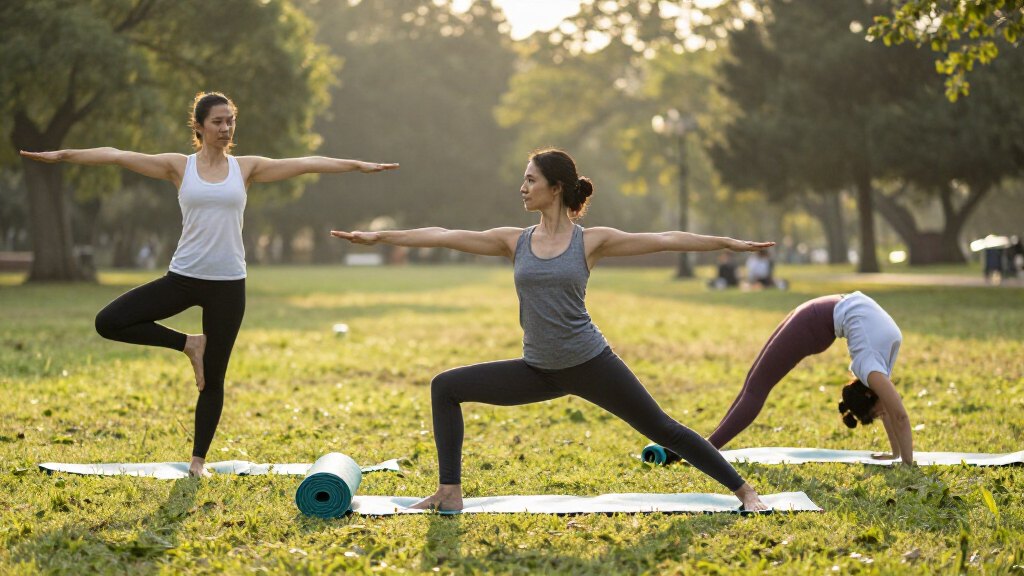
Yoga teacher Cheryl McColgan recommends tree pose, eagle pose and warrior three as single-leg exercises that can train balance and stability. She advises beginners to start with tree pose, use a fixed gaze and add wall or chair support if needed.
A Fit&Well report identifies tree pose, eagle pose and warrior three as three yoga poses that teacher Cheryl McColgan recommends for practicing balance and stability. The poses involve standing on one leg, and McColgan says they can help develop body awareness and strength in muscles around the ankle, knee and hip.
McColgan, founder of Heal, Nourish, Grow, says yoga trains proprioception—the body’s ability to sense its position and movement—and can support balance through muscular strength and endurance. She recommends practicing the poses in a progression: tree pose first, followed by eagle pose and then warrior three. The report presents these as exercise recommendations, not as a guaranteed outcome or medical treatment.
In tree pose, shift weight onto one foot and place the other foot against the standing leg’s ankle, calf or inner thigh. Avoid pressing it into the knee. Hands can rest in prayer position, reach overhead or hold a support. In eagle pose, bend both knees slightly, cross one thigh over the other and, if comfortable, wrap the lifted foot behind the standing calf. The toes can remain on the floor if that wrap is not manageable.
For warrior three, stand on one leg, hinge forward at the hips and extend the other leg behind, keeping a slight bend in the standing knee. The arms can be held in prayer, extended behind in line with the torso or, for a greater challenge, stretched forward. The report suggests holding each pose for three to 10 breaths and repeating on the other side.
Building Balance With Supported Practice
Balance exercises can be a practical part of maintaining movement ability as people age. The poses in the report offer different levels of challenge while sharing a single-leg focus, giving readers a way to practice stability without needing specialized equipment. Their relevance is in the accessible options: a beginner can use a wall or chair, while a more experienced practitioner can attempt the full positions.
McColgan recommends fixing the gaze on one point to help with steadiness and using a support when needed. She also suggests a simple starting exercise: stand on one leg while brushing your teeth. These are general fitness suggestions; the report does not provide research findings showing how much balance may improve, or how quickly.
Products Worth Considering

Withings Sleep Under-Mattress Sleep Tracking Pad

Garmin Forerunner 165 GPS Running Smartwatch, 43 mm, Whitestone

Withings BPM Connect Wi-Fi and Bluetooth Blood Pressure Monitor
As an affiliate, we earn on qualifying purchases.
How the Three Poses Differ
The report groups the poses by their demand on single-leg balance. Tree pose keeps the torso upright and allows the raised foot to rest at several heights, making it the suggested starting point. Eagle adds a crossed-leg position and bent knees, while warrior three involves hinging forward and extending the lifted leg behind the body.
That sequence is McColgan’s recommendation, not a formal training plan with prescribed frequency or progression milestones. The report advises holding each pose for three to 10 breaths, switching sides and adapting the position when needed. It does not set out a weekly schedule or define a target level of proficiency.
“One of my favorite things about yoga is that it trains proprioception—your body’s ability to sense its own movements and position—so it can definitely help with balance and stability.”
— Cheryl McColgan, yoga teacher and founder of Heal, Nourish, Grow
Evidence and Individual Limits
The supplied report does not cite a clinical trial or quantify the effect of these poses on balance, stability or fall risk. It also does not specify how often to practice, how long it may take to notice a change, or whether results differ by age, experience or health status. McColgan’s recommendations are attributed expert guidance, not a claim that these poses work equally for everyone.
People with injuries, pain, mobility limitations or conditions that affect balance may need individualized advice before attempting single-leg poses. The report offers wall or chair support as an option but does not give detailed modifications for every condition. Stop if a pose causes pain or feels unsafe.
A Gradual Practice Sequence
The report provides no announced follow-up study or next publication milestone. Its practical sequence is to begin with supported tree pose, then try eagle and warrior three as comfort and control allow. Practitioners can use a fixed point for their gaze, keep a hand near a stable support and work within a range that feels manageable. Any change in balance ability is not quantified in the source, so readers should treat the poses as a way to practice rather than a guaranteed result.
Key Questions
Which yoga pose should a beginner try first?
McColgan recommends tree pose as the starting point. The raised foot can rest at the ankle, calf or inner thigh, and a wall or chair can provide support.
How long should each pose be held?
The report suggests holding each pose for three to 10 breaths, then switching sides. It does not specify a practice frequency.
What can help me stay steady during the poses?
McColgan advises focusing the eyes on a single point. She also recommends holding a wall or chair for support if needed.
Do these poses guarantee better balance?
No. The report shares a yoga teacher’s recommendations but provides no measured results or guarantee. It does not state how much improvement to expect or how quickly.
Source: rss