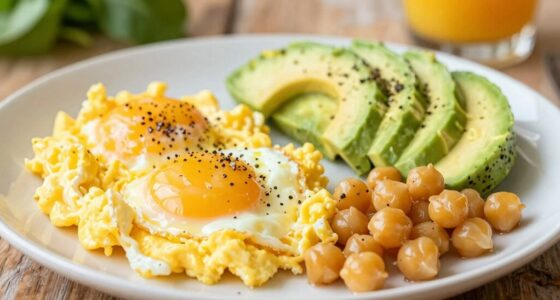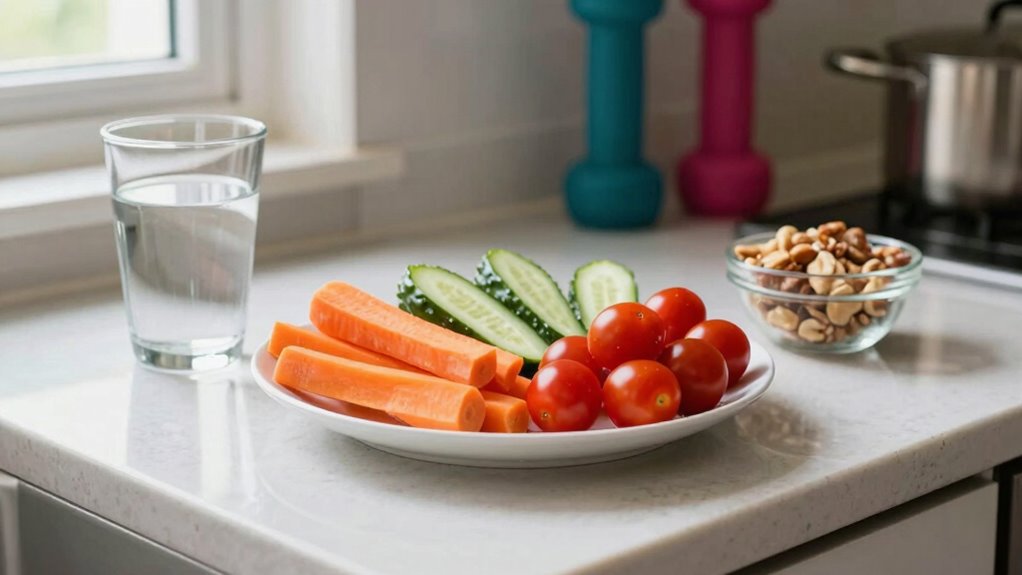

To boost your energy and performance before a short home workout, choose a small, balanced snack with carbs and protein, like a banana with peanut butter or Greek yogurt with berries. Eat about 30 to 60 minutes beforehand to allow digestion and absorption. Hydrate well with water or electrolyte drinks for peak performance and recovery. Proper portions prevent feeling sluggish, and timing enhances muscle repair afterward. Keep exploring to discover more tips for a successful workout snack strategy.

Get workout gear delivered free with Prime
- Fast, free delivery on millions of items
- Prime Video, Amazon Music and more included
- Member-only deals all year
Key Takeaways
- Consume a small, balanced snack containing carbs and protein 30-60 minutes before exercise.
- Opt for quick-digesting options like a banana with peanut butter or Greek yogurt with berries.
- Avoid heavy, greasy foods to prevent sluggishness during your workout.
- Stay hydrated by drinking water before and during exercise to boost performance.
- Adjust portion sizes to prevent discomfort and ensure energy without feeling overly full.
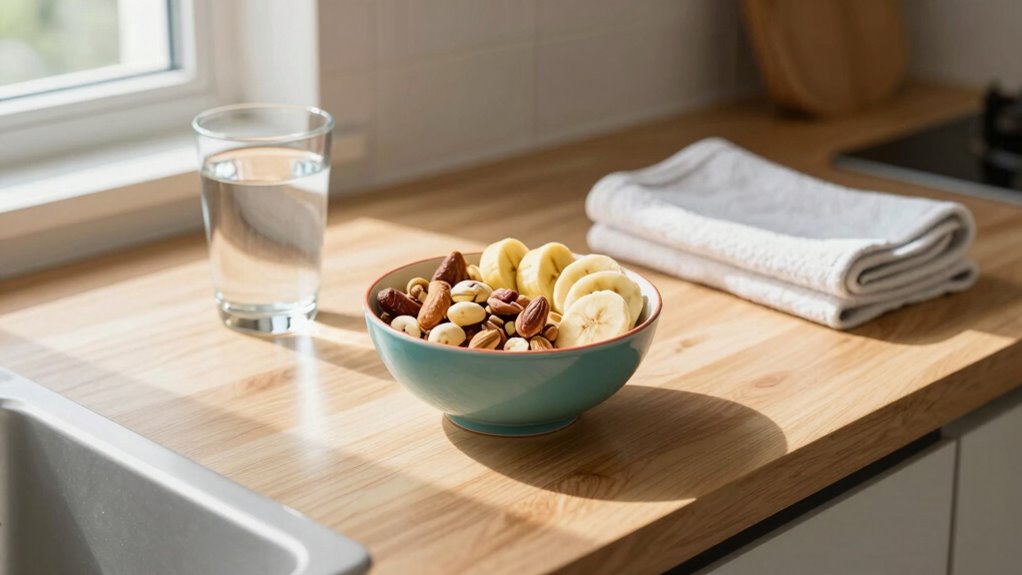
When you’re pressed for time but still want to stay active, having a smart snack strategy can make a big difference in fueling your short home workouts. Choosing the right snack before exercising helps boost your energy levels and prepares your body for movement. It also sets the stage for effective post workout recovery, guaranteeing your muscles get the nutrients they need to repair and grow stronger. But don’t forget, hydration plays an essential role in both performance and recovery, so incorporating hydration tips into your snack strategy is vital.
Start with a small, balanced snack that combines carbs and protein. Carbohydrates provide quick energy, while protein supports muscle repair. For example, a banana with a spoonful of peanut butter or a small Greek yogurt with berries works well. These options are light enough not to cause discomfort during your workout but substantial enough to keep your energy steady. Avoid heavy, greasy foods that can make you sluggish or cause stomach upset.
Choose light, balanced snacks with carbs and protein to fuel your workout and prevent discomfort.
Timing matters too. Aim to eat your snack about 30 to 60 minutes before starting your workout. This window allows your body to digest and absorb nutrients, giving you a quick energy boost without feeling overly full. If you’re short on time, a small snack like a handful of nuts or a piece of fruit can suffice. Planning your nutrient intake in advance can help optimize your performance and recovery. Incorporating proper timing for eating can maximize the benefits of your snack and prevent discomfort during exercise. Additionally, paying attention to portion sizes can help you avoid feeling overly full or sluggish during your workout. Ensuring your meal composition aligns with your activity level can enhance your energy levels. Post workout recovery is equally important, so plan to refuel within 30 minutes of finishing your workout with a combination of carbs and protein. This helps replenish glycogen stores and jumpstarts muscle repair, making your next workout more effective.
Hydration tips should be integrated into your snack strategy. Drinking water before and during your workout keeps you hydrated and prevents fatigue. If your workout is intense or lasts longer than 30 minutes, consider adding an electrolyte-rich drink, like a sports drink or coconut water, to replace lost minerals. After your workout, continue hydrating to support recovery and reduce muscle soreness. Proper hydration aids in post workout recovery by flushing out toxins and delivering nutrients more efficiently to your muscles.
Frequently Asked Questions
Can I Snack Right Before My Workout Without Feeling Sluggish?
Yes, you can snack right before your workout without feeling sluggish if you follow timing tips and snack portioning. Aim to eat a small, easily digestible snack about 30 minutes beforehand, like a banana or a handful of nuts. Keep the portion moderate to avoid discomfort, and choose carbs with a bit of protein. This way, you’ll fuel your workout without feeling weighed down or sluggish.
Are There Snacks I Should Avoid Before Exercising?
Think of your stomach as a delicate dance partner—avoid heavy, greasy snacks that can weigh you down. Steer clear of chips, sugary treats, and fried foods before exercise. Instead, opt for healthy alternatives like fruits, nuts, or yogurt, and stay hydrated with water or electrolyte drinks. Hydration tips include sipping small amounts regularly, ensuring your body’s ready to perform without feeling sluggish or bloated.
How Long Before Exercise Should I Eat My Snack?
You should eat your snack about 30 to 60 minutes before your workout. Proper meal timing guarantees your energy levels stay high without feeling too full or sluggish. Opt for easily digestible carbs and a little protein to fuel your workout effectively. If you wait too long, you might feel hungry, but eating too close to exercising can cause discomfort. Find the timing that works best for your body and workout intensity.
Do Snack Choices Vary for Different Types of Workouts?
Your snack choices do vary for different types of workouts, depending on your goals. For cardio, opt for easily digestible carbs like fruit or a granola bar to boost energy. For strength training, choose protein-rich snacks like yogurt or nuts to support muscle repair. Meal timing influences your snack variety; eating lighter before intense workouts helps prevent discomfort, while a more substantial snack suits longer or less intense sessions.
Can Snacks Improve My Workout Performance Significantly?
Snacks can greatly boost your workout performance by providing energy and aiding post-workout recovery. Eating a balanced snack with carbs and protein before exercise keeps you fueled, while post-workout snacks help repair muscles. Stay hydrated with hydration tips like drinking water or electrolyte drinks. Proper nutrition and hydration ensure you perform better, recover faster, and stay energized, making snacks a valuable part of your overall workout routine.
Conclusion
So, next time you’re gearing up for a quick home workout, try that snack strategy. Some say it boosts energy and performance, while others believe it’s just a myth. The truth? A small, balanced snack can give you the extra push you need without feeling sluggish afterward. Science suggests your body benefits from that fuel, so don’t skip it. Give it a try—you might just discover your new secret weapon for short, effective workouts.
Columbus Day / Indigenous Peoples' Day Picks
long weekend sales
As an affiliate, we earn on qualifying purchases.