
Focusing on consistent meal timing and staying well-hydrated supports your home training more than obsessing over perfect macros. Eating balanced meals 1-2 hours before workouts and refueling within an hour afterward helps boost energy, replenish glycogen, and repair muscles. Regular hydration keeps muscles functioning well and prevents cramps, enhancing your performance and recovery. Prioritizing these habits creates a sustainable routine that powers your progress — keep going to discover more ways to optimize your training.

Get workout gear delivered free with Prime
- Fast, free delivery on millions of items
- Prime Video, Amazon Music and more included
- Member-only deals all year
Key Takeaways
- Prioritize consistent meal timing around workouts over obsessing over macro ratios.
- Focus on balanced pre- and post-workout meals for energy and recovery.
- Maintain regular hydration throughout the day to support performance and muscle function.
- Use simple, sustainable nutrition habits aligned with training schedules rather than perfect macro counting.
- Create an environment that facilitates easy access to water and nutritious foods for better adherence.

Maintaining proper nutrition is essential when you’re training at home, as it directly influences your energy levels, recovery, and overall progress. While many focus on hitting perfect macros, the real game-changer lies in how you time your meals and stay hydrated. These habits can often make a bigger impact on your results than obsessing over every gram of protein, carbs, or fat.
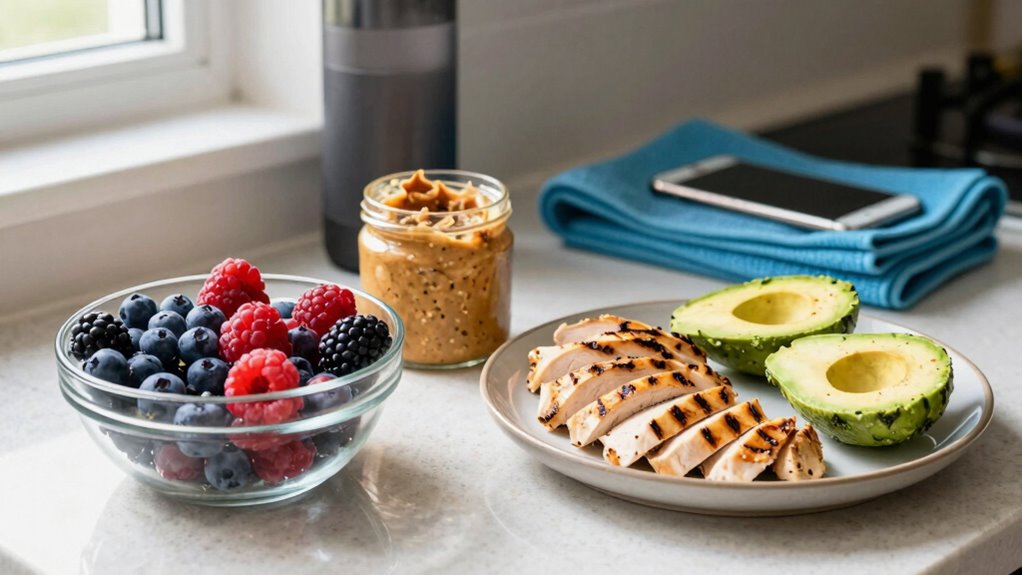
Meal timing is crucial because it helps optimize your energy during workouts and speeds up recovery afterward. Instead of stressing over strict macro ratios, aim to eat a balanced meal about 1-2 hours before your training session. This gives your body the fuel it needs without feeling sluggish or overly full. After your workout, prioritize a meal rich in protein and carbs within an hour to replenish glycogen stores and support muscle repair. Consistency in meal timing helps regulate your energy levels, prevents fatigue, and reduces cravings that might lead to unhealthy snacking. You don’t need to overcomplicate it—just plan your meals so they align with your training schedule, ensuring you’re energized and ready to perform. Incorporating proper hydration into your routine can further enhance your training results and overall well-being.
Eat balanced meals 1-2 hours before training and refuel with protein and carbs within an hour afterward.
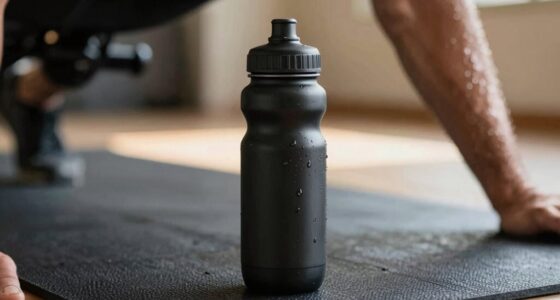
Hydration strategies are equally vital. Dehydration can sap your strength, impair muscle function, and slow down recovery, so paying attention to your fluid intake is a simple yet powerful habit. Make it a point to drink water regularly throughout the day, not just when you’re thirsty. During workouts, sip small amounts of water frequently, especially if you’re sweating a lot. If you’re engaging in longer or more intense sessions, consider adding electrolytes to your water to replace lost minerals. A consistent hydration routine keeps your muscles functioning properly, helps prevent cramps, and keeps your energy levels steady. Remember, thirst isn’t always a reliable indicator of dehydration, so proactively drinking throughout the day is a smarter approach. Recognizing the importance of home training environment can help you better optimize your hydration and nutrition habits for maximum results. Additionally, understanding the benefits of hydration can motivate you to stay consistent in your fluid intake. Ensuring your environment supports these habits, such as having easy access to water and a comfortable space to train, can further improve your consistency and results.
Combining good meal timing with effective hydration strategies creates a supportive environment for your home training. When your body is fueled and well-hydrated, you’re more likely to push through tough workouts, recover faster, and see consistent progress. These habits require less precision than aiming for perfect macros but offer a more sustainable and practical way to support your fitness journey. By focusing on when you eat and how you hydrate, you set a foundation that allows you to train smarter, not just harder, ensuring your efforts translate into real results over time.
Products Worth Considering

Levoit Vital 100S-P Smart Air Purifier with Washable Pre-Filter

Withings BPM Connect Wi-Fi and Bluetooth Blood Pressure Monitor

Oura Ring 5 Smart Ring, Gold, Size 10
As an affiliate, we earn on qualifying purchases.
Frequently Asked Questions
How Long Does It Take to See Results From This Nutrition Habit?
You might start noticing results from improved meal timing and portion control within a few weeks. Consistently maintaining these habits helps regulate your energy levels and supports your training goals. While individual results vary, sticking to balanced meals and mindful portions accelerates progress. Keep in mind, patience is key—commit to these habits daily, and you’ll likely see positive changes in your strength, endurance, and overall fitness over time.
Can This Habit Be Maintained Long-Term Without Feeling Restrictive?
Yes, you can maintain this habit long-term without feeling restricted if you develop a flexible mindset and focus on sustainable commitment. When you allow room for adjustments and listen to your body’s needs, it becomes easier to stay consistent without burnout or frustration. This approach makes healthy eating a natural part of your routine, rather than a chore, ensuring you enjoy the process and stick with it for the long haul.
Does This Nutrition Habit Suit All Types of Training Programs?
Yes, this nutrition habit suits most training programs because it emphasizes meal timing and hydration strategies that boost performance and recovery. You can adapt your meal schedule to match workout times, ensuring you get energy when needed. Staying well-hydrated supports endurance and muscle function, making this habit versatile across strength, cardio, or flexibility routines. It promotes consistent progress without feeling restrictive, fitting seamlessly into various training styles.
Are There Specific Foods to Avoid While Practicing This Habit?
You should avoid processed foods high in added sugars and unhealthy fats, especially if you have food sensitivities or dietary restrictions. These can cause bloating, fatigue, or inflammation, hindering your progress. While practicing this habit, steer clear of foods that don’t align with your needs, such as gluten or dairy if you’re sensitive. Sticking to whole, nutrient-dense options helps you stay energized and supports consistent training without discomfort.
How Can I Stay Motivated to Follow This Nutrition Habit Consistently?
To stay motivated, focus on meal planning and practicing portion control consistently. When you plan your meals ahead, you reduce decision fatigue and stay aligned with your goals. Keep track of your progress and celebrate small wins to boost your motivation. Remember, maintaining discipline with portion control helps you see results faster, which fuels your commitment. Stay flexible, patient, and remind yourself of the benefits to keep your motivation high.
Conclusion
By focusing on consistent, whole-food meals rather than obsessing over perfect macros, you build a stronger foundation for your home training. Small, mindful changes add up over time and help you stay committed. Remember, Rome wasn’t built in a day, so don’t expect overnight results. Stay patient and trust the process—your dedication will pay off in the long run. Keep pushing forward, and you’ll see progress where it truly counts.