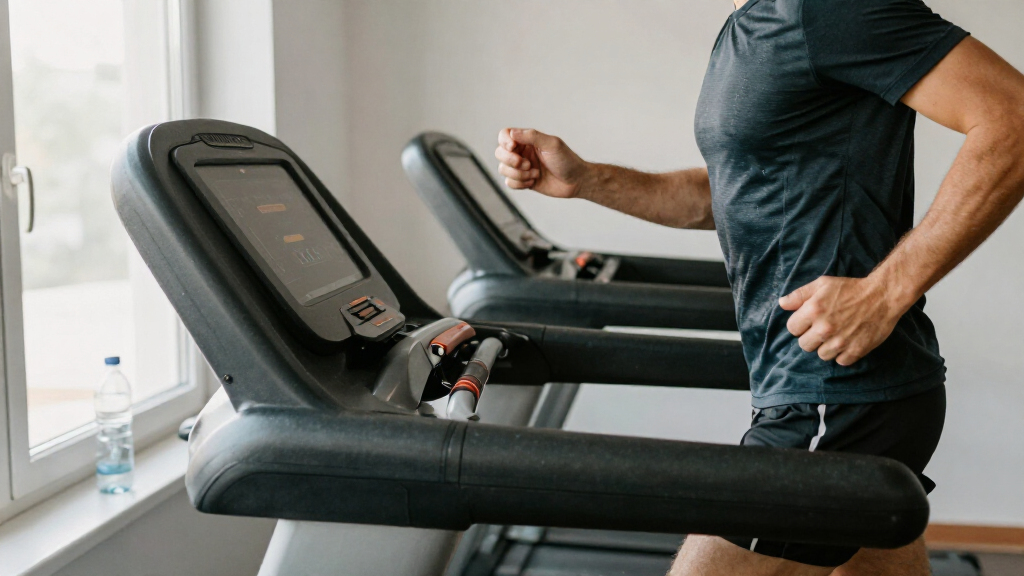
The best running exercise equipment depends on whether you want steady indoor miles, low-impact movement, or short bursts of speed work. I rank the NordicTrack T Series T5 as the best overall treadmill choice for buyers seeking a more complete running setup; the CURSOR 40% Incline Folding Treadmill stands out for steep incline sessions, while the 20ft Adjustable Agility Speed Ladder suits compact footwork drills. The main tradeoffs are running capability versus storage space, impact versus lower-impact training, and a full treadmill’s versatility versus simpler, more portable gear. No single option fits every training plan or home. Read on for the full comparison and help matching each pick to your needs.

Get workout gear delivered free with Prime
- Fast, free delivery on millions of items
- Prime Video, Amazon Music and more included
- Member-only deals all year
Complete the kit


Key Takeaways
- The NordicTrack T Series T5 is the most complete running pick in this lineup, while compact walking pads are better suited to walking and space-conscious home use.
- The CURSOR’s steep incline focus separates it from standard walking pads; incline training is a distinct use case, not a replacement for checking running speed, belt dimensions, and stability.
- The three walking pads with handles are not interchangeable: compare their incline options, handlebar setup, and storage needs rather than choosing by the foldable label alone.
- The agility ladder and resistance parachute train speed differently from treadmills, relying on footwork or resisted outdoor movement instead of continuous indoor running.
- The ANCHEER elliptical offers a lower-impact alternative, but it does not reproduce a running stride, so it suits cross-training better than buyers who specifically want to run.
| Terluxra Foldable Walking Pad Treadmill with Handle Bar |  | Best for Quiet, Light Running | Motor power: 2.0 HP | Maximum speed: 4 MPH | Exercise modes: Walking (0.6–1.5 MPH), jogging (1.5–2.5 MPH), running (2.5–4 MPH) | VIEW LATEST PRICE | See Our Full Breakdown |
| Walking Pad with Incline and Stable Handle Bar, Foldable Treadmill | 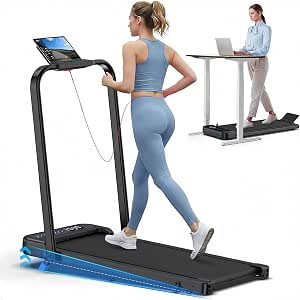 | Best Compact Pick for Incline Training | Speed range: 0.6–6.2 mph | Maximum horsepower: 3 hp | Maximum incline: 10% manual | VIEW LATEST PRICE | See Our Full Breakdown |
| Ulfario Folding Walking Pad Treadmill with Removable Handlebar |  | Best for Under-Desk Flexibility | Maximum speed: 6 km/h (about 4 MPH) | Motor power: 440 W | Maximum horsepower: 2 hp | VIEW LATEST PRICE | See Our Full Breakdown |
| Bfsmile Running Speed Training Parachute with Adjustable Strap and Carry Bag |  | Best for Sprint Resistance Drills | Canopy diameter: 56 in | Material: Polyester | Adjustable waist range: 20–42 in | VIEW LATEST PRICE | See Our Full Breakdown |
| 20ft Adjustable Agility Speed Ladder with Carry Bag – Soccer, Football, and Footwork Training |  | Best for Running Footwork and Drills | Length: 20 ft | Number of crossbars: 12 | Adjustable rung spacing: 12–18 in | VIEW LATEST PRICE | See Our Full Breakdown |
| CURSOR 40% Incline Folding Treadmill with Extended Handrails |  | Best for Steep Incline Walking | Model: X5FD | Incline settings: 0%, 10%, 20%, 30%, 40% | Maximum speed: 7.5 mph listed in specifications; description states 6.2 mph | VIEW LATEST PRICE | See Our Full Breakdown |
| NordicTrack T Series T5 Treadmill for Home |  | Best for Guided Running Workouts | Model: T5 (NTL17624) | Maximum speed: 10 mph | Maximum incline: 10% | VIEW LATEST PRICE | See Our Full Breakdown |
| ANCHEER Magnetic Elliptical Exercise Machine |  | Best Low-Impact Alternative to Running | Model: AMA006031 | Resistance system: Magnetic | Resistance levels: 14 | VIEW LATEST PRICE | See Our Full Breakdown |
| ZPUFDYM Walking Pad Treadmill with 12% Manual Incline and Handle Bar |  | Best Compact Pick for Walking and Light Jogging | Maximum speed: 6.2 mph | Minimum speed: 0.6 mph | Maximum incline: 12% manual | VIEW LATEST PRICE | See Our Full Breakdown |
| running exercise equipment | Maximum speed | Item weight |
|---|---|---|
| Terluxra Foldable Walking Pad | 4 MPH | — |
| Walking Pad with Incline and S | — | 41.6 lb |
| Ulfario Folding Walking Pad Tr | 6 km/h (about 4 MPH) | 17.5 kg |
| Bfsmile Running Speed Training | — | 0.16 kg |
| 20ft Adjustable Agility Speed | — | — |
| CURSOR 40% Incline Folding Tre | 7.5 mph listed in specifications; description states 6.2 mph | — |
| NordicTrack T Series T5 Treadm | 10 mph | 130 lbs |
| ANCHEER Magnetic Elliptical Ex | — | — |
| ZPUFDYM Walking Pad Treadmill | 6.2 mph | 42 lbs |
More Details on Our Top Picks
Terluxra Foldable Walking Pad Treadmill with Handle Bar
The Terluxra suits buyers who want more than an under-desk walking pad but don’t need a full-size treadmill. Its 2.0 HP motor and three modes cover walking through easy running, while shock absorption and a quiet design make it more practical for shared homes or office use than the more workout-focused Walking Pad with Incline and Stable Handle Bar. The tradeoff is speed: its 4 MPH ceiling supports brisk walking and gentle jog intervals, not sustained faster running or serious speed training. Its fold-flat frame also makes storage under a bed or sofa easier, though ABS and PVC components may feel less substantial than a steel-framed machine. I’d choose it for compact, low-impact sessions, not as a substitute for a conventional running treadmill.
Pros:- Quiet 2.0 HP motor and shock absorption suit shared living spaces
- Folds flat for storage under beds or sofas
- Three modes support walking, jogging, and light running
- Remote control and LED display provide convenient workout adjustments and tracking
Cons:- 4 MPH maximum speed is too limited for faster or sustained running
- ABS and PVC construction may feel less substantial than a steel-framed treadmill
Best for: Apartment or home-office users who want quiet walking and occasional easy jogging on equipment they can store under furniture
Not ideal for: Runners who need sustained speeds above 4 MPH, a full-size running deck, or a more substantial frame
- Motor power:2.0 HP
- Maximum speed:4 MPH
- Exercise modes:Walking (0.6–1.5 MPH), jogging (1.5–2.5 MPH), running (2.5–4 MPH)
- Maximum load capacity:242 lb (110 kg)
- Dimensions:40.9 × 19.2 × 4.1 in
- Materials:ABS and PVC
- Model number:3BXFS-930iF
Our verdict“Choose the Terluxra for quiet, space-saving walking and light jogging, but pick the faster incline walking pad or a full treadmill for harder runs.”
Walking Pad with Incline and Stable Handle Bar, Foldable Treadmill
For buyers who want training variety without a full-size treadmill, this walking pad has the strongest mix of speed and incline among the compact options here. It reaches 6.2 mph, compared with the Terluxra’s 4 MPH limit, and its 10% manual incline adds a hill effort without taking up the space of a larger machine. Handlebar, remote, app, and voice controls give users several ways to adjust speed, while the belt’s auto-alignment system is intended to support smooth operation. Its 350 lb capacity also exceeds the other listed walking pads. The main compromise is that incline changes are manual, so you can’t switch grades mid-session at the touch of a control. It’s a more versatile compact workout option, but still not a full treadmill for dedicated distance training.
Pros:- 6.2 mph maximum speed gives it more running range than the Terluxra and Ulfario
- 10% manual incline adds hill-training variety in a compact footprint
- Handlebar, remote, app, and voice controls offer flexible operation
- 350 lb maximum weight capacity is higher than the other walking pads in this group
Cons:- Manual incline adjustment interrupts workouts when changing grade
- Compact format is less suited to sustained distance running than a full-size treadmill
Best for: Space-conscious users who want brisk walking, short running intervals, and hill training, with multiple ways to control the workout
Not ideal for: Runners who need a full-size deck or want to adjust incline electronically without stopping to change it manually
- Speed range:0.6–6.2 mph
- Maximum horsepower:3 hp
- Maximum incline:10% manual
- Maximum weight capacity:350 lb
- Unfolded dimensions:43.3 × 21.3 × 38 in
- Folded height:5 in
- Item weight:41.6 lb
- Frame material:Alloy steel
- Display metrics:Calories, distance, speed, and time
Our verdict“Pick this model if you want the most speed and incline variety in a compact walking pad and can live with manual grade changes.”
Ulfario Folding Walking Pad Treadmill with Removable Handlebar
The Ulfario’s defining advantage is its removable handlebar: it can serve as a supported walking pad, then be adapted for under-desk use when the bar is removed. That makes it more flexible for workday movement than the fixed-handlebar Terluxra, though the Ulfario’s own speed ceiling is also only 4 MPH, so neither is the right choice for fast running. The five-layer non-slip belt, shock absorption, remote, and LED display cover the basics for walking and gentle jogging. Its running area measures 90 × 38 cm, a compact deck that favors easy storage over room to lengthen a stride. Removing the handlebar requires unscrewing bolts, so changing setups is not instant. I’d favor it for buyers who value dual-purpose use over faster pace or frequent handlebar changes.
Pros:- Removable handlebar allows supported use or an under-desk configuration
- Folds and has transport wheels for easier storage and moving
- Five-layer non-slip belt and shock absorption support walking comfort
- Remote and LED display show workout metrics and control speed
Cons:- Maximum speed of 4 MPH limits use to walking and gentle jogging
- Handlebar removal requires unscrewing bolts rather than a quick adjustment
- 90 × 38 cm running area may feel short and narrow for running strides
Best for: Remote workers who want a compact walking pad that can also fit under a desk after removing the handlebar
Not ideal for: Faster runners, taller users who want a longer running area, or people who plan to remove and reinstall the handlebar often
- Maximum speed:6 km/h (about 4 MPH)
- Motor power:440 W
- Maximum horsepower:2 hp
- Maximum user weight:264 lb (120 kg)
- Running area:90 × 38 cm
- Folded dimensions:104 × 48.7 × 10.5 cm
- Item weight:17.5 kg
- Display metrics:Time, speed, calories, and distance
- Warranty:1 year
Our verdict“Choose the Ulfario if under-desk walking and compact storage matter more than speed, deck space, or quick handlebar changes.”
Bfsmile Running Speed Training Parachute with Adjustable Strap and Carry Bag
Unlike the treadmills in this roundup, the Bfsmile parachute is for outdoor acceleration and sprint-resistance work, not steady running or indoor cardio. Its 56-inch canopy creates drag as you run, giving athletes a way to add resistance to short speed drills without carrying bulky equipment. The rotating D-ring allows movement in different directions, which broadens its use for field-sport practice compared with a straight-line-only setup. It is much lighter and easier to pack than any treadmill here, but it requires open space and active running; it won’t support low-impact walking or provide a measured pace like the Walking Pad with Incline. Product information gives conflicting resistance ranges, so I wouldn’t choose it based on a precise load expectation. The warning against dragging the canopy also calls for attention to surface and technique.
Pros:- 56-inch parachute adds drag for sprint and acceleration sessions
- Rotating D-ring supports movement in different directions
- Adjustable 20–42 inch waist belt fits a range of users
- Lightweight design includes a carry bag for transport
Cons:- Published resistance range is inconsistent, making the load difficult to predict
- Needs open space and proper use; instructions warn against dragging the canopy
- Does not replace a treadmill or walking pad for steady, low-impact cardio
Best for: Field-sport athletes and runners with access to an open area who want portable resistance for short acceleration drills
Not ideal for: Buyers seeking indoor cardio, steady-paced running, or a clearly specified resistance level
- Canopy diameter:56 in
- Material:Polyester
- Adjustable waist range:20–42 in
- Stated resistance:12–33 lb; product description also states 15–33 lb
- Item weight:0.16 kg
- Included components:Resistance parachute and carrying bag
Our verdict“Choose the Bfsmile for portable outdoor sprint resistance, not for everyday running sessions or predictable treadmill-style training.”
20ft Adjustable Agility Speed Ladder with Carry Bag – Soccer, Football, and Footwork Training
This ladder helps runners work on foot speed, coordination, and directional patterns, rather than pace or endurance. Its 12 adjustable crossbars can be set 12–18 inches apart, allowing users to make drills more accessible or demanding as technique improves. That gives it a different role from the Bfsmile parachute, which adds resistance to a sprint: the ladder emphasizes quick, controlled steps and is also useful in soccer, basketball, and HIIT sessions. At 20 feet, it offers room for a sequence of drills and rolls into its carry bag for transport. The plastic rungs keep it light, but they may feel less sturdy during very heavy use, and this is ground-based training gear rather than a substitute for a treadmill. I’d pick it for varied footwork practice, not for building continuous running volume.
Pros:- Adjustable rung spacing from 12–18 inches supports drills at different skill levels
- 20-foot length provides room for linked footwork patterns
- Roll-up design and carry bag make it easy to take to fields or gyms
- Useful for running drills, field sports, and HIIT
Cons:- Plastic steps may feel less sturdy under very heavy use
- Requires clear, flat ground and does not provide continuous running exercise
- Does not add resistance or track running pace
Best for: Runners, coaches, and field-sport athletes who want portable footwork and coordination drills for outdoor or gym sessions
Not ideal for: Buyers looking for continuous running cardio, resistance training, or equipment built for heavy use on rough surfaces
- Length:20 ft
- Number of crossbars:12
- Adjustable rung spacing:12–18 in
- Materials:Plastic steps and reinforced nylon straps
- Color:Yellow
- Package weight:0.37 kg
- Included components:Agility ladder and carrying bag
- Warranty:2 years
Our verdict“Choose this ladder to add portable footwork and coordination drills to a running or field-sport routine, not to replace cardio equipment.”
CURSOR 40% Incline Folding Treadmill with Extended Handrails
The CURSOR stands apart for manual incline up to 40%, making it the strongest fit here for steep uphill walking rather than fast running. Its 51-inch extended handrails, cushioned anti-slip belt, and 350-pound capacity offer more support than the compact ZPUFDYM Walking Pad, whose incline tops out at 12%. The tradeoff is that changing incline requires stopping to adjust it, so it lacks the seamless grade changes available on the NordicTrack T Series T5. Its stated top speed is also inconsistent: the specifications list 7.5 mph, while the description says 6.2 mph. I’d treat it as a walking and moderate-jogging option, not a dependable choice for speed-focused training, until that discrepancy is clarified.
Pros:- Five manual incline settings, reaching 40%, support demanding uphill walking
- Extended 51-inch handrails and 350-pound capacity suit users who prioritize support
- Cushioned, anti-slip belt and shock absorbers add comfort underfoot
- Folds for storage and includes transport wheels, an LED display, a remote, and a phone holder
Cons:- Incline changes are manual, interrupting workouts when the grade needs adjustment
- Maximum speed is unclear, with 6.2 mph in the description and 7.5 mph in the specifications
- The 38.6-by-15.4-inch belt offers less running room than the NordicTrack T5’s 55-by-18-inch deck
Best for: Home walkers seeking steep hill sessions, extended handrails, and a folding frame with a higher stated weight capacity
Not ideal for: Runners who need fast intervals or automatic incline changes, especially while moving at pace
- Model:X5FD
- Incline settings:0%, 10%, 20%, 30%, 40%
- Maximum speed:7.5 mph listed in specifications; description states 6.2 mph
- Motor:3 HP brushless
- Maximum weight capacity:350 lbs
- Walking belt:38.6 × 15.4 in
- Handrail height:51 in
- Folded dimensions:57.3 × 24.4 × 6.1 in
- Warranty:1 year
Our verdict“Choose the CURSOR for supported, steep-incline walking at home, but skip it if you need confirmed high speeds or automatic grade changes.”
NordicTrack T Series T5 Treadmill for Home
For runners who want structure and progression, the NordicTrack T5 is the most training-focused treadmill in this group. iFIT-guided sessions can adjust speed and incline automatically, while its 10 mph ceiling and 55-by-18-inch deck give it more room for running than the CURSOR or ZPUFDYM walking pads. A 0–10% incline range is far less steep than the CURSOR’s manual 40%, but the T5 makes grade changes during a session without requiring a stop. The compromises are its paid iFIT membership for full smart features and 130-pound weight, which makes moving it harder than either walking pad. Its 300-pound user limit is also lower than the CURSOR and ANCHEER elliptical.
Pros:- iFIT integration offers guided sessions with automatic speed and incline adjustments
- 10 mph maximum speed and a 55-by-18-inch deck better suit running than either walking pad
- KeyFlex cushioning is designed to reduce impact during walking and running
- Bluetooth supports connections with fitness apps including Strava, Garmin, and Apple Health
Cons:- Full smart workout features require a paid iFIT Train membership
- At 130 lbs, it is difficult to move without assistance
- The 300-pound user limit is lower than the CURSOR treadmill’s stated 350-pound capacity
Best for: Home runners who want guided workouts, app connections, and automatic speed and incline changes
Not ideal for: Buyers avoiding ongoing workout subscriptions, people who need a lightweight machine to move often, or users seeking a very steep walking grade
- Model:T5 (NTL17624)
- Maximum speed:10 mph
- Maximum incline:10%
- Motor power:2.6 HP
- Deck dimensions:55 × 18 in
- Display:5-inch LCD
- Connectivity:Bluetooth
- Maximum user weight:300 lbs
- Item weight:130 lbs
Our verdict“Pick the NordicTrack T5 if guided, app-connected running matters more than simple operation, easy relocation, or steep manual inclines.”
ANCHEER Magnetic Elliptical Exercise Machine
The ANCHEER is the outlier in this roundup: it does not provide running mechanics, but it gives buyers a low-impact cardio option for days when treadmill running is uncomfortable or unwanted. Its 14 magnetic resistance levels and 16-inch stride let users vary effort without the belt impact of the NordicTrack T5 or either walking pad. A 500-pound stated capacity also exceeds every treadmill here. The cost of that gentler approach is clear: an elliptical won’t prepare you for running-specific foot strike, pace, or form, and its stride is fixed at 16 inches. Assembly is required, and the listed monitor tracks basic workout metrics rather than offering the guided training and app-connected experience of the NordicTrack.
Pros:- Magnetic resistance operates quietly for home workouts
- Fourteen resistance levels allow effort to be adjusted without changing machines
- 500-pound maximum capacity is higher than the listed capacity of the treadmills
- Lifetime warranty and replacement parts are stated as included support
Cons:- Elliptical movement does not replicate running or support running-specific form practice
- Assembly is required
- The 16-inch stride is fixed, and the monitor offers basic metrics rather than guided workout features
Best for: People who want indoor cardio with less impact than treadmill running and value a high stated capacity
Not ideal for: Runners training for race pace or running-specific fitness, or buyers who need guided digital workouts
- Model:AMA006031
- Resistance system:Magnetic
- Resistance levels:14
- Stride length:16 in
- Maximum weight capacity:500 lbs
- Monitor metrics:Time, speed, distance, and calories burned
- Heart rate tracking:Hand pulse sensors
- Warranty:Lifetime
Our verdict“Choose the ANCHEER when low-impact cardio matters more than practicing the movement and pace of running.”
ZPUFDYM Walking Pad Treadmill with 12% Manual Incline and Handle Bar
The ZPUFDYM is the easiest fit for a tight home or office: it folds to just 5 inches thick and weighs 42 pounds, making it simpler to store than the 130-pound NordicTrack T5. Its 12% manual incline adds hill work beyond flat walking, while six-layer shock absorption and handrails make it more supportive than a bare walking pad. But this remains a walking-first machine: the 6.2 mph top speed limits serious running intervals, and manual incline adjustment cannot match the NordicTrack’s automatic changes during guided workouts. Compared with the CURSOR, it stores more compactly but gives up the latter’s steeper 40% incline and higher stated weight capacity. Assembly is required.
Pros:- Folds to 5 inches thick and weighs 42 lbs, easing storage and repositioning
- 12% manual incline adds hill walking beyond a flat walking pad
- Six-layer shock absorption is designed to soften impact
- Handle bar and transport wheels provide support and easier movement
Cons:- Maximum speed of 6.2 mph is limiting for intense running
- Incline adjustment is manual rather than automatic
- Assembly is required
Best for: Apartment or home-office users who need a slim-storage treadmill for walking, incline sessions, and occasional light jogging
Not ideal for: Runners doing fast intervals, buyers wanting automatic incline control, or users who need a higher stated capacity than 330 lbs
- Maximum speed:6.2 mph
- Minimum speed:0.6 mph
- Maximum incline:12% manual
- Motor power:3.0 HP brushless
- Maximum user weight:330 lbs
- Dimensions:48 × 23 × 40 in
- Folded dimensions:48 × 23 × 5 in
- Item weight:42 lbs
- Display:LED
Our verdict“Choose the ZPUFDYM for compact, mostly walking-focused use with some incline work, not for fast or structured running sessions.”

How We Picked
I compared these nine products by how directly they support common running goals: sustained indoor running, walking and light cardio, hill-style effort, speed development, footwork, or lower-impact conditioning. For treadmills and walking pads, I prioritized the distinction between a machine built for a running routine and a compact platform better suited to walking, along with usable support features, storage demands, and the practical limits implied by each product’s design. For the ladder and parachute, I judged their value by the specific kind of speed practice they enable and whether they complement rather than replace running.
The ranking favors versatility for the broadest range of home runners, then gives dedicated designs their place where they serve a clear need. That puts the NordicTrack T Series T5 ahead as the broadest running-focused choice, while the CURSOR earns distinction for incline work and the walking pads serve tighter spaces or walking-first routines. The elliptical, ladder, and parachute rank as specialized alternatives: useful for particular training needs, but not substitutes for a treadmill when continuous running is the priority. I did not treat every product as a like-for-like treadmill or infer performance details that are not stated in its product name.
Factors to Consider When Choosing Best Running Exercise Equipment
Before choosing, decide what you mean by running equipment: a machine for logging indoor miles, a compact walking surface, or tools for speed and conditioning. The biggest buying mistake is comparing these categories as though they deliver the same workout. I would start with training purpose, then check fit, setup, and the effort required to use the equipment consistently.
Match the Equipment to the Workout You Will Repeat
Write down the sessions you expect to do most often before comparing features. Continuous running calls for a treadmill designed around that use, while a walking pad may be a better match for walking breaks or light movement at home. A ladder helps rehearse foot placement and quick direction changes; a parachute adds resistance to outdoor acceleration drills. An elliptical can support cardio with less impact, but its motion does not duplicate running. Choosing a specialist tool for a workout you rarely do can leave your main training need unmet.
Check Running Fit, Not Just the Machine’s Footprint
A compact frame may be easier to store, but the area it occupies is not the same as the space needed to run comfortably around it. Check the belt’s usable length and width, your stride, and the clearance around the machine before buying. Tall runners or people with longer strides may find a small walking surface restrictive even if it suits walking well. Also account for the room needed to get on and off safely and for any handrails when they are in use. A measurement check at home can prevent a foldable machine from becoming awkward to use.
Treat Incline as a Training Feature With Limits
Incline can raise workout intensity without requiring a faster pace, which may appeal to walkers and runners building hill sessions indoors. Manual incline means the adjustment may require stopping or changing the setup, so check how often you expect to alter it during a workout. A steep incline label alone does not tell you whether the machine suits sustained running; belt size, stability, and the intended use still matter. If you want varied, changing hill workouts, confirm how incline is adjusted before choosing. Buyers focused on flat, steady miles may get more value from a machine that prioritizes running fit instead.
Plan for Storage and Setup Before Buying Foldable Gear
Foldable does not always mean effortless to move or store. Check the folded dimensions, whether the handlebar detaches or folds, and whether the machine can be kept where you plan to use it without blocking a walkway. Allow for the weight and handling involved in putting equipment away after each session. Small training tools such as a ladder or parachute take less permanent floor space, but they need an appropriate area for drills and, in the parachute’s case, outdoor movement. A realistic storage plan matters more than a compact product label.
Balance Impact, Support, and Training Variety
Running is repetitive and higher impact than elliptical training, so consider how much impact you want in your weekly routine. Handrails can provide support, but relying on them throughout a run may not match the movement you want to train. An elliptical may be useful for cardio variety or lower-impact sessions, while a treadmill preserves a more running-specific pattern. A ladder and resistance parachute can add skill or speed work, but they do not provide the same steady aerobic session as a treadmill. If you are managing pain or returning after an injury, ask a qualified clinician which movement options fit your situation.
Pay for Capabilities You Will Actually Use
More features are only useful when they support workouts you plan to repeat. A full treadmill can make sense for frequent indoor running, while a simpler walking pad may better serve a walking-first routine in a small home. Specialized gear earns its place when you already have space and a plan for speed drills, not merely because it adds another training option. Before committing, check assembly requirements, upkeep guidance, warranty terms, and access to replacement parts. Comparing those ownership details can matter more over time than a long feature list.
Frequently Asked Questions
Can a walking pad replace a treadmill for regular running?
That depends on the walking pad’s intended use, running surface, speed range, stability, and your stride. A compact pad can work well for walking or light movement, but a small belt or limited support may feel restrictive during a regular running routine. Check the manufacturer’s stated use and dimensions rather than assuming every motorized belt is suitable for running. If you plan frequent or faster sessions, a running-focused treadmill is the safer category to compare first. A walking pad makes more sense when storage and walking are the main priorities.
Is an incline walking pad a good choice if I do not want to run?
It can be a good fit if you want indoor walking with added effort and do not need a running-centered machine. Incline raises the demand of a walk without requiring you to run, but the way it is adjusted matters if you plan to change intensity during a session. Check whether the incline is manual and whether you can use the handrails comfortably. Also confirm that the belt suits your walking stride and that the machine fits your available space. If you want gentler cardio with less impact, compare an elliptical as well.
Should I buy a treadmill or an elliptical for lower-impact cardio?
An elliptical generally offers a lower-impact movement pattern than running on a treadmill, making it useful for cardio variety or days when you want to reduce pounding. It does not train the same running stride, so it is not a direct substitute if your goal is to build running-specific fitness. A treadmill gives you a closer match to outdoor running but retains the impact of that movement. Your choice should reflect the workouts you can do comfortably and consistently. If you have an injury or medical concern, get personal guidance before choosing an exercise mode.
Do an agility ladder or resistance parachute replace a running machine?
No: they target different parts of training. A ladder is for footwork and quick-step patterns, while a resistance parachute is intended for resisted acceleration work that needs outdoor space. Neither offers the continuous, controlled pace of a treadmill workout. They make more sense as additions for people who already have a plan for speed or field drills. If your main goal is regular indoor running, put a running-capable treadmill ahead of either tool.
What should I measure before choosing a foldable treadmill or walking pad?
Measure the intended storage spot, the floor area available when the machine is open, and the path needed to move it into position. Compare those measurements with both the folded and unfolded dimensions, including the handlebar if it folds or detaches. Check belt length and width against your stride, since a machine that fits the room may still feel too small for your movement. Leave room to step on and off without obstacles nearby. Also check the unit’s weight and storage instructions so folding it away is practical for you.
Conclusion
For most buyers seeking indoor running, I recommend the NordicTrack T Series T5 as the best overall because this roundup’s ranking favors a more complete, running-focused treadmill over walking-first or specialist gear. The best value for a walking-first routine is one of the foldable walking pads, chosen by fit, handlebar arrangement, and whether incline matters to you; I would not treat them as full running replacements without checking their stated use. The best premium-leaning choice for incline sessions is the CURSOR, while the best option for beginners who want a simpler, compact start is a walking pad suited to their space and pace. For specific needs, choose the ANCHEER elliptical for lower-impact cardio, the agility ladder for footwork, or the parachute for resisted outdoor speed work. If your goal is steady indoor miles, start with the NordicTrack; if storage or a specialized workout comes first, choose the category that matches that need.