
TL;DR

Get workout gear delivered free — and shop member deals
- Fast, free delivery on millions of items
- Access to Prime Big Deal Days deals on October 6–7
- Prime Video, Amazon Music and more included
Fit&Well has published a five-minute routine recommended by Pilates instructor and barre coach Vanessa Michielon for people seeking a short movement break. It includes four bodyweight exercises targeting the core, shoulders and hips, with easier variations described for each move.
Fit&Well has published a five-minute bodyweight routine recommended by Pilates instructor and barre coach Vanessa Michielon, presenting it as an exercise snack for people who cannot fit in a longer workout. The four-part sequence uses planks, kneeling positions and side-plank variations to work the core, shoulders and glutes, and the instructor’s guidance includes modifications for each move.
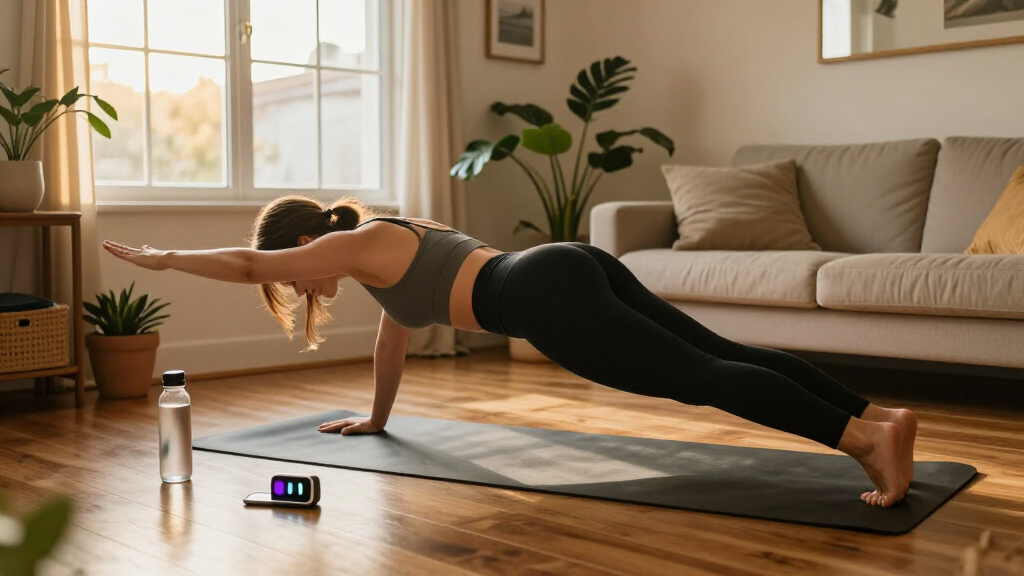
The routine consists of plank knee drives, a kneeling forearm exercise with a leg extension, a kneeling side kick, and a side plank with rotation. Fit&Well describes it as a short sequence for movement during the day, rather than a replacement for a longer workout. Its instructions give suggested repetitions and holds for each exercise, generally performed on both sides.
For the plank knee drives, the routine calls for five repetitions per side, drawing each knee toward the same-side shoulder and then across toward the opposite shoulder. The kneeling forearm move is listed at 10 repetitions per side. The side-kick sequence includes eight leg sweeps, 10 small pulses and eight bicycle motions per side. The final side plank calls for eight rotations followed by an eight-second hold on each side.
Michielon describes the moves as ways to challenge control and stability while the limbs move. Those descriptions are the instructor’s rationale for the routine; the source does not report results from a study or quantify health effects. Fit&Well also includes easier options, such as performing the knee drives from hands and knees, limiting the kneeling forearm move to knee draws, lying the supporting hip down for the side kick, and using a forearm rather than a hand in the side plank.
A Short Option for Movement Breaks
The routine is framed for readers whose schedules make a full workout difficult, offering a brief, structured alternative to remaining inactive during a long stretch of the day. Its value as a news item is practical: the article brings the exercises and their suggested dose together in a format readers can save and return to, rather than announcing a new fitness study, product or formal health recommendation.
All four exercises use body weight and require little equipment, according to the instructions. That may make the sequence easier to try at home, but it still involves weight-bearing through the hands or forearms, balance and controlled movement. The included modifications give readers ways to reduce some demands, though the source does not establish that the routine is suitable for every person or fitness level.
The distinction matters because the report offers an instructor’s suggested routine, not evidence that five minutes will produce a particular health or fitness outcome. Readers can take the sequence as one possible movement break and adjust or stop if an exercise causes pain or discomfort. Anyone with an injury, a medical condition or concerns about starting exercise should seek guidance from a qualified health professional.
As an affiliate, we earn on qualifying purchases.
How the Four-Move Sequence Works
Fit&Well introduces the sequence through the idea of an exercise snack: a short burst of movement taken during the day. Its article links that idea to people who spend substantial time sitting or have difficulty setting aside time for a full workout. It does not give a study citation or present comparative data on the effects of short routines.
The exercises progress from a high-plank variation to kneeling work and then side-focused movements. In Michielon’s description, the opening knee drives warm up the body and bring in a cross-body coordination challenge. The forearm exercise adds leg movement while the upper body supports the position; the side kick emphasizes controlled hip motion; and the final side plank combines rotation with a hold. These are the instructor’s explanations, not independently measured findings included in the report.
The source provides a modification alongside each exercise, an important part of the practical guidance. Options include keeping a knee down, doing only part of a sequence, supporting the hip on the floor, or using the forearm to ease the wrist position. The report does not specify a required pace, rest intervals or warm-up beyond the first movement, so the exact time needed may vary by reader.
“The cross-body action also challenges coordination and control through the trunk.”
— Vanessa Michielon, Pilates instructor and barre coach, as quoted by Fit&Well
As an affiliate, we earn on qualifying purchases.
Evidence and Individual Suitability
Fit&Well’s report does not identify when the routine was published, provide a study evaluating it, or offer measured outcomes for people who complete it. It also does not say how the five-minute duration was calculated, including whether it assumes transitions or rest between exercises. The listed repetitions may take different amounts of time depending on pace and breaks.
The article does not specify how often readers should repeat the routine or whether it is intended for a particular age, health status or level of experience. Although each exercise has a suggested modification, the source does not claim those alternatives are appropriate for all injuries or physical limitations. The routine’s effects and suitability for an individual remain unestablished by the material provided.
As an affiliate, we earn on qualifying purchases.
How Readers Can Use the Routine
Readers can save the Fit&Well article and follow its instructions at a self-selected pace, using the listed repetitions as guidance rather than rushing to finish within a fixed time. The published material contains no announced follow-up study, event or program, and it does not indicate that further reporting or updated guidance is planned.
Anyone trying the movements should choose a variation they can control and stop if they experience pain, dizziness or unusual discomfort. People with existing conditions, injuries or uncertainty about weight-bearing exercises can ask a qualified professional for advice before starting. Whether the routine suits a particular reader depends on their circumstances; the source does not provide individualized assessment.
As an affiliate, we earn on qualifying purchases.
Key Questions
Who recommended the five-minute workout?
Vanessa Michielon, a Pilates instructor and barre coach, recommended the routine in comments quoted by Fit&Well.
What exercises are included?
The sequence includes plank knee drives, a kneeling forearm move with a leg extension, kneeling side kicks, and side planks with rotation.
Are easier versions included?
Yes. Fit&Well lists modifications such as keeping a knee on the ground, doing only part of a movement, supporting the hip on the floor, or using a forearm in the side plank.
Does the report show that the workout improves health?
No. It presents an instructor-recommended routine and her explanations of the exercises, but it does not cite research or report measured health outcomes.
How often should someone do the routine?
The source does not specify a recommended frequency. It presents the sequence as a possible short movement break, without setting a weekly schedule.
Source: rss
Halloween Picks
halloween
As an affiliate, we earn on qualifying purchases.