TL;DR

Get workout gear delivered free with Prime
- Fast, free delivery on millions of items
- Prime Video, Amazon Music and more included
- Member-only deals all year
A Fit&Well report describes a floor-to-stand challenge included in five fitness checks devised by coach Yancy Culp. The test draws on research linking lower sitting-rising test scores with higher mortality, but it is not a diagnosis or a standalone forecast of an individual’s health. Culp recommends daily knee rolls as a mobility drill, with support from the hands if needed.
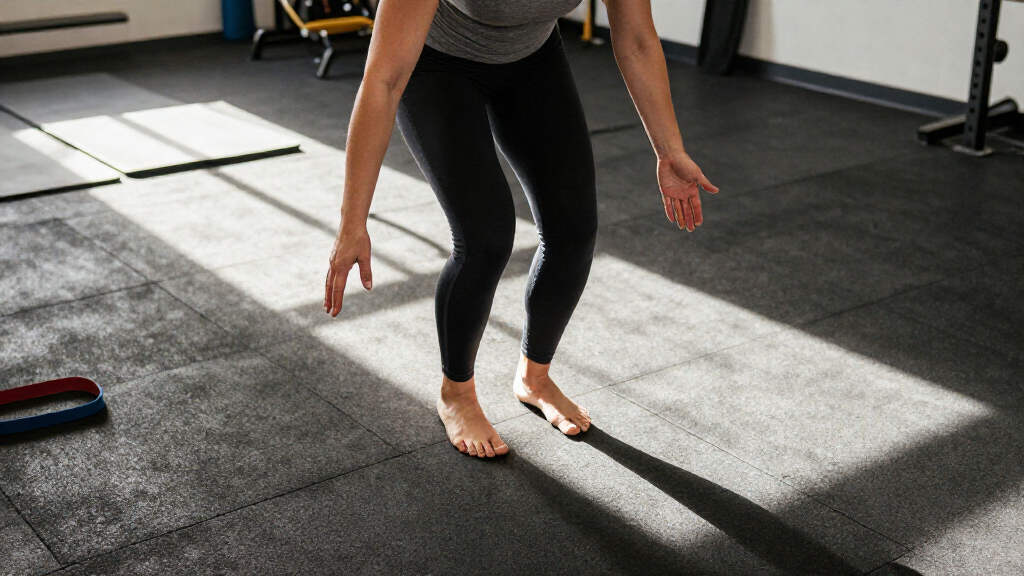
Fit&Well’s writer tried a set of checks devised by Yancy Culp, a coach, Spartan DEKA co-creator and senior director who has trained obstacle-course racers. The tests ask whether someone can balance on one leg while doing a task, sit on the floor and stand without using their hands, hold a plank for 30 seconds, do two reverse lunges and walk briskly for 20 minutes.
The writer reported being unable to complete the floor-to-stand check without assistance. The report describes it as a variation of the sitting-rising test, which Brazilian researchers developed in the 1990s to assess muscular strength and flexibility. The test’s score reflects performance on a movement; the article does not present it as a formal clinical assessment.
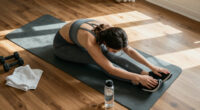
In an email to Fit&Well, Culp recommended a daily movement he calls knee rolls to work on hip and overall mobility. He said to begin seated with both knees and lower legs on the floor, knees turned to one side and feet pointing the other way, then lift and roll the knees across to the opposite side while keeping the feet in contact with the floor. He suggested repeating the movement for 20 reps each day and leaning forward at the end of each roll. Culp said using the hands for stability may be necessary.
What a Difficult Rise Can Signal
Getting up from the floor uses a combination of mobility, strength and balance. Difficulty with the movement may be a useful prompt to pay attention to those abilities, particularly if the challenge is new or worsening. It is not, on its own, evidence of a particular illness or a reliable measure of someone’s overall health.
The cited research makes the test relevant as a population-level observation, but its finding should be read carefully. An association with mortality does not show that a low score causes an increased risk, nor does it tell a reader what will happen to them. Age, health conditions, pain, injury and other factors can affect a person’s ability to rise.
For readers, the practical point is to treat the movement as a simple check-in, not a pass-or-fail verdict. A person who struggles can use it to identify a movement they may want to discuss with a qualified health or fitness professional. Those with pain, balance problems or existing conditions should not force repeated attempts.
non-slip exercise mat for floor mobility exercises
As an affiliate, we earn on qualifying purchases.
As an affiliate, we earn on qualifying purchases.
The Test Behind the Floor Rise
The sitting-rising test was developed by Brazilian researchers in the 1990s as a way to assess muscular strength and flexibility. A 2014 paper in the European Journal of Preventive Cardiology reported that lower scores were associated with higher mortality rates. The supplied report does not provide the study’s participant details, follow-up period or exact risk estimates, so those figures cannot be assessed here.
Culp’s five checks are presented as everyday movement and fitness prompts. They include a mix of balance, strength, mobility and aerobic activity, rather than a single standardized medical screening. His knee-roll suggestion is coaching advice reported by Fit&Well; the source does not provide evidence that the drill changes mortality risk or treats a medical condition.
“Improving hip and overall mobility is very important for this one.”
— Yancy Culp, in an email to Fit&Well
yoga blocks for seated mobility and balance support
As an affiliate, we earn on qualifying purchases.
As an affiliate, we earn on qualifying purchases.
Limits of the Evidence and Advice
The report cites the 2014 study’s association but does not include its sample size, methods, score thresholds or numerical results. It is not clear from the supplied material how much a particular score changes risk, or whether the finding applies equally across different ages and health circumstances.
Nor does the report establish that practising knee rolls will improve a person’s floor-rise score or affect long-term health. Culp’s recommendation is presented as a coach’s advice, not as a tested treatment. Difficulty standing may have many explanations, and the article does not identify the cause of the writer’s difficulty.
sturdy exercise chair with arms for mobility exercises
As an affiliate, we earn on qualifying purchases.
As an affiliate, we earn on qualifying purchases.
Practise Carefully, Seek Guidance
Culp’s suggested starting point is to practise knee rolls while seated, using the hands for stability when needed. People should stop if a movement causes pain, dizziness or a sense of instability. Anyone with a pre-existing condition, recent injury or significant balance concern should ask a qualified health professional before starting a new exercise routine.
The next step for readers is not to chase a score but to consider whether the movement is safe and useful for them. If difficulty getting up is persistent, worsening or accompanied by other symptoms, seeking professional advice is more appropriate than relying on a fitness test. The source material does not report further study results or a scheduled follow-up to Culp’s advice.
resistance bands for hip mobility and leg strengthening
As an affiliate, we earn on qualifying purchases.
As an affiliate, we earn on qualifying purchases.
Key Questions
What is the floor-to-stand test?
It is a movement check in which a person sits on the floor and attempts to stand without using their hands. Fit&Well describes it as a variation of the sitting-rising test.
Does failing the test mean I have a health problem?
No. The test is not a diagnosis. Difficulty can reflect several factors, including mobility, strength, balance, pain or an existing condition, and the report does not provide a way to identify the cause for an individual.
What did the 2014 study find?
As summarized by Fit&Well, the study in the European Journal of Preventive Cardiology found an association between lower sitting-rising test scores and higher mortality rates. An association does not prove cause and effect or predict an individual’s outcome.
What are knee rolls?
They are a seated drill recommended by coach Yancy Culp: roll the knees from one side to the other while keeping the feet in contact with the floor. Culp suggested 20 repetitions daily and said people may use their hands for support.
Should I try the drill if I have pain or balance concerns?
Do not force a movement that causes pain, dizziness or instability. If you have a pre-existing condition, recent injury or significant balance concerns, seek guidance from a qualified health professional before starting.
Source: rss
Halloween Picks
halloween
As an affiliate, we earn on qualifying purchases.