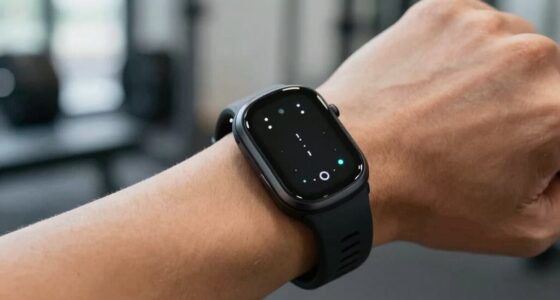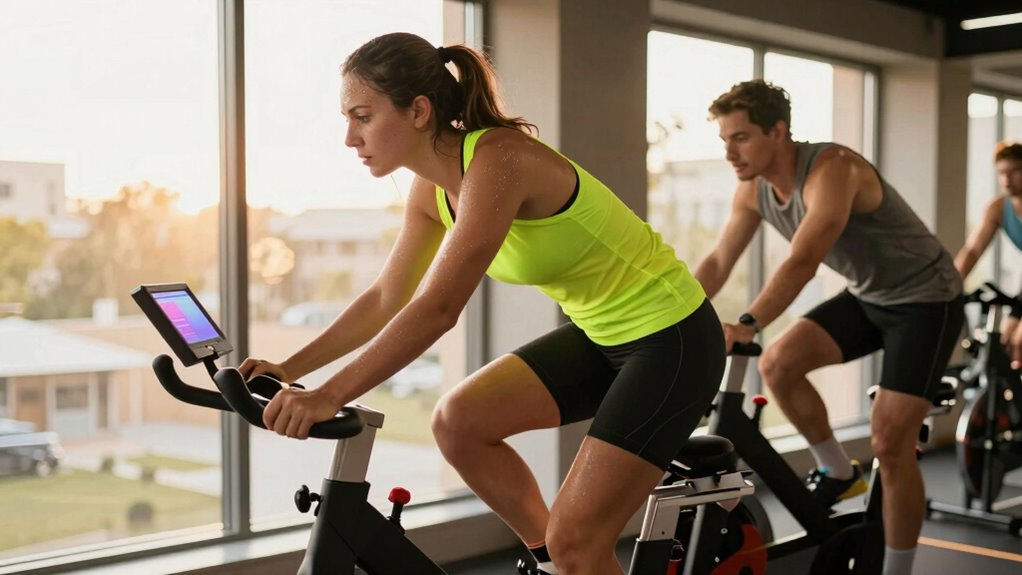

Your indoor cycling rides can feel very different because factors like effort level, heart rate zones, and your unique physiology all play a role in how many calories you burn. Even if your ride seems similar, variations in intensity, effort, and physiological responses can cause differences in calorie expenditure. Using a heart rate monitor helps you understand these differences and track your effort accurately. Keep going to discover more about how to optimize your workout and calorie burn.

Get workout gear delivered free with Prime
- Fast, free delivery on millions of items
- Prime Video, Amazon Music and more included
- Member-only deals all year
Key Takeaways
- Different effort levels and heart rate zones during rides cause variations in calorie burn, even if rides seem similar.
- Physiological differences among individuals affect heart rate responses and calorie estimates for the same effort.
- Using heart rate monitors provides more accurate calorie calculations by reflecting actual effort rather than relying on speed or resistance alone.
- Perceived exertion can vary due to psychological factors, making two rides feel different despite similar settings.
- Adjusting workout intensity based on real-time heart rate data helps optimize calorie burn and workout effectiveness.
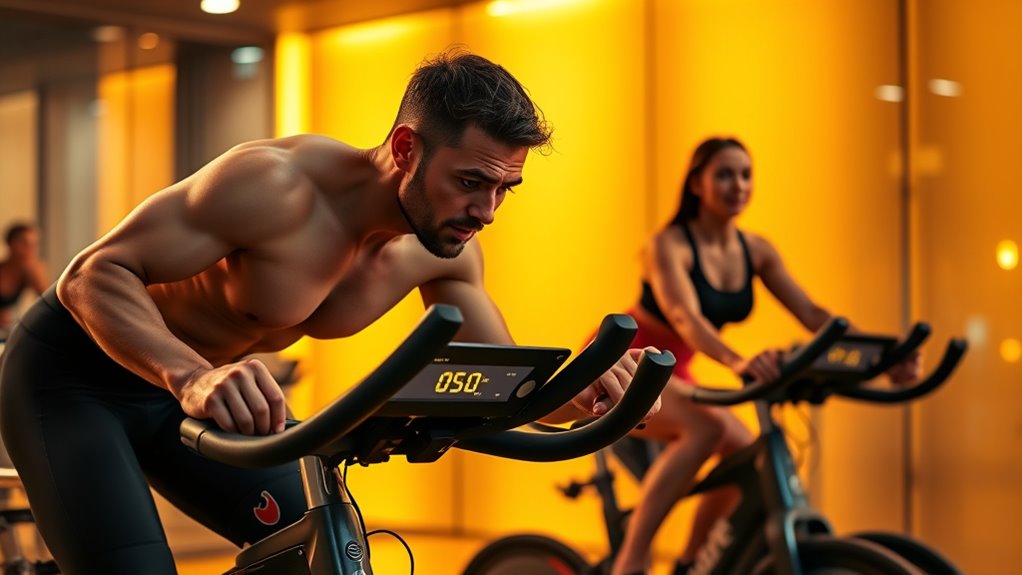
Ever wondered how many calories you burn during indoor cycling? The answer isn’t a simple number because so many factors influence your calorie burn, including your effort level, body weight, and how your body responds during each ride. One way to get a clearer picture is by understanding your heart rate zones. These zones categorize your effort level based on your maximum heart rate, helping you gauge how hard you’re working. Typically, you’ll find yourself in different heart rate zones during a ride, from warm-up and fat-burning zones to high-intensity anaerobic zones. When you stay in the lower zones, your calorie estimation methods might suggest a lower burn rate, but as you push into higher zones, the calorie count increases markedly. This variation is why two rides that seem similar can feel so different in terms of effort and calorie expenditure.
Using heart rate zones also helps you target specific fitness goals. If you’re aiming for fat loss, staying within the fat-burning zone might be ideal, but for improving cardiovascular fitness, hitting higher zones makes more sense. The challenge is that calorie estimation methods based solely on perceived effort or speed are less accurate than those incorporating heart rate data. Many indoor cycling machines now come with built-in heart rate monitors or are compatible with external ones, making it easier to track your zones in real-time. These devices enable you to see your calorie burn more precisely, as they take your heart rate into account rather than just relying on speed or resistance levels alone.
Tracking heart rate zones enhances calorie estimates and helps achieve specific fitness goals effectively.
Another reason rides feel different, calorie-wise, is because individual physiology varies. Some people naturally have higher heart rates at a given effort, resulting in a different calorie estimate compared to someone with a lower heart rate response. This variation emphasizes why relying solely on generic calorie estimation methods can be misleading. Instead, tracking your heart rate zones during each workout provides a more personalized and accurate estimate of your calorie expenditure. Additionally, understanding the significance of heart rate zones can help you optimize your training and ensure you’re working within your desired intensity levels.
In the end, understanding your heart rate zones and how they influence calorie estimation methods can make your indoor cycling sessions more effective. It helps you recognize why two rides can feel so different—whether it’s due to effort, intensity, or your physiological response. By paying attention to your heart rate, you gain better insight into your workout’s true calorie burn, allowing you to tailor each session to meet your specific goals more effectively.
indoor cycling heart rate monitor
As an affiliate, we earn on qualifying purchases.
As an affiliate, we earn on qualifying purchases.
Frequently Asked Questions
How Does Hydration Impact Calorie Burn During Indoor Cycling?
Proper hydration levels directly impact your calorie burn during indoor cycling. When you’re well-hydrated, your electrolyte balance stays intact, helping your muscles perform efficiently and delaying fatigue. If you’re dehydrated, your body works harder to cool down, which can increase calorie expenditure but also cause early exhaustion. Staying consistently hydrated keeps your energy levels steady, allowing you to ride longer and burn more calories effectively.
Can Music Influence the Number of Calories I Burn?
Yes, music motivation can influence the calories you burn during indoor cycling. Rhythmic pacing from upbeat tunes can boost your energy, helping you pedal harder and longer. When you sync your effort to the music’s beat, you’re likely to stay more engaged and push yourself further. So, crank up the music, let it motivate you, and watch your calorie burn increase as you ride with rhythm and enthusiasm.
Do Different Bike Brands Affect Calorie Estimates?
Think of bike brands like different chefs in a kitchen—each with unique recipes. Yes, bike brand discrepancies can impact calorie estimation accuracy because different models use varied algorithms and sensors. So, your calorie count might not be perfectly accurate across brands. You’ll get a close idea, but don’t rely solely on the numbers. Instead, focus on your effort and consistency for the best results.
How Does Interval Training Alter Calorie Expenditure?
Interval training boosts your calorie expenditure by alternating between high-intensity and lower-intensity efforts. When you push during intense intervals, your body burns more calories in a shorter time. The increased interval intensity makes your workout more efficient, and even if your workout duration stays the same, you’ll burn considerably more calories. This variation challenges your muscles and metabolism, leading to a higher overall calorie burn during and after your ride.
Does Clothing Choice Affect Calorie Calculations?
Clothing choice can impact calorie calculations, especially if it affects your comfort and movement. When your clothing is uncomfortable or restrictive, you might exert more effort, leading to higher calorie burn. Conversely, loose or non-breathable fabrics can cause discomfort, possibly reducing your effort. To improve calorie accuracy, wear comfortable, moisture-wicking clothing that supports your range of motion, so your effort level truly reflects your energy expenditure during indoor cycling.
best indoor cycling bike with heart rate tracking
As an affiliate, we earn on qualifying purchases.
As an affiliate, we earn on qualifying purchases.
Conclusion
So, don’t get discouraged if two indoor rides feel totally different, even if your calorie burn varies. Remember, factors like effort level, resistance, and your current energy can all influence how many calories you burn. It’s normal for rides to feel different day to day. Keep pushing yourself and stay consistent—you’ll see progress over time. The key is to focus on your effort and enjoyment, not just the numbers on the clock or calorie count.
wearable heart rate monitor for exercise
As an affiliate, we earn on qualifying purchases.
As an affiliate, we earn on qualifying purchases.
As an affiliate, we earn on qualifying purchases.
Halloween Picks
halloween
As an affiliate, we earn on qualifying purchases.