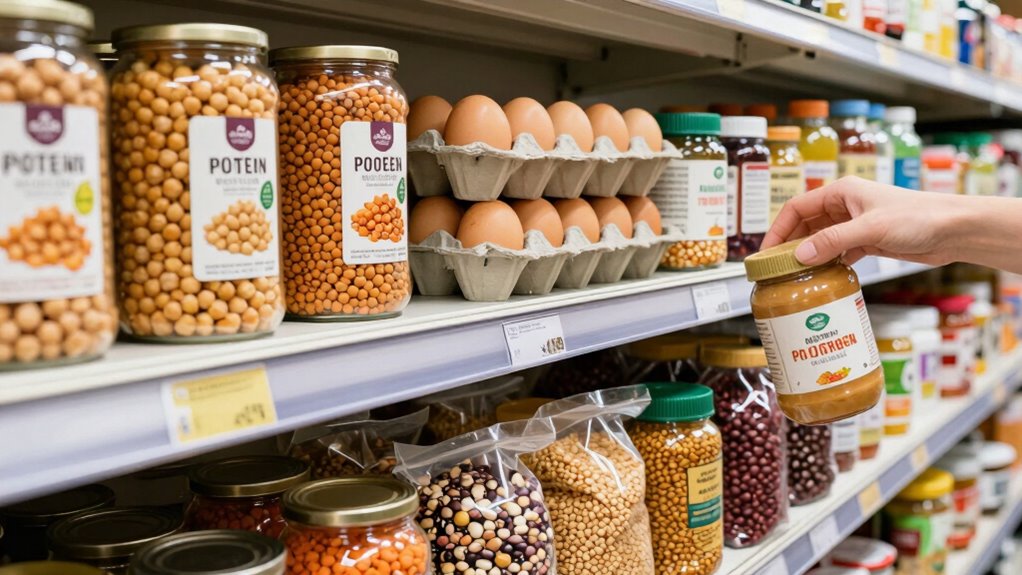

To keep high-quality protein affordable, plan your meals ahead and buy in bulk, focusing on cost-effective sources like eggs, beans, lentils, and canned fish. Incorporate smart snacks like yogurt or roasted chickpeas, and compare prices across stores to find deals. Meal prepping and using versatile ingredients help reduce waste and save money. Stick to these strategies, and you’ll find it easier than ever to enjoy a nutritious, high-protein diet without overspending. Keep exploring for more tips!
Key Takeaways
- Plan meals ahead and buy in bulk to reduce costs and minimize food waste.
- Incorporate affordable protein sources like eggs, beans, lentils, and canned fish into your diet.
- Shop at wholesale stores and compare prices to find the best deals on high-protein foods.
- Prepare large batches of protein-rich meals to save time and money throughout the week.
- Use smart substitutions, such as plant-based proteins, to diversify your diet while maintaining affordability.
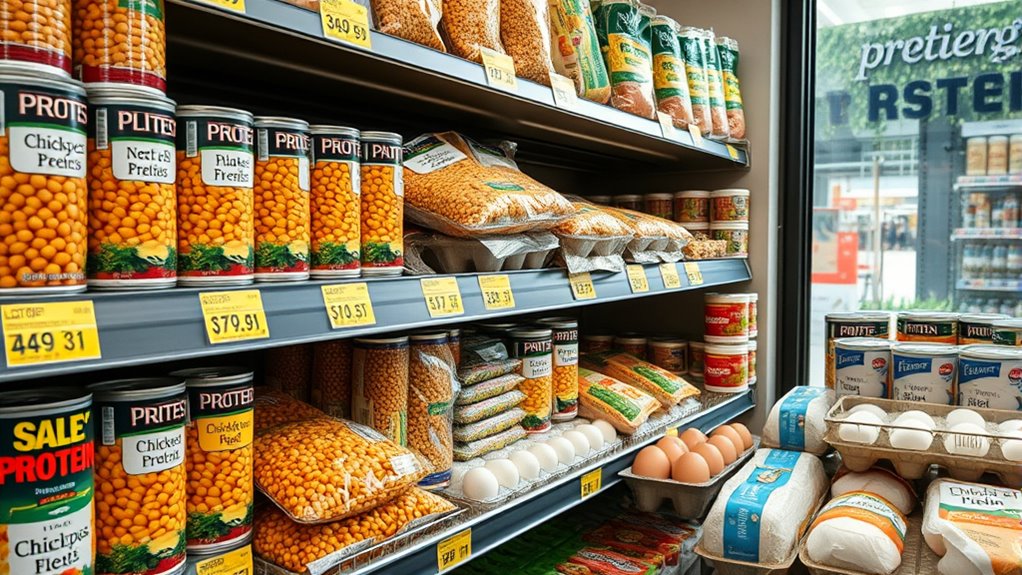
Eating enough protein doesn’t have to break the bank. With a few smart strategies, you can get the protein your body needs without overspending. One of the best ways to do this is by incorporating meal prep into your routine. Planning your meals ahead of time helps you buy in bulk, which often means lower prices per serving. You can cook large batches of affordable protein sources like beans, eggs, or chicken, then portion them out for the week. Not only does this save you money, but it also reduces the temptation to buy expensive, less nutritious convenience foods. When you’re prepared, you’re more likely to stick to your budget and maintain a high-protein diet.
Meal prep saves money and keeps your protein intake on track all week.
Snacks are another area where you can save money while boosting your protein intake. Instead of reaching for costly protein bars or pre-packaged snacks, opt for simple, inexpensive snack ideas that pack a punch. Hard-boiled eggs are a perfect example—they’re affordable, portable, and rich in protein. Canned tuna or sardines are also budget-friendly options that you can toss into salads, sandwiches, or even eat straight from the can. Greek yogurt, especially store brands, offers a high-protein snack that often costs less than specialized protein products. Additionally, roasting chickpeas or making your own trail mix with nuts and seeds can be both economical and satisfying.
You should also consider buying protein sources in bulk. Items like dried beans, lentils, and oats are inexpensive, versatile, and have a long shelf life. Incorporate these into your meals regularly to stretch your budget further. For example, lentils are quick to cook and can be added to soups, stews, or salads. When shopping, look for sales and discounts on larger packages, which tend to be more cost-effective in the long run. Don’t forget to compare prices at different stores or consider shopping at wholesale stores for better deals on staples like chicken breasts or ground turkey.
Finally, making smart substitutions can help you maintain a high-protein diet without overspending. For instance, eggs are often cheaper than meat and provide high-quality protein. Incorporate more plant-based proteins like tofu and edamame, which are usually affordable and can be used in a variety of dishes. Being aware of protein sources and their cost-effectiveness can help you make better purchasing decisions. By combining meal prep, creative snack ideas, bulk buying, and strategic shopping, you’ll find it easier to meet your protein goals without draining your wallet. Staying consistent with these habits means you can enjoy a nutritious, protein-rich diet that’s sustainable and budget-friendly.

Acteon Microfiber Gym Towels 5 Pack, Quick Dry Silver ION Odor-Free Sweat Towel, Super Absorbent Fast Drying for Men & Women, Workout, Yoga, Running, Hiking, Travel – 16x30.5 Inch
- Odor-Free with Silver Ions: Prevents odors and wicks moisture
- Quick Dry Microfiber: Absorbs five times its weight, dries fast
- Durable Microfiber Material: Long-lasting, lightweight, easy to wash
As an affiliate, we earn on qualifying purchases.
Frequently Asked Questions
How Can I Incorporate More Plant-Based Proteins Affordably?
To incorporate more plant-based proteins affordably, you can explore soy alternatives like tofu or tempeh, which are budget-friendly and versatile. Incorporate different legume varieties such as lentils, chickpeas, and black beans into your meals for variety and cost savings. Use dried beans instead of canned to save even more. These options are nutritious, affordable, and easy to prepare, helping you boost plant-based protein intake without breaking the bank.
What Are the Best Budget-Friendly Protein Supplements?
You might think expensive supplements are your only option, but budget-friendly choices like whey protein powder, plant-based blends, or generic brands can still give you quality. When you meal prep, add these supplements at ideal times, like post-workout, to maximize benefits. Don’t overlook store brands or buying in bulk—they save money and keep your protein intake steady without breaking the bank.
How Do I Balance Protein Intake With Other Nutrients?
You should balance protein intake with other nutrients by paying attention to meal timing and portion control. Spread your protein sources evenly throughout the day to support muscle repair and energy levels. Pair proteins with healthy carbs and fats to guarantee a well-rounded diet. Avoid overloading on protein, and always check portion sizes to prevent excess intake, helping you maintain nutritional balance without overspending.
Are Canned or Frozen Proteins as Nutritious as Fresh?
Canned and frozen proteins are just as nutritious as fresh options because they retain most of their nutrients during preservation. When considering meat preservation and protein storage, these methods help lock in quality and prevent spoilage. You can confidently include canned or frozen meats in your diet, saving money and reducing waste. Just be mindful of added sodium in canned products and opt for low-sodium choices whenever possible.
What Are Common Mistakes When Buying Protein on a Budget?
You often make mistakes like skipping meal planning, which leads to impulse buys and overspending. Not considering portion control can cause wastage and higher costs. Avoid buying in bulk without knowing how you’ll use it, and overlook frozen or canned options that are budget-friendly and nutritious. Always compare prices and check for sales. By planning meals and controlling portions, you maximize your protein budget and reduce waste.
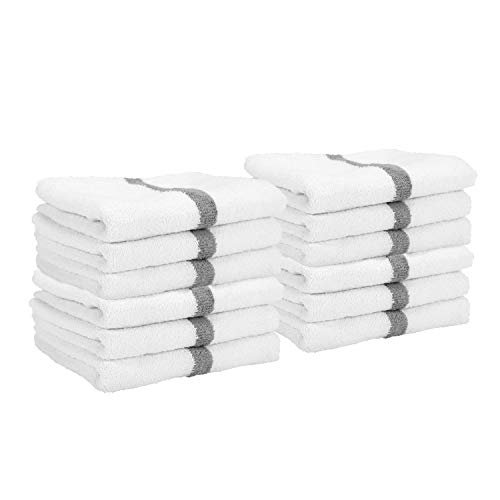
Arkwright White Hand Gym Towels - Pack of 12 - Bulk 100% Cotton Soft Quick Dry Sweat Absorbent Hotel Quality Towels for Workout, Bathroom, Spa, Pool, 16 x 27 in, Grey
- Material: 100% cotton for softness and durability
- Size: 16 x 27 inches, pack of 12
- Quick Drying: Highly absorbent and fast-drying
As an affiliate, we earn on qualifying purchases.
Conclusion
Sticking to a budget doesn’t mean you have to miss out on quality. With just a little planning and savvy choices, you can enjoy a variety of nutritious proteins without stretching yourself thin. Think of it as discovering hidden treasures in your grocery aisles—simple, affordable options that keep your meals satisfying. So, keep exploring and experimenting; your wallet—and your taste buds—will thank you for it. Happy cooking on your budget-friendly protein journey!

Tagefa Cooling Towels 20 Pack, 40"x 12" Cooling Rags Neck Wraps for Sports with Carrying Pouch, Gym Cooling Neck Towels for Hor Weather, Sweat, Fitness, Travel
- Instant cooling effect: Super-absorbent fiber for rapid cooling
- Versatile use: Neck, face, workout, golf, and more
- Portable design: Includes pouch and carabiner for easy carry
As an affiliate, we earn on qualifying purchases.