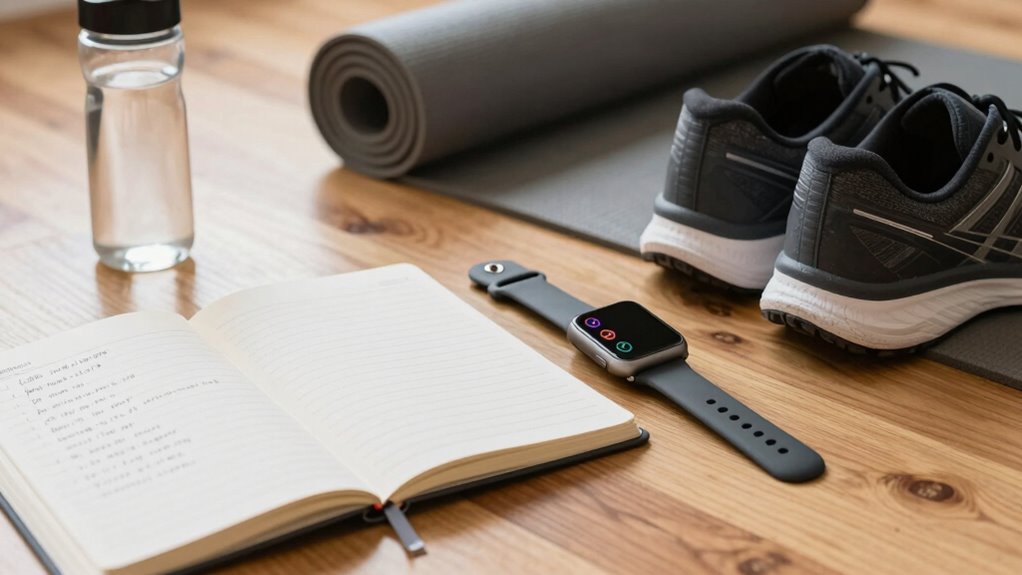

To track workouts without obsession, focus on the ‘3 Wins’ method: celebrate small achievements, reflect on progress, and set realistic goals. Avoid obsessing over every detail—highlighting key wins keeps motivation high without burnout. Use journaling to recognize patterns and stay balanced, emphasizing effort over perfection. Incorporate mindfulness to boost enjoyment and guarantee your fitness journey remains sustainable and positive. Keep exploring how this approach can transform your routine into a healthy habit.

Get workout gear delivered free with Prime
- Fast, free delivery on millions of items
- Prime Video, Amazon Music and more included
- Member-only deals all year
Key Takeaways
- Focus on recording three meaningful achievements after each workout to celebrate progress without over-tracking.
- Use the ‘3 Wins’ method to highlight effort, consistency, and small improvements, fostering motivation and reducing obsession.
- Balance tracking by emphasizing overall growth and well-being rather than obsessing over every detail or number.
- Incorporate mindfulness to stay present and appreciate workouts, preventing fixation on perfection or excessive data.
- Set realistic, process-oriented goals alongside the ‘3 Wins’ approach to maintain engagement and promote sustainable progress.

Tracking your workouts can be a helpful tool for progress, but it’s easy to fall into the trap of obsession. When you start obsessively logging every detail, it can feel overwhelming and even discouraging if progress slows or stalls. That’s where progress journaling and goal setting come into play, helping you stay focused without losing perspective. Instead of fixating on every rep or set, consider using your journal to reflect on your overall progress and set clear, achievable goals. This shifts your mindset from tracking for perfection to tracking for growth, making the process more sustainable and motivating.
Progress journaling is about more than just recording numbers. It’s a way to recognize patterns, celebrate small wins, and identify areas that need improvement. When you write down how you felt during a workout, what exercises you enjoyed, or where you faced challenges, you create a narrative of your journey. This ongoing record helps you see tangible progress over time, which can be more motivating than obsessing over individual workout metrics. It also encourages you to celebrate milestones, like lifting heavier weights or running longer distances, reinforcing positive habits.
Tracking feelings and milestones enriches your fitness journey beyond numbers.
Goal setting is equally important in avoiding obsession. Instead of fixating on a specific number or appearance, set process-oriented goals that focus on consistency and effort. For example, aim to work out three times a week, improve your form, or try new exercises. These goals are adaptable and focus on the journey rather than just the outcome, reducing the pressure to hit specific benchmarks immediately. By breaking bigger goals into smaller, manageable steps, you stay motivated without feeling overwhelmed if progress seems slow.
Combining progress journaling with goal setting creates a balanced approach. You document your efforts, reflect on your achievements, and adjust your goals as needed. This cyclical process keeps you engaged and aware of your growth, rather than fixated on perfection. It also helps you develop a healthier relationship with your workouts, emphasizing learning and consistency over obsession. Remember, the goal isn’t to track obsessively but to use your records as a tool for insight and motivation, keeping your fitness journey sustainable and enjoyable. Incorporating mindfulness practices into your routine can further enhance your awareness and enjoyment of the process. When you focus on progress and set realistic goals, you’re more likely to stay committed and enjoy your workouts without falling into the trap of obsession.
Frequently Asked Questions
How Can I Stay Motivated Using the ‘3 Wins’ Method?
To stay motivated with the ‘3 Wins’ method, focus on celebrating small successes each day. This boosts your motivation and keeps goal setting exciting. Recognize your progress, no matter how minor, and reward yourself. When you see consistent wins, you’ll stay inspired to push forward. Remember, motivation boosts come from appreciating your efforts, making your workout journey enjoyable and sustainable through positive reinforcement.
Is This Approach Suitable for Beginners or Advanced Athletes?
This approach is beginner-friendly and also suitable for advanced athletes. As a beginner, you’ll find it easy to focus on small, achievable goals that keep you motivated without feeling overwhelmed. For athletes, it helps refine progress and target specific improvements. The ‘3 Wins’ method adapts well to your experience level, making workout tracking enjoyable and sustainable. Whether just starting or pushing limits, it encourages steady growth without obsession.
How Often Should I Review My Progress With This System?
Think of your progress review as watering a plant—too often, and you risk overwatering; too infrequent, and it may wilt unnoticed. You should review your progress with this system every 1-2 weeks, adjusting the frequency based on your goals and how your body responds. Regularly scheduled reviews help you stay motivated and make necessary tweaks, ensuring steady growth without obsession.
Can I Adapt the ‘3 Wins’ Method for Different Workouts?
Yes, you can adapt the ‘3 Wins’ method for different workouts by leveraging its customization options. Focus on tracking specific goals for each workout variety, whether strength, cardio, or flexibility. This approach helps you stay motivated without obsession, as you celebrate small wins tailored to each session. Adjust your tracking to reflect your changing workouts, ensuring the method remains flexible and relevant to your evolving fitness journey.
What Are Common Mistakes to Avoid When Tracking Workouts?
You should avoid overgeneralization and neglecting recovery when tracking workouts. For example, if you assume all gains come from increasing weights without noting fatigue or soreness, you risk overtraining. Tracking only progress without paying attention to your body’s signals can lead to burnout. Be specific, acknowledge small improvements, and prioritize recovery, ensuring your tracking supports sustainable progress rather than obsession or injury.
Conclusion
Remember, the ‘3 wins’ method is like a gentle compass guiding you through your fitness journey. It keeps your focus steady, like a lighthouse in a foggy sea, without letting obsession pull you into choppy waters. Celebrate each small victory as a shining star on your path. With this approach, workout tracking becomes a dance, not a drag—an empowering rhythm that fuels your progress while keeping your love for movement alive and thriving.
Halloween Picks
halloween
As an affiliate, we earn on qualifying purchases.