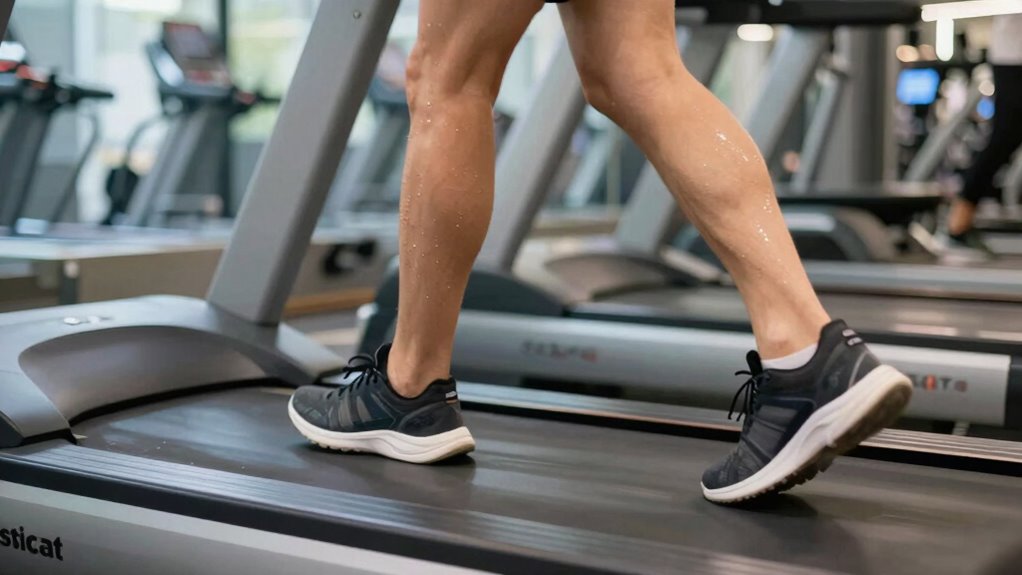
The biggest mistake that makes treadmill workouts feel pointless is walking at the wrong speed—either too slow or too fast for your goals. Going too slow limits progress and can cause frustration, while pushing too hard risks burnout and injury. Finding the right pace is key to building endurance, burning fat, and staying motivated. Keep moving at a pace that challenges you just enough—but if you stay tuned, you’ll discover how to optimize your workout efficiency.
Key Takeaways
- Walking at a pace that is too slow fails to challenge your body, making workouts feel ineffective.
- Walking too fast without proper progression leads to fatigue and discourages consistent effort.
- Maintaining a constant, unvarying speed prevents cardiovascular improvement and causes workout stagnation.
- Ignoring the importance of gradual speed increases limits endurance development and fitness gains.
- Sticking to a single, moderate pace without incorporating interval training diminishes motivation and workout effectiveness.
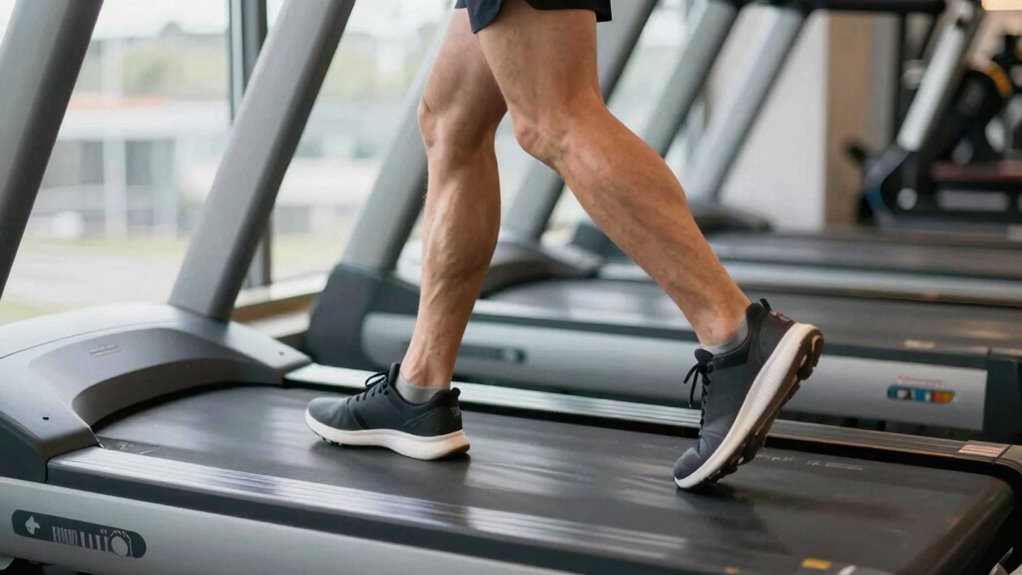
Many treadmill users make the common mistake of walking at a speed that’s either too slow or too fast for their fitness goals, which can hinder progress and cause frustration. If you’re not mindful of your pace, your workouts might feel pointless, especially when you’re trying to improve endurance or burn fat efficiently. One key to avoiding this pitfall is understanding how to use your walking speed intentionally, especially through interval training. Instead of sticking to a steady pace, you should alternate between faster and slower speeds to challenge your body and keep your workout engaging.
Interval training, for example, can be a game-changer. When you push yourself to walk faster for short bursts and then slow down to recover, you activate different energy systems in your body. This method not only boosts your cardiovascular fitness but also helps build endurance more effectively than walking at a single, steady pace. You might start by walking briskly for 30 seconds to 1 minute, then slow down to a comfortable pace for the same amount of time. Repeating this cycle pushes your limits without overexerting you, making your workout more productive and less monotonous.
Building endurance requires a strategic approach to your walking speed. If you always walk at a speed that feels too easy, you’re not challenging your muscles or cardiovascular system enough to see improvements. Conversely, walking at a pace that’s too intense constantly can lead to burnout and injury. The sweet spot lies in finding a balance—pushing yourself just enough to elevate your heart rate but still allowing you to maintain proper form. Incorporating interval training helps you find this balance because it teaches your body to adapt to varying intensities. Additionally, understanding how to optimize your walking pace can significantly impact your overall progress and motivation. Recognizing the importance of training variation is essential for preventing plateaus and keeping your workouts effective.
Your goal should be to gradually increase your faster intervals over time, which trains your body to sustain higher speeds longer. This incremental approach enhances endurance, making your workouts more effective and less frustrating. Remember, consistency matters more than intensity in the long run, so listen to your body and adjust your speeds accordingly. Avoid the mistake of locking into a single pace that doesn’t challenge you or feels too easy, and instead, embrace variation. By doing so, you’ll make your treadmill workouts more purposeful, avoiding the feeling that they’re just going through the motions, and you’ll steadily progress toward your fitness goals.

TOPUTURE Walking Pad Treadmill with 12% Incline and Handle Bar, 4 in 1 Folding Treadmill for Home/Office, Under Desk Treadmills Portable Walking Pad with App & Bluetooth Speaker, 0.6-10MPH
🏃♂️【Upgraded 12% Incline Treadmill】unlike ordinary walking pad treadmill, the TOPUTURE under desk treadmill has an updated 1%-6%-12% incline…
As an affiliate, we earn on qualifying purchases.
As an affiliate, we earn on qualifying purchases.
Frequently Asked Questions
How Can I Determine My Ideal Treadmill Walking Speed?
To determine your ideal treadmill walking speed, start by setting a comfortable walking pace that feels natural. Use your perceived effort and breathing as guides. Make sure the treadmill is properly calibrated for accurate speed readings. Walk at this pace for a few minutes, then adjust gradually until you find a pace that challenges you without overexerting. This personalized walking pace maximizes workout effectiveness and minimizes feeling pointless.
Does Treadmill Incline Affect Perceived Walking Effort?
Think of incline adjustments as your secret weapon—yes, they definitely affect perceived effort. When you increase the incline, your workout feels tougher, which can boost calorie burn during interval training. It’s like climbing a hill rather than walking flat, making your muscles work harder. So, adjusting the incline can intensify your workout and keep you engaged, helping you push through those challenging intervals with more motivation and impact.
Should I Vary My Walking Speed During Workouts?
Yes, you should vary your walking speed during workouts. Incorporate pacing strategies to keep challenging yourself and prevent boredom. Alternating speeds helps you build endurance more effectively, as it mimics real-world walking and keeps your muscles engaged. By changing your pace, you avoid plateauing and enhance your overall fitness. This approach makes treadmill workouts more dynamic, enjoyable, and beneficial for your long-term endurance building goals.
How Does Walking Speed Impact Calorie Burn?
Walking speed directly impacts calorie burn; go faster, and you’ll increase your calorie estimation, maximizing your workout. Think of it like a medieval knight charging into battle—more effort equals more results. When you walk efficiently at a brisk pace, you improve your calorie expenditure without overexerting. Pushing your speed slightly higher boosts your calorie burn while maintaining good walking efficiency, making every step count toward your fitness goals.
What Are Signs I’m Walking Too Fast or Too Slow?
You can tell if your walking pace is too fast if you’re huffing and struggling to maintain conversation, indicating high exercise intensity. Conversely, if you’re barely breaking a sweat and can chat easily, your pace might be too slow, reducing calorie burn. The ideal walking pace strikes a balance where you feel challenged but still comfortable, ensuring your exercise intensity is effective without causing fatigue or boredom.

ZENGZHIC Magnetic Safety Switch Universal Treadmill Magnetic Lock Emergency Stop Treadmill Accessories Suitable for Most Treadmills
1: Security: First, of course, security. The compact and lightweight design allows you to run on the treadmill…
As an affiliate, we earn on qualifying purchases.
As an affiliate, we earn on qualifying purchases.
Conclusion
Don’t let your treadmill walk turn into a hamster wheel — running at the wrong speed can make your efforts feel futile. Think of it like trying to sail against the wind; if you push too hard or too slow, progress stalls. Instead, find that sweet spot where your stride feels natural, and your effort matches your goals. When you hit that balance, your workout becomes a smooth ride, not a frustrating struggle.

NESKLA 838 3D Pedometer for Walking, Simple Step Counter and Tracker with Large Digital Display, Removable Clip Lanyard, Accurately Track Steps for Men, Women, Kids, Adults, Seniors, Black
SIMPLE & EASY TO USE: 3D Pedometer for Steps Only. No Bluetooth, no app or smartphone connections required….
As an affiliate, we earn on qualifying purchases.
As an affiliate, we earn on qualifying purchases.

Treadmill Workout for Weight Loss: The Ultimate Guide to Burn Calories and Slim your Waist with Quick and Fun Exercises | 12-3-30 Routine Included
As an affiliate, we earn on qualifying purchases.
As an affiliate, we earn on qualifying purchases.