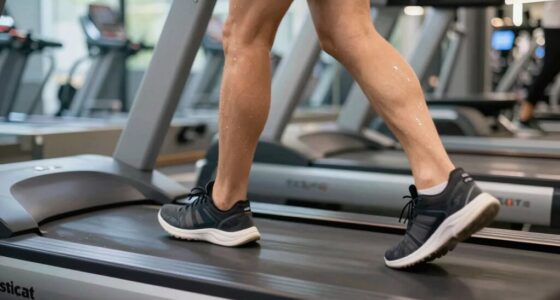
To warm up effectively before a hard treadmill session, start with 3-5 minutes of light cardio like walking or marching to raise your heart rate. Follow with dynamic exercises such as leg swings, arm circles, high knees, and butt kicks to activate muscles and improve mobility. Avoid static stretching and focus on controlled movements that mimic running. If you’re interested in optimizing your warm-up further, keep going to discover more expert tips for peak performance.
Key Takeaways
- Start with 3-5 minutes of light walking or marching to gradually raise heart rate and warm muscles.
- Incorporate dynamic exercises like leg swings, arm circles, and high knees to activate muscles and improve flexibility.
- Avoid static stretching; focus on controlled, purposeful movements that mimic running to prepare specific muscle groups.
- Gradually increase the intensity of warm-up activities to prevent fatigue and enhance responsiveness.
- Use muscle activation drills to improve neuromuscular control and reduce injury risk during high-intensity treadmill sessions.

Warming up properly before a hard treadmill session can make a significant difference in your performance and help prevent injuries. The key is to prepare your muscles and joints with targeted movements that increase blood flow and loosen tight areas. Starting with a few stretching routines is essential, but don’t rely solely on static stretches. Instead, focus on dynamic exercises that mimic the movements you’ll perform during your workout. These dynamic routines activate your muscles, improve flexibility, and prime your cardiovascular system, setting you up for a more effective session.
Begin with light cardio, like walking at a slow pace on the treadmill or marching in place, for about 3 to 5 minutes. This step gradually elevates your heart rate and warms up your muscles, making subsequent movements smoother and safer. Follow this with dynamic exercises such as leg swings, arm circles, or high knees. For example, leg swings help loosen up your hip flexors and hamstrings, which are vital for running. Arm circles prepare your shoulder joints, especially if you plan to incorporate arm movement into your run or if you’re doing interval training. High knees or butt kicks elevate your core temperature quickly, engaging your leg muscles more intensely and preparing them for the demands of a strenuous treadmill session.
Start with 3-5 minutes of light cardio, then incorporate dynamic moves like leg swings and high knees to prepare your muscles.
Avoid static stretching during warm-up, as holding stretches for prolonged periods can actually weaken muscles temporarily and reduce performance. Instead, keep your movements controlled and purposeful, focusing on range of motion and muscle activation. Incorporating dynamic warm-up routines can further enhance muscle responsiveness and prepare your body for high-intensity activity. Additionally, adding proper warm-up techniques rooted in the latest sports science can optimize your readiness and reduce the risk of injury. Engaging in muscle activation exercises during warm-up can also improve neuromuscular control, which is crucial for efficient running form. A recent understanding of muscle responsiveness underscores the importance of preparing muscles properly before intense activity, helping to prevent strains and sprains.
As you progress through your warm-up, gradually increase the intensity of your dynamic exercises. By the time you hop onto the treadmill for your hard session, your muscles should feel warm, responsive, and ready to perform. Remember, the goal isn’t to tire yourself out but to prepare your body for the upcoming effort. A well-structured warm-up that combines light cardio with dynamic exercises and targeted stretching routines can boost your endurance, improve your pace, and keep you injury-free during intense treadmill workouts. Take the time to warm up properly, and you’ll notice the difference in how you feel and perform during your hardest runs.
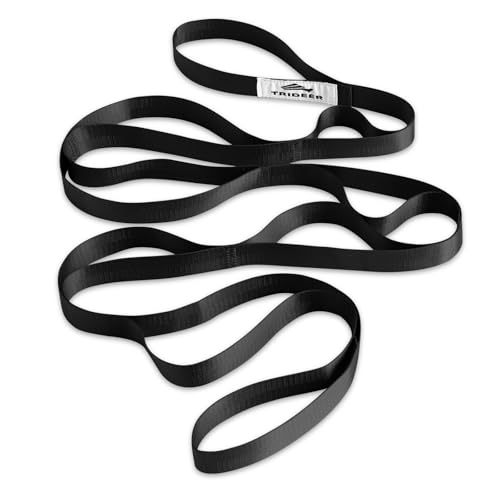
Trideer Stretching Strap Yoga Strap Physical Therapy for Home Workout, Exercise, Pilates and Gymnastics, 10 Loops Non-Elastic Stretch Bands with Aesthetic Packaging for Women & Men (Black)
Long Lasting Premium Quality: Made of sturdy polypropylene, this tough yoga strap stands out in a crowd by…
As an affiliate, we earn on qualifying purchases.
As an affiliate, we earn on qualifying purchases.
Frequently Asked Questions
How Long Should a Warm-Up Typically Last?
A warm-up should last about 5 to 10 minutes, gradually increasing your pace to prepare your muscles and heart. You’ll want to incorporate light jogging or brisk walking, focusing on injury prevention and proper circulation. After your main workout, don’t forget cool down routines to help your body recover. Proper warm-up and cool-down routines are essential for safe, effective treadmill sessions, reducing injury risk and boosting performance.
Can Stretching Replace a Warm-Up?
Stretching myths often lead you to believe it can replace a warm-up, but warm-up misconceptions suggest otherwise. Stretching alone doesn’t prepare your muscles for intense activity; it may even increase injury risk. Instead, you should do dynamic movements that elevate your heart rate and loosen muscles. This active approach activates your body properly, reducing injury risk and increasing performance, unlike static stretching, which is better suited for post-exercise recovery.
Is Dynamic Warm-Up Better Than Static?
Dynamic warm-ups are better than static stretching because they actively engage your muscles, promoting muscle activation and improving blood flow. This prepares your body for intense activity and helps prevent injuries. Static stretches, while useful for flexibility, don’t increase muscle temperature or activation as effectively. For a treadmill session, focus on dynamic movements like leg swings or jogging in place to warm up efficiently and reduce injury risk.
Should I Hydrate Before Warming Up?
Yes, you should hydrate before warming up. Hydration importance can’t be overstated, as it helps maintain your performance and prevents cramps. Drinking water or a pre-exercise drink with electrolytes guarantees your body is ready for the workout. Aim to hydrate about 15-30 minutes before starting, and sip small amounts to stay hydrated without feeling uncomfortable. Proper hydration sets a solid foundation for a successful treadmill session.
Does Age Affect Warm-Up Routines?
Age can influence your warm-up routine because age-related flexibility tends to decrease, making it important to include gentle stretching to prevent injury. Additionally, as you age, recovery might take longer, so you should allocate more time for warming up and cooling down. Adjust your warm-up to match your body’s needs, focusing on gradual intensity increases, ensuring safety and ideal performance during your treadmill session.

Heated Muscle Scraper Tool with Pulse, Vibration & Heat, Muscle Scraper Tool for Deep Tissue Myofascial Release, Gua Sha Massage Tool for Muscle Pain Relief & Full Body Relaxation (Black)
Multifunctional Heated Muscle Scraper Tool: This heated gua sha tool integrates heating, vibration, and bioelectric relaxation pulse technology…
As an affiliate, we earn on qualifying purchases.
As an affiliate, we earn on qualifying purchases.
Conclusion
So, next time you gear up for that punishing treadmill session, remember: a proper warm-up isn’t just a warm-up; it’s your ticket to avoiding the grand spectacle of pulled muscles and embarrassing gasps. Treat your body like a delicate masterpiece—it’s not a machine that starts at full throttle. Warm up wisely, and you’ll impress yourself with endurance instead of tears. After all, who wants to be the star of the “injured runner” show?

ZENGZHIC Magnetic Safety Switch Universal Treadmill Magnetic Lock Emergency Stop Treadmill Accessories Suitable for Most Treadmills
1: Security: First, of course, security. The compact and lightweight design allows you to run on the treadmill…
As an affiliate, we earn on qualifying purchases.
As an affiliate, we earn on qualifying purchases.

PHYSIX GEAR Knee Support Brace – Premium Recovery & Compression Sleeve for Meniscus Tear, ACL, MCL Running & Arthritis – Best Neoprene Stabilizer Wrap for Crossfit, Squats & Workouts (Single Beige M)
Experience Ultimate Comfort & Support: our compression knee sleeve for women & men offers premium stability; designed to…
As an affiliate, we earn on qualifying purchases.
As an affiliate, we earn on qualifying purchases.