You can boost your fitness even with a busy schedule by following a 3-day cardio plan that combines interval training, steady-state workouts, and active recovery. On Day 1, do high-intensity intervals to maximize calorie burn in 20-30 minutes. Day 2, focus on moderate, sustained effort to build endurance, while Day 3, choose lighter activities to recover and stay active. This balanced approach fits into your life, and you’ll find more tips if you continue exploring.
Key Takeaways
- Focus on efficient, high-intensity interval training on Day 1 to maximize calorie burn in 20-30 minutes.
- Incorporate steady-state cardio on Day 2 for endurance without requiring extra time or effort.
- Use active recovery activities on Day 3 to promote movement and recovery with minimal time commitment.
- Schedule workouts for just 3 days per week, fitting easily into busy lifestyles while boosting cardiovascular health.
- Vary activities like walking, cycling, or swimming to maintain engagement and prevent monotony within limited time.

Creating a balanced 3-day cardio schedule can boost your fitness levels and improve overall health. When you’re pressed for time, focusing on effective workouts that deliver maximum results is vital. One of the most efficient ways to do this is by incorporating interval training into your routine. Interval training involves alternating between periods of high-intensity effort and lower-intensity recovery. This approach not only makes your workouts more engaging but also helps you burn more calories in less time. To maximize the benefits, it’s essential to pay attention to your heart rate zones during these intervals.
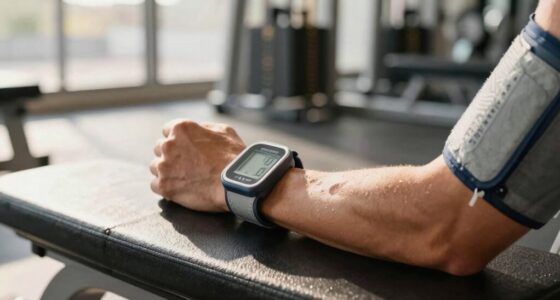
Your heart rate zones are different levels of effort that correspond to percentages of your maximum heart rate. For effective interval training, you want to push into higher zones—typically 70% to 85% of your max heart rate—during the intense phases. This guarantees you’re working hard enough to stimulate cardiovascular improvements and boost endurance. During recovery periods, your heart rate should drop to a lower zone, around 50% to 60%, allowing your body to recover briefly before the next push. Using a heart rate monitor makes it easier to stay within these zones, guaranteeing you’re training efficiently and safely.
Push into 70-85% max heart rate during intense intervals for maximum cardio benefits.
For your first cardio day, consider a session of 20 to 30 minutes of interval running or cycling. Warm up for five minutes at a comfortable pace, then alternate between 30 seconds of sprinting or fast pedaling and one to two minutes of light jogging or slow pedaling. Repeat these intervals for about 15-20 minutes, then cool down for five minutes. This structure helps you get the benefits of high-intensity training without overexerting yourself. If running isn’t your thing, you can adapt this method to rowing, swimming, or brisk walking, depending on your preference and available equipment. Incorporating proper recovery strategies can further enhance your performance and prevent injury.
On your second day, focus on a steady-state cardio session. This means maintaining a moderate, sustainable effort for 30 to 45 minutes, staying within your aerobic heart rate zone. This type of workout enhances your cardiovascular capacity and endurance without the intense bursts of interval training. It’s perfect for days when you want something less demanding but still beneficial.
Finally, your third day can be a mix. You might do a lighter session, such as a brisk walk or easy bike ride, or integrate a different activity like dancing or hiking. The goal is to keep moving without overtraining, giving your body time to recover and adapt. By following this schedule, you’ll work within your heart rate zones, incorporate interval training effectively, and maximize your time, all while boosting your overall fitness.

Garmin HRM 600, Premium Heart Rate Monitor, M-XL
- Real-time Heart Rate Data: Provides accurate HR and HRV data
- Comfortable Washable Strap: Available in XS–S and M–XL sizes
- Running Dynamics Metrics: Includes stride length, vertical oscillation, and ground contact
As an affiliate, we earn on qualifying purchases.
As an affiliate, we earn on qualifying purchases.
Frequently Asked Questions
Can I Customize the Cardio Workouts for Different Fitness Levels?
Yes, you can customize your cardio workouts for different fitness levels. You have plenty of personalization options, such as adjusting the intensity, duration, and speed of exercises. Beginners can start with modifications like lower impact or shorter sessions, gradually increasing difficulty as they build stamina. This flexible approach guarantees you stay motivated and progress safely, whether you’re just starting out or looking for a more challenging routine.
How Should I Adjust the Schedule When Experiencing Fatigue or Soreness?
When experiencing fatigue or soreness, listen to your body and adjust your schedule accordingly. Incorporate recovery strategies like gentle stretching, foam rolling, and adequate hydration to manage soreness. Consider substituting high-intensity sessions with low-impact activities such as walking or light cycling. Prioritize rest and guarantee you’re allowing your muscles enough time to recover, helping you stay consistent and avoid injury while maintaining progress on your cardio schedule.
Is This Schedule Suitable for Weight Loss or Muscle Gain?
Think of this schedule as your secret weapon—perfect for torching calories and building endurance. If your goal is weight loss, it’s a great fit because it ramps up calorie burning without overtraining. For muscle gain, you’ll want to add strength workouts, but this cardio plan complements your goals by boosting stamina and burning fat. Adjust intensity to keep progressing and stay motivated, no matter your fitness journey.
What Equipment Is Needed for the Cardio Sessions?
For your cardio sessions, the equipment essentials include a good pair of running shoes, a jump rope, and a treadmill or stationary bike if available. You can modify workouts with minimal equipment, like doing bodyweight jumping jacks or brisk walking. If you have limited space, focus on exercises that need no equipment at all. Flexibility in your gear allows you to stay consistent and keep your routine effective.
How Soon Can I Expect to See Results Using This Schedule?
You can start noticing results in as little as two to four weeks with consistent effort. Track your progress regularly by noting improvements in stamina, distance, or time. Stay motivated by setting small goals and celebrating each achievement. Remember, patience and persistence are key—sticking to this schedule and using motivation strategies like rewarding yourself will help you stay committed and see steady improvements over time.

Gymboss Interval Timer and Stopwatch – Violet/Pink Metallic Gloss
- Compact Interval Timer: Times 1 or 2 intervals from 2 sec to 99 min
- Includes Stopwatch and Clock: Built-in stopwatch and clock features with belt clip
- Auto Repeat Mode: Repeats intervals up to 99 times with notifications
As an affiliate, we earn on qualifying purchases.
As an affiliate, we earn on qualifying purchases.
Conclusion
Stick to this 3-day cardio schedule, and you’ll boost your fitness without overwhelming your busy life. While some believe shorter, consistent workouts are less effective, research shows that moderate, regular exercise can substantially improve heart health and endurance. The key is consistency and intensity—trust that even a quick, well-planned session adds up over time. So, stay committed, and you’ll see progress, proving that quality often beats quantity in achieving your fitness goals.

YOSUDA Exercise Bike, Brake Pad Stationary Bike for Home with Exclusive App, Magnetic Indoor Cycling Bike with 300 lb Weight Capacity, Low Noise, Tablet Holder and Fitness Courses for Weight Loss, Friction-Black
- Model: YOSUDA Friction Exercise Bike 002
- Brand Trust: Over 20 years in home fitness
- Customer Base: Trusted by 3 million families
As an affiliate, we earn on qualifying purchases.
As an affiliate, we earn on qualifying purchases.

Aegend Swim Goggles, Swimming Goggles No Leaking Full Protect Adult Youth
- Universal Fit for All Ages: Suitable for adults and youth with stylish options
- Stylish Multi-Color Design: Available in 43+ trendy colors for visibility
- Fog-Resistant and UV Protection: Anti-fog coating and UV blocking for clear vision
As an affiliate, we earn on qualifying purchases.
As an affiliate, we earn on qualifying purchases.