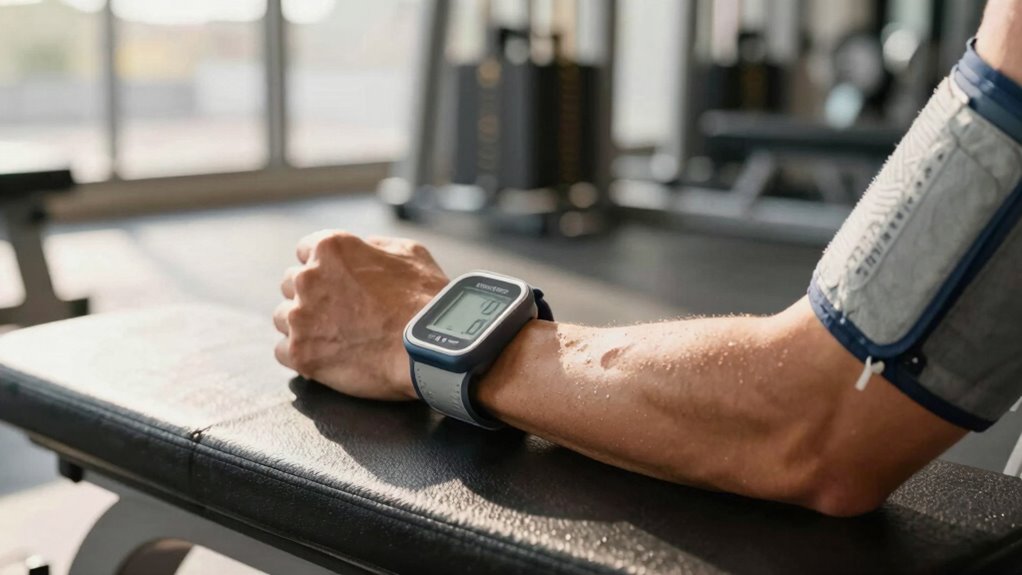

Before pushing yourself during exercise, it’s vital to know that moderate activity helps lower blood pressure and improves heart health, but you should always consult your healthcare provider first. Monitor your blood pressure before, during, and after workouts, and watch for signs like dizziness or chest pain. Starting slow, warming up, and avoiding strenuous activities that spike your pressure are key. Want to discover more safe exercise tips for blood pressure control? Keep going for essential insights.
Key Takeaways
- Consult your healthcare provider before starting intense exercise routines to ensure safety with your blood pressure.
- Monitor blood pressure regularly before, during, and after exercise to prevent overexertion.
- Avoid heavy lifting or high-intensity workouts if your blood pressure is uncontrolled or excessively high.
- Warm up and cool down properly to help prevent sudden blood pressure spikes during workouts.
- Listen to your body; stop exercising if you experience dizziness, chest pain, or shortness of breath.

Regular exercise can substantially influence your blood pressure, helping to keep it within healthy ranges. If you’re managing hypertension, engaging in physical activity is one of the most effective strategies to improve your overall health. However, it’s imperative to approach exercise with caution, especially if you have high blood pressure, to guarantee safety and maximize benefits. Knowing how to incorporate exercise safely into your routine can make a significant difference in your hypertension management.
Before jumping into intense workouts, it’s wise to consult your healthcare provider. They can help you determine what types of exercise are suitable for your condition and set clear boundaries to prevent overexertion. Understanding exercise safety is essential because certain activities might pose risks if your blood pressure is poorly controlled. For example, heavy lifting or high-intensity workouts can cause sudden spikes in blood pressure, which may be dangerous if you have hypertension. Starting slowly and gradually increasing the intensity of your workouts allows your body to adapt safely.
Consult your healthcare provider before starting new exercise routines to ensure safety and suitability.
Monitoring your blood pressure before, during, and after exercise helps you recognize how your body responds to different activities. If your readings are consistently high, it’s a sign to adjust your activity level and consult your doctor. Incorporating moderate aerobic activities like brisk walking, swimming, or cycling can effectively support hypertension management without putting excessive strain on your cardiovascular system. These exercises help improve blood vessel flexibility and reduce arterial stiffness, which can lower your blood pressure over time. Yardage for scarves is another example of how understanding specific measurements can help in different contexts, just as monitoring blood pressure helps tailor your exercise routine.
It’s also important to pay attention to how you feel during exercise. If you experience dizziness, chest pain, shortness of breath, or extreme fatigue, stop immediately and seek medical advice. Proper warm-up and cool-down routines are indispensable for exercise safety, as they help your heart gradually adjust to increased activity levels and prevent sudden blood pressure spikes. Wearing comfortable, supportive clothing and staying hydrated can further reduce risks during workouts.
Consistency is key. Regular, moderate exercise, combined with proper rest and medication if prescribed, can help you maintain better control over your blood pressure. Remember, the goal isn’t to push yourself to the limit but to find a sustainable routine that promotes cardiovascular health without compromising safety. As you incorporate exercise into your hypertension management plan, stay attentive to your body’s signals and work closely with your healthcare team. This way, you can enjoy the many benefits of physical activity while safeguarding your health.
Top picks for "blood pressure exercise"
Open Amazon search results for this keyword.
As an affiliate, we earn on qualifying purchases.
Frequently Asked Questions
Can Exercise Lower High Blood Pressure Permanently?
Yes, exercise can lower high blood pressure permanently if you follow proper exercise precautions and regularly monitor your blood pressure. Staying consistent with aerobic activities like walking or cycling helps improve your heart health over time. However, it is crucial to consult your doctor before starting or intensifying your routine, and keep blood pressure monitoring ongoing to track progress and avoid overexertion. This proactive approach ensures lasting benefits and safety.
Are There Specific Exercises for People With Low Blood Pressure?
If you have low blood pressure, focus on gentle exercises like walking, yoga, or swimming to aid in post-exercise recovery and support low blood pressure management. Avoid high-intensity workouts that might cause dizziness or fainting. Stay hydrated and take breaks as needed. Always listen to your body, and consult with your healthcare provider to personalize your exercise plan, ensuring safe and effective blood pressure control during your fitness routine.
How Does Dehydration Affect Blood Pressure During Exercise?
Dehydration acts like a thief, stealing your hydration levels and throwing your electrolyte balance into chaos during exercise. When you’re dehydrated, your blood becomes thick, making it harder for your heart to pump and causing blood pressure to drop unexpectedly. Stay ahead of this silent saboteur by drinking water regularly, replenishing electrolytes, and maintaining proper hydration, so your blood pressure stays steady and your workout remains powerful.
What Are the Signs of Dangerously High Blood Pressure During Activity?
If you notice hypertensive symptoms like severe headache, dizziness, chest pain, or shortness of breath during exercise, it’s a warning sign of dangerously high blood pressure. You should stop exercising immediately and seek medical attention, as these exercise warning signs indicate your blood pressure may be reaching unsafe levels. Pay close attention to your body, and don’t ignore any symptoms that suggest your blood pressure is dangerously elevated.
Is Blood Pressure Medication Affected by Exercise Routines?
Your blood pressure medication can be considerably affected by your exercise routines, potentially making your blood pressure soar or plummet unexpectedly. Exercise routines can enhance medication effectiveness or sometimes cause dangerous drops in blood pressure. Always talk to your healthcare provider before changing your activity level, as they can adjust your medication if needed. Don’t ignore how your workouts influence your medication—your health depends on it!
Conclusion
Remember, it’s always better to be safe than sorry. Keep an eye on your blood pressure before pushing yourself too hard, and listen to your body. As the saying goes, “An ounce of prevention is worth a pound of cure.” Stay mindful, stay healthy, and enjoy your workouts without worry. Your heart will thank you for it!