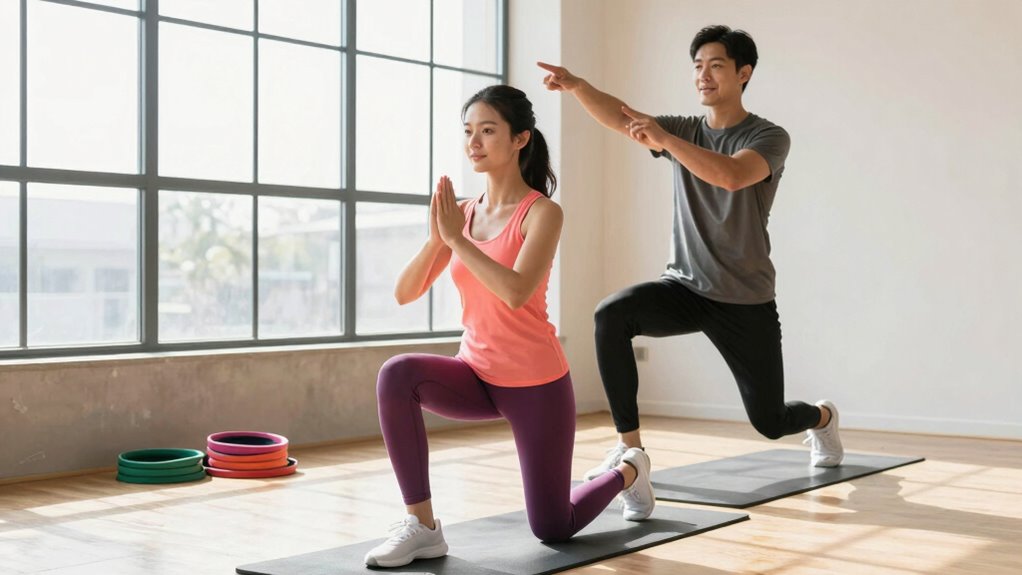

To start HIIT safely, ease into workouts with moderate effort and gradually increase intensity over time. Focus on proper form and controlled movements to prevent injuries and guarantee effectiveness. Invest in comfortable, supportive gear like good sneakers, moisture-wicking clothes, and a yoga mat to boost motivation and safety. Prioritize consistency, allow recovery, and pay attention to your body’s signals. Keep these tips in mind, and you’ll build your fitness confidently step by step.
Key Takeaways
- Begin with moderate effort and shorter intervals to allow your body to adapt gradually.
- Use proper workout gear, like supportive sneakers and moisture-wicking clothing, to prevent injuries and enhance comfort.
- Focus on maintaining proper form and controlled movements to maximize effectiveness and reduce injury risk.
- Incorporate adequate rest and recovery days, increasing workout intensity slowly over time.
- Prioritize nutrition and hydration to support your energy levels and muscle recovery during HIIT training.

Are you looking for an efficient way to boost your fitness without spending hours at the gym? High-Intensity Interval Training (HIIT) is a fantastic option that delivers quick results and fits into busy schedules. But starting out safely is key, especially if you’re new to this type of workout. Before diving in, make sure your workout gear is appropriate—comfortable sneakers with good support, moisture-wicking clothes, and a yoga mat if needed. Proper gear helps prevent injuries and keeps you motivated to push through each session.
Starting HIIT safely with proper gear and gradual intensity boosts your fitness effectively.
When beginning HIIT, it’s crucial to ease into the intensity. Instead of jumping straight into maximum effort, focus on building a foundation with moderate intensity. Think of it as a way to get your body accustomed to the quick bursts of activity and rest periods. Starting slow reduces the risk of overtraining and injury, which is common among beginners who push too hard too soon. Remember, consistency beats intensity when you’re just starting. As your fitness improves, you can gradually increase the duration and intensity of your intervals.
Nutrition plays a vital role in supporting your HIIT journey. Incorporate nutrition tips like fueling your body with a balanced meal containing complex carbs, protein, and healthy fats about 1-2 hours before your workout. This provides sustained energy and helps prevent fatigue. Post-workout, prioritize protein to aid muscle recovery and include some carbs to replenish glycogen stores. Staying hydrated before, during, and after your workout is equally important; water helps maintain performance and speeds up recovery.
To get the most out of your sessions, keep your movements controlled and focus on proper form. This not only maximizes effectiveness but also minimizes injury risk. As you progress, listen to your body—if you’re feeling overly fatigued or sore, allow yourself adequate rest. Incorporate stretching and mobility exercises to improve flexibility and reduce soreness, making your workouts more comfortable and sustainable over time.
Top picks for "hiit beginner safe"
Open Amazon search results for this keyword.
As an affiliate, we earn on qualifying purchases.
Frequently Asked Questions
Can HIIT Help With Weight Loss Faster Than Traditional Cardio?
Yes, HIIT can help you lose weight faster than traditional cardio. It provides a metabolic boost, increasing your calorie burn even after you finish exercising. This high-intensity approach pushes your body to work harder in less time, maximizing fat burning. By integrating HIIT into your routine, you’ll see quicker results, making it an efficient way to achieve your weight loss goals while fitting into a busy schedule.
How Often Should Beginners Do HIIT Workouts Weekly?
You should aim for 2 to 3 HIIT workouts per week, giving your body enough time to recover. Picture your muscles thanking you for the rest days, helping you avoid burnout and injury. This workout frequency keeps your metabolism blazing without overdoing it, making each session effective and safe. Remember, even the toughest athletes need rest days—so listen to your body and pace yourself!
Are There Any Medical Conditions That Prevent Safe HIIT Practice?
Certain medical restrictions might prevent you from safely doing HIIT workouts. If you have underlying health conditions like heart disease, hypertension, or joint issues, you should get a health screening and consult your doctor first. They can advise whether HIIT is suitable for you or suggest modifications. Always listen to your body and avoid pushing through pain or discomfort to prevent injury or health complications.
What Are the Common Mistakes Beginners Make With HIIT?
Like a novice painter hesitant with color, you might rush into HIIT without proper form, risking injury. Beginners often stick to one workout, missing the richness of variety that challenges different muscles. You should focus on proper form to prevent strain and embrace workout variety to keep progress steady. Avoid overdoing it; listen to your body, and gradually increase intensity, turning your fitness journey into a vibrant masterpiece.
How Do I Choose the Right Intensity Level for My Fitness?
To choose the right intensity level, listen to your body and start slow. Use exercise modifications to adjust the effort, ensuring you’re challenged but not overwhelmed. Track your progress by noting how you feel after each session and gradually increase intensity as your endurance improves. Remember, consistency is key—don’t push too hard too soon. Find a balance that keeps you motivated and safe, and adjust as you grow stronger.
Conclusion
Starting HIIT is like planting a young sapling—you need patience and care to see it flourish. By easing into each session and listening to your body, you’ll build strength without risking burnout. Remember, progress might feel slow at first, but each small step is like watering your growing tree. Stay consistent, stay safe, and soon you’ll watch your fitness journey blossom into something strong and vibrant. Keep going—you’re nurturing a healthier, happier you.