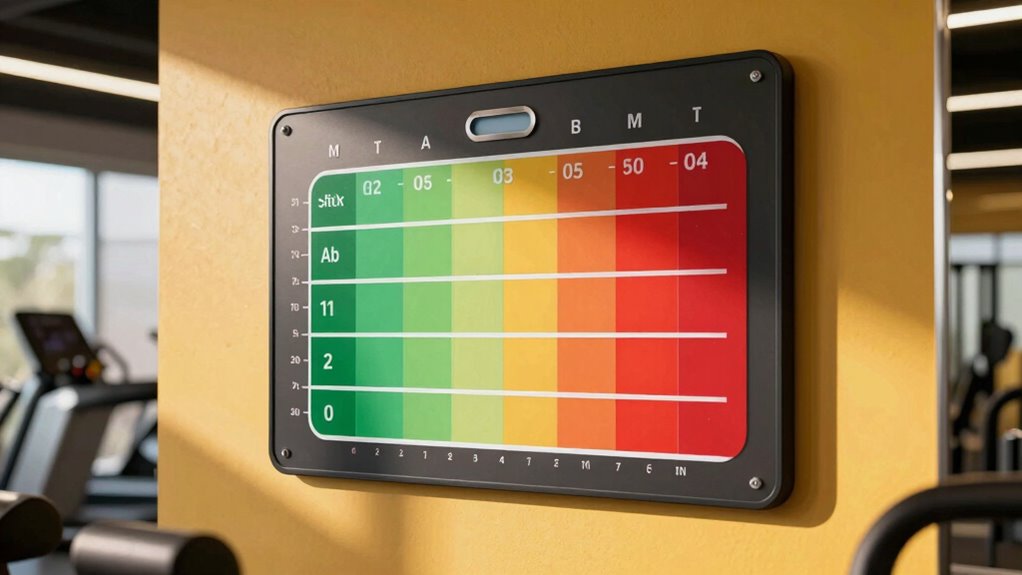

The effort scale makes cardio training easier by helping you gauge your workout intensity through simple body cues like breath, sweat, and muscle fatigue, instead of gadgets. It breaks down effort into zones, from light to intense, so you can stay within your goals without overexerting or undertraining. By focusing on how your body feels, you’ll gain confidence managing your pace. Keep exploring to discover how to use this approach for more effective, enjoyable workouts.

Get workout gear delivered free — and shop member deals
- Fast, free delivery on millions of items
- Access to Prime Big Deal Days deals on October 6–7
- Prime Video, Amazon Music and more included
Key Takeaways
- The effort scale links perceived exertion with heart rate zones, simplifying intensity understanding without gadgets.
- It helps identify appropriate effort levels for different training goals like fat burning or endurance.
- Using body cues like breathing and sweating makes effort assessment more intuitive and accessible.
- The scale promotes consistent effort regulation, reducing risk of overtraining or injury.
- It enhances confidence and awareness, making cardio workouts more effective and enjoyable.

Understanding how hard you’re working during cardio sessions is vital for achieving your fitness goals, and that’s where the Effort Scale comes in. This simple tool helps you gauge your training intensity without needing fancy gadgets or constant monitoring. By paying attention to your body’s signals, you can stay within the right heart rate zones, guaranteeing you’re working hard enough to improve but not overdoing it. The key is understanding how different heart rate zones correspond to your effort levels, which makes adjusting your workout straightforward and effective.
When you start your cardio workout, you’re likely in the light or moderate heart rate zone. This is where your breathing is steady, and you feel capable of holding a conversation. It’s perfect for warm-ups or recovery days. As you increase your effort, you’ll enter the moderate to vigorous heart rate zones, where breathing becomes heavier, and talking requires more effort. This is where training intensity ramps up, and you’re pushing your cardiovascular system, which helps build endurance and burn calories efficiently. The highest zone, often called the anaerobic zone, is where your heart rate reaches its peak. It’s intense, often unsustainable for long periods, but vital for improving speed and power.
Using the Effort Scale, you learn to listen to your body and identify these zones intuitively. For example, if you’re aiming for a moderate training intensity, you’d target a heart rate zone where you’re working hard but not exhausted—roughly 50-70% of your maximum heart rate. If you’re using a heart rate monitor, you can compare your data against this target zone. But even without one, you can judge your effort based on how breathless you feel or how much you’re sweating. The goal is to stay within the right zone for your current workout goal—whether that’s fat burning, building endurance, or increasing speed. Incorporating biodiversity and sustainable living principles into your routine can also enhance your overall well-being and connection to nature, making your fitness journey more fulfilling. Recognizing the importance of heart rate zones can help you develop a more effective and personalized training plan, ultimately leading to better results. The Effort Scale simplifies this process, making it easier for you to stay consistent. Instead of obsessing over numbers, you tune into your body’s cues. This approach guarantees you’re training at the right intensity for your fitness level and goals. It also minimizes the risk of burnout or injury by preventing you from pushing too hard too soon. As you become more familiar with your heart rate zones and how they feel, you’ll gain confidence in managing your training intensity. This understanding of training zones is crucial in preventing overtraining and ensuring recovery. Ultimately, this makes your cardio sessions more effective, enjoyable, and sustainable. By mastering the Effort Scale, you take control of your workouts, making it easier to reach your fitness milestones efficiently and safely.
As an affiliate, we earn on qualifying purchases.
Frequently Asked Questions
How Do I Determine My Starting Effort Level?
To determine your starting effort level, listen to how hard your body feels during exercise. Use effort measurement by gauging your breathing, speaking ability, and muscle fatigue. Aim to start at a moderate exercise intensity where you can talk comfortably but feel your heart rate increasing. This helps you avoid overexertion and guarantees you’re training safely. Adjust your effort gradually as your fitness improves, keeping the effort measurement consistent.
Can the Effort Scale Be Used for Strength Training?
Imagine dialing a dimmer switch, gradually increasing the brightness—this visual helps you see how the effort scale applies to strength training. Yes, you can use the effort scale for strength training by gauging how hard each set feels. It guides you to challenge yourself without overexerting, helping you find the right intensity for growth and endurance. Think of it as your personal compass for balanced strength workouts.
How Often Should I Reassess My Effort Level?
You should reassess your effort perception regularly, ideally every few sessions or whenever your training feels easier or harder than usual. This helps guarantee you’re staying within the right training zones, whether you’re aiming for fat burn, endurance, or peak performance. By frequently adjusting your effort level, you maintain ideal challenge and progress, preventing plateaus and overtraining. Listening to your body is key to accurately gauging your effort perception.
Is the Effort Scale Suitable for Beginners?
Yes, the effort scale is suitable for beginners. It provides clear guidance on exercise intensity, helping you gauge how hard you’re working without feeling overwhelmed. As a beginner, you can use it to stay within a comfortable effort level while gradually increasing intensity. It simplifies understanding your effort, making it easier to follow your workout plan and progress safely. Overall, it’s a helpful tool for beginner guidance in cardio training.
How Does Nutrition Affect Effort Levels During Cardio?
Your nutrition directly impacts your effort levels during cardio. If you consume enough calorie intake, you’ll have the energy needed to maintain a higher effort without feeling exhausted quickly. Staying well-hydrated is equally important, as proper hydration keeps your muscles functioning efficiently and prevents fatigue. When you balance your calorie intake and hydration levels, you’ll find it easier to sustain effort during your cardio sessions and improve your overall performance.
As an affiliate, we earn on qualifying purchases.
Conclusion
By using the effort scale, you can easily gauge your intensity and tailor your cardio workouts for better results. Notably, studies show that exercisers who monitor their effort level are 30% more likely to stick with their routines long-term. So, next time you hit the gym or go for a run, remember that understanding your effort makes all the difference. It transforms guesswork into clarity, helping you stay motivated and achieve your fitness goals more effectively.
As an affiliate, we earn on qualifying purchases.
As an affiliate, we earn on qualifying purchases.
Fall Picks
fall essentials
As an affiliate, we earn on qualifying purchases.