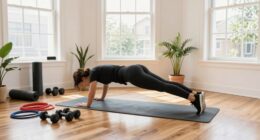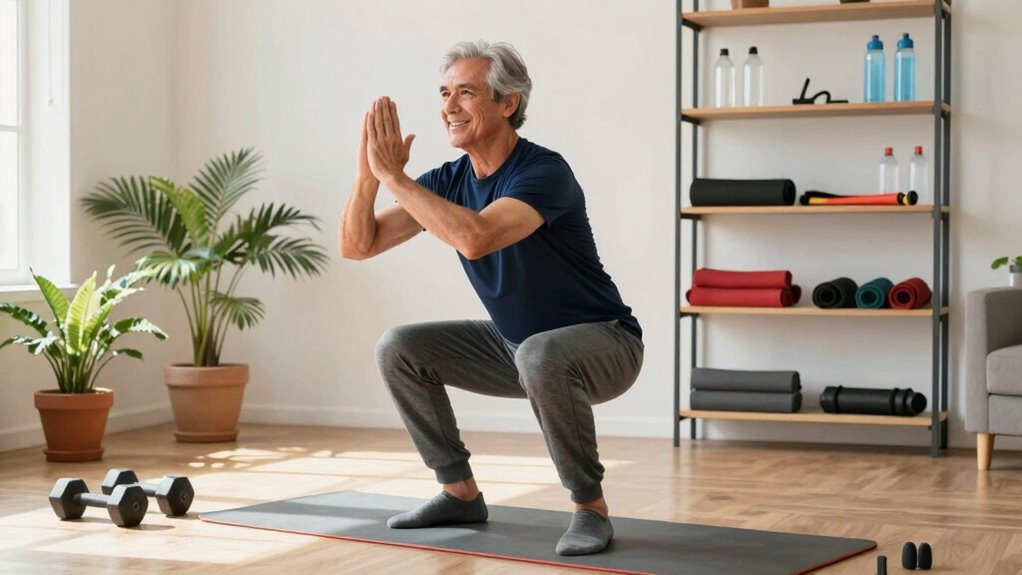

To train over 50 safely at home, focus on low-impact exercises like walking, swimming, or yoga that boost flexibility and balance. Start slow with proper form using light weights or resistance bands and gradually increase intensity. Warm up before workouts, stay hydrated, and listen to your body to prevent injuries. Incorporate rest days and balance exercises regularly. Keep these principles in mind, and you’ll discover more ways to stay active safely as you progress.
Key Takeaways
- Focus on low-impact, age-appropriate exercises like walking, swimming, and yoga to enhance flexibility, balance, and cardiovascular health.
- Prioritize proper form, gradual intensity increases, and consistent routines to prevent injury and promote safe progress.
- Incorporate strength and balance exercises, such as resistance training and tai chi, to support daily mobility and reduce fall risk.
- Always warm up thoroughly, stay hydrated, listen to your body, and include rest days to facilitate recovery and injury prevention.
- Consider consulting healthcare professionals or trainers for personalized exercise plans tailored to your fitness level and health needs.

Starting a fitness routine after 50 can seem intimidating, but with the right approach, you can stay healthy and energized right at home. The key is to focus on age-appropriate exercises that match your current fitness level and to implement injury prevention strategies to keep yourself safe. As you age, your body needs different considerations to avoid strain and injury, so selecting exercises designed for your age group is essential. These might include low-impact activities like walking, swimming, or gentle yoga, all of which help improve flexibility, balance, and cardiovascular health without putting excessive stress on your joints.
Focus on age-appropriate, low-impact exercises like walking, swimming, or yoga to improve flexibility and balance safely after 50.
When choosing your exercises, prioritize movements that support your daily activities. Strength training is essential, but it should be tailored to avoid overexertion. Use light weights, resistance bands, or bodyweight exercises like squats and wall push-ups. Always start slow, focusing on proper form, and gradually increase intensity. This approach helps prevent injury and builds confidence in your routine. Incorporating balance exercises, such as standing on one leg or practicing tai chi, can considerably reduce the risk of falls, which become more common with age. Balance exercises also enhance coordination and stability, contributing to overall safety during physical activity.
Injury prevention strategies are imperative when training over 50. Warm up thoroughly before each session with light cardio like marching in place or gentle stretching. This increases blood flow and prepares your muscles for activity. Pay close attention to your body’s signals—if something hurts beyond normal exertion, stop immediately and assess whether you need to modify the movement. Staying hydrated and avoiding overexertion also plays a crucial role in injury prevention. Remember, consistency is more important than intensity. If you experience pain or discomfort, don’t push through it; instead, rest and consult a healthcare professional if needed.
Additionally, understanding the importance of proper exercise form can significantly reduce the risk of injury and improve effectiveness. It’s also wise to include rest days in your routine, giving your muscles time to recover and adapt. Consider working with a trainer or physical therapist initially to develop a safe, effective plan tailored to your needs. They can help you learn proper techniques and recommend modifications to keep your workouts both safe and effective. Additionally, listening to your body’s feedback and adjusting your routine as needed will help you stay motivated and injury-free.
Top picks for "train over home"
Open Amazon search results for this keyword.
As an affiliate, we earn on qualifying purchases.
Frequently Asked Questions
What Are the Best Low-Impact Exercises for Over 50S?
You should try low-impact exercises like walking, swimming, or cycling to improve joint health and boost balance. These activities are gentle on your joints, reducing injury risk while strengthening muscles and enhancing stability. Incorporate yoga or tai chi to further improve balance and flexibility. Consistently doing these exercises helps you stay active safely, supports joint health, and keeps you confident in your movements as you age.
How Often Should I Update My Workout Routine?
Ever wondered how often you should update your workout routine? You should aim for exercise variation every 4 to 6 weeks to keep your muscles challenged and prevent plateaus. Adjust your workout frequency based on how your body responds—if you notice fatigue or lack of progress, it’s time for a change. Regular updates guarantee you stay safe, motivated, and continue making progress at home over 50.
Are There Specific Injuries to Watch for When Training at Home?
Yes, watch for injuries like falls and joint strain when training at home. Focus on falls prevention by keeping your workout area clear and using non-slip mats. Prioritize joint safety by warming up properly, avoiding sudden movements, and not overdoing it. Listen to your body, and stop if you feel pain or dizziness. Regularly evaluate your environment to guarantee a safe space for effective, injury-free exercise.
Can I Start Strength Training Without Prior Experience?
Absolutely, you can start strength training without prior experience. Think of it as planting seeds—you just need the right beginner tips and safety considerations. Begin with light weights, focus on proper form, and listen to your body. Progress gradually, and don’t rush. Remember, consistency beats intensity. By following these simple principles, you’ll build strength safely and confidently, making your fitness journey both enjoyable and effective.
How Do I Stay Motivated to Exercise Regularly?
You stay motivated by adopting mindset strategies that keep you focused on your goals. Find accountability partners who encourage you and hold you responsible, making workouts more enjoyable. Celebrate small victories to boost your confidence. Create a routine that fits your schedule, and remind yourself of the benefits, like increased energy and strength. With consistent effort and support, you’ll find it easier to exercise regularly and enjoy your progress.
Conclusion
Remember, just like the steady resilience of the oak tree, your progress over 50 is built on consistent, gentle effort. Stay mindful of your body’s signals, embrace the journey with patience, and celebrate each small victory—like a hero forging their legend. With safe, simple principles, you’ll not only strengthen your body but also nurture your spirit. Keep going, and you’ll find that age is just a number in your story of strength and vigor.