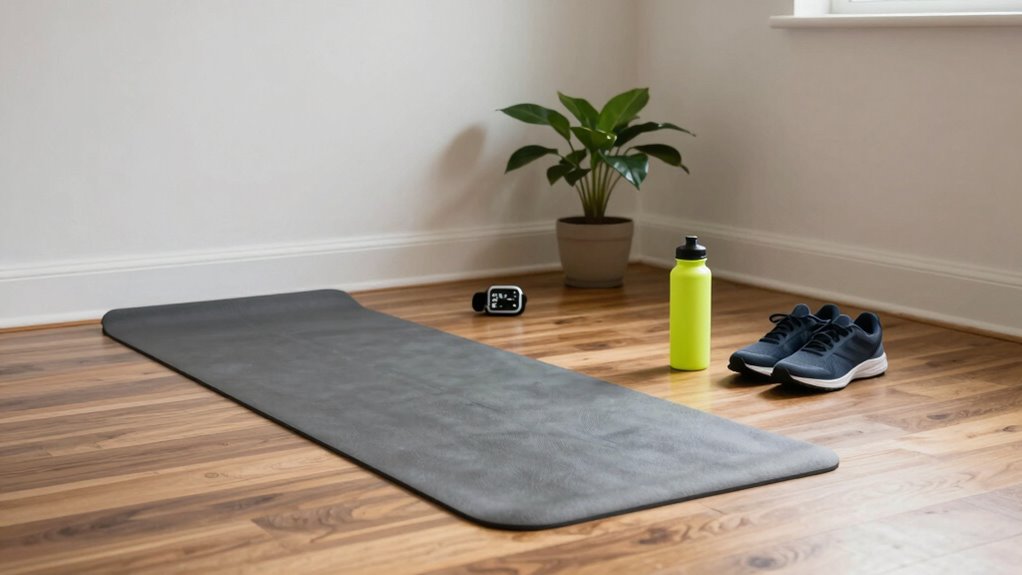

To create a workout trigger that doesn’t rely on motivation, pair your exercise with daily habits using habit stacking—like doing a quick stretch after brushing your teeth. Place visual cues, such as workout shoes, in prominent spots to remind yourself automatically. Consistently linking workouts to routines makes them automatic, reducing mental effort. Keep exploring simple strategies to turn triggers into reliable cues for your fitness journey and sustain long-term habits.
Key Takeaways
- Pair workout routines with existing habits using habit stacking to make exercise automatic.
- Place visual cues like workout clothes or shoes in prominent locations for constant reminders.
- Identify daily routines and attach workouts immediately afterward to reinforce triggers.
- Use environmental cues, such as a specific spot or object, to subconsciously prompt exercise initiation.
- Reinforce consistency by integrating triggers into daily life, reducing reliance on motivation.
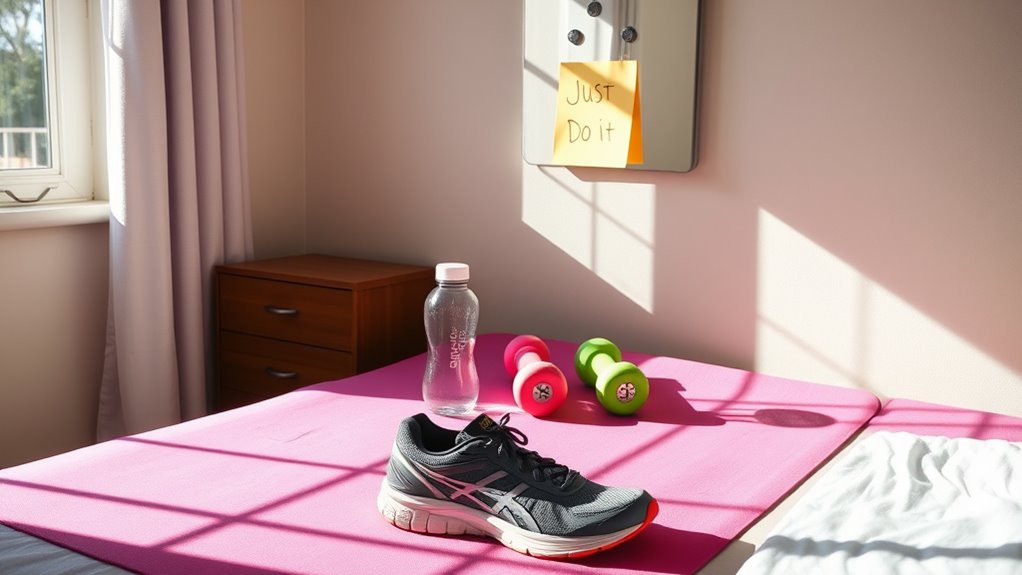
Establishing a workout trigger can considerably improve your consistency and motivation. When you create a reliable cue that signals it’s time to exercise, you remove the need to rely solely on fleeting motivation. Instead, your habits become automatic, making it easier to stick with your fitness routine even on days when motivation wanes. One effective way to do this is through habit stacking, which involves pairing a new workout habit with an existing daily activity. For example, if you already brush your teeth every morning, you can stack a quick 5-minute stretch or bodyweight exercise immediately afterward. This pairing leverages the habit you already perform, making it easier to remember and execute your workout without extra effort. Additionally, visual cues play a powerful role in reinforcing your workout trigger. Placing your workout shoes and workout clothes in a prominent spot, like beside your bed or on top of your desk, creates a visual reminder that prompts action. These visual cues serve as constant, subconscious prompts that nudge you toward your workout, especially during busy or distracted days. Using environmental cues effectively can help condition your brain to associate specific locations or objects with exercise, making the habit more sustainable.
To effectively implement habit stacking, identify a daily activity with high consistency, such as making coffee or locking the front door. Then, immediately attach your workout to that activity. If you finish work at a certain time each day, set an intention to do a quick workout right afterward—no excuses, no waiting for motivation to strike. Over time, this pairing becomes automatic, transforming your workout into an expected part of your routine. Visual cues work similarly; they serve as physical reminders that trigger your brain to associate that specific object or location with exercise. For example, leaving your workout gear near your bed or on your desk creates a visual prompt that reminds you to move. When you see these cues, your brain links them to your workout, reducing the mental effort needed to start. Incorporating consistent cues from your environment can also help you develop a stronger habit formation process, making your new routine stick more effectively.
The combination of habit stacking and visual cues strengthens your workout trigger, making it more resilient to disruptions or low motivation. These techniques turn your workout into a habitual response to everyday cues, rather than something you need to force yourself to do. By consistently pairing your exercise with existing routines and placing visual reminders in strategic spots, you set up a system that works automatically. Over time, your workout becomes ingrained in your daily life, freeing you from dependence on motivation alone. Instead, your environment and habits do the heavy lifting, helping you stay committed and consistent, even on days when you don’t feel like working out.

Oltyutc Barefoot Shoes Women Minimalist Tennis Shoes Zero Drop Gym Walking Sneakers Non Slip for Work Workout Travel Indoor Slippers Light Green 8.5
Comfortable Upper: Designed with an open-knit upper, these womens barefoot shoes allow air circulation, keeping your feet cool…
As an affiliate, we earn on qualifying purchases.
As an affiliate, we earn on qualifying purchases.
Frequently Asked Questions
How Long Does It Take to Establish a New Workout Trigger?
It typically takes about 21 to 66 days to establish a new workout trigger through habit formation. Consistency building is key, so you should perform your workout at the same time and place daily. The more you stick with it, the faster the trigger becomes automatic. Remember, patience is essential—every person’s different, but staying committed helps solidify the new habit and makes it effortless over time.
Can Workout Triggers Be Different for Various Types of Exercise?
Did you know that habit formation varies by exercise type? Yes, workout triggers can differ depending on whether you’re lifting weights, running, or doing yoga. For example, a specific stretch might cue yoga, while a mug of tea signals your cool-down. To maintain exercise consistency, tailor triggers to each activity, making habit formation easier. This personalized approach helps your brain associate distinct cues with different workouts, boosting your motivation and adherence.
What if I Forget My Workout Trigger One Day?
If you forget your workout trigger, don’t worry—you can rely on accountability partners or motivational quotes to get back on track. Reach out to a friend who encourages you or read a quote that inspires action. These tools help reinforce your habits and keep you motivated, even if your usual trigger slips your mind. Consistency with external support makes it easier to stay committed, no matter the day.
Are There Specific Triggers That Work Better for Beginners?
As a beginner, simple behavioral cues work best for habit formation. Choose triggers like placing your workout clothes where you’ll see them, setting an alarm, or linking exercise to daily routines like brushing your teeth. Consistency is key—repeat your cues regularly. The more you reinforce these behavioral cues, the stronger your workout habit becomes. These specific triggers make it easier to start, maintain, and build momentum without relying solely on motivation.
How Do I Adjust My Trigger if My Routine Changes?
When your routine changes, you should adjust your workout trigger by creating a new habit that fits your updated schedule. Focus on habit adjustment by choosing a different cue or time that aligns with your new routine, fostering routine flexibility. For example, if you used to work out after breakfast, switch to exercising during a lunch break or evening. Consistency is key, so make your new trigger as easy to remember as possible.

DYNAMIC DUO Bodyweight Training for Couples : A beginner's workout guide to strength, balance and flexibility for men and women
As an affiliate, we earn on qualifying purchases.
As an affiliate, we earn on qualifying purchases.
Conclusion
By establishing a reliable workout trigger, you’re planting a seed that blossoms into consistency, transforming motivation into a steady current rather than fleeting gusts. Think of it as building a personal lighthouse—an unwavering beacon that guides you through the fog of procrastination. With this mental anchor, your workouts become a natural tide, ebbing and flowing with purpose. Soon, your routine will feel as instinctive as breathing—second nature, resilient, and impossible to ignore.

Habit Stacking: 127 Small Changes to Improve Your Health, Wealth, and Happiness (Most are Five Minutes or Less)
As an affiliate, we earn on qualifying purchases.
As an affiliate, we earn on qualifying purchases.
Feminine Reminder Fill in Sticky Note Pads / 4" x 3" Pink Purple Sticky Notes/Set of 6 Pads / 50 Sheets Per Pad/Trendy Gift Idea/Made in The USA
Includes: Pack of 6 sticky note pads with 50 sheets per pad.
As an affiliate, we earn on qualifying purchases.
As an affiliate, we earn on qualifying purchases.