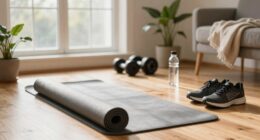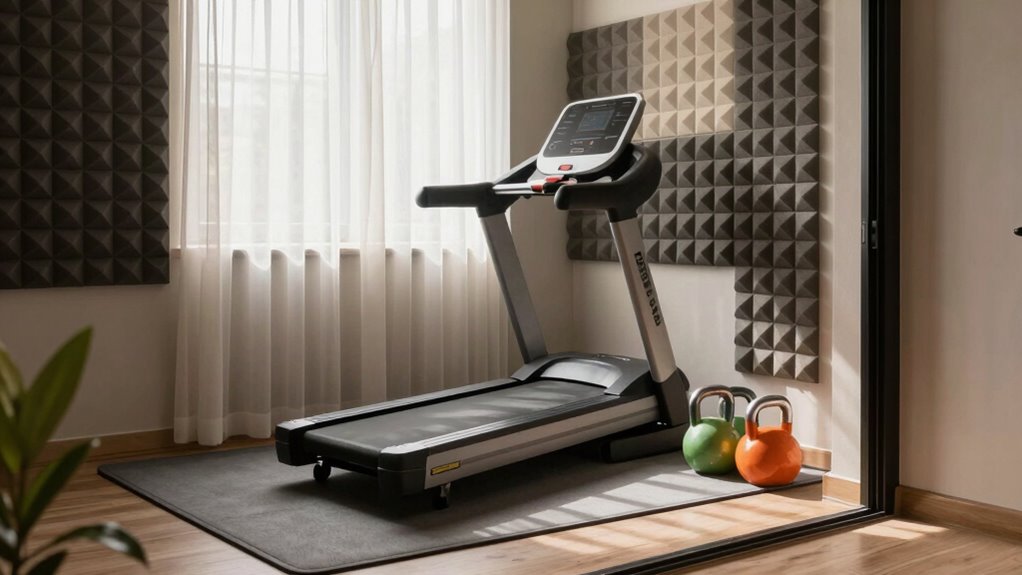
To keep your workouts quiet and neighbors happy, choose impact-absorbing flooring like rubber mats or cork, and layer underlayment for extra soundproofing. Hang sound-absorbing panels on walls and seal gaps around doors and windows to block noise. Schedule high-impact exercises during off-hours and create designated workout zones in basements or garages. Communicating your plans helps foster understanding. Keep exploring for more simple tips to manage noise effectively and maintain good neighborly relations.
Key Takeaways
- Use impact-absorbing flooring like rubber or cork to reduce noise transmission during workouts.
- Install sound-absorbing panels or foam tiles on walls and ceilings to dampen echo and sound escape.
- Schedule high-impact exercises during off-peak hours and communicate workout plans with neighbors.
- Create designated workout zones in basements or garages to contain noise effectively.
- Seal gaps around doors and windows with weatherstripping or door sweeps to prevent sound leaks.
Top picks for "noise proof workout"
Open Amazon search results for this keyword.
As an affiliate, we earn on qualifying purchases.
Choose the Right Flooring Solutions
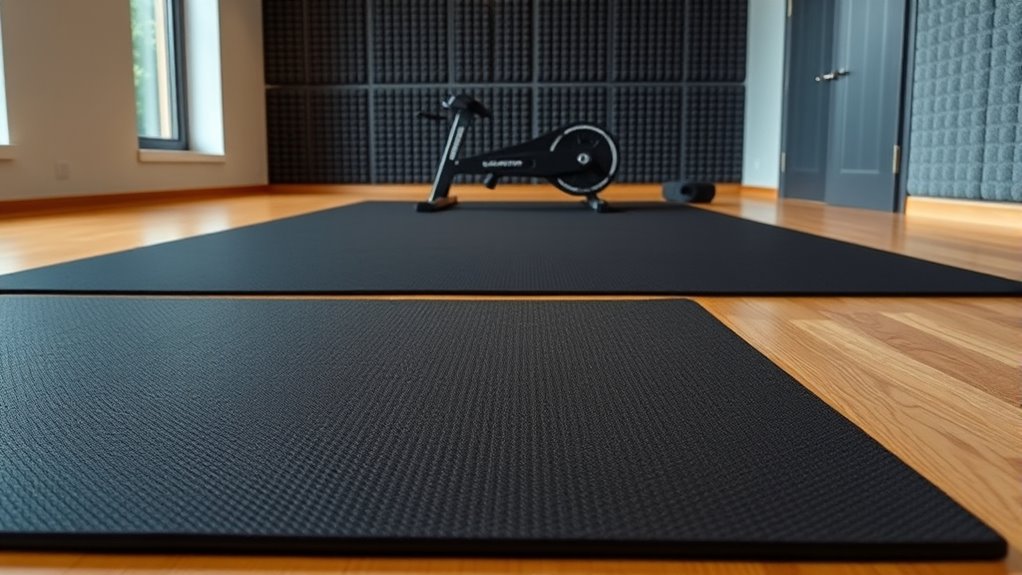
Choosing the right flooring solutions is essential for minimizing noise during your workouts. You want a surface that absorbs impact and reduces sound transmission to neighbors below. Rubber flooring is a popular choice because it’s durable, shock-absorbent, and quiet underfoot. Foam mats are also effective, especially for lighter exercises, offering cushioning and noise reduction. If you prefer a more natural look, cork flooring is eco-friendly and excellent at dampening sound. Avoid hard surfaces like tile or hardwood, as they amplify noise and impact. Consider the type of workouts you do most often to select the best material. Proper flooring not only keeps noise levels down but also enhances safety and comfort, making your workouts more enjoyable for you and your neighbors. Incorporating impact-absorbing technology into your flooring can further enhance noise reduction and safety. Additionally, selecting materials with high shock absorption qualities helps to minimize vibrations and noise during intense routines. Using soundproofing techniques can further improve noise control in shared living spaces. To optimize your setup, think about adding underlayment materials that can boost soundproofing performance. Integrating adequate cushioning can also reduce joint strain and improve workout safety.
Incorporate Noise-Absorbing Materials
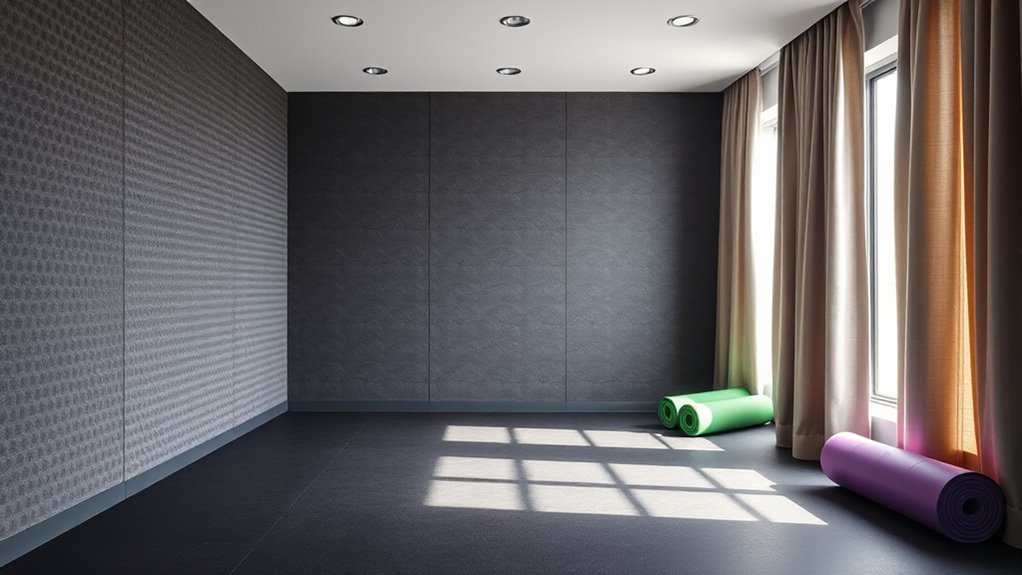
Adding noise-absorbing materials can substantially reduce sound transfer during your workouts. You might consider using thick rubber mats, hanging sound-absorbing panels, or installing insulation barriers. These simple steps help create a quieter, more focused workout environment.
Use Thick Rubber Mats
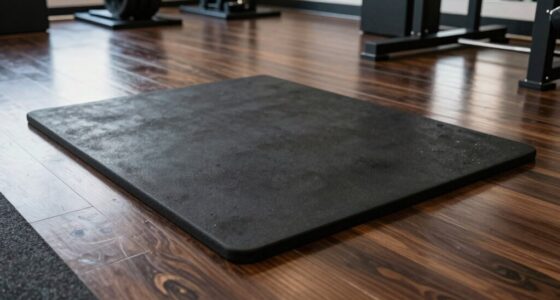
Thick rubber mats are an effective way to absorb noise and reduce sound transmission during workouts. They cushion your equipment and movements, preventing loud impacts that can disturb neighbors. When you lay these mats on your workout area, they absorb shock and dampen vibrations, decreasing noise levels markedly. Opt for mats at least 1/2 inch thick to maximize soundproofing. Installing them underneath heavy weights, cardio machines, or plyometric exercises ensures minimal noise escape. Rubber mats also protect your floors from damage, extending the life of your equipment. Easy to cut and install, they fit most spaces and are simple to clean. Incorporating soundproofing materials like these mats can significantly improve the acoustics of your workout space. Using high-density rubber enhances sound absorption, creating a quieter environment. Adding additional insulation layers beneath the mats can further reduce noise transmission. Employing noise-reducing techniques such as rubber mats can help maintain a peaceful home environment. Additionally, choosing high-quality rubber can improve durability and long-term soundproofing effectiveness. By using thick rubber mats, you create a quieter workout zone that’s less likely to disturb those living nearby.
Hang Sound-Absorbing Panels
Hanging sound-absorbing panels is an effective way to reduce noise and improve the acoustics in your workout space. These panels absorb sound waves, preventing them from bouncing around and spreading to neighboring areas. You can easily mount them on walls or ceilings using simple hooks or adhesive strips. Choose panels made from materials like foam or fabric that are designed specifically for sound absorption. Position the panels strategically around high-impact zones, such as near weights or cardio equipment, to maximize their effectiveness. Not only do they cut down on noise, but they also create a more comfortable environment by reducing echo and harsh sounds. Incorporating soundproofing materials like specialized acoustic foam or fabric-covered panels can further enhance noise reduction. Using modern installation techniques can also make setup easier and more secure. Additionally, selecting panels with appropriate thickness and density can significantly improve their sound-absorbing capabilities. Understanding the importance of contrast ratio helps in designing a space that minimizes sound reflection and enhances overall comfort. Considering smart home automation options, such as automated lighting or sound control, can help create a more tailored and noise-sensitive workout environment. With a few simple installations, you’ll notice a quieter, more pleasant workout space that keeps neighbors happy.
Install Insulation Barriers
Installing insulation barriers that incorporate noise-absorbing materials is one of the most effective ways to block sound from traveling beyond your workout space. You can start by adding dense insulation within walls, ceilings, or floors to dampen sound vibrations. Use materials like mineral wool, fiberglass, or foam panels, which absorb noise rather than reflect it. Seal gaps and cracks around doors, windows, and joints to prevent sound leaks. Consider building a double-layer wall or adding a resilient channel system to further reduce noise transmission. These barriers absorb and dissipate sound energy, considerably minimizing noise escape. Incorporating soundproofing techniques can enhance your efforts and ensure your workouts remain peaceful for neighbors. Additionally, choosing connected fitness equipment designed with sound reduction features can further decrease noise levels during your routines. Proper installation of these soundproofing methods can significantly improve noise control, making your workout space more neighbor-friendly. Using sound-dampening materials in combination with insulation can further optimize noise reduction. For optimal results, ensure proper installation techniques and regular maintenance of your noise barriers. With proper installation, you’ll enjoy your workouts without disturbing neighbors, creating a more peaceful environment for everyone.
Modify Your Workout Routines for Less Impact
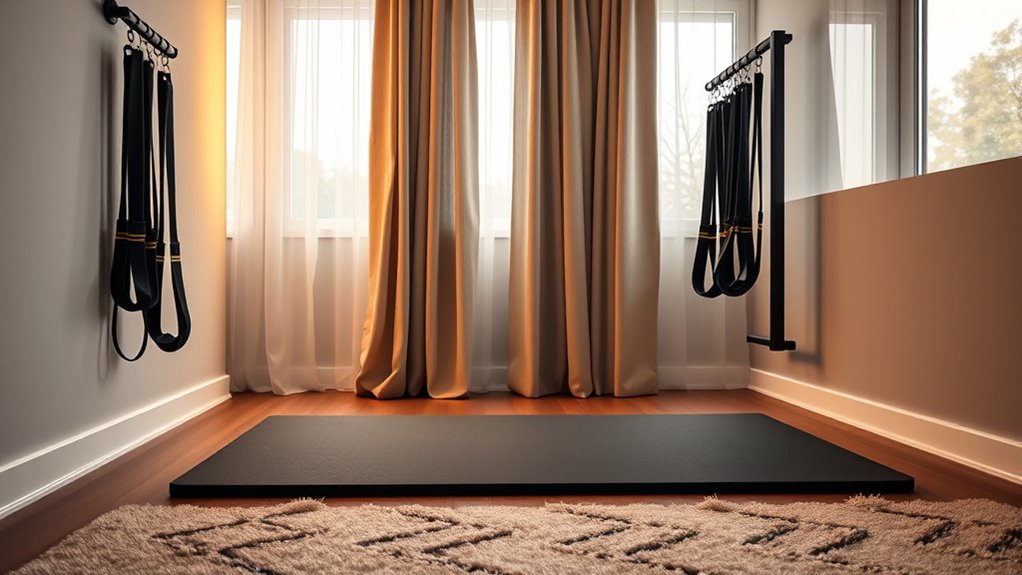
To reduce the impact of your workouts on your joints and bones, consider modifying your routines to incorporate lower-impact exercises. Swap high-impact moves like jumping jacks or running with activities such as brisk walking, cycling, or swimming, which provide effective workouts without the pounding. Incorporate strength training with controlled movements to minimize joint stress, focusing on proper form. You can also try resistance band exercises or body-weight routines like planks and seated workouts. Adjust your intensity by reducing the speed or duration of high-impact activities, gradually building up as your body adapts. Paying attention to piercing care and hygiene and ensuring proper recovery can also help prevent injuries and maintain overall joint health. These modifications help protect your joints, keep noise levels down, and ensure you stay consistent with your fitness goals without disturbing your neighbors.
Utilize Soundproofing Techniques in Your Space
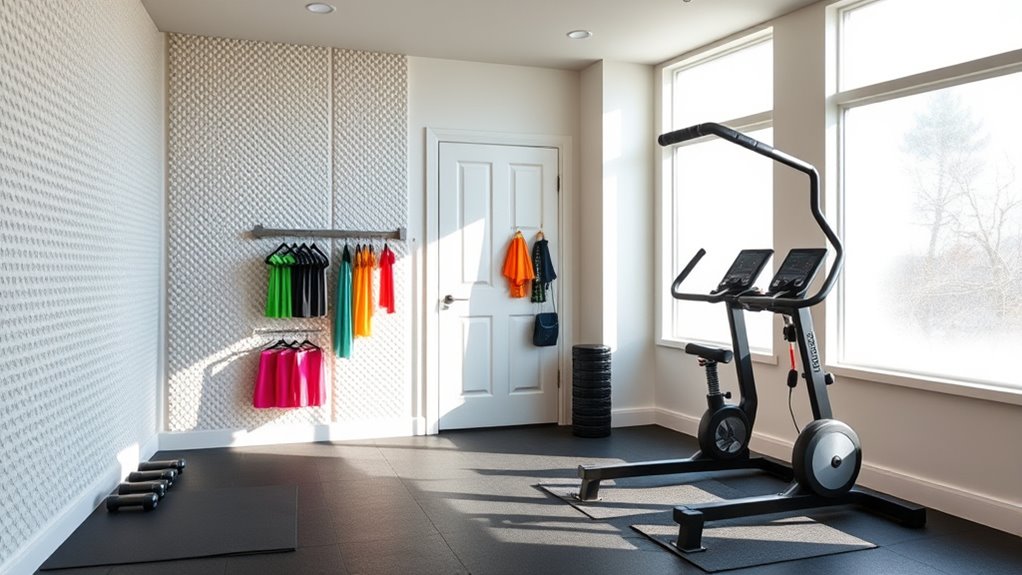
Since noise can easily escape your workout area and disturb others, implementing soundproofing techniques is essential for a quieter exercise space. Start by adding thick rugs or carpets to absorb impact noise, especially if you’re doing jumping or running. Installing foam panels or acoustic tiles on walls reduces echo and sound transmission. Use weatherstripping or door sweeps on doors to seal gaps that let sound escape. Consider adding heavy curtains or blankets over windows to dampen noise further. If possible, create a basement or garage workout zone, as these spaces naturally contain sound better than upstairs rooms. Additionally, choosing properly insulated spaces can help contain noise more effectively and prevent sound leakage. Employing soundproofing materials that are designed for noise reduction can further enhance the effectiveness of your efforts. Incorporating soundproof doors or window inserts can also make a significant difference in minimizing noise escape. Combining these methods helps contain noise, making your workouts less disruptive and keeping neighbors happy. Small adjustments can make a big difference in achieving a quieter, more considerate exercise environment.
Time Your Workouts Thoughtfully
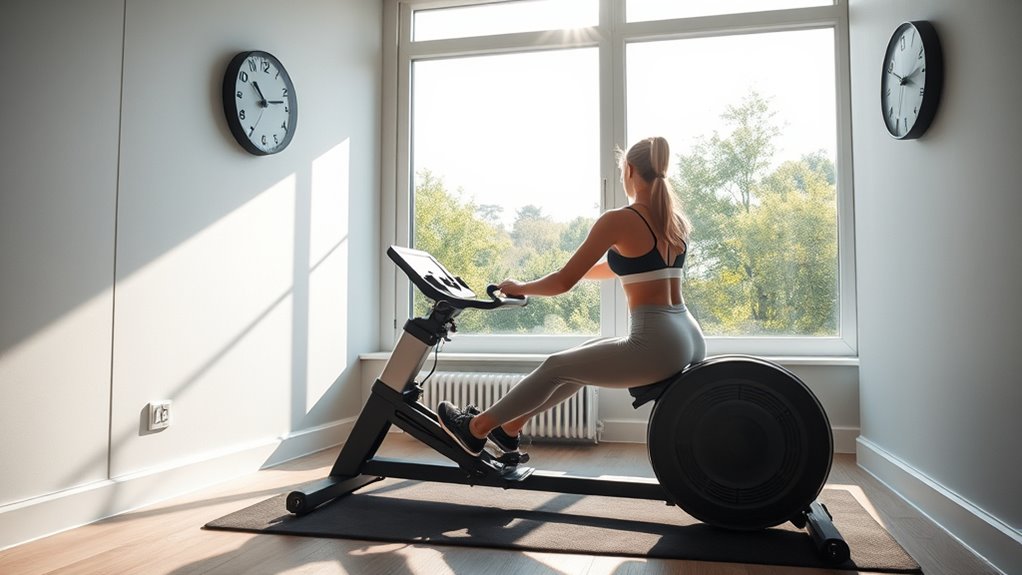
Choosing the right time for your workouts can make a big difference in reducing noise disturbance. Exercising during off-peak hours or coordinating with neighbors helps keep noise levels down. Pairing this with sound-absorbing mats further minimizes disruptions and keeps your workouts quieter.
Exercise During Off-Peak Hours
Ever considered how timing your workouts can reduce noise disturbance? Exercising during off-peak hours, like mid-morning or early afternoon, can make a big difference. Neighbors are less likely to be home or paying attention during these times, so your noise won’t disrupt their routines. Check your building’s quiet hours or community guidelines to find ideal times. If you work from home, schedule high-impact exercises during lunch breaks or when your neighbors are less likely to be around. Using this strategy shows respect for your neighbors’ peace and quiet. Planning your workouts thoughtfully not only minimizes complaints but also makes your exercise routine more considerate and sustainable. With a little planning, you can stay active without creating unnecessary noise issues.
Coordinate With Neighbors
Coordinating with your neighbors before your workouts can prevent noise conflicts and foster good relationships. By discussing your schedule, you show respect and understanding, making it easier to find mutually suitable times. Consider sharing your workout plans and asking about their routines to identify quiet periods. To help visualize coordination, here’s a simple schedule example:
| Time Slot | Your Workout | Neighbor’s Routine |
|---|---|---|
| 7-8 AM | Cardio | Early breakfast, quiet |
| 12-1 PM | Strength training | Lunch break, noisy pets |
| 6-7 PM | Yoga | Dinner prep, reduced noise |
| 8-9 PM | Stretching | Resting, low activity |
Open communication and planning can make your workouts quieter and neighborly relations stronger.
Use Sound-Absorbing Mats
Using sound-absorbing mats can considerably reduce the noise generated during your workouts, helping you stay considerate of your neighbors. These mats absorb impact and dampen vibrations, making loud movements less disruptive. Place them under your exercise area, especially if you’re doing high-impact activities like jumping or running in place. They also protect your floors and equipment from damage. To maximize noise reduction, choose thick, dense mats designed for sound insulation. Timing your workouts during less sensitive hours, like mid-morning or early evening, combined with mats, creates a quieter environment for everyone. Remember, the more effective your mats, the less noise escapes, making your workout routine less of a disturbance. Using sound-absorbing mats is a simple, proactive step to keep your neighbors happy.
Communicate and Coordinate With Neighbors
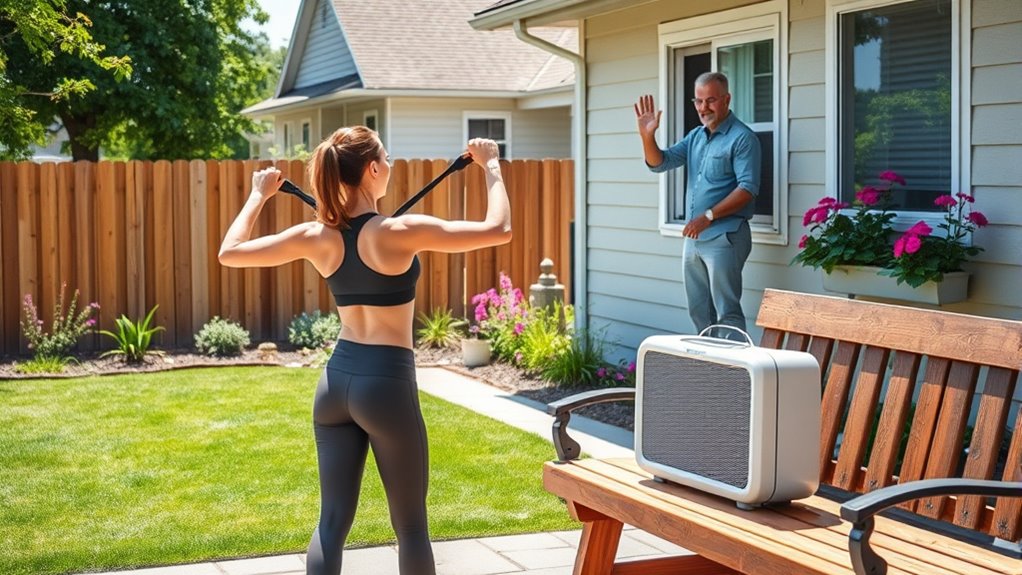
Have you considered how talking to your neighbors can make your noise-proofing efforts more effective? Open communication builds understanding and trust. Let your neighbors know when you plan to work out, especially if you expect louder noises. Agree on specific times that work for everyone, reducing surprises and frustrations. If you’re aware of their schedule or concerns, you can adjust your workout times accordingly. Listening to their feedback shows you respect their space, making them more receptive. Sometimes, a simple conversation can lead to mutual solutions—like lowering volume during early mornings or late nights. By actively coordinating, you demonstrate consideration, which encourages patience and cooperation. Good communication transforms potential conflicts into collaborative efforts to keep the neighborhood peaceful.
Frequently Asked Questions
What Are the Most Affordable Noise-Proofing Options for Small Home Gyms?
You can start with affordable options like thick foam mats or carpets to absorb sound, which are easy to lay down and cost-effective. Using heavy-duty curtains or blankets around your workout area also dampens noise effectively. Additionally, consider adding furniture like bookshelves filled with books to help absorb sound, and place your equipment on rubber pads to reduce vibrations. These simple, inexpensive solutions keep noise levels down without breaking the bank.
How Can I Measure the Noise Levels Generated During My Workouts?
You can measure your workout noise levels with a sound level meter or a smartphone app designed for noise measurement. Place the device at your neighbor’s property line or near their window to get an accurate reading of the noise they might hear. Make sure to record the decibel levels during your most intense exercises, and compare the results to local noise ordinances to guarantee you’re staying within acceptable limits.
Are There Specific Workout Types That Are Inherently Quieter Than Others?
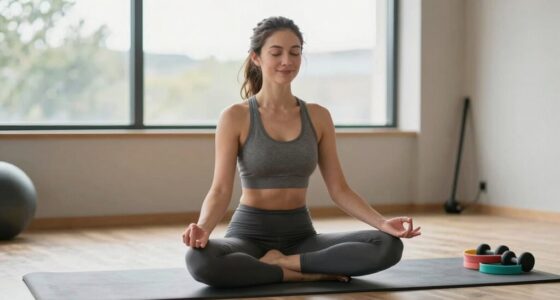
Like a whisper from the past, yoga and Pilates are inherently quieter workout options. You won’t have to worry about loud thuds or crashing weights, making them perfect for keeping neighbors happy. These workouts focus on controlled movements and minimal equipment, so you can exercise intensively without disrupting your surroundings. If you prefer high-energy routines, consider modifying or choosing quieter times to work out, like early mornings or late evenings.
Can Furniture Placement Reduce Noise Transmission Effectively?
Yes, furniture placement can effectively reduce noise transmission. You should position heavy pieces like sofas and bookshelves against shared walls to absorb sound. Adding upholstered furniture and area rugs also helps dampen noise. Keep in mind, filling gaps with weatherstripping or acoustic panels behind furniture can further minimize sound leaks. By strategically arranging your furniture, you create a buffer that keeps workout noise from disturbing your neighbors.
What Legal Rights Do I Have if Neighbors Complain About My Noise?
Imagine your neighbors hearing your workouts like distant thunder—annoying, but manageable. If they complain, your legal rights depend on local laws and noise ordinances. You’re generally protected from excessive noise that disturbs peace, but you also must consider quiet hours and reasonable limits. If disputes escalate, you can seek mediation or law enforcement help. Staying informed about your rights helps you keep the peace and avoid legal trouble.
Conclusion
By choosing the right flooring, adding sound-absorbing materials, and adjusting your workout routines, you can substantially reduce noise. Using soundproofing techniques and timing your workouts thoughtfully also helps keep neighbors happy. When you communicate openly and coordinate with them, it creates a peaceful environment for everyone. Implementing these simple strategies proves that a quieter workout isn’t just a myth—it’s achievable, allowing you to stay active without disturbing those around you.