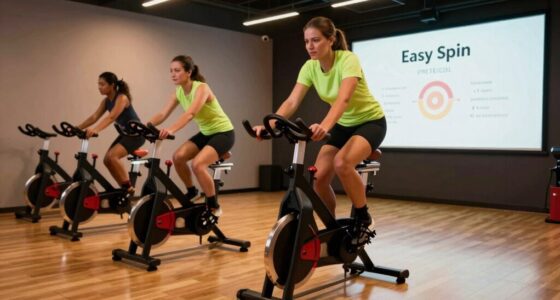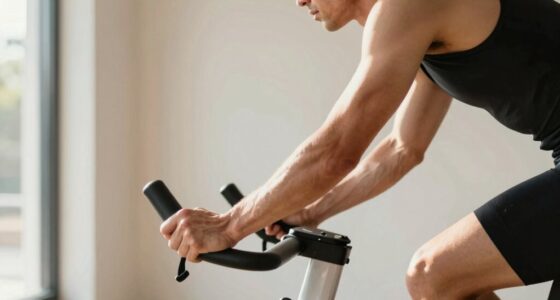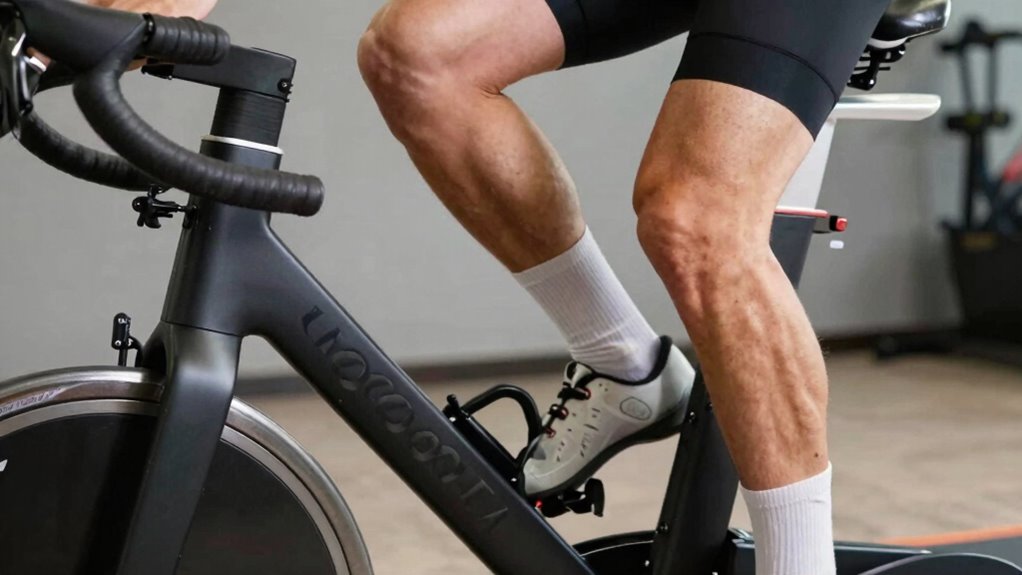
One of the most overlooked tips for indoor cycling knee tracking is ensuring your knees stay aligned over your toes throughout the pedal stroke. Many riders focus on training intensity or distance and ignore how their knees wobble or drift inward or outward, which can cause injuries over time. Correct alignment promotes a smooth pedal motion, reduces joint stress, and improves efficiency. Stay attentive to your knee movement, as mastering this small detail can make a big difference for your cycling health.
Key Takeaways
- Many riders overlook side-to-side knee tracking, which can cause misalignment and joint stress during indoor cycling.
- Monitoring knees from the side reveals wobbling or lateral movement indicating poor alignment.
- Proper bike fit ensures knees stay directly over toes, preventing inward or outward tracking.
- Recording yourself riding helps identify subtle misalignments that are hard to notice in real time.
- Correcting knee tracking promotes efficient pedal stroke and reduces the risk of overuse injuries.
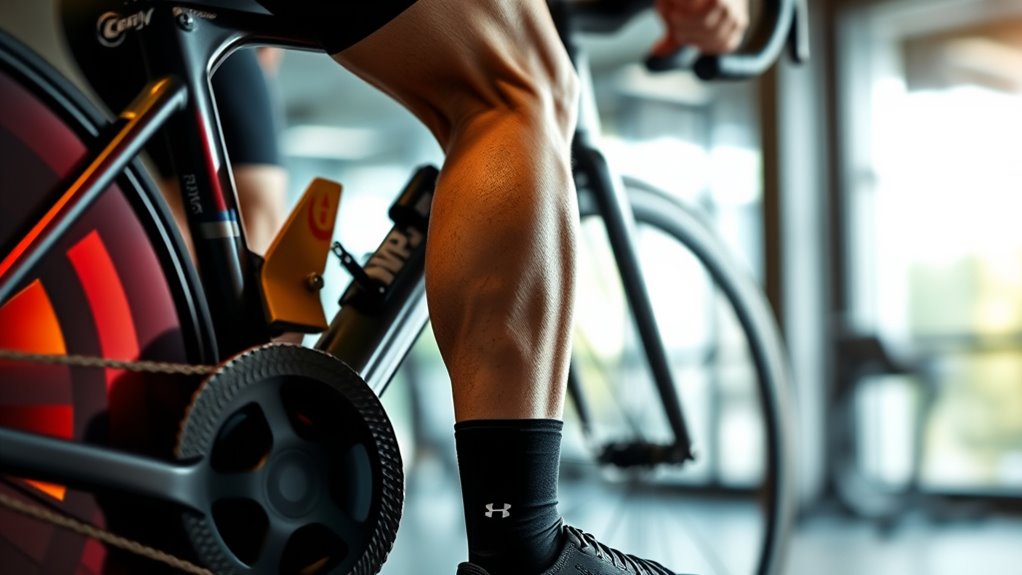
Have you ever wondered how indoor cycling can impact your knee health? The truth is, many riders overlook the importance of proper bike fit and how it influences your pedal stroke, which directly affects your knees. When you hop on a stationary bike without ensuring your bike fit is correct, you might unknowingly set yourself up for discomfort or injury. Your pedal stroke should be smooth and efficient, but if your bike isn’t adjusted properly, your knees could be tracking incorrectly, causing unnecessary strain.
A key factor in preventing knee problems is paying attention to your bike fit. When your saddle height, position, and handlebar height are just right, it promotes a natural pedal stroke. If your saddle is too low or too high, your knee might extend or bend excessively during each revolution. This misalignment can lead to overuse injuries, especially if you’re pedaling for extended periods. Proper bike fit ensures your knees stay aligned over your toes throughout the pedal cycle, minimizing lateral movement and reducing stress on your joints.
Understanding your pedal stroke is essential. When your bike is correctly fitted, your legs should move through a full, smooth circle without wobbling or side-to-side motion. This balanced movement helps distribute force evenly across your knee joint, preventing localized stress that can cause pain or damage over time. A misaligned pedal stroke often results from an improper bike fit, which can cause your knees to track inward or outward during cycling. Over time, this misalignment can lead to inflammation and discomfort, especially if you’re unaware of the root cause.
Many riders miss the importance of checking their knee alignment during indoor cycling sessions. It’s tempting to focus solely on intensity or distance, but neglecting proper alignment can undermine your efforts and lead to injury. A simple way to monitor your knee tracking is to observe your knees from the side or even record yourself while riding. If you notice your knees wobbling or moving erratically, it’s a sign that your bike fit may need adjustment. Correcting your bike fit not only improves your overall comfort but also enhances your pedaling efficiency, making your workouts more effective and safer. Additionally, understanding knee tracking and its proper alignment can greatly contribute to long-term joint health.

Joint Angle Measurement Tool for Cycling Fitting – Pro Bike Posture Optimizer for Knee & Elbow Alignment – Lightweight Protractor for Cyclists – Improve Riding Ergonomics & Reduce Injuries
Optimize Cycling Posture: Achieve perfect knee and elbow angles with the joint angle measurement tool, designed for professional…
As an affiliate, we earn on qualifying purchases.
As an affiliate, we earn on qualifying purchases.
Frequently Asked Questions
How Can I Tell if My Knee Alignment Is Correct?
To check if your knee alignment is correct, focus on your pedal biomechanics and saddle height. When pedaling, your knees should track directly over your toes without wobbling side to side. Adjust your saddle height so your knee is slightly bent at the bottom of the pedal stroke. If your knees wobble or feel strained, fine-tune your saddle height and monitor your pedal biomechanics for better alignment and comfort during your ride.
What Are Common Mistakes Riders Make With Knee Tracking?
You often make the mistake of letting your knees drift inward or outward during your pedal stroke, which can cause injury over time. A common error is neglecting saddle height, leading to improper knee tracking. To fix this, keep your knees aligned with your toes, and verify your saddle height is correct. Studies show that 60% of riders don’t check their saddle height regularly, increasing the risk of misalignment.
Does Bike Fit Affect Knee Tracking Accuracy?
Yes, your bike fit influences knee tracking accuracy. If your saddle height is too high or low, it can alter your pedal stroke and cause your knees to track improperly. Proper bike fit ensures your knees stay aligned over your pedals throughout the ride. Adjusting saddle height and position helps maintain correct knee movement, preventing strain and improving overall efficiency during indoor cycling sessions.
Can Improper Knee Tracking Cause Long-Term Injury?
Sure, ignoring proper knee tracking can turn your indoor cycling sessions into a long-term injury saga. You might think knee pain is just a temporary annoyance, but it’s actually a red flag for serious damage down the line. Improper tracking compromises injury prevention and can lead to chronic issues like ligament strains or joint problems. So, pay attention now—your knees will thank you for correcting your form before it’s too late.
How Often Should I Check My Knee Alignment During Rides?
You should check your knee alignment every 15 to 20 minutes during your ride. If you experience knee pain or notice your pedal alignment shifting, pause and reassess immediately. Regular checks help prevent long-term injury by ensuring your knees stay in proper position. Adjust your saddle height or cleats if needed, and focus on maintaining correct pedal alignment to keep your knees healthy and riding comfortably.

RRSKIT Cleat Adjustment Tool, SPD Cleat Tool, Pedal Cleat Fitting Tool, Cycling Cleat Alignment Tool (for KEO)
High Quality Materials: The bicycle cleat adjustment tool is made of high quality material, durable and practical to…
As an affiliate, we earn on qualifying purchases.
As an affiliate, we earn on qualifying purchases.
Conclusion
To truly elevate your indoor cycling game, paying attention to knee tracking is like fine-tuning a delicate instrument—you get harmony and efficiency. When your knees stay aligned, you’ll ride smoother, prevent injuries, and maximize each pedal stroke. Don’t let this small detail slip through the cracks; it’s the secret ingredient most riders overlook. Keep your knees in line, and you’ll find your ride becomes an unstoppable force, turning every session into a symphony of power and precision.

Caromix Folding Exercise Bike, 5 in 1 Stationary Magnetic Cycling Bicycle Upright Indoor Cycling Bike for Home Workout 330LB Capacity (Dark Black)
【5-IN-1 Folding Exercise Bike】This exercise bike allows you to exercise in both upright and semi reclining positions, whether…
As an affiliate, we earn on qualifying purchases.
As an affiliate, we earn on qualifying purchases.

Bicycle Bike Seat Cushion Height Measuring Tool Fitting Measurement Gauge
Scientific Measurement for Optimal Riding: With the MTB road bike saddle measure tool, quickly and precisely find your…
As an affiliate, we earn on qualifying purchases.
As an affiliate, we earn on qualifying purchases.