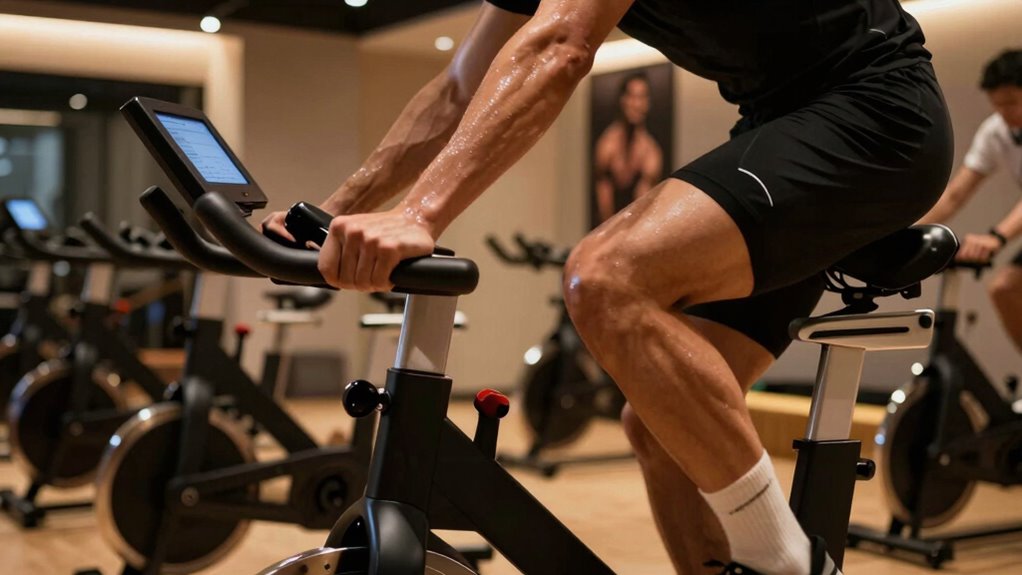
To find your indoor cycling cadence sweet spot in just five minutes, focus on listening to your body and experimenting within a comfortable range, typically between 80 to 100 RPM. Adjust your gear to support steady pedaling and aim for a rhythm that feels challenging yet sustainable. Tracking your progress with a cycling app or smartwatch can help refine your ideal cadence. Keep exploring and fine-tuning—there’s more to discover for maximum results.
Key Takeaways
- Listen to your body to identify comfortable, sustainable cadence ranges between 80-100 RPM.
- Experiment with gear adjustments to maintain a steady, efficient cadence without overexertion.
- Use cycling apps or smartwatches to monitor and track your cadence for personalized insights.
- Incorporate interval training to explore and find your ideal cadence sweet spot.
- Focus on consistent, mindful pedaling to discover the rhythm that feels most natural and effective.
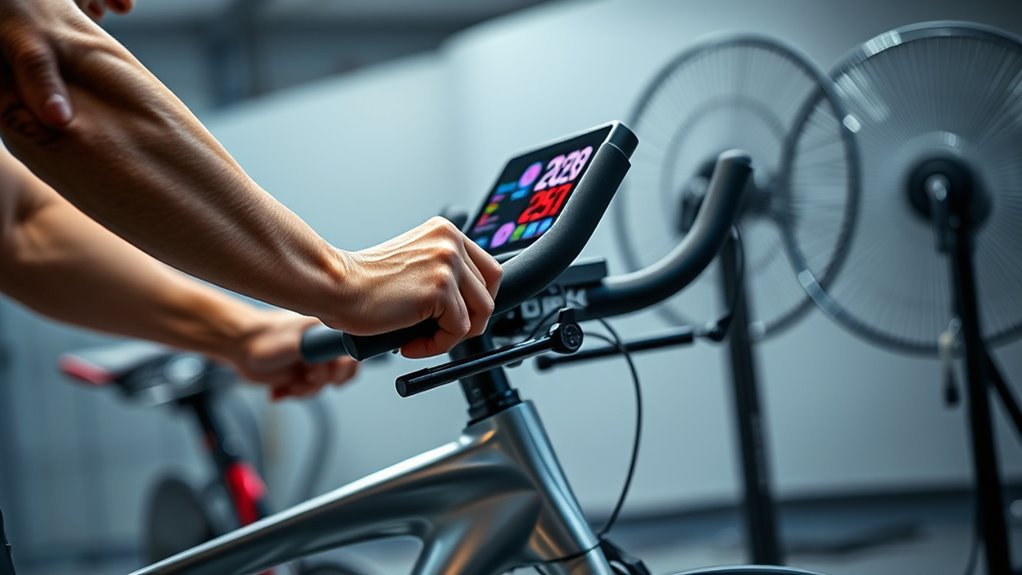
Indoor cycling cadence is a essential factor that can profoundly impact your workout performance and results. Finding your ideal cadence sweet spot helps you ride more efficiently, avoid injury, and stay motivated during each session. It’s not just about spinning faster or slower; it’s about discovering that perfect rhythm that aligns with your fitness level and goals. When you enhance your cadence, you’ll notice improvements in endurance, power, and overall comfort, making every workout feel more effective and enjoyable. Incorporating proper technique and listening to your body’s signals can further enhance your ride.
To start, consider your cycling gear. Proper footwear, a comfortable saddle, and well-adjusted handlebars create a foundation that enables you to pedal smoothly and maintain your chosen cadence for longer periods. High-quality cycling shoes with stiff soles, for instance, transfer power more efficiently, allowing you to sustain higher cadences without fatigue. As you experiment, pay attention to how your gear influences your ability to find and hold your sweet spot. Having the right equipment boosts your confidence and makes it easier to stay motivated, even during challenging intervals.
Finding your cadence sweet spot isn’t about chasing the highest RPMs or sticking rigidly to a preset number. Instead, listen to your body and notice how different cadences feel. Typically, a moderate range—around 80 to 100 revolutions per minute—serves most riders well, but this can vary based on your fitness level and cycling style. When you ride within your comfort zone, you conserve energy, reduce strain, and maintain a steady rhythm that keeps you engaged. It’s a satisfying feeling to hit that groove where everything clicks, and you feel in control of your ride.
Find your comfortable cadence—typically 80–100 RPM—to conserve energy, reduce strain, and enjoy a steady, engaging ride.
Training motivation plays a essential role in this process. When you’re motivated, you’re more likely to stay consistent and push through tough intervals. Discovering your cadence sweet spot can be a motivating breakthrough; it makes workouts feel less like a chore and more like a personal achievement. Incorporate interval training, where you alternate between higher and lower cadences, to keep things fresh and exciting. Tracking your progress, whether through a cycling app or a smartwatch, can also boost your motivation as you see improvements over time.
Ultimately, finding your indoor cycling cadence sweet spot is a quick, empowering process. It’s about tuning into your body, experimenting with your cycling gear, and setting achievable goals to keep your training motivation high. With a little patience and mindful adjustments, you’ll identify that optimal rhythm that maximizes your performance and keeps you coming back for more. Remember, the journey to the perfect cadence isn’t a race—it’s a personal exploration that leads to better rides and greater satisfaction. Recognizing the importance of Free Floating can help you optimize your pedaling efficiency and comfort.
Top picks for "indoor cycl cadence"
Open Amazon search results for this keyword.
As an affiliate, we earn on qualifying purchases.
Frequently Asked Questions
How Does Cadence Influence Overall Cycling Performance?
Cadence directly impacts your cycling performance by optimizing gear ratios and muscle recruitment. When you maintain an ideal cadence, you use your muscles efficiently, reducing fatigue and increasing endurance. By finding your sweet spot, you can shift gears smoothly, conserving energy and boosting speed. Consistently riding at the right cadence helps you perform better, recover faster, and ride longer without overexerting yourself.
Can Cadence Be Too High or Too Low for Safety?
Imagine pushing your cadence too high during a ride, risking strain on your knees and hips. Yes, cadence can be too high or too low for safety, impacting cadence ergonomics and injury prevention. A safe, ideal cadence maintains efficiency without overloading your joints. Staying within your personalized sweet spot helps prevent injury, ensuring you ride comfortably and sustainably. Always listen to your body and adjust your cadence accordingly.
How Do I Adjust Cadence for Different Workout Intensities?
To adjust your cadence for different workout intensities, start by changing your gear selection. For higher intensities, shift to a lower gear to maintain a steady cadence without overexerting. Pay attention to muscle fatigue—if you feel your muscles tiring too quickly, ease up slightly. Conversely, increase resistance when you want a tougher workout. Find a balance that challenges you without risking injury or burnout.
What Are Common Mistakes When Finding My Cadence Sweet Spot?
Don’t fall into the trap of thinking there’s a one-size-fits-all cadence sweet spot. Common mistakes include chasing high pedal speed without adjusting gear selection, which can lead to fatigue or injury. You might also ignore your body’s signals or keep a constant cadence regardless of workout intensity. Remember, it’s about finding a balance that feels natural—listen to your body and tweak gear and pedal speed accordingly, not just what looks good on the monitor.
Does Cycling Cadence Vary With Different Bike Types?
Yes, cycling cadence varies with different bike types because each bike’s design influences your ideal cadence. For example, road bikes often require higher cadences, while mountain bikes may need lower, more controlled speeds. You should aim for cadence consistency within each bike type, but be adaptable when switching between them. Adjust your pedaling to match the bike’s demands, helping you ride efficiently and comfortably across various cycling styles.
Conclusion
Now that you’ve uncovered your ideal indoor cycling cadence, the real challenge begins. Will you stick to it and push your limits, or let doubt slow you down? Remember, finding your sweet spot is just the start—mastering it could transform your rides forever. So, are you ready to embrace the unknown, challenge your comfort zone, and see how far you can go? The journey ahead is yours to shape. Your perfect cadence awaits—are you ready to find it?