
As you return to outdoor cycling, plan your first three rides carefully by starting with easy, familiar trails to rebuild confidence. Wear bright, reflective gear and a well-fitting helmet for safety and visibility. Carry essentials like water, a repair kit, and extra snacks. Gradually increase difficulty and duration while sticking to your skill level. Maintain communication with others and respect trail rules. Continuing your journey will reveal more tips to keep your cycling experience safe and enjoyable.
Key Takeaways
- Start with familiar, easy trails to build confidence and assess comfort levels.
- Ensure all safety gear, lights, and visibility accessories are properly fitted and functioning.
- Carry essential supplies like water, repair kits, and snacks for longer or unexpected rides.
- Ride within your skill level, and communicate intentions clearly with hand signals or vocal cues.
- Respect trail rules, environment, and other users to ensure a safe, enjoyable cycling experience.
Have you noticed more people hitting the roads and trails on their bikes lately? It seems like cycling is making a strong comeback, and it’s easy to see why. With outdoor spaces reopening and a desire for healthy, eco-friendly activities, more riders are dusting off their bikes and exploring new routes. If you’re planning your first rides back or just starting out, it’s essential to focus on the essentials—especially cycling gear and trail safety—to guarantee your experience is enjoyable and safe.
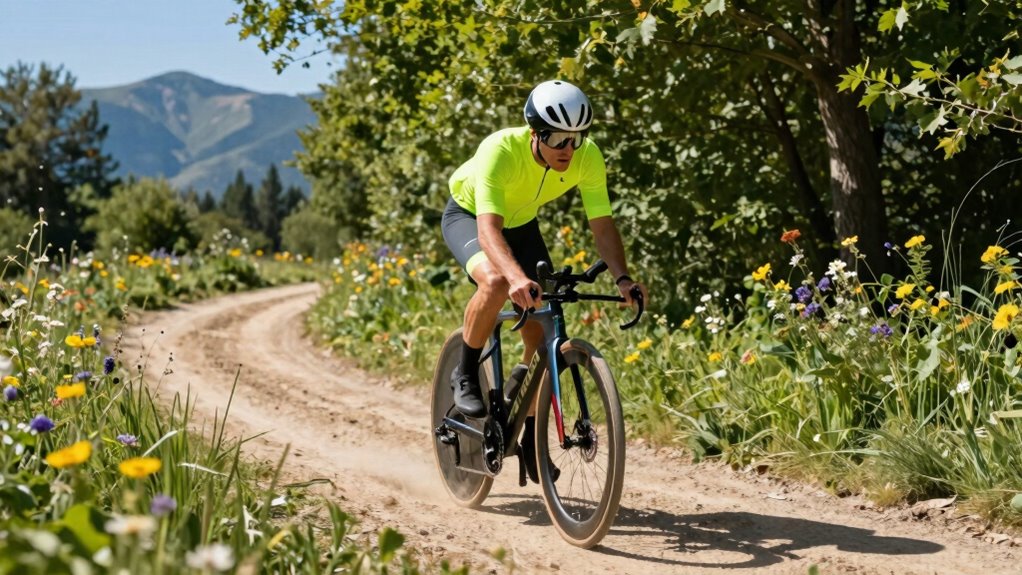
First, investing in the right cycling gear makes a big difference. Comfortable, well-fitting helmets are non-negotiable since they protect your head in case of falls or accidents. Look for helmets that fit snugly but aren’t too tight, with adjustable straps for a secure fit. Bright-colored or reflective elements on your helmet and clothing boost visibility, which is critical as more riders share the trails. A good pair of gloves not only improves grip but also reduces vibrations and protects your hands. Padded shorts or cycling tights can make longer rides more comfortable, preventing chafing and soreness. And don’t forget about shoes—clipless pedals or sturdy sneakers with good grip help you pedal efficiently and stay stable. As you gear up, consider investing in sunglasses or clear glasses to shield your eyes from dust, insects, and sun glare. Having the right cycling gear isn’t just about comfort; it’s about safety. Proper gear helps you stay alert, protected, and confident as you navigate busy roads or winding trails.
Invest in comfortable helmets, gloves, and bright gear for safer, more enjoyable cycling experiences.
Trail safety is equally important as your gear. Before heading out, familiarize yourself with the trail rules and any posted signs. Keep an eye out for potential hazards like loose gravel, roots, or uneven surfaces, and adjust your speed accordingly. Always ride within your skill level—pushing too hard on unfamiliar terrain can lead to accidents. Maintain a safe distance from other cyclists, pedestrians, and wildlife, giving everyone enough space to enjoy the trail. Use hand signals or vocal cues to communicate your intentions to others, especially when passing or turning. If you’re riding during low-light hours, make sure your bike is equipped with front and rear lights, and wear reflective clothing to stay visible. Carry a small repair kit, water, and some snacks, so you’re prepared for unexpected issues or longer rides. Additionally, understanding cycling safety guidelines can further enhance your experience and reduce risks. Remember, trail safety isn’t just about your own protection but also about respecting the environment and fellow trail users.
Getting back into outdoor cycling is exciting, but it’s essential to do it responsibly. With the right cycling gear and a mindful approach to trail safety, you’ll be able to enjoy your rides fully while minimizing risks. Whether you’re exploring quiet country roads or scenic mountain trails, being prepared makes all the difference. So, gear up wisely, stay alert, and embrace the fresh air and freedom that cycling offers. Your first ride back could be the start of a new, rewarding chapter in outdoor adventures.
Top picks for "outdoor cycl comeback"
Open Amazon search results for this keyword.
As an affiliate, we earn on qualifying purchases.
Frequently Asked Questions
What Safety Gear Is Recommended for Outdoor Cycling?
You should always wear a helmet to guarantee helmet safety and protect your head in case of falls. Additionally, don’t forget reflective gear like vests or strips to increase visibility, especially during dawn, dusk, or low-light conditions. Gloves and proper shoes also help maintain control and comfort. By prioritizing safety gear, you reduce risks and make your outdoor cycling experience safer and more enjoyable.
How Can Beginners Start Cycling Outdoors Confidently?
You can start cycling outdoors confidently by choosing comfortable cycling apparel that fits well and suits your environment. Begin with easy, familiar routes and gradually increase distance as your confidence grows. Follow beginner’s tips like practicing proper gear shifting, maintaining steady speed, and staying aware of your surroundings. Visualize yourself riding smoothly, feeling in control, and enjoying the fresh air—this mindset will boost your confidence with every ride.
What Are the Best Routes for New Cyclists?
You should start with scenic trail options that are gentle and well-marked, perfect for building confidence. Urban cycling routes are also great, especially those with dedicated bike lanes, making your ride safer and more enjoyable. Look for routes with minimal traffic, smooth surfaces, and good signage. These options help you gain experience and enjoy your ride, whether you’re exploring nature or cruising through your city.
How Do Weather Conditions Affect Outdoor Cycling Plans?
Weather conditions substantially influence your outdoor cycling plans. You should wear seasonal clothing to stay comfortable and protected from changing temperatures, rain, or wind. Wind resistance can make pedaling more challenging, so check the forecast and plan rides on calmer days when possible. Be prepared for sudden weather shifts by carrying appropriate gear, and always prioritize safety by adjusting your route or postponing rides during severe conditions.
Are There Specific Maintenance Tips for Outdoor Bikes?
You should regularly perform bike cleaning to keep your outdoor bike in top shape, removing dirt and debris that can cause wear. Check and maintain proper tire pressure before each ride to ensure ideal performance and safety. Also, regularly inspect your brakes, chain, and gears, lubricate moving parts, and store your bike in a dry place to prevent rust. These simple maintenance tips help extend your bike’s lifespan and improve your riding experience.
Conclusion
As you hop back on your bike, think of it as waking up a long-lost friend—exciting and full of promise. Every pedal stroke is a brushstroke on your outdoor canvas, painting a vibrant scene of adventure and freedom. The open road awaits like a welcoming smile, ready to carry you through new sights and fresh air. So, embrace this comeback ride with open arms—your journey of discovery is just beginning, and the horizon is calling your name.