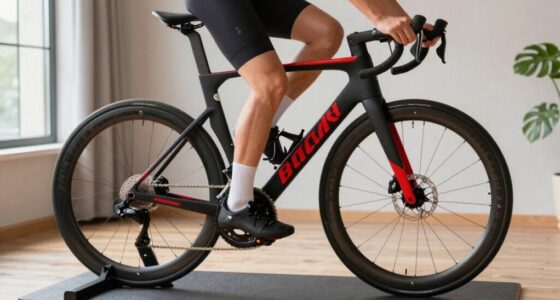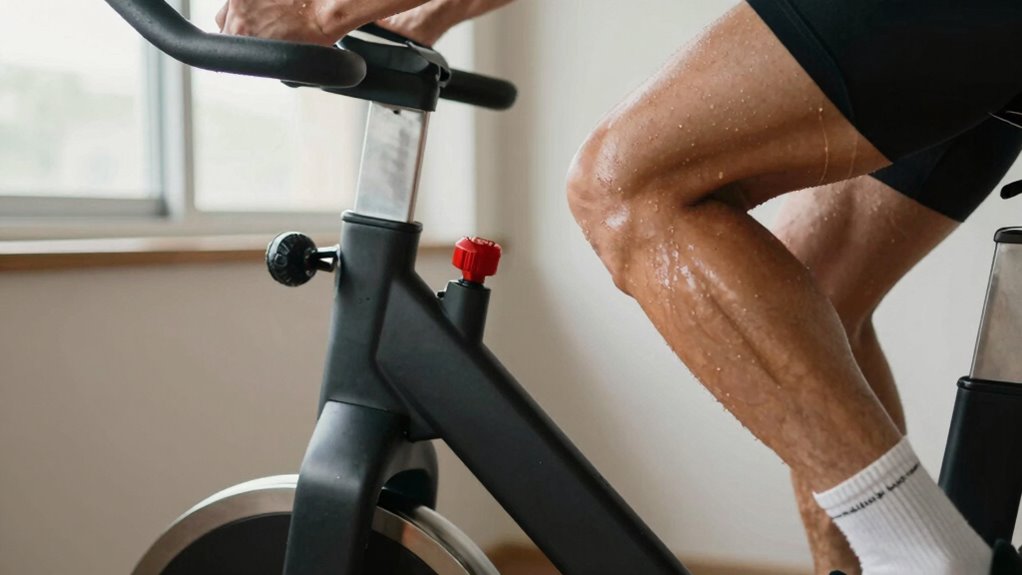

One common mistake that leaves your quads toast too early is neglecting proper bike fit and posture. When you hunch or lean too far forward, it causes over-reliance on your quads and strains your upper body, leading to quick fatigue. Also, starting with too high resistance can tire your muscles prematurely. By ensuring your bike is well-fitted, maintaining a neutral spine, and managing resistance, you can ride longer and more efficiently. Keep going to learn how to optimize your ride.

Get workout gear delivered free with Prime
- Fast, free delivery on millions of items
- Prime Video, Amazon Music and more included
- Member-only deals all year
Key Takeaways
- Using resistance that’s too high at the start overloads your quads early in the workout.
- Poor bike fit and incorrect posture cause uneven muscle engagement, leading to quad fatigue.
- Not maintaining a neutral spine and relaxed shoulders increases upper body tension, affecting pedal efficiency.
- Failing to gradually increase resistance during warm-up causes muscle overexertion.
- Ignoring pedal stroke mechanics results in inefficient muscle use and quicker quad burnout.

Many indoor cyclists make the mistake of neglecting proper bike fit, which can lead to discomfort and injury. But another common error that often goes unnoticed is how your cycling posture and resistance control can cause your quads to burn out too early in a ride. If you’re not paying attention to these details, you might find yourself hitting a wall faster than expected, with tired legs that hinder your overall performance.
Your cycling posture plays an essential role in how efficiently you ride and how your muscles are engaged. If you’re leaning too far forward or hunching your shoulders, you’re likely putting unnecessary strain on your upper body and altering your pedal stroke. This misalignment can lead you to rely excessively on your quads, causing them to fatigue quickly. Instead, focus on maintaining a neutral spine, keeping your shoulders relaxed, and positioning your saddle height correctly to promote an ideal riding posture. When your posture is right, you distribute effort more evenly across your muscle groups, preventing your quads from taking on too much work too soon. Additionally, proper biomechanics can help optimize muscle engagement and reduce fatigue. Paying attention to bike fit can ensure your body is aligned correctly, further reducing fatigue and discomfort. Incorporating correct riding technique can also make a significant difference in how your muscles are recruited during each pedal stroke. Being mindful of your pedal stroke mechanics can lead to more efficient muscle use and less early fatigue. Practicing riding efficiency can also help you develop a more sustainable effort throughout your ride.
Maintain a neutral spine and relaxed shoulders for balanced effort and reduced quad fatigue during indoor cycling.
Resistance control is another key factor that influences how your muscles fatigue during a session. Many riders set the resistance too high at the start or during intense segments, which forces your quads to work harder than necessary. This can result in early fatigue, making it tough to complete your workout or enjoy the full benefits of your ride. Instead, start with a manageable resistance and gradually increase it as you warm up, paying close attention to how your muscles respond. Proper resistance control allows you to sustain a steady effort, promoting better endurance and muscle balance.
Combining good cycling posture with mindful resistance control is vital to prevent your quads from burning out prematurely. Keep your core engaged to support your upper body, and avoid overusing your quads by ensuring your pedal stroke remains smooth and efficient. Remember to shift resistance appropriately throughout your workout, not just during the most intense moments. This balanced approach helps you conserve energy, prevent muscle overuse, and ultimately improve your cycling performance.
If you’re consistently finding your quads fatigued early in rides, reassess your posture and resistance settings. Small adjustments can make a significant difference in how your muscles respond and how long you can maintain high-quality effort. By paying attention to these elements, you’ll ride smarter, last longer, and enjoy your indoor cycling sessions more fully.
indoor cycling bike fit adjustment
As an affiliate, we earn on qualifying purchases.
As an affiliate, we earn on qualifying purchases.
Frequently Asked Questions
How Can I Tell if I’M Overusing My Quads During Cycling?
You can tell you’re overusing your quads if you feel excessive fatigue or soreness in them after cycling, especially if your hamstrings or glutes feel underworked. Pay attention to your pedal technique; if you’re relying heavily on your quads, you might develop a muscle imbalance. Focus on engaging your hamstrings and glutes more, and adjust your pedal stroke to distribute effort evenly, helping prevent early quad fatigue and improving overall efficiency.
Are There Specific Bike Settings to Prevent Quad Fatigue?
Think of your bike settings like tuning a guitar—when they’re just right, everything plays smoothly. To prevent quad fatigue, adjust your seat height so your knees aren’t overextended and set your gears to maintain pedal efficiency without overexerting your quads. Regular gear maintenance guarantees smooth shifting, reducing unnecessary strain. These tweaks help distribute effort evenly, keeping your quads fresh and letting you ride longer without burning out too soon.
What Are the Best Techniques to Balance Muscle Engagement?
To balance muscle engagement, focus on improving your pedal technique and muscle coordination. Keep your pedals smooth and consistent, avoiding excessive resistance that overworks your quads. Engage your core and use your hamstrings and glutes more effectively to distribute effort evenly. Practice proper pedal strokes, like pulling up with your ankles and pushing down with your heels, to prevent over-reliance on your quads and promote balanced muscle activation throughout your ride.
How Does Bike Seat Height Influence Quad Exhaustion?
Did you know that improper seat height can increase quad fatigue by up to 30%? When you adjust your seat, make sure it’s at the right height for your body, which affects pedal alignment. A seat that’s too low forces your quads to work harder, leading to early exhaustion. Proper seat adjustment promotes balanced muscle engagement and reduces early quad burnout, making your ride more efficient and comfortable.
Can Different Riding Positions Reduce Quad Strain?
Yes, changing your riding positions can reduce quad strain. When you adopt a more upright or varied posture, you engage different muscles, easing quad fatigue. Adjusting your pedal cadence and managing wind resistance also helps; for example, a higher cadence with less wind resistance minimizes quad overload. By alternating positions and tweaking these factors, you distribute effort more evenly, preventing your quads from burning out too early during indoor cycling.
As an affiliate, we earn on qualifying purchases.
Conclusion
To avoid burning out your quads too soon, stay mindful of your positioning and resistance levels. Think of each pedal stroke as a delicate dance—balance is key to endurance and strength. If you push too hard too soon, you risk feeling toasted before the ride’s even halfway over. Keep your form steady and listen to your body, so your workout becomes a marathon, not a sprint, much like a steady heartbeat in a moment of calm amidst chaos.
As an affiliate, we earn on qualifying purchases.
cycling posture correction accessories
As an affiliate, we earn on qualifying purchases.
As an affiliate, we earn on qualifying purchases.
Halloween Picks
halloween
As an affiliate, we earn on qualifying purchases.