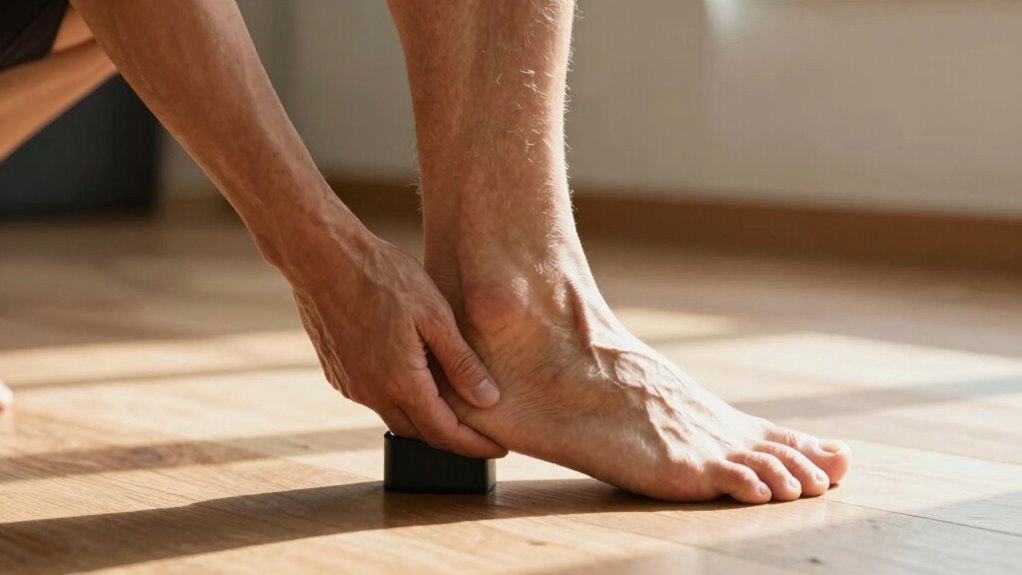

To quickly improve ankle mobility for squats and running, dedicate five minutes daily to static and dynamic stretches. Start with calf wall stretches to loosen tight muscles and perform ankle circles or heel-toe rocks to warm up and mobilize your ankles. Consistency makes a big difference; over time, these exercises help you squat deeper, run more efficiently, and prevent injuries. Keep exploring for more tips to discover your full movement potential.

Get workout gear delivered free with Prime
- Fast, free delivery on millions of items
- Prime Video, Amazon Music and more included
- Member-only deals all year
Key Takeaways
- Incorporate daily static calf stretches to improve ankle dorsiflexion and support proper squat form.
- Use dynamic exercises like ankle circles and heel-toe rocks to warm up and enhance ankle mobility.
- Consistently dedicate 5 minutes to mobility routines for sustained flexibility during running and squats.
- Improved ankle flexibility reduces strain and prevents injuries, boosting overall movement efficiency.
- Enhanced ankle mobility leads to deeper squats and smoother running gait through better joint alignment.
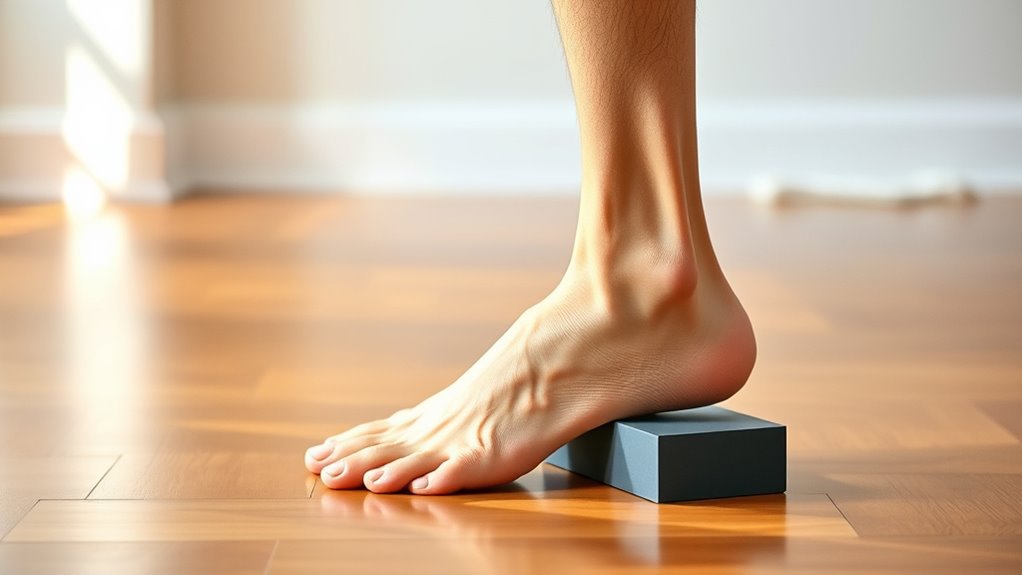
Good ankle mobility is essential for both effective squats and smooth running, as it directly impacts your balance, form, and injury prevention. When your ankles move freely, you can maintain proper alignment, generate power, and reduce strain on surrounding joints. One of the simplest ways to improve ankle mobility is by focusing on ankle flexibility through targeted stretches, especially calf stretching. Tight calves often restrict ankle movement, limiting your range of motion and setting the stage for compensations or injuries. By incorporating regular calf stretches into your routine, you loosen up the muscles at the back of your lower leg, which in turn enhances ankle flexibility. This not only helps you squat deeper with proper form but also allows for a more natural gait when running.
To get started, find a wall or sturdy surface to support your stretch. Place your hands on the wall and step one foot back, keeping it flat on the ground. Bend your front knee slightly and lean forward, feeling a stretch in your calf. Hold this position for about 30 seconds and switch sides. Doing this consistently will gradually loosen your calf muscles, improving ankle dorsiflexion—the movement where your toes move toward your shin. When your calves are tight, your ankles can’t move through their full range, causing compensations that may lead to knee or hip issues over time. By regularly stretching your calves, you’re directly increasing ankle flexibility, which benefits your overall movement mechanics.
In addition to static calf stretches, incorporating dynamic ankle mobility exercises can further enhance your flexibility. Simple movements like ankle circles or heel-toe rocks can warm up and mobilize your ankles during warm-up routines. These exercises improve circulation and prepare your ankles for more demanding activities like squatting or running. Consistent practice of these exercises can lead to sustained improvements in ankle mobility. Remember, consistency is key—aim for daily or every-other-day calf stretching sessions, especially if you notice tightness or discomfort. Over time, you’ll notice increased ankle mobility, making squats feel more natural and running more efficient.
Ultimately, dedicating just five minutes a day to ankle flexibility and calf stretching can make a noticeable difference. It’s a quick, effective way to unlock better movement, prevent injuries, and improve your performance. When your ankles move freely, your entire lower body benefits, allowing you to squat lower with control and run with ease. Keep these stretches simple, stay consistent, and watch your ankle mobility—and your overall movement—improve considerably.
As an affiliate, we earn on qualifying purchases.
Frequently Asked Questions
Can Ankle Mobility Exercises Prevent Injuries During Running?
Yes, ankle mobility exercises can help prevent injuries during running by reducing ankle stiffness. When your ankles move more freely, you improve your balance, stability, and shock absorption, lowering the risk of strains and sprains. Incorporating quick, targeted ankle mobility routines before your run guarantees your joints stay flexible, which is key for injury prevention. So, dedicating just a few minutes to these exercises can make a significant difference.
How Often Should I Perform Ankle Mobility Drills?
Think of your ankles as the foundation of a sturdy house—without proper care, everything else suffers. You should perform ankle mobility drills 3-5 times a week, integrating them into your training routine. Keep each session short and effective, around 5 minutes. This consistent exercise duration boosts flexibility and prevents injuries, ensuring your foundation stays strong and resilient for both squats and running.
Are There Specific Shoes That Improve Ankle Flexibility?
Yes, some shoes can enhance ankle flexibility through footwear enhancement and shoe modifications. Look for footwear with a flexible sole, a low heel-to-toe drop, and a wide toe box to promote better ankle mobility. You might also consider custom orthotics or shoe inserts designed to improve ankle movement. Avoid stiff, supportive shoes that restrict ankle motion, and opt for footwear that encourages natural ankle movement during activity.
Is There a Difference in Ankle Mobility Needs for Men and Women?
Yes, there are differences in ankle mobility needs for men and women due to anatomical variations. Men often have slightly stiffer ankles, requiring more targeted mobility work, while women typically have greater flexibility but may still benefit from specific exercises. You should focus on your individual needs, regardless of gender. Pay attention to your body’s signals and tailor your mobility routine to improve your ankle function effectively.
Can Poor Ankle Mobility Affect My Overall Athletic Performance?
Poor ankle mobility can definitely impact your athletic performance. If you experience ankle stiffness or mobility limitations, your movements become less efficient, increasing the risk of injury and reducing your speed, agility, and power. When your ankles don’t move freely, it affects your balance and stability, making it harder to perform at your best. Improving ankle mobility helps enhance your overall performance, allowing you to move more freely and confidently in every activity.
As an affiliate, we earn on qualifying purchases.
Conclusion
Improving your ankle mobility can feel like a lucky break, releasing better squats and smoother runs without extra effort. Just a few minutes daily, and suddenly everything clicks into place—like finding that perfect pair of shoes you didn’t realize you needed. When your ankles move freely, your entire workout improves, and you might even enjoy your run more. It’s a small fix that surprisingly makes a big difference, turning routine into something you look forward to.
As an affiliate, we earn on qualifying purchases.
dynamic ankle mobility exercises
As an affiliate, we earn on qualifying purchases.
As an affiliate, we earn on qualifying purchases.
Fall Picks
fall essentials
As an affiliate, we earn on qualifying purchases.