

You can boost your training consistency by including simple everyday foods like bananas, Greek yogurt, and whole-grain toast in your diet. These foods provide essential carbs and protein to fuel workouts and support recovery, helping you stay energized and prevent fatigue. Consistent consumption of these nutritious options quietly enhances your progress without much effort. Stick around to discover more small changes that can make a big difference in reaching your fitness goals.

Get workout gear delivered free — and shop member deals
- Fast, free delivery on millions of items
- Access to Prime Big Deal Days deals on October 6–7
- Prime Video, Amazon Music and more included
Key Takeaways
- Incorporate bananas and oranges for hydration and quick energy during workouts.
- Consume Greek yogurt and whole-grain toast for sustained post-workout muscle repair.
- Snack on cucumbers and watermelon to maintain hydration and electrolytes naturally.
- Include lean proteins like eggs or chicken for daily muscle support and recovery.
- Practice regular, small fluid intake with herbal teas or diluted fruit juices to prevent dehydration.
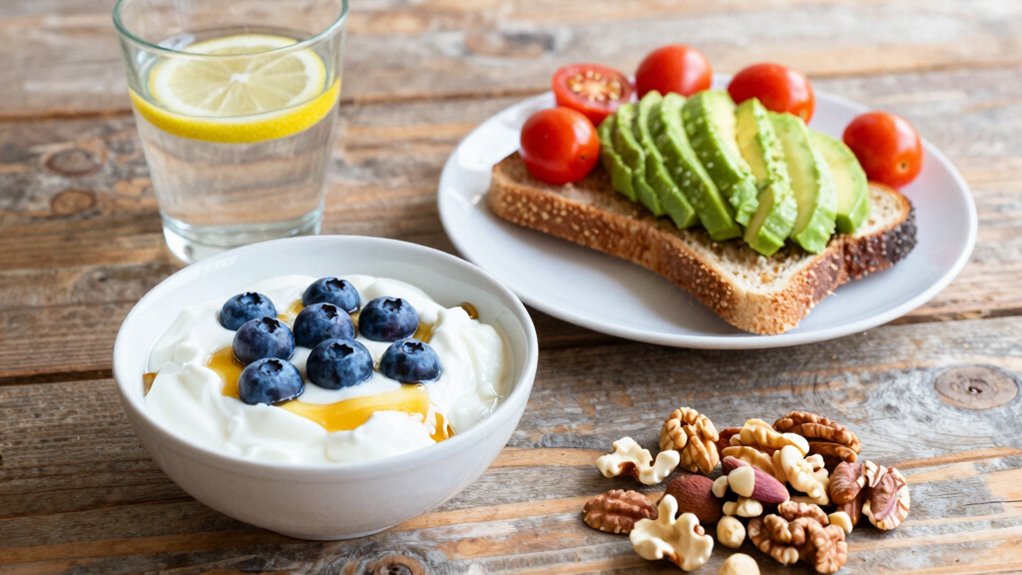
Maintaining consistent training results isn’t just about workouts; what you eat every day plays a crucial role. The foods you select, along with when and how you consume them, can markedly influence your performance and recovery. Two critical aspects often overlooked are nutrient timing and hydration strategies. Paying attention to these can help you sustain energy levels, prevent fatigue, and keep your progress on track. Incorporating nutrient timing into your routine ensures your body receives the right nutrients at optimal moments for maximum benefit.
Consistent training relies on smart eating, nutrient timing, and hydration to boost energy, recovery, and progress.
Nutrient timing refers to consuming specific nutrients at ideal times to enhance your training results. For instance, eating a balanced meal rich in carbs and protein about 30 to 60 minutes before your workout can give you the energy boost needed to perform at your best. Post-workout, focusing on replenishing glycogen stores with carbs and repairing muscles with protein helps speed up recovery. You don’t need fancy supplements; everyday foods like bananas, Greek yogurt, and whole-grain toast can serve these purposes well. Understanding how your body processes nutrients can also help you make smarter choices that support your training goals. Additionally, paying attention to meal composition can optimize how your body utilizes nutrients during different phases of your exercise routine. Incorporating personalized nutrition strategies can further enhance your results, ensuring your diet aligns with your specific activity levels and goals.
Hydration strategies are equally essential. Staying properly hydrated isn’t just about drinking water during or after exercise; it’s about maintaining a consistent fluid intake throughout the day. Dehydration can impair your strength, endurance, and focus, making it harder to stick with your routine. Incorporate hydrating foods like watermelon, cucumbers, and oranges into your meals, and don’t rely solely on water. Herbal teas or diluted fruit juices can add variety and electrolytes, especially if you’re sweating heavily. Remember, thirst isn’t always the best indicator of hydration needs—develop a habit of drinking small amounts regularly, even if you don’t feel thirsty. Proper hydration also supports overall metabolic function, which is crucial for sustained energy and recovery. Staying mindful of your hydration habits can also prevent common issues like muscle cramps and fatigue, helping you stay consistent with your training.
In addition to timing your nutrient intake, paying attention to hydration strategies helps your body operate smoothly. It prevents cramps, reduces fatigue, and supports peak muscle function. When your body remains well-hydrated, you’re more likely to stay consistent with your training because you’ll feel energized and less prone to setbacks caused by dehydration-related issues. Combining proper nutrient timing with effective hydration strategies ensures your body gets what it needs when it needs it, making it easier to stay committed and see steady progress.
In essence, everyday foods are your allies in supporting training consistency. By paying attention to when and what you eat, along with staying mindful of hydration, you set a foundation that helps you push through challenges and keep moving forward. Small, intentional choices around nutrient timing and hydration can lead to big improvements in your overall training journey.
Greek yogurt for muscle recovery
As an affiliate, we earn on qualifying purchases.
As an affiliate, we earn on qualifying purchases.
Frequently Asked Questions
Can These Foods Improve Athletic Performance Immediately?
These foods can offer an immediate performance boost if you use nutrient timing strategies effectively. Eating carbohydrate-rich foods before your workout provides quick energy, while consuming protein afterward helps recovery. Though they won’t transform your performance overnight, incorporating these foods strategically helps you feel more energized and focused during training. Consistent use over time, combined with proper timing, maximizes their benefits and supports better athletic performance overall.
Are There Any Side Effects From Eating These Foods Regularly?
About 20% of people experience potential allergen concerns when eating certain everyday foods regularly, which could lead to reactions. You might also face nutrient absorption issues if you overconsume specific items, like dairy or grains. While these foods are generally safe, eating them excessively might cause side effects like digestive discomfort or allergic responses. Always balance your diet and monitor how your body reacts to prevent any adverse effects.
How Much of These Foods Should I Consume Daily?
You should aim for balanced portions of these foods daily, considering nutrient timing to optimize your training. Typically, a serving size aligned with your dietary needs—like a handful of nuts or a cup of yogurt—works well. Use portion control to prevent overeating, and space out intake through the day to maintain steady energy levels. Adjust quantities based on your activity level and consult a nutritionist for personalized guidance.
Do These Foods Benefit All Types of Training?
You’ll find that these foods benefit nearly all types of training, transforming your performance like a secret weapon. Incorporating food variety guarantees your body gets a wide range of nutrients, while paying attention to nutritional timing maximizes energy and recovery. Whether you’re lifting, running, or doing yoga, these foods support your goals. Consistently including them in your diet helps optimize your training, no matter the activity or intensity.
Can Vegetarians or Vegans Incorporate These Foods Easily?
Yes, vegetarians and vegans can easily incorporate these foods into their diets. They can focus on plant-based protein sources like beans, lentils, tofu, and nuts to meet their nutritional needs. Proper nutrient timing is key, so you should consume these foods around your workouts for peak energy and recovery. By doing this, you guarantee consistent training progress while maintaining a plant-based diet.
As an affiliate, we earn on qualifying purchases.
Conclusion
Incorporating these everyday foods into your routine can boost your training consistency without feeling like a chore. You might worry that changing your diet is complicated or expensive, but most of these options are simple, affordable, and easy to find. Remember, small changes add up over time. Enjoying your meals while fueling your body is key—so don’t stress about perfection. Focus on progress, not perfection, and watch your training improve naturally.
hydrating fruits watermelon cucumber
As an affiliate, we earn on qualifying purchases.
As an affiliate, we earn on qualifying purchases.
As an affiliate, we earn on qualifying purchases.
Fall Picks
fall essentials
As an affiliate, we earn on qualifying purchases.