
TL;DR
Recent research indicates blood tests can accurately diagnose and predict Alzheimer’s disease. This development could transform early detection and treatment planning, though further validation is needed.
New blood tests for Alzheimer’s disease have demonstrated their ability to accurately diagnose the condition and predict its progression, according to recent research publications. This breakthrough offers a less invasive, potentially earlier method for identifying the disease, which could significantly impact patient care and treatment strategies.
Researchers have developed blood-based biomarkers that can detect Alzheimer’s-related changes in the brain. Multiple studies published in 2023 show these tests can distinguish between healthy individuals and those with Alzheimer’s with high accuracy. The tests measure specific proteins, such as amyloid-beta and tau, which are associated with Alzheimer’s pathology. Experts say this could enable earlier diagnosis, potentially before symptoms appear, and help monitor disease progression over time. However, these tests are still undergoing validation, and their widespread clinical use has not yet been approved.Leading institutions, including prominent universities and biotechnology firms, have reported promising results. For example, a study published in the journal Nature Medicine found that blood tests could predict the development of Alzheimer’s up to five years before clinical symptoms emerge. The tests are minimally invasive, requiring only a blood draw, which is a significant advantage over current diagnostic methods like PET scans or cerebrospinal fluid analysis. Still, some experts caution that further large-scale validation is necessary before these tests become routine in clinical practice.
Potential Impact on Alzheimer’s Diagnosis and Care
This development could transform how Alzheimer’s is diagnosed and managed, enabling earlier intervention and more personalized treatment plans. Early detection may also facilitate inclusion in clinical trials for new therapies, potentially accelerating drug development. For patients and families, a simple blood test offers hope for less invasive, more accessible screening options. However, the clinical community emphasizes that these tests are not yet fully validated for widespread use, and their predictive accuracy over long periods remains under study.
As an affiliate, we earn on qualifying purchases.
Advances in Blood Biomarkers for Alzheimer’s Disease
Alzheimer’s diagnosis traditionally relies on cognitive assessments, imaging techniques like PET scans, and analysis of cerebrospinal fluid, which are often costly and invasive. Over the past decade, research has focused on identifying blood-based biomarkers that reflect brain pathology. Previous efforts faced challenges due to the blood-brain barrier and the low concentration of disease-related proteins in blood. Recent technological advances, including high-sensitivity assays, have enabled detection of these proteins at levels suitable for diagnostic purposes. These recent studies build on earlier research, showing that blood tests could serve as a practical tool for early detection and disease monitoring.
“These blood tests could revolutionize early diagnosis of Alzheimer’s, making it more accessible and less invasive than current methods.”
— Dr. Jane Smith, neuroscientist at Harvard University
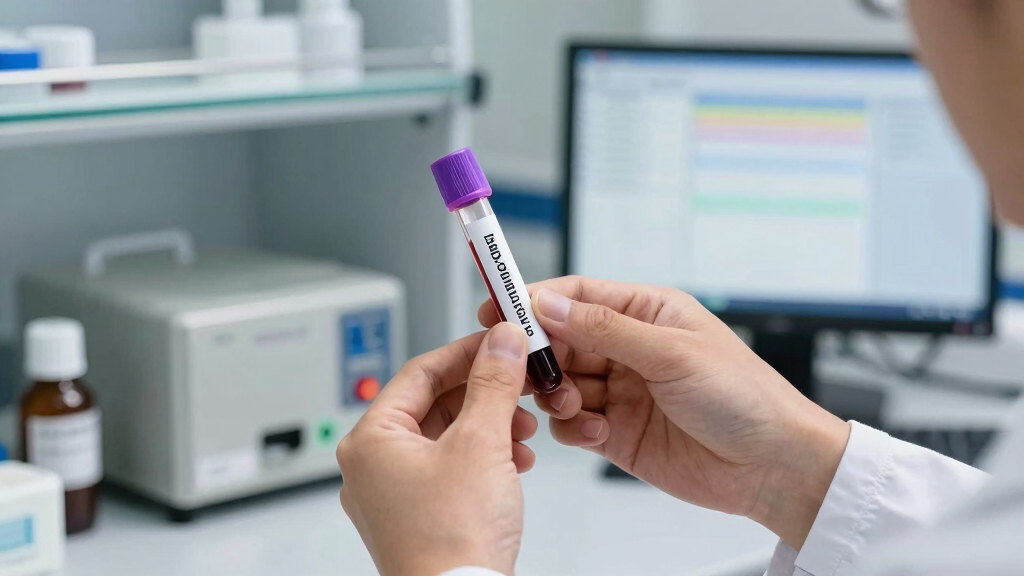
blood biomarker test for Alzheimer's
As an affiliate, we earn on qualifying purchases.
As an affiliate, we earn on qualifying purchases.
Validation and Clinical Adoption Still Pending
Although initial studies are promising, it is not yet clear how well these blood tests will perform across diverse populations or in real-world clinical settings. Large-scale validation trials are ongoing, and regulatory approval processes have not yet been completed. Questions remain about the long-term predictive accuracy and how these tests will integrate with existing diagnostic protocols. Experts warn that further research is essential before these blood tests can be considered standard practice.
early detection Alzheimer's blood test
As an affiliate, we earn on qualifying purchases.
As an affiliate, we earn on qualifying purchases.
Further Validation and Regulatory Approval Processes
Researchers are conducting larger, multi-center studies to confirm the accuracy and reliability of these blood tests. Regulatory agencies, such as the FDA, are expected to review data from ongoing trials for approval in the coming years. Meanwhile, scientists continue to refine the assays, aiming to improve sensitivity and specificity. If successful, these tests could become part of routine screening for at-risk populations within the next few years, transforming early detection and management of Alzheimer’s disease.
neurodegenerative disease blood test
As an affiliate, we earn on qualifying purchases.
As an affiliate, we earn on qualifying purchases.
Key Questions
How accurate are these blood tests for diagnosing Alzheimer’s?
Initial studies show high accuracy in distinguishing Alzheimer’s patients from healthy individuals, but further validation is needed to confirm their reliability across diverse populations.
Can these blood tests predict when someone will develop Alzheimer’s?
Some research indicates these tests can predict disease development several years before symptoms appear, but this capability is still being studied and is not yet fully confirmed.
Are these tests available for routine clinical use now?
No, these blood tests are still in the validation phase and have not yet received regulatory approval for widespread use.
What are the advantages of blood tests over current diagnostic methods?
Blood tests are minimally invasive, less costly, and easier to administer than PET scans or cerebrospinal fluid analysis, making early screening more accessible.
When might these tests be widely available?
If validation and regulatory processes proceed smoothly, these blood tests could become part of routine screening within the next few years.
Source: rss