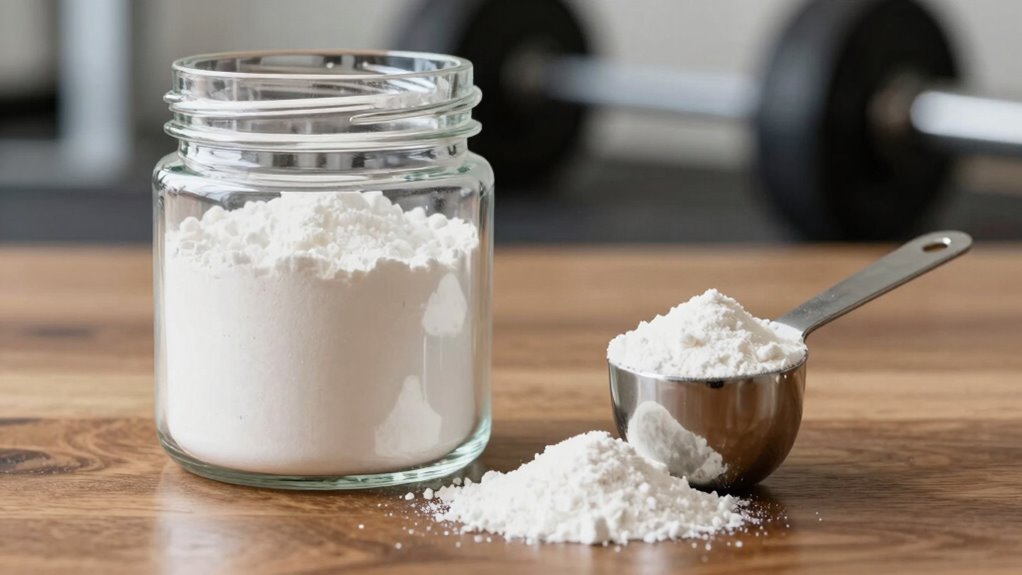

Creatine is a natural compound found mainly in muscles, helping produce energy during intense workouts. Supplementing with creatine boosts your muscle stores of phosphocreatine, allowing you to lift heavier, do more reps, and recover faster. It’s especially beneficial for strength trainers, athletes, vegetarians, or anyone looking to build muscle and improve performance. If you want to understand how creatine can help you reach your fitness goals, keep exploring how it works and who can benefit.
Key Takeaways
- Creatine is a naturally occurring compound in muscles that boosts energy production during high-intensity activities.
- It enhances workout performance by increasing strength, power, and recovery, leading to greater muscle gains.
- Creatine is especially beneficial for power athletes, bodybuilders, vegetarians, and those seeking faster muscle growth.
- Supplementing with creatine can improve athletic capacity and reduce fatigue during intense exercise.
- It is generally safe and suitable for anyone aiming to enhance exercise results and muscle development.
Are you curious about how creatine can boost your workout performance? If so, you’re not alone. Creatine is one of the most researched and popular supplements among athletes and fitness enthusiasts alike. When used correctly, it can considerably support muscle gain and enhance athletic performance. But what exactly is creatine, and who might benefit from taking it? Let’s break it down.
Creatine is a naturally occurring compound found mainly in your muscles. Your body produces some on its own, and you also get it from foods like red meat and fish. Creatine plays a crucial role in energy production, especially during short bursts of intense activity. When you take a creatine supplement, you’re increasing your muscles’ stores of phosphocreatine, which helps regenerate ATP—the primary energy carrier in cells. This boost in available energy allows you to push harder during your workouts, whether you’re lifting weights, sprinting, or engaging in high-intensity interval training.
Creatine boosts energy by increasing muscle phosphocreatine, enhancing workout performance and recovery.
By supplementing with creatine, you’ll likely notice improvements in muscle gain. It enables you to perform more reps, lift heavier weights, and recover faster between sets. Over time, this increased training capacity translates into greater muscle hypertrophy and strength gains. Additionally, creatine has been shown to promote cell volumization, making your muscles look fuller and more defined. These effects make it a favorite among bodybuilders and athletes aiming to maximize their muscle-building potential.
Beyond muscle gain, creatine also enhances athletic performance. It’s particularly effective in sports that require quick bursts of power, speed, or strength. Whether you’re a sprinter, football player, or someone who enjoys intense workouts, creatine helps you perform at a higher level. It reduces fatigue, allowing you to sustain high-intensity efforts longer. This means you can train harder and recover quicker, ultimately improving your overall athletic capacity.
People who might consider taking creatine include those involved in strength training, bodybuilding, or sports demanding explosive movements. It’s also beneficial for vegetarians and vegans, who often have lower baseline creatine levels due to plant-based diets. However, even if you’re a casual exerciser, creatine can still support your fitness goals, especially if you want to see faster progress and better performance. Always remember to consult with a healthcare professional before starting any new supplement, but rest assured, creatine is generally safe and well-tolerated when used appropriately.
Top picks for "creatine basic might"
Open Amazon search results for this keyword.
As an affiliate, we earn on qualifying purchases.
Frequently Asked Questions
Are There Any Long-Term Health Risks of Creatine Supplementation?
You might wonder about long-term safety and health risks of creatine supplementation. Current research suggests that when you follow recommended doses, creatine is generally safe for healthy individuals. However, some concerns include potential stress on your kidneys or dehydration if you don’t stay well-hydrated. Always consider consulting a healthcare professional before long-term use, especially if you have existing health conditions, to guarantee it’s safe for you.
Can Vegetarians or Vegans Benefit From Creatine?
If you’re on a plant-based diet or are a vegan athlete, you can definitely benefit from creatine. Since creatine is mainly found in animal products, supplementing helps boost your levels, improving strength and recovery. Vegan athletes often see gains similar to omnivores when supplementing, making creatine a valuable addition to support your training, especially because plant-based diets may naturally have lower creatine stores.
How Does Creatine Affect Mental Performance?
Creatine can boost your mental performance by enhancing cognitive functions and reducing mental fatigue. When you supplement with it, you may notice sharper focus, better memory, and quicker reaction times. It provides your brain with extra energy, helping you stay alert during demanding tasks. If you often feel mentally drained or need improved cognitive enhancement, creatine might be a beneficial addition to support your brain health and mental clarity.
Is There an Age Limit for Taking Creatine?
Age is just a number, but when it comes to creatine, there are age restrictions to take into account. If you’re a minor, consult a healthcare professional before starting supplementation, as adolescent supplementation should be approached with caution. While adults can generally take creatine safely, teenagers need guidance to ensure proper dosage and monitor effects. Always prioritize safety and make informed choices based on your age and health status.
Can Creatine Cause Weight Gain or Bloating?
Yes, creatine can cause weight gain or bloating due to water retention and muscle swelling. When you take creatine, your muscles store more water, making you feel puffier and increasing your weight temporarily. This isn’t fat gain, but it may seem like it. Staying well-hydrated can help manage water retention, and the swelling usually subsides after your body adjusts.
Conclusion
So, now you know creatine’s secret sauce—boosting strength, fueling those reps, and maybe even making you look a little more ripped. Whether you’re chasing gains or just trying to keep up with your gym buddy, it’s pretty much the Swiss Army knife of supplements. Just remember, it’s not magic, so don’t skip the basics. Take it, stay consistent, and maybe, just maybe, you’ll impress everyone—especially yourself. Happy lifting!