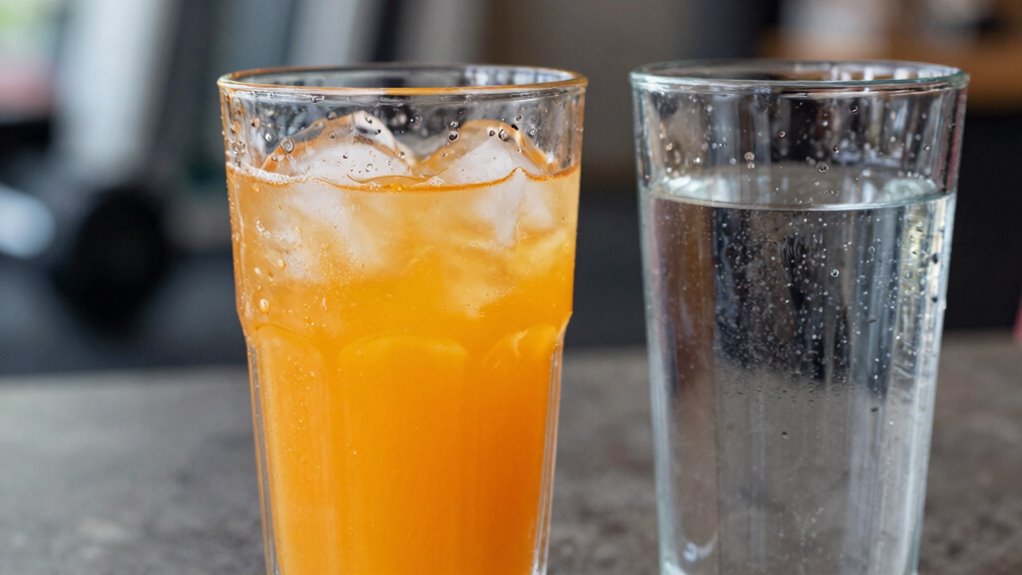

For most daily hydration needs and light activities, water is your best choice since it’s cost-effective and provides thorough hydration without extra calories or minerals. However, during intense or prolonged exercise, especially in hot environments, electrolyte drinks become helpful as they replenish essential minerals lost through sweat, supporting muscle function and performance. Knowing when each makes sense can boost your hydration game—keep going to find out how to optimize your fluid intake in different situations.
Key Takeaways
- Use water for daily hydration and light activity; electrolyte drinks are best during intense or prolonged exercise.
- Electrolyte drinks replenish minerals lost through sweat, supporting muscle function and preventing dehydration.
- Overconsumption of electrolyte drinks can lead to excessive sodium or sugar intake, so use them selectively.
- For activities under an hour or low-intensity, water is usually sufficient; electrolyte drinks are more beneficial beyond that.
- Choose hydration options based on activity level, duration, and environmental conditions to optimize health and performance.
When it comes to staying hydrated, many people wonder whether they should reach for plain water or choose an electrolyte drink. The answer depends on your activity level, environment, and specific hydration needs. For everyday hydration, water often does the trick, keeping you refreshed without extra calories or additives. However, if you’re engaging in intense exercise or sweating heavily, electrolyte drinks can offer advantages by supporting sports hydration and maintaining your mineral balance.
Electrolyte drinks are designed to replenish the minerals lost through sweat, like sodium, potassium, magnesium, and calcium. These minerals are essential for muscle function, nerve signaling, and fluid regulation within your body. When you sweat excessively during a workout, especially in hot or humid conditions, your mineral balance can become disrupted. Drinking plain water alone might rehydrate you but could dilute your electrolytes, potentially leading to an imbalance that causes muscle cramps, fatigue, or dizziness. That’s where electrolyte drinks come into play—they help restore your mineral levels quickly, ensuring your body functions efficiently during and after exercise.
In terms of sports hydration, electrolyte beverages are especially beneficial during prolonged or high-intensity activities lasting over an hour. They help prevent dehydration and electrolyte depletion, which can impair performance and recovery. If you’re participating in a marathon, cycling race, or intense gym session, these drinks support your body’s needs better than water alone. They also encourage you to drink more, as the taste and added minerals make hydration more appealing when you’re sweating a lot.
That said, not everyone needs electrolyte drinks for typical daily hydration. If you’re mostly sedentary or engaging in light activity, water should suffice. Overconsumption of electrolyte drinks can sometimes lead to excessive intake of sodium or sugars, which isn’t ideal for your health. For casual hydration, sticking with plain water is simple, cost-effective, and effective.
Top picks for "electrolyte drink water"
Open Amazon search results for this keyword.
As an affiliate, we earn on qualifying purchases.
Frequently Asked Questions
Are Electrolyte Drinks Suitable for Children?
Electrolyte drinks can be suitable for children, but only in specific situations like illness or intense physical activity. You should prioritize child safety and consult a healthcare professional before giving them electrolyte drinks. These beverages help maintain electrolyte balance during dehydration, but overuse can be harmful. For everyday hydration, water is best. Use electrolyte drinks sparingly and always follow age-appropriate guidelines to keep your child safe and properly hydrated.
Can Electrolyte Drinks Replace Water Entirely?
Picture your body as a well-tuned engine, needing just the right fuel for ideal performance. Electrolyte drinks can’t replace water entirely because maintaining hydration balance relies on proper electrolyte ratios. They are designed to supplement, not substitute water, especially during intense activity or illness. For everyday hydration, water is sufficient. Use electrolyte drinks only when your body demands extra electrolytes, like during prolonged exercise or dehydration.
Do Electrolyte Drinks Contain Harmful Ingredients?
Electrolyte drinks can contain harmful ingredients like artificial sweeteners and artificial colors, which some people prefer to avoid. These additives might cause unwanted side effects or sensitivities. While generally safe in moderation, it’s best to check labels carefully. If you’re concerned about harmful ingredients, opt for natural electrolyte options or plain water, especially during routine hydration, reserving electrolyte drinks for intense workouts or illness.
How Do Electrolyte Drinks Affect Weight Management?
Electrolyte drinks can influence your weight management by affecting hydration balance and calorie impact. They help replenish lost minerals during intense exercise, preventing dehydration, but often contain added sugars that increase calorie intake. If you consume them regularly, you might consume more calories than you realize, hindering weight loss efforts. Use them wisely, especially during prolonged workouts, while keeping an eye on their calorie content to maintain your weight management goals.
Are There Natural Alternatives to Commercial Electrolyte Drinks?
Yes, you can find natural alternatives to commercial electrolyte drinks through homemade solutions. Natural hydration options include mixing water with a pinch of sea salt, a splash of citrus juice like lemon or lime, and a little honey or maple syrup. These homemade solutions provide essential electrolytes like sodium and potassium, helping you stay balanced during exercise or hot weather without added artificial ingredients.
Conclusion
So, next time you’re feeling dehydrated, think carefully—will plain water do the trick, or do you need an electrolyte boost? The choice isn’t always clear-cut, and missing out on the right option could leave you feeling worse. Stay alert to your body’s signals, because the right drink at the right moment might just make all the difference. But what happens when you choose wrong? That secret might surprise you.