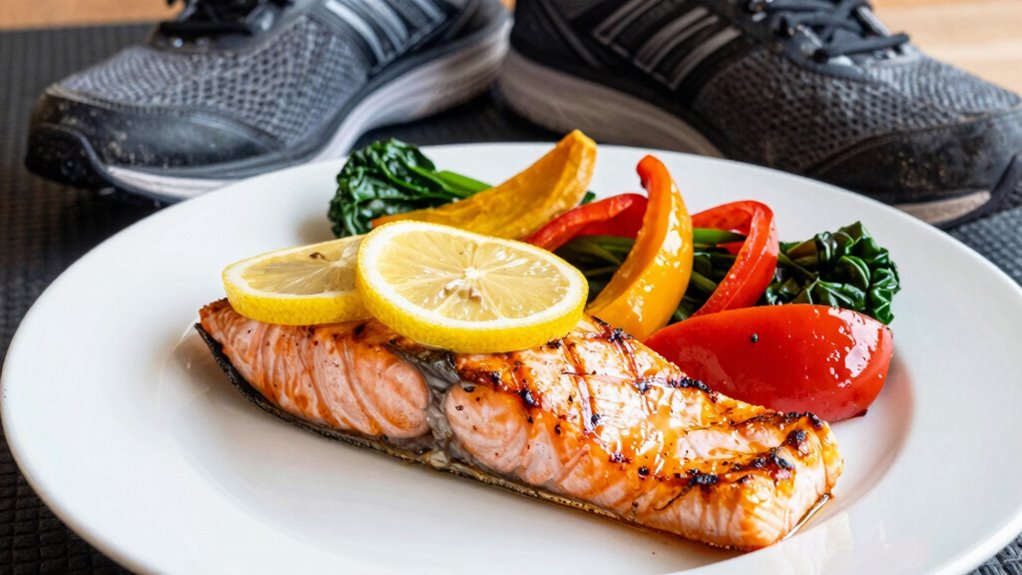

After exercising, your body sends hormonal signals, like ghrelin and leptin, that can trick you into feeling hungrier than you actually are. These cues often lead you to overeat, even if you’ve already burned calories or depleted glycogen. Recognizing that this hunger is temporary and hormonal helps you avoid unnecessary eating. Instead, focus on mindful, nourishing choices and listen to true physical hunger—if you keep exploring, you’ll find how to break this cycle for good.
Key Takeaways
- Post-workout hunger signals are hormonal and temporary; they don’t necessarily indicate real physical need.
- Recognize the difference between true hunger and emotional or hormonal cravings to prevent overeating.
- Practice mindful eating by assessing your body cues before consuming food after exercise.
- Hormonal hunger, driven by ghrelin and leptin, can mislead you into overeating despite sufficient calories.
- Focus on nourishing your body with nutrient-dense foods and avoid mindless eating driven by workout-induced signals.

After a tough workout, it’s common to feel hungry and want to eat everything in sight. Your body has burned calories, depleted glycogen stores, and signaled that it needs fuel to recover. It’s easy to fall into the trap of thinking you’ve earned a big feast, but this mindset can lead to overeating. Instead, practicing mindful eating helps you listen to your body’s true needs rather than giving in to hormonal hunger that might be misleading you. Hormonal hunger is driven by signals from hormones like ghrelin and leptin, which can spike after exercise, making you feel insatiably hungry even if you’ve already eaten enough. Recognizing these signals as temporary and not necessarily a call for large amounts of food is key to avoiding overeating.
Post-workout hunger signals are temporary; listen carefully to avoid overeating and nourish your body mindfully.
When you’re genuinely hungry after a workout, it’s important to identify whether your hunger is real or hormonal. Mindful eating encourages you to pause and assess your body’s cues before diving into food. Ask yourself if you’re physically hungry or simply craving comfort or convenience. If it’s the latter, consider whether you’re trying to fill an emotional void or just responding to the hormonal hunger signals that have been triggered by exercise. This awareness helps you make better choices and prevents you from overeating just because you think you “deserve” it. Instead, aim to nourish your body with balanced, nutrient-dense foods that support recovery without going overboard.
It’s also essential to understand that the body’s need for refueling isn’t an invitation to eat mindlessly. Your hunger hormones might be telling you to eat, but they don’t distinguish between necessary nourishment and unnecessary excess. By slowing down, savoring each bite, and paying attention to how your body feels, you can prevent the instinct to overeat. Drinking water or having a small, protein-rich snack can help satisfy hormonal hunger without leading to excess calories. Recognizing that hormonal hunger signals can be misleading helps you focus on true physical needs rather than temporary urges. Remember, the goal is to refuel your body efficiently, not to compensate for every calorie burned with a binge. Listening to your body, practicing mindful eating, and understanding hormonal hunger cues are your best tools to break the cycle of overeating after workouts.
In the end, treating your post-workout hunger with awareness and care ensures you support your fitness goals while respecting your body’s natural signals. Avoid the trap of overeating simply because you exercised—by tuning into true hunger and practicing mindful eating, you’ll recover better and develop healthier eating habits that last.
Top picks for "stop overeat because"
Open Amazon search results for this keyword.
As an affiliate, we earn on qualifying purchases.
Frequently Asked Questions
How Can I Tell if I’M Truly Hungry or Just Craving?
You can tell if you’re truly hungry by paying attention to your hunger cues—are your stomach growling or do you feel low energy? If cravings are driven by emotional triggers like stress or boredom, it’s likely not real hunger. Take a moment to pause, ask yourself if you’re genuinely hungry or just craving comfort. Responding to true hunger helps prevent overeating and supports healthier choices.
What Are Healthy Post-Workout Snacks to Prevent Overeating?
You should choose healthy post-workout snacks that support your goals and prevent overeating. Opt for options like Greek yogurt with fruit or a small handful of nuts, practicing portion control and calorie counting to stay on track. These snacks provide essential nutrients without excess calories, helping you recover and satisfy your hunger without triggering overeating. Remember, mindful portion sizes keep your post-workout nutrition balanced and effective.
Does Drinking Water Help Control Post-Exercise Overeating?
Yes, drinking water helps control post-exercise overeating by enhancing hydration benefits. When you stay well-hydrated, you’re more likely to listen to your thirst cues, which often mimic hunger signals. This prevents you from overeating due to misinterpreted signals. Drinking water before and after your workout can curb unnecessary snacking, and keeping hydrated supports your recovery, helping you feel satisfied without consuming extra calories.
Can Certain Workouts Increase My Appetite More Than Others?
Think of your appetite as a wildfire, fueled by exercise intensity and workout duration. High-intensity or long workouts act like gusts of wind, sparking a larger blaze of hunger. You might feel hungrier after intense cardio or weightlifting that pushes your limits. To keep the fire manageable, balance your exercise with proper nutrition and hydration. This way, you control your appetite rather than letting it blaze out of control.
How Long Should I Wait After Exercising Before Eating?
You should wait about 30 to 60 minutes after exercising before eating to optimize your calorie balance and meal timing. This window helps your body recover and prevents overeating caused by increased appetite. If you exercise intensely or in the morning, eating a small snack sooner can support recovery without disrupting your calorie goals. Listening to your hunger cues and planning meals around your workout guarantees balanced nutrition and prevents overeating.
Conclusion
So, the next time you finish a workout and feel that urge to overeat, remember this: your hunger might not be a sign to indulge. It’s a trap that can undo all your hard work. Will you fall into it again? Or will you recognize the subtle cues and make smarter choices? The power’s in your hands. Stay aware, stay focused—your progress depends on what you do next. The real test is just beginning.