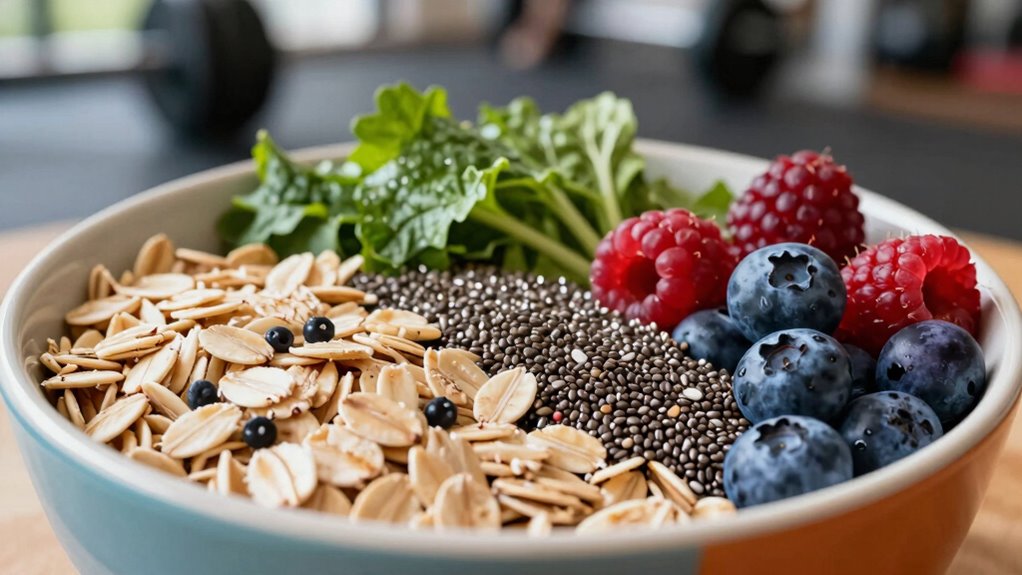

Your gut health heavily influences your energy, and fiber is key to keeping it balanced. When you eat enough fiber, it supports friendly bacteria in your digestive system, helping your body extract nutrients efficiently. This stabilizes blood sugar levels and prevents energy crashes or feelings of fatigue. Poor fiber intake can lead to bloating, irregular digestion, and low energy during workouts. If you want to discover how to optimize your gut for better performance, keep exploring these essential connections.
Key Takeaways
- Inadequate or excessive fiber intake can disrupt gut microbiome balance, leading to bloating, fatigue, and irregular digestion affecting energy levels.
- Poor fiber digestion may impair nutrient absorption, reducing the availability of essential nutrients needed for sustained energy.
- Imbalanced fiber intake can cause gut discomfort, slowing digestion and causing energy crashes during workouts or daily activities.
- Insufficient fiber may lead to constipation or bloating, which can drain energy and cause feelings of fatigue or sluggishness.
- Proper fiber levels support gut health, optimize nutrient absorption, and stabilize blood sugar, preventing energy fluctuations and fatigue.

Have you ever wondered how fiber impacts your fitness goals? It’s more than just about regularity; fiber plays a pivotal role in maintaining gut health, which directly influences how your body absorbs nutrients and, ultimately, how you perform. When you include enough fiber in your diet, you support a healthy gut microbiome, the collection of beneficial bacteria that line your digestive tract. This ecosystem is essential because a balanced microbiome helps break down food more efficiently, ensuring that your body gets the maximum nutrients from every meal. Without proper fiber intake, your gut health can suffer, leading to sluggish digestion and poor nutrient absorption, which can leave you feeling tired and lacking energy during workouts.
Fiber also acts as a sort of regulator within your digestive system, slowing down digestion and giving your body time to extract essential nutrients from food. When nutrients are absorbed efficiently, your muscles get the fuel they need to perform at their best, and your recovery process speeds up after intense sessions. Conversely, a diet low in fiber can cause irregularities, like bloating or constipation, that hinder your ability to recover and perform at their best. It might even lead to feelings of fatigue, as your body struggles to extract and utilize the nutrients necessary for energy production.
Fiber regulates digestion, enhances nutrient absorption, and speeds recovery after workouts.
In addition, fiber influences blood sugar levels by moderating how quickly glucose enters your bloodstream. Stable blood sugar levels mean consistent energy, which is fundamental when you’re pushing through workouts or trying to maintain a calorie deficit for fat loss. Sudden spikes and crashes in blood sugar can leave you feeling drained or irritable, making it harder to stay committed to your fitness routine. By including adequate fiber, especially soluble fiber found in oats, fruits, and legumes, you help stabilize these levels, leading to more sustained energy throughout the day.
Furthermore, fiber-rich foods tend to be nutrient-dense and less calorie-dense, making them perfect for fueling your body without excess calories. They are packed with vitamins, minerals, and antioxidants that support overall health, immune function, and recovery. When your gut health is enhanced through fiber intake, your body is better equipped to handle physical stress and repair tissues, which are essential aspects of any fitness journey.
Top picks for "fiber fitnes reason"
Open Amazon search results for this keyword.
As an affiliate, we earn on qualifying purchases.
Frequently Asked Questions
How Quickly Can Fiber Improve My Gut Health?
You can start noticing improvements in your gut health within a few days to a week by increasing fiber diversity. When you consume a variety of fiber-rich foods, you support a diverse gut microbiome, which boosts digestion and energy levels. Consistently eating different types of fiber helps nurture beneficial bacteria, leading to more stable gut health over time. Stay patient and keep diversifying your fiber intake for long-term benefits.
Are All Fiber Sources Equally Beneficial for Energy Levels?
Not all fiber sources benefit your energy equally. While fiber diversity matters, some sources like whole grains and fruits provide more sustained energy compared to processed fibers. Comparing fiber sources helps you understand which fuels your body best. Don’t assume all fibers are the same—opt for a variety to maximize gut health and energy levels. Incorporate different fiber types to keep your digestion smooth and your energy steady throughout the day.
Can Excessive Fiber Intake Cause Nutrient Deficiencies?
Yes, excessive fiber intake can cause nutrient deficiencies. When you consume too much fiber, it may lead to fiber malabsorption, which can interfere with your body’s ability to absorb essential nutrients like iron, calcium, and vitamins. This results in a nutrient imbalance, potentially causing fatigue and other health issues. To avoid this, balance your fiber intake and include a variety of nutrient-rich foods to support overall health.
How Does Fiber Influence Athletic Performance?
Fiber markedly boosts your athletic performance by supporting fiber fermentation in your gut microbiome, which produces beneficial short-chain fatty acids. Studies show athletes with diverse microbiomes perform better and recover faster. When you consume ample fiber, it enhances gut health, improves nutrient absorption, and sustains energy levels during exercise. So, by prioritizing fiber, you optimize your gut microbiome, directly influencing your stamina, strength, and overall athletic success.
What Are Signs of Fiber Intolerance or Allergy?
You might notice fiber symptoms like bloating, gas, stomach cramps, or diarrhea, which can signal intolerance. Allergy indicators include skin reactions such as hives or itching, swelling, or breathing issues after consuming high-fiber foods. If these symptoms appear consistently, it’s essential to cut back and consult a healthcare professional to determine if you have a fiber allergy or intolerance to prevent further discomfort or health risks.
Conclusion
Now that you know how fiber influences your gut and energy, imagine what revealing this secret could do for your daily performance. Could tweaking your fiber intake be the missing piece to feeling more energized and balanced? The surprising connection might just change the way you approach your fitness routine—if you’re willing to explore it. So, are you ready to discover the hidden power of fiber and transform your gut, and your life? The choice is yours.