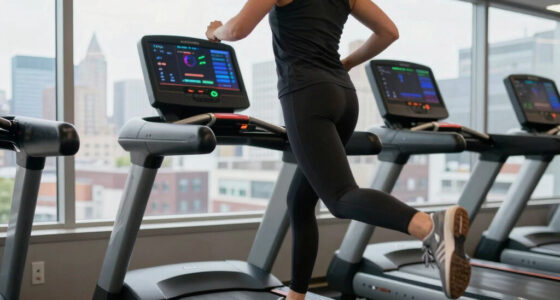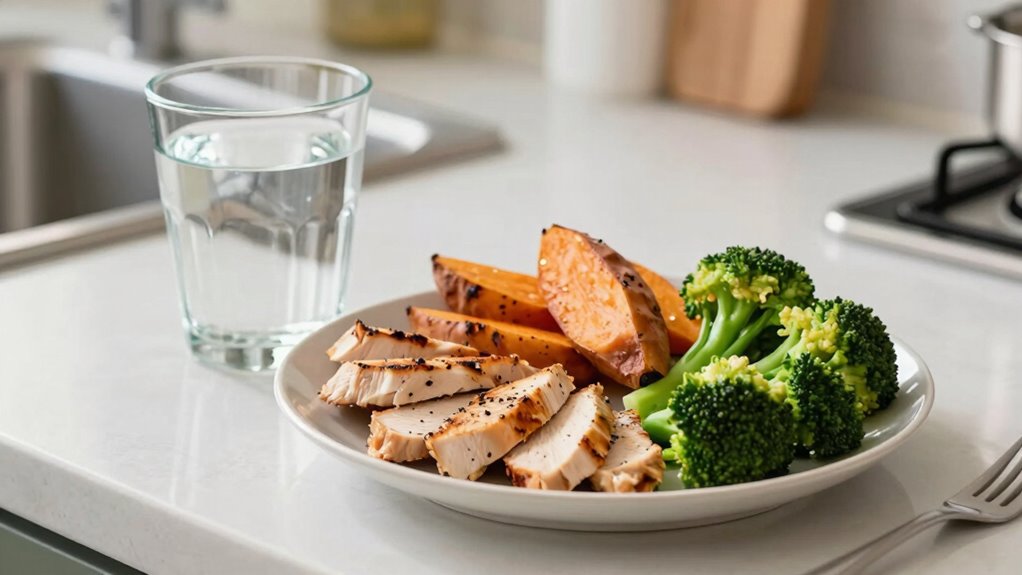

To avoid feeling too full during your evening workout, eat a light, easily digestible snack about 30 to 60 minutes beforehand, like a banana with peanut butter or a small protein bar. Keep portions moderate to prevent sluggishness or discomfort. Stay hydrated and listen to your body’s cues to adjust snack timing and size as needed. If you want to learn more tips for optimizing your workout fuel, continue exploring effective meal timing strategies.

Get workout gear delivered free with Prime
- Fast, free delivery on millions of items
- Prime Video, Amazon Music and more included
- Member-only deals all year
Key Takeaways
- Eat a light, easily digestible snack 30-60 minutes before your workout to prevent feeling too full.
- Choose small portions of quick carbs like a banana or a handful of almonds to boost energy without discomfort.
- Avoid heavy, greasy foods before exercise to prevent sluggishness and nausea during your workout.
- Keep post-workout meals balanced and moderate to support recovery without causing fullness late at night.
- Stay hydrated throughout the day and during your workout to optimize performance and reduce the need for large snacks.
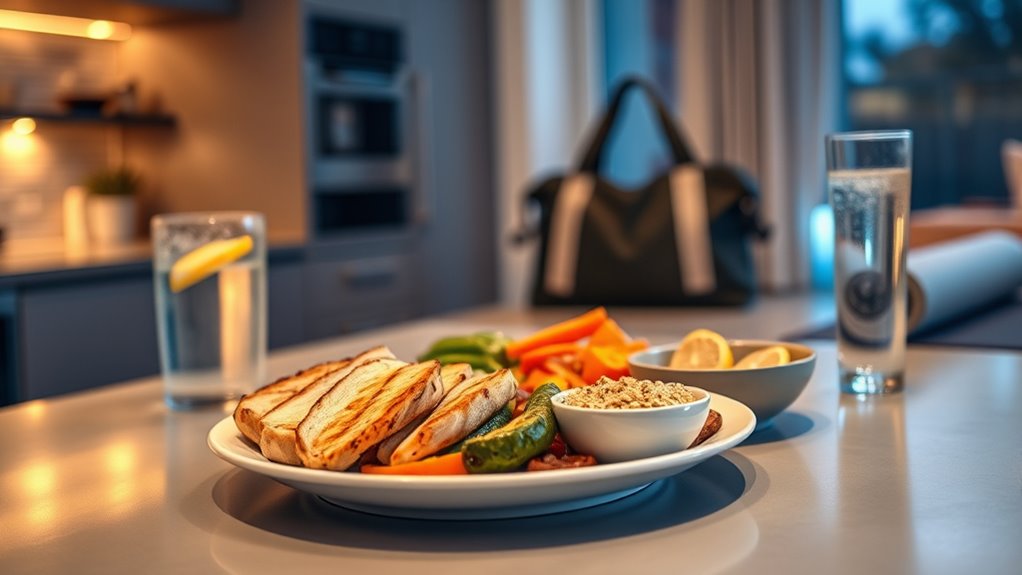
If you work out in the evening, paying attention to when you eat can considerably impact your performance and recovery. The right timing and choice of meals or snacks can help you avoid feeling too full during your workout, which can hinder your movement and energy levels. It’s essential to find a balance that fuels your workout without weighing you down. Pre workout snacks are your best allies here. Opt for light, easily digestible options like a banana with a small spoon of peanut butter, a handful of almonds, or a small protein bar. These snacks provide quick energy and keep hunger at bay without causing discomfort. Avoid heavy or greasy foods before your workout, as they can lead to sluggishness or nausea. Ideally, have your pre workout snack about 30 to 60 minutes before exercising, giving your body enough time to digest while still providing energy for your session. Incorporating proper nutrition timing can further enhance your workout efficiency and recovery. After your workout, your focus should shift to post exercise nutrition. Proper recovery food helps replenish glycogen stores, repair muscle tissues, and reduce soreness. Aim to have a balanced meal or snack within an hour of finishing your workout. Incorporate lean proteins like chicken, fish, or plant-based options, along with complex carbs such as brown rice, sweet potatoes, or whole-grain bread. Including healthy fats from sources like avocado or nuts can also support recovery. Keep your portions moderate; overeating can leave you feeling sluggish or uncomfortable, especially late at night. If you’re pressed for time or prefer a lighter option, a protein shake paired with fruit can do wonders. This way, you get the necessary nutrients without feeling overly full. Timing is key, but so is listening to your body. If you notice that eating too close to your workout causes discomfort, adjust your pre workout snacks to be more minimal or earlier. Conversely, if you’re too hungry during your session, consider a small, carbohydrate-rich snack beforehand. Don’t forget that staying hydrated is equally important. Drinking water throughout the day and during your workout helps prevent dehydration and supports overall performance. Remember, the goal is to find a routine that fuels you effectively without making you feel stuffed. By choosing the right pre workout snacks and focusing on smart post exercise nutrition, you can optimize your evening workouts, enhance recovery, and avoid that uncomfortable “too full” feeling.
As an affiliate, we earn on qualifying purchases.
Frequently Asked Questions
Can I Eat Before a Late-Night Workout Without Feeling Sluggish?
Yes, you can eat before a late-night workout without feeling sluggish by choosing light pre-workout snacks like a banana or a handful of nuts. Hydration strategies are also key—drink water beforehand to stay hydrated and avoid feeling heavy. Keep your snack small and easily digestible, and wait about 30 minutes after eating before exercising, so digestion doesn’t interfere with your workout.
How Long Should I Wait After Eating to Exercise Comfortably?
Don’t rush into your workout right after eating; give yourself about 30 to 60 minutes, depending on your meal composition. Lighter, easily digestible foods require less time, while heavier meals need more. Think of it as giving your post-meal digestion a head start. This way, you’ll avoid feeling sluggish or uncomfortable during exercise, making your workout smoother and more effective. Trust your body’s signals and adjust accordingly.
Are There Specific Foods That Prevent the ‘Too Full’ Sensation?
You should choose foods like lightweight proteins and complex carbs to prevent feeling too full before your workout. Opt for options such as yogurt with oats, a banana with peanut butter, or a small grilled chicken salad. These foods are easier to digest and provide sustained energy. Avoid heavy, greasy meals, and eat about 1-2 hours before exercising to keep your stomach comfortable and energized.
Does Meal Timing Affect My Workout Performance in the Evening?
Yes, meal timing considerably impacts your evening workout. Opt for a balanced meal with easily digestible foods that match your digestion timing, so you don’t feel sluggish or overly full. Eating too close to your workout can hinder performance, while waiting too long might leave you low on energy. Focus on meal composition—incorporate carbs for energy and moderate protein—to optimize your performance and avoid discomfort.
What Are Quick, Light Snacks Suitable Before Evening Exercise?
Think of your pre-workout snack as fuel for a smooth ride. You should opt for healthy snack options like a banana with a spoon of peanut butter, a small handful of almonds, or Greek yogurt. Timing of light bites matters—eat about 30-60 minutes before exercise. These quick, light snacks boost your energy without feeling too heavy, helping you perform your best without the discomfort of being overly full.
As an affiliate, we earn on qualifying purchases.
Conclusion
So, next time you’re sweating it out in the evening, remember—eating too little might leave you starving, while overeating could make you feel sluggish. Ironically, the perfect meal timing is all about balance, not binging or skipping. Keep your portions just right, and you’ll avoid that “too full” nightmare. Who knew that the secret to a great workout was simply not eating like you’re about to run a marathon?
As an affiliate, we earn on qualifying purchases.
As an affiliate, we earn on qualifying purchases.
Halloween Picks
halloween
As an affiliate, we earn on qualifying purchases.