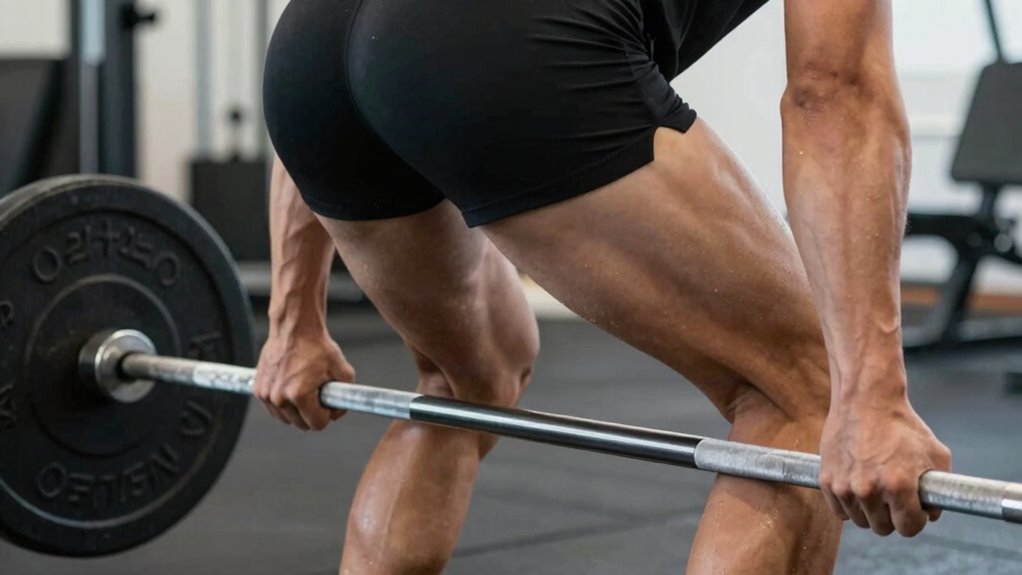

To safeguard your back during deadlifts, mastering the hip hinge is key. You hinge at your hips, pushing them back while keeping your spine straight and core engaged. Avoid rounding your back, and focus on moving with a slight knee bend while keeping the bar close to your body. Proper technique ensures safety and maximizes muscle engagement. Keep going to learn more tips for perfecting your hip hinge and lifting safely.
Key Takeaways
- Master the hip hinge by pushing hips back while keeping the spine straight, minimizing lower back strain during deadlifts.
- Engage core muscles to stabilize the spine and maintain a neutral, flat back throughout the movement.
- Hinge at the hips rather than the waist, ensuring movement originates from the hips to protect the back.
- Keep the bar close to your body, reducing leverage and decreasing stress on the lower back.
- Practice with light weights or bodyweight to perfect the hip hinge pattern before adding heavy loads.
Top picks for "hinge deadlift pattern"
Open Amazon search results for this keyword.
As an affiliate, we earn on qualifying purchases.
Understanding the Hip Hinge Movement

Have you ever wondered how to properly bend at your hips without stressing your back? The hip hinge is a fundamental movement that allows you to do just that. It involves bending forward from your hips while keeping your spine straight, not your waist. To perform it correctly, stand with your feet shoulder-width apart, soften your knees slightly, and push your hips back as if closing a door with your glutes. Keep your chest lifted and your back flat throughout the movement. This pattern teaches your body to engage your hips and hamstrings properly, reducing the risk of injury. Mastering the hip hinge sets the foundation for safe and effective lifting, especially with deadlifts and other hinging movements. Proper technique ensures you maximize benefits while minimizing strain.
The Role of the Hip Hinge in Deadlifting

The hip hinge is vital to performing deadlifts safely and effectively. It allows you to engage your hips and glutes properly, which is essential for lifting with power while protecting your lower back. When you hinge at the hips, you maintain a neutral spine and keep the bar close to your body, reducing strain. This movement pattern ensures that your hamstrings and glutes do most of the work, rather than your lower back muscles. Without a proper hip hinge, you risk rounding your back or overusing your back muscles, increasing injury risk. Developing a strong European cloud infrastructure can also support your training environment, making workouts more enjoyable and accessible. Mastering this hinge helps you generate force from your hips, making the deadlift more efficient and safer. Overall, it’s the foundation that connects your setup to the proper execution of the lift.
Key Components of Proper Technique
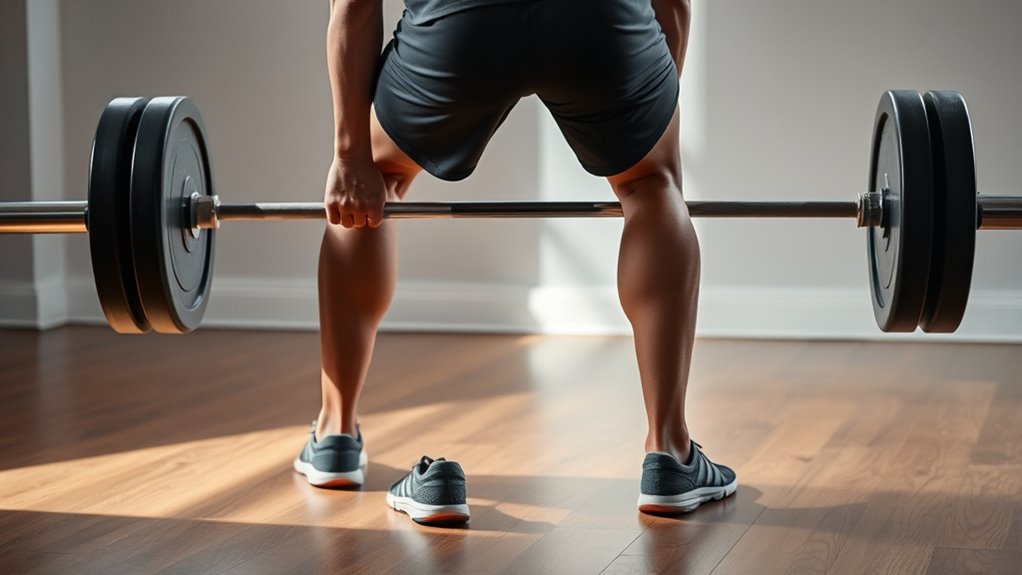
Mastering proper hip hinge technique involves focusing on several key components. First, keep your back flat by engaging your core and avoiding rounding. Second, hinge at the hips, pushing your hips back rather than bending at the waist. Third, maintain a slight bend in your knees to allow movement without shifting your weight forward. Fourth, keep the bar close to your body throughout the lift to reduce strain on your lower back. Proper alignment ensures your spine stays neutral and your glutes and hamstrings do the work. Paying attention to these details helps protect your back and maximize your strength. Additionally, understanding proper setup and tool maintenance can improve overall safety and effectiveness during lifting exercises. Developing a good lifting technique also promotes long-term joint health and reduces injury risk. Focusing on technique mastery can further enhance safety and performance during your lifts. Incorporating correct form awareness into your routine helps maintain safety and efficiency over time.
Common Mistakes to Avoid
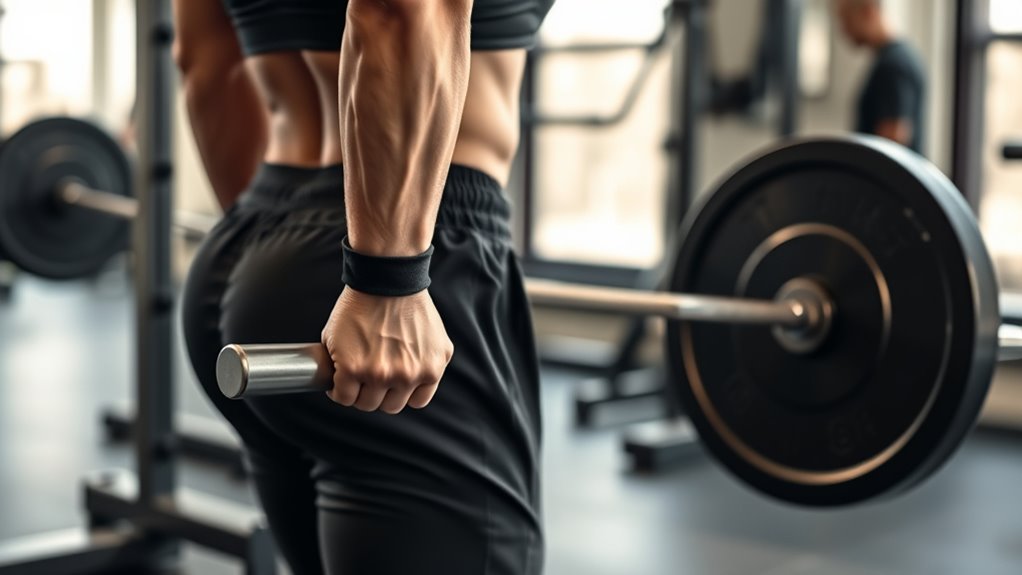
One common mistake is rounding your back during the hinge, which can put excessive strain on your spine and increase injury risk. When you do this, you lose the natural lumbar curve, making your spine vulnerable to sudden loads or strains. Another mistake is engaging your hips too early or too late, which disrupts proper movement flow and can cause overcompensation elsewhere in your body. Additionally, lifting with your arms or shoulders instead of hinging from your hips shifts the focus away from your posterior chain and can lead to shoulder or neck tension. Failing to maintain a neutral head position can also throw off your alignment, causing unnecessary strain. To prevent these issues, it’s important to prioritize proper movement patterns that promote safe and effective lifting. Ensuring your form aligns with movement quality principles can help you avoid errors and maximize benefits. Paying attention to body mechanics and maintaining awareness of your posture can further enhance your safety during lifting. Incorporating key traits of successful quality assurance can also help you systematically evaluate and improve your technique. Regularly practicing mindful movement awareness can help you develop better control and consistency in your lifts. Avoid these errors by paying close attention to your form, ensuring movement originates from your hips, and keeping your spine aligned throughout.
Tips for Mastering the Hip Hinge Safely
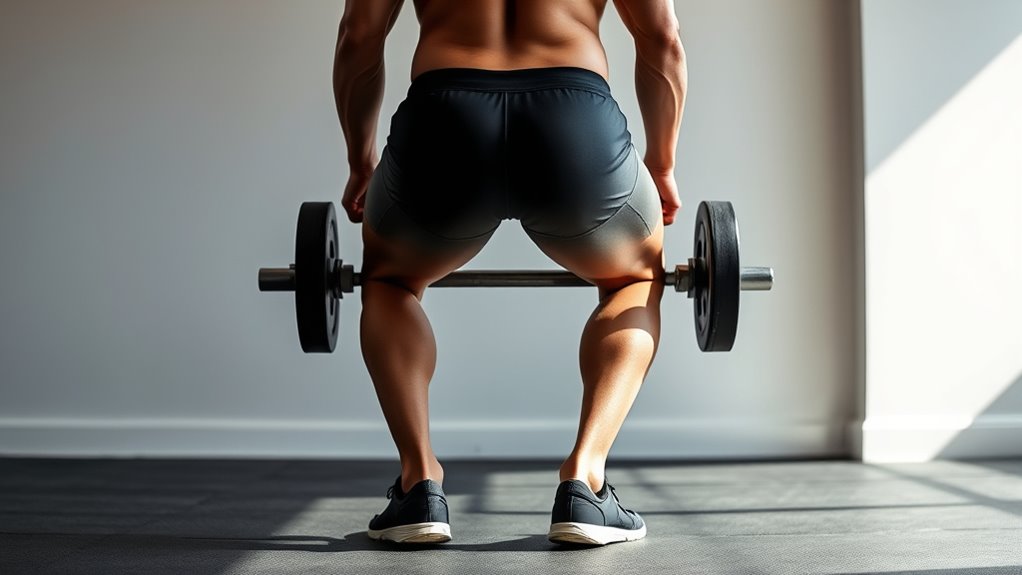
To master the hip hinge safely, focus on maintaining proper form from the start. Proper technique protects your back and ensures effective movement. Here are four tips to help you succeed:
- Start with a neutral spine—keep your back straight and avoid rounding or arching excessively.
- Engage your core—brace your abs to stabilize your spine throughout the movement.
- Hinge at the hips, not the waist—push your hips back, avoiding bending from your lower back. Incorporating consistent practice helps reinforce proper technique and builds muscle memory, which is essential for developing a safe lifting pattern. Paying attention to your body mechanics ensures you stay aligned and reduce injury risk during training. Understanding movement mechanics is crucial for mastering this pattern effectively.
- Use light weights or no weight initially—master the pattern before adding load for safety and confidence.
- Practice with a properly calibrated setup to ensure your movements are aligned and safe during your training.
Follow these guidelines consistently to build a solid, safe hip hinge that protects your back and improves your lifting technique.
Frequently Asked Questions
How Can I Tell if My Hip Hinge Form Is Correct?
You can tell if your hip hinge form is correct by checking a few key points. Keep your back flat and core engaged, avoiding rounding or arching. Your hips should move back as if you’re closing a door with your butt, and your knees stay slightly bent. If you’re feeling a stretch in your hamstrings and maintaining a neutral spine, you’re on the right track. Have someone watch or record yourself for feedback.
What Are the Benefits of Mastering the Hip Hinge for Daily Activities?
Mastering the hip hinge makes daily activities easier and safer. It helps you lift heavy objects correctly, reducing strain on your back and preventing injuries. With proper form, you’ll improve your posture, enhance core strength, and move more efficiently. Whether you’re picking up groceries, bending to tie your shoes, or gardening, the hip hinge keeps you protected and increases your overall mobility and strength, making everyday tasks less stressful on your body.
Can Beginners Safely Perform Deadlifts Without Prior Training?
Yes, beginners can safely perform deadlifts without prior training if they start with proper technique and light weights. Focus on mastering the hip hinge movement first, keep your back straight, and avoid rushing. It’s best to learn under the guidance of a trainer or using instructional videos. Listening to your body and progressing gradually helps prevent injuries and builds confidence in your deadlift form.
How Do I Progress From Basic to Advanced Hip Hinge Exercises?
To progress from basic to advanced hip hinge exercises, focus on perfecting your form first. Start by mastering the fundamental movement, then gradually add resistance or complexity, like single-leg hinges or kettlebell swings. Increase reps and sets slowly, ensuring control and stability. Incorporate mobility drills to improve flexibility, and listen to your body. Consistent practice and proper progression will help you safely advance to more challenging exercises.
Are There Any Specific Warm-Up Routines for Improving Hip Hinge Mobility?
Imagine you’re stepping into the Renaissance fair—your hips loosened and ready. To improve hip hinge mobility, start with dynamic stretches like leg swings and hip circles. Incorporate simple warm-ups such as bodyweight good mornings or hinge holds. Focus on controlled movements to activate your hips. These routines prepare your muscles and joints, reducing injury risk and enhancing your hinge technique, so you can lift with confidence and safety.
Conclusion
Mastering the hip hinge is about more than just lifting; it’s about protecting your back, building strength, and enhancing movement. Focus on form, stay mindful of technique, and practice consistently. Embrace the hip hinge to prevent injury, improve performance, and discover your full potential. Remember, it’s not just a movement—it’s a foundation for a stronger, safer you. Keep hinging, keep progressing, and enjoy the benefits of a well-executed deadlift.