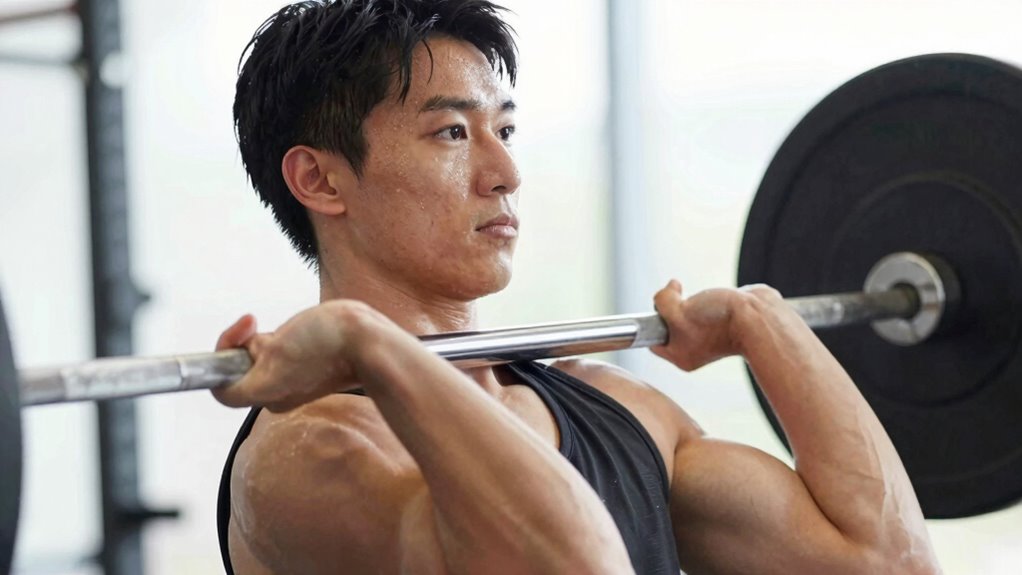

You’ll know you’re lifting too light when your reps feel effortless, and your muscles aren’t getting challenged or fatigued. If your form stays perfect and you experience no muscle engagement or discomfort, it’s a sign the weight isn’t enough to promote progress. When you can finish sets comfortably without effort or feeling any strain, it’s time to increase resistance. Keep going to learn how to find the right challenge for steady gains.
Key Takeaways
- Reps feel too easy, with minimal effort and no muscle fatigue after completing sets.
- You can perform reps with perfect form comfortably, indicating the weight isn’t challenging enough.
- There’s little to no muscle engagement or burn during exercises, suggesting insufficient resistance.
- You don’t experience progress in strength or size over time, which signals the need for heavier weights.
- Your technique remains flawless, but the workout lacks difficulty, showing the current load is too light.

Have you ever wondered if you’re lifting weights that are too light? It’s a common question, especially when you’re trying to balance building strength without risking injury or falling into ego lifting. The key isn’t just about feeling tired after your set; it’s about understanding whether your current weights are effectively helping you progress. One of the best ways to gauge this is by paying attention to your form strength and technique focus. When you lift weights, maintaining proper form isn’t just about safety—it’s about making certain your muscles are doing the work they’re supposed to do. If you find that your form is effortless or sloppy, it’s a sign you might not be challenging yourself enough. Conversely, if your form begins to break down as the weight increases, that’s a cue to lighten the load or improve your technique before pushing further.
Focusing on technique allows you to lift smarter, not just heavier. When your goal is to build strength or muscle efficiently, it’s imperative to lift with control and precision. If you’re breezing through reps with minimal effort and no noticeable muscle engagement, you likely aren’t providing enough resistance to stimulate growth. Proper technique also includes controlled tempo, full range of motion, and deliberate movement. These elements help you target the right muscles and prevent injury. It’s tempting to add more weight to feel accomplished, but if your form suffers, you’re not gaining the benefits you could be with a more deliberate approach. Instead, aim to master the technique first, then gradually increase the weight as your form remains solid.
You’ll notice that when you focus on form strength and technique, your progress becomes more consistent. You’ll feel your muscles working throughout each set because the weight is challenging enough to activate them without compromising your posture or safety. If you’re able to perform reps comfortably with perfect form, then it’s likely time to add more resistance. But if you’re just going through the motions, with little effort and no real muscle fatigue, it’s a clear sign that your weights are too light. Remember, lifting isn’t about ego—it’s about smart training that pushes you without risking injury. By prioritizing technique focus and building form strength, you guarantee that each session counts, and you’re truly progressing toward your fitness goals.

BDSHE Adjustable Dumbbell Set, 45lbs Free Weight Set with Upgraded Nut,4 in1 Dumbbells Set Used as Barbell, Kettlebells, Push up Stand, Weight Set for Home Gym Suitable Men/Women
【4 in 1 Multifunctional Dumbbell Set】This versatile dumbbell set quickly converts into dumbbells, barbells, kettlebells, and push-up stands,…
As an affiliate, we earn on qualifying purchases.
As an affiliate, we earn on qualifying purchases.
Frequently Asked Questions
How Long Should I Gradually Increase My Weight?
You should gradually increase your weight every 1-2 weeks, depending on your progress and weight perception. Listen to your body and avoid rushing, as lifting too quickly can raise injury risk. Focus on maintaining proper form and hitting your reps comfortably before adding more weight. This steady progression helps you build strength safely, preventing setbacks and ensuring consistent gains without risking injury.
Can Lifting Too Light Improve Muscle Endurance?
Lifting too light can indeed improve muscle endurance, especially during endurance training sessions. By using lighter weights, you challenge your muscles to perform more repetitions, which helps build stamina and delay muscle fatigue. This approach trains your muscles to sustain activity longer, enhancing overall endurance. So, incorporating lighter weights into your routine isn’t just for recovery—it’s a strategic way to boost your muscle endurance through consistent endurance training.
What’s the Ideal Rep Range for Safe Progression?
The ideal rep range for safe progression is typically 6-12 reps per set, focusing on muscle hypertrophy. This range allows you to challenge your muscles without risking injury. To see consistent gains, prioritize workout consistency and gradually increase weights or reps over time. Stay attentive to your form and avoid ego lifting—pushing too hard too fast can lead to setbacks. Stick to this rep range for steady, safe progress.
Should I Prioritize Form Over Weight Increases?
You should prioritize form over weight increases to maximize training volume and guarantee proper muscle isolation. Focusing on good form helps target the right muscles and reduces injury risk, making your workouts more effective. Once you master proper technique, gradually increase the weight while maintaining control. This approach promotes steady progress and safe training, helping you build strength and muscle without sacrificing quality or risking setbacks.
How Do I Avoid Plateauing With Light Weights?
To avoid plateauing with light weights, focus on progressive overload by gradually increasing reps, sets, or intensity. This challenges your muscles without risking injury, helping you progress steadily. Keep proper form to prevent injury and ensure effective training. Incorporate variety, like tempo changes or different exercises, to keep your muscles adapting. Consistency and mindful adjustments are key to breaking through plateaus while prioritizing injury prevention.

HPYGN Resistance Bands, Figure 8 Exercise Bands for Women Men, 8 Shaped Resistance Bands for Arms, Chest Expander, Yoga Gym Fitness Pulling Rope 8 Word Elastic for Exercise Muscle Training Tubing
【Posture correction, Body Shaping】Persist in ten minutes a day, use the 8 shaped resistance band to perform chest…
As an affiliate, we earn on qualifying purchases.
As an affiliate, we earn on qualifying purchases.
Conclusion
Remember, lifting too light can hold you back from progress. If you’re not challenging yourself, you’re like a bird in a cage—meant to soar but kept grounded. Pay attention to how your body feels during workouts and aim for that sweet spot where effort meets growth. Progress isn’t about ego; it’s about consistency and pushing just enough. Keep pushing, stay mindful, and don’t be afraid to lift a little heavier to reveal your true strength.

Seektop Workout Gloves for Men and Women, Weight Lifting Gloves with Full Protection, Excellent Grip, Gym, Breathable Exercise Gloves for Weightlifting, Fitness, Training
【Extended Thumb Design with Enhanced Grip】:No more tear,calluses,and blisters.We leverage the muscle direction and optimize grip,adopt thicker 4mm…
As an affiliate, we earn on qualifying purchases.
As an affiliate, we earn on qualifying purchases.

RitFit Fractional Rubber Weight Plates, Colored Bumper Plates for Starting Strength and Progressive Overload Training, Pair and Sets
Progressive Weight Training Plates: Crafted from precision-machined steel with ±10g weight accuracy. With the help of these lightweight…
As an affiliate, we earn on qualifying purchases.
As an affiliate, we earn on qualifying purchases.