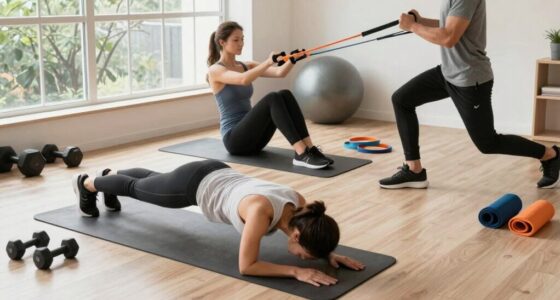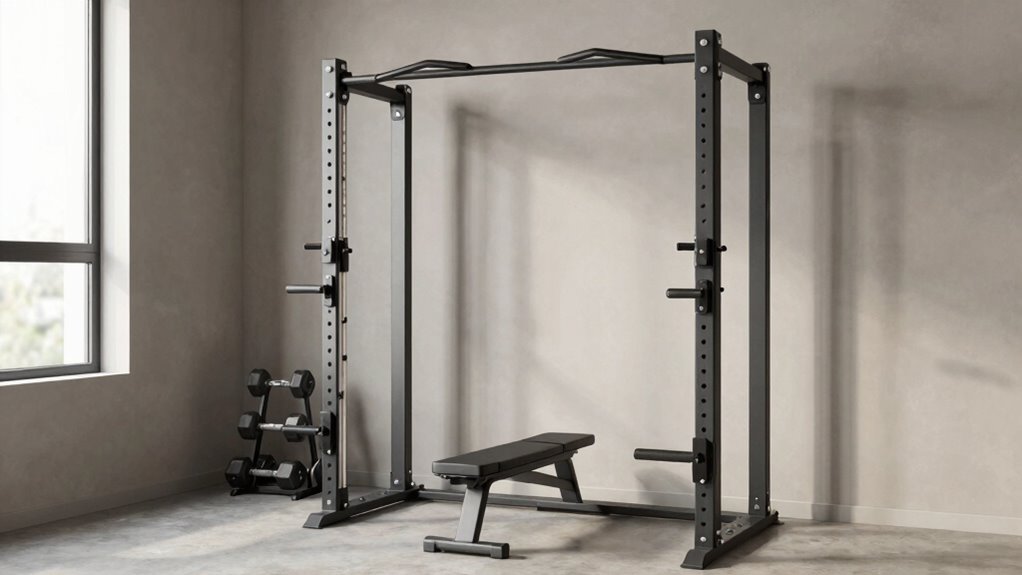
The simple strength split that fits most home gym setups focuses on core lifts like squats, deadlifts, presses, and rows. It involves gradually increasing weight or reps, emphasizing consistency and progressive overload without complicated routines. You can use minimal equipment such as barbells, dumbbells, resistance bands, or your body weight. This approach is flexible, easy to adapt, and guarantees continuous progress while fitting into a busy schedule. Keep exploring to discover how to make this routine your own.
Open a free Amazon Business account
Business pricing, bulk buying and tax-exempt orders.
As an affiliate, we earn on qualifying purchases.
Key Takeaways
- Focus on core lifts like squat, deadlift, bench press, and overhead press for effective strength gains.
- Use minimal equipment such as barbell, dumbbells, resistance bands, and bodyweight exercises.
- Progress gradually by increasing weight, reps, or intensity to ensure continuous improvement.
- Incorporate exercise variation and routine flexibility to prevent plateaus and maintain engagement.
- Prioritize recovery and rest to support long-term progression and prevent overtraining.
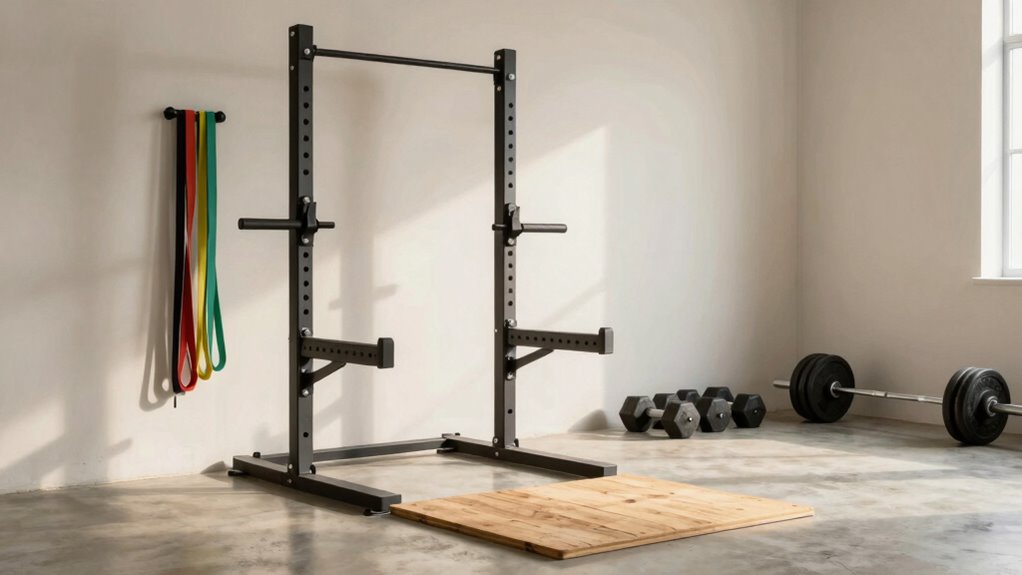
If you’re looking for an effective way to build strength without overcomplicating your training routine, the Simple Strength Split is a great option. It’s designed to maximize results with minimal fuss, making it perfect for most home gym setups. The key to its effectiveness lies in straightforward progression planning. You focus on gradually increasing the difficulty of your exercises—whether that means adding more weight, increasing reps, or reducing rest time. This systematic approach ensures continuous improvement without the need for complex programming or excessive tracking. You don’t have to constantly switch exercises or follow complicated routines; instead, you hone in on core lifts and steadily push your limits.
Another reason this split works well at home is its emphasis on equipment versatility. You don’t need a full arsenal of machines or specialized gear. Basic equipment like a barbell, dumbbells, resistance bands, or even bodyweight exercises can be integrated into the program. The versatility of your equipment allows you to adapt the routine as your space and resources evolve. For example, if you only have dumbbells, you can modify fundamental lifts like squats, presses, and rows. As you acquire more gear, you can incorporate variations or heavier weights to keep progressing. This adaptability means you’re not locked into a rigid setup—your routine can grow with your equipment collection. Additionally, understanding the importance of progressive overload helps ensure your training remains effective over time. Incorporating training consistency is also crucial for sustained progress, especially in a home environment where distractions can be prevalent. Moreover, integrating exercise variation can help prevent plateaus and keep your routine engaging over the long term. Recognizing the role of training adaptation can further enhance your ability to make continuous gains and adjust your program as needed. Plus, paying attention to recovery and rest ensures your muscles have adequate time to repair and grow stronger, which is vital for ongoing progress.
As an affiliate, we earn on qualifying purchases.
Frequently Asked Questions
Can Beginners Safely Follow This Training Split?
Yes, beginners can safely follow this training split if they focus on proper form and gradually increase intensity. Incorporate advanced techniques cautiously and prioritize recovery strategies like rest days and stretching. Listening to your body helps prevent injury, and seeking guidance from a professional can guarantee you’re progressing safely. The key is consistency and patience, making this split adaptable to your fitness level while minimizing risk.
How Long Does Each Workout Session Typically Last?
Each workout session typically lasts around 45 minutes to an hour, depending on your exercise variety and intensity. You should focus on maintaining good recovery strategies, like proper rest and hydration, to optimize results. Keep your routines efficient by balancing strength exercises with adequate rest periods, and avoid overtraining. This approach guarantees you stay motivated and prevent injury, making your workouts sustainable and effective over time.
What Equipment Is Essential for This Split?
You only need basic equipment for this split, like dumbbells and your bodyweight. Don’t worry if you think you need fancy gear—you can do plenty with just dumbbell variations and bodyweight exercises. A sturdy chair or a pull-up bar can also help. This minimal setup keeps things simple, affordable, and effective, making it perfect for your home gym without any extra clutter or expense.
How Often Should I Increase Weights or Reps?
You should increase weights or reps when you can comfortably complete your current sets and reps with good form, typically every one to two weeks. This promotes progressive overload, helping you build strength effectively. However, listen to your body to prevent injury—avoid rushing increases if you feel pain or fatigue. Gradual progress guarantees consistent gains while minimizing injury risk, making your training both safe and productive.
Is This Split Suitable for Hypertrophy or Strength Goals?
Yes, this split can support both hypertrophy and strength goals. It promotes ideal muscle activation by targeting different muscle groups effectively, allowing you to focus on specific areas. Adjust your workout frequency based on your goals—more frequent sessions can boost hypertrophy, while slightly lower frequency emphasizes strength. By tailoring your reps and weights, you’ll maximize gains in both areas without overtraining.
As an affiliate, we earn on qualifying purchases.
Conclusion
By sticking with this simple strength split, you’re setting yourself up for steady progress without the overwhelm. Did you know that nearly 70% of home gym users see consistent gains within just three months of following a straightforward program? Keep your workouts focused, stay consistent, and don’t forget to track your progress. With dedication, you’ll build strength and confidence right in your own space—proving that simplicity truly delivers results.
resistance bands for strength training
As an affiliate, we earn on qualifying purchases.
As an affiliate, we earn on qualifying purchases.
As an affiliate, we earn on qualifying purchases.
Fall Picks
fall essentials
As an affiliate, we earn on qualifying purchases.