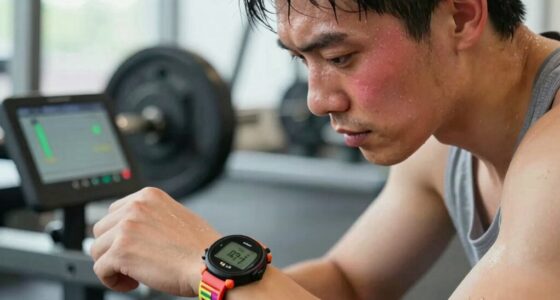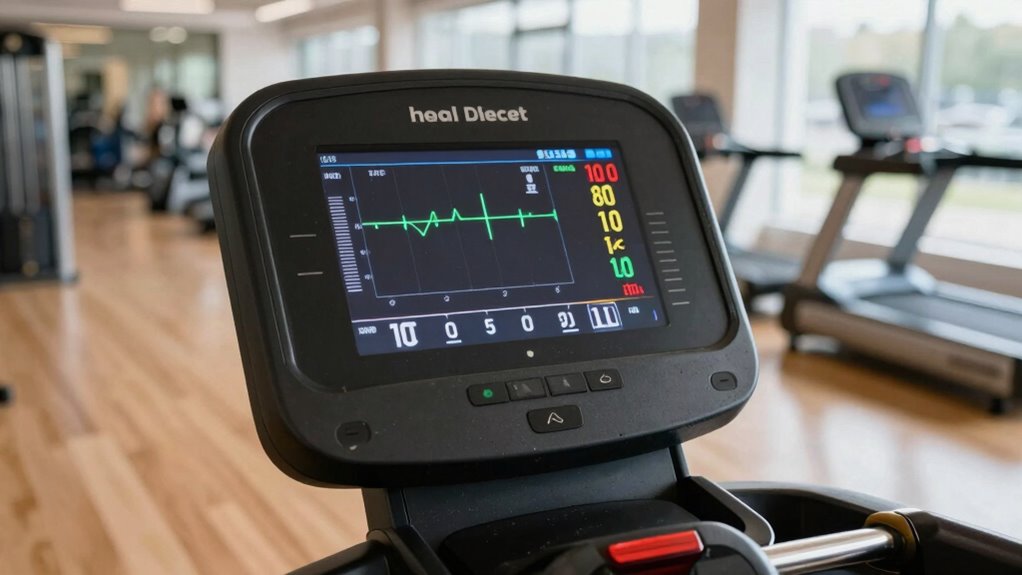

The treadmill metric that matters more than calories burned is your heart rate. It shows how hard your body is working in real time and helps you adjust your effort accordingly. Tracking your heart rate guarantees you stay within your target zones for ideal fat burning, endurance, or performance. Focusing on this measure boosts workout effectiveness and prevents overexertion. Keep going, and you’ll discover how heart rate monitoring can truly transform your treadmill sessions.
Open a free Amazon Business account
Business pricing, bulk buying and tax-exempt orders.
As an affiliate, we earn on qualifying purchases.
Key Takeaways
- Heart rate provides real-time insight into workout intensity, unlike static calorie counts.
- Monitoring heart rate zones optimizes training for fat burn, endurance, and cardiovascular health.
- Heart rate variability reflects recovery and adaptation, crucial for long-term performance improvements.
- Effort level adjustments based on heart rate prevent overtraining and enhance workout efficiency.
- Heart rate metrics offer a clearer picture of fitness progress than calories burned alone.
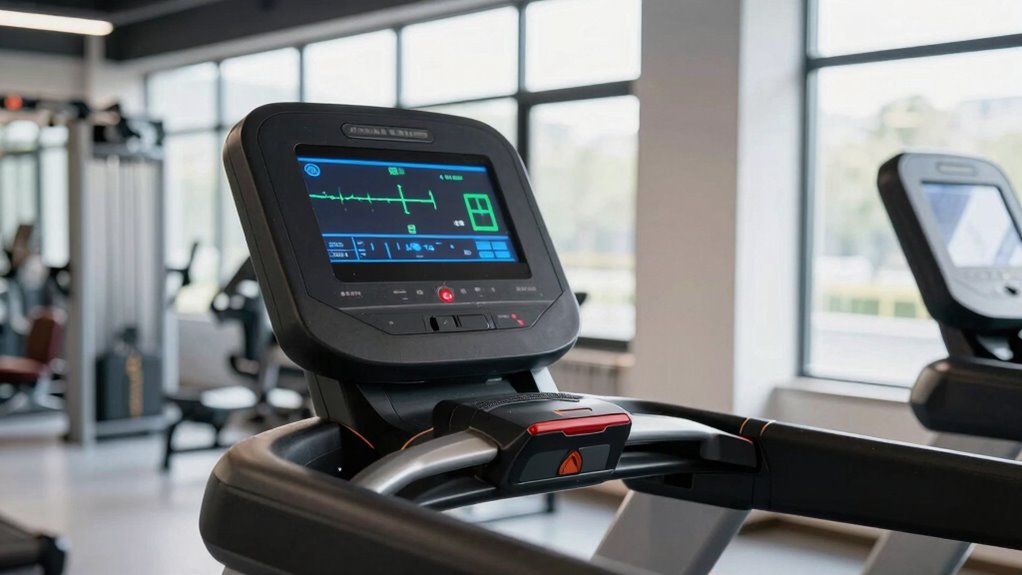
When you hit the treadmill, it’s easy to focus solely on calories burned, but that number doesn’t tell the whole story about your workout’s effectiveness. Instead, paying attention to your heart rate offers a much clearer picture of your fitness progress. Heart rate reflects how hard your body is working in real time, giving you insight into whether you’re pushing enough or need to step it up. It’s especially useful when incorporating interval training, which involves alternating between high-intensity bursts and recovery periods. During these intense intervals, your heart rate spikes, signaling that you’re challenging your cardiovascular system, which is key for improved endurance and calorie burn.
Monitoring your heart rate allows you to optimize your workout intensity. For example, if you’re aiming for a fat-burning zone, you want to stay within a specific heart rate range—usually around 50-70% of your maximum heart rate. Keeping track of this helps you avoid overexertion or undertraining. When you perform interval training, your goal is to push your heart rate into higher zones during the bursts, then allow it to recover during the rest periods. This pattern not only boosts your metabolism but also enhances cardiovascular health more effectively than steady-state exercise alone. Additionally, understanding your heart rate zones can help you tailor your workouts for maximum benefit. Using a heart rate monitor or the treadmill’s built-in sensors makes it easier to stay within your target zones. You can adjust your speed or incline to maintain the proper heart rate during different phases of your workout. Over time, as your fitness improves, you’ll notice that your heart rate responses change—showing increased efficiency. This progress is harder to measure by calories alone, which can be influenced by factors like body weight and metabolism but don’t necessarily reflect your cardiovascular gains.
Interval training, guided by your heart rate, also keeps workouts engaging. Instead of just running at a constant pace, you switch between effort levels, making the session more dynamic and less monotonous. This approach maximizes calorie burn during and after the workout, thanks to the afterburn effect, and accelerates improvements in speed, stamina, and overall heart health. Recognizing the importance of heart rate variability can further help in understanding how your body adapts to different exercise intensities and recovery periods. Tracking this variability provides insight into your autonomic nervous system and how well it’s responding to training stress, which is crucial for avoiding overtraining. Ultimately, focusing on your heart rate during treadmill sessions gives you a more accurate measure of your workout’s quality than calories burned alone. It’s a direct indicator of effort and adaptation, helping you train smarter, reach your goals faster, and build a stronger, healthier heart. This metric, combined with smart interval training, ensures every minute on the treadmill counts.
heart rate monitor for treadmill
As an affiliate, we earn on qualifying purchases.
As an affiliate, we earn on qualifying purchases.
Frequently Asked Questions
How Is the Key Treadmill Metric Measured Accurately?
You measure your heart rate accurately by using a chest strap monitor or a wrist-based fitness tracker that reliably detects your pulse. To track stride length, walk or run a known distance, then count your steps and divide the distance by your steps. This method gives you precise data on your stride length, helping you optimize your workout intensity and guarantee you’re training effectively for your fitness goals.
Can This Metric Be Tracked Without Specialized Equipment?
Sure, you can track your heart rate and perceived exertion without fancy gadgets—just use your fingers on your neck or wrist for a pulse, and ask yourself if you’re gasping or chatting comfortably. While these methods aren’t as precise as specialized equipment, they give you a decent idea of your effort. Remember, sometimes the best metrics are the ones you can eyeball and feel, not measure.
How Does This Metric Relate to Overall Fitness Progress?
You’ll find that tracking your Heart Rate Variability (HRV) offers deep insights into your overall fitness progress. It reflects your nutrition insights and mental resilience, showing how well your body recovers and adapts. As HRV improves, it indicates better cardiovascular health and mental strength. By monitoring HRV regularly, you can tailor your workouts and recovery strategies, ultimately supporting sustained fitness growth and resilience over time.
Is This Metric Affected by Different Treadmill Brands?
Yes, this metric can be affected by different treadmill brands. Brand variation can cause significant consistency challenges, making your results seem wildly inconsistent—like trying to hit a moving target! Some machines might overestimate or underestimate your effort, skewing your progress. So, if you want reliable tracking, stick to one trusted brand or consistently calibrate your treadmill. Otherwise, your fitness journey could turn into a confusing, unpredictable rollercoaster!
How Often Should I Monitor This Metric During Workouts?
You should monitor your heart rate variability and hydration levels throughout your workout, ideally every 10 to 15 minutes. Keeping an eye on these metrics helps you gauge your recovery and hydration status, preventing overexertion. Consistent checks allow you to adjust your intensity as needed, optimizing performance and safety. Staying attentive to these indicators guarantees you’re training effectively without risking burnout or dehydration.
fitness tracker with heart rate zone
As an affiliate, we earn on qualifying purchases.
As an affiliate, we earn on qualifying purchases.
Conclusion
Remember, focusing solely on calories burned can be misleading. Instead, pay attention to your heart rate during your treadmill sessions, as it’s a better indicator of cardiovascular health. Did you know that maintaining your heart rate within the target zone can improve endurance and reduce health risks? Next time you’re on the treadmill, aim for that ideal heart rate rather than just counting calories. It’s a smarter way to level up your fitness and see real results.
treadmill with built-in heart rate sensors
As an affiliate, we earn on qualifying purchases.
As an affiliate, we earn on qualifying purchases.
wearable heart rate monitor for running
As an affiliate, we earn on qualifying purchases.
As an affiliate, we earn on qualifying purchases.
Flea & tick season Picks
flea and tick prevention
As an affiliate, we earn on qualifying purchases.