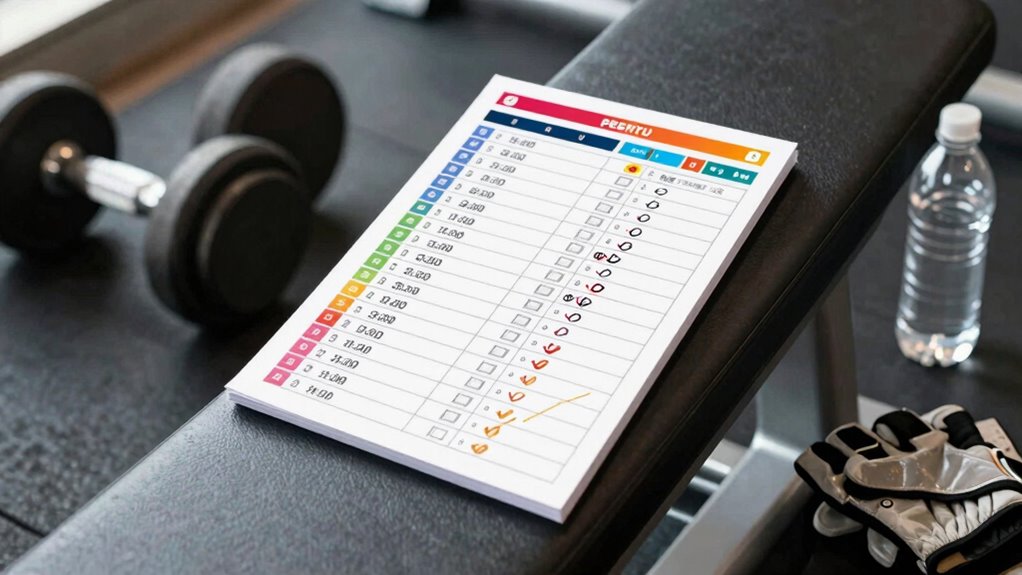

A ‘Good Workout’ Scorecard helps you look beyond just personal records by measuring progress in areas like nutrition, hydration, recovery, mental resilience, and overall well-being. It encourages you to celebrate small victories, stay motivated during fatigue, and focus on balanced growth instead of only numbers. By considering your mindset and environment, you create a sustainable routine that promotes long-term success. Keep exploring how this holistic approach can enhance your fitness journey.

Get workout gear delivered free — and shop member deals
- Fast, free delivery on millions of items
- Access to Prime Big Deal Days deals on October 6–7
- Prime Video, Amazon Music and more included
Key Takeaways
- The scorecard emphasizes measuring progress through nutrition, hydration, mental resilience, and overall well-being, not just physical numbers.
- It encourages tracking small victories and consistency to foster motivation and long-term growth.
- Incorporating mental toughness and mindset assessments helps build resilience beyond physical performance.
- Focusing on recovery and environment factors ensures sustainable progress and prevents overtraining.
- Recognizing holistic growth promotes balanced development and a broader view of workout success.
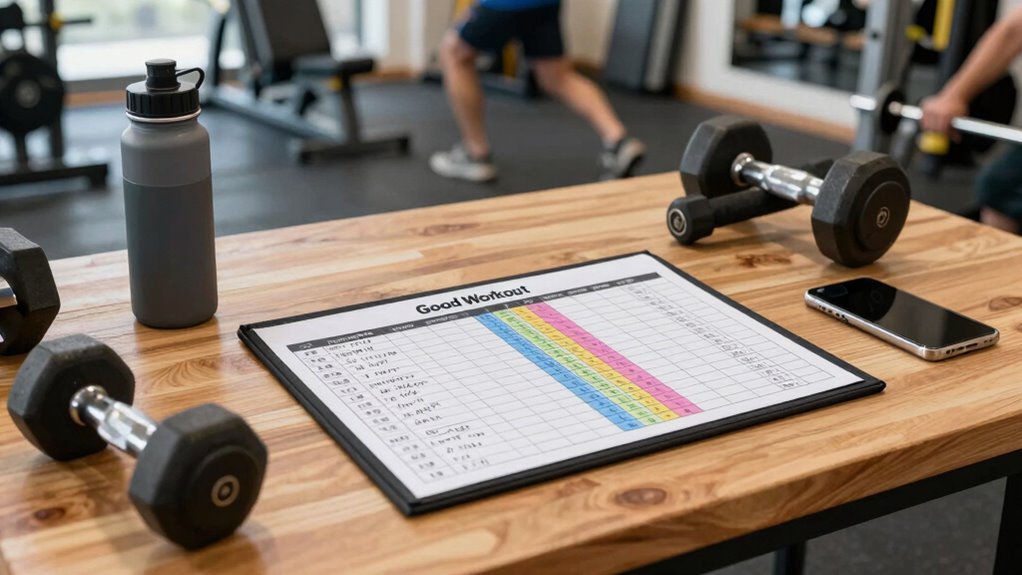
If you want to make the most of your workouts, it’s essential to have a clear way to measure your progress and effectiveness. Relying solely on personal records (PRs) can be limiting because they don’t capture the full scope of your fitness journey. That’s where The ‘Good Workout’ Scorecard comes in. It encourages you to look beyond just numbers and think about other key aspects like nutrition strategies and mental resilience, giving you a more all-encompassing view of your progress.
A holistic approach to fitness: measuring progress beyond numbers through nutrition, mindset, and resilience.
When you use this scorecard, you start recognizing that a good workout isn’t just about lifting heavier or running faster. It’s about how you feel during and after your session—your energy levels, focus, and recovery. You’ll learn to assess whether your nutrition strategies support your training goals. For example, did you fuel properly before hitting the gym? Did you hydrate well? These factors markedly influence your performance and how quickly you bounce back afterward. Tracking these elements helps you understand what’s working and what needs adjustment, making your workouts more effective over time.
Mental resilience plays a critical role in this process, too. A good workout isn’t only about physical effort; it’s also about your mindset. Did you stay motivated even when fatigue crept in? Did you push through mental barriers? By incorporating mental resilience into your scorecard, you start seeing progress in how you handle setbacks and challenges. This mental toughness translates into better consistency and persistence, which are key for long-term success. Over time, you’ll notice that improvements aren’t just physical but psychological as well.
Additionally, understanding the role of training environment can help you optimize your workout conditions and enhance your overall experience. The scorecard prompts you to reflect on your overall well-being, not just the numbers on the scale or the weights lifted. It encourages you to celebrate small victories, whether it’s sticking to your nutrition plan, maintaining focus during a tough workout, or simply showing up consistently. This shift in perspective helps you stay motivated and reduces the pressure to only chase PRs. Recognizing the importance of holistic growth supports a more balanced approach to fitness and well-being. Incorporating consistent routines can further reinforce your progress and build habits that foster resilience and long-term success. Moreover, understanding the science of recovery can help you optimize rest and avoid overtraining, ensuring sustainable progress.
Incorporating this scorecard into your routine means you’re actively engaging with every aspect of your fitness journey. It pushes you to think beyond the immediate gains and focus on sustainable habits, mental strength, and proper nutrition strategies. For example, understanding how mindset influences your training can be transformative. By doing so, your workouts become more meaningful, and you set yourself up for continuous improvement that lasts well beyond the gym. Ultimately, it’s about creating a mindset where success is measured by resilience, consistency, and overall well-being—not just numbers.
As an affiliate, we earn on qualifying purchases.
Frequently Asked Questions
How Often Should I Update My Good Workout Scorecard?
You should update your good workout scorecard after each session to keep your progress tracking accurate and fresh. Regular updates give you a continuous motivation boost, showing clear evidence of your improvements and areas needing focus. By maintaining consistent updates, you stay engaged and motivated, ensuring your fitness journey stays on track. Remember, frequent updates help you see progress, celebrate wins, and stay committed to your goals.
Can the Scorecard Be Customized for Different Fitness Goals?
Yes, you can customize the scorecard for different fitness goals by using personalization options. You’ll be able to add goal-specific metrics that matter most to your objectives, whether it’s strength, endurance, flexibility, or mobility. This way, your scorecard reflects your unique progress and keeps you motivated. Adjust the metrics as your goals evolve, ensuring your workout tracking stays relevant and effective for your personal fitness journey.
Is the Scorecard Suitable for Beginners or Only Advanced Athletes?
Yes, the scorecard is suitable for both beginners and advanced athletes. If you’re just starting, it helps boost beginner motivation by tracking progress and celebrating small wins. For advanced users, it offers detailed, advanced tracking to push limits and refine routines. Its flexibility allows you to adapt it to your current fitness level, making it a valuable tool whether you’re new or experienced.
How Does the Scorecard Account for Injury Recovery Workouts?
Think of the scorecard as your personal compass during injury recovery. It accounts for injury management by allowing you to log specific recovery workouts, tracking progress in a clear, visual way. You actively monitor how each session contributes to your healing, making adjustments as needed. This recovery tracking helps you stay motivated, ensuring you progress safely, and ultimately guides you back to peak performance without risking setbacks.
What Feedback or Adjustments Should I Consider After Using the Scorecard?
After using the scorecard, you should review your progress tracking closely to identify patterns and areas for improvement. Consider adjusting your goals based on your recent workouts and recovery progress. Use the motivational feedback to stay inspired, especially during challenging phases. Reflect on your performance honestly, and tweak your routines or rest days accordingly, ensuring continuous growth while honoring your body’s recovery needs.
As an affiliate, we earn on qualifying purchases.
Conclusion
As you reflect on your workout using the ‘Good Workout’ scorecard, you realize that progress isn’t just about hitting PRs. Sometimes, the real gains come from moments you didn’t plan for—like pushing through fatigue or listening to your body. Coincidentally, these unanticipated successes often lead to the most meaningful growth. So, keep looking beyond numbers, and you’ll discover that the true measure of a good workout is how it shapes not just your strength, but your resilience too.
As an affiliate, we earn on qualifying purchases.
As an affiliate, we earn on qualifying purchases.
Evergreen bestsellers Picks
bestsellers
As an affiliate, we earn on qualifying purchases.