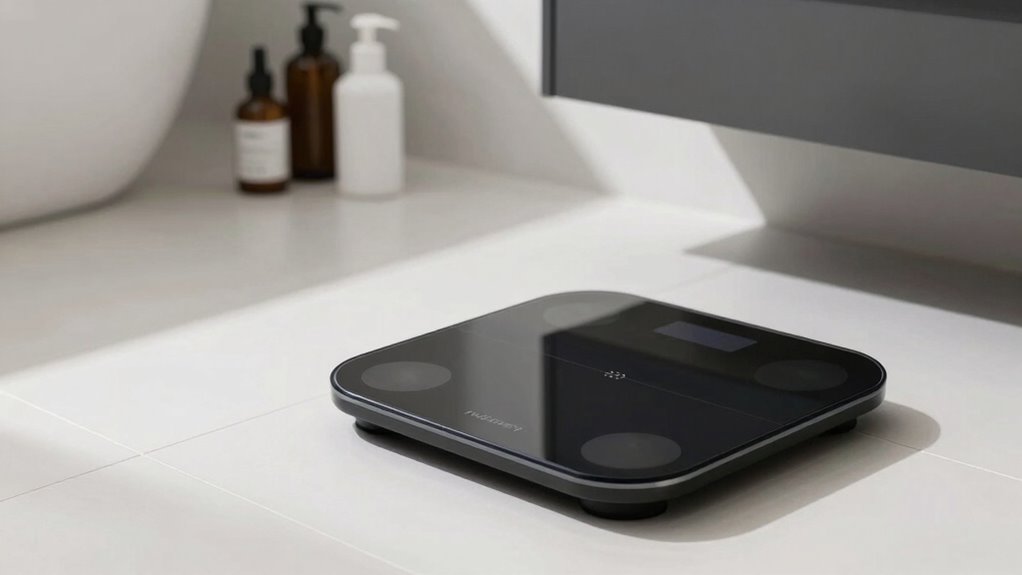

Smart scales can show quick body composition estimates, but they often mislead by fluctuating due to hydration, recent activity, or food intake. They can’t distinguish between muscle gain, fat loss, or dehydration, so you shouldn’t rely solely on these numbers. Trends over time are more meaningful, but even then, results can be skewed. If you want a clearer picture of your health, understanding their limitations is key—stick with us to uncover more insights.

Get workout gear delivered free — and shop member deals
- Fast, free delivery on millions of items
- Access to Prime Big Deal Days deals on October 6–7
- Prime Video, Amazon Music and more included
Key Takeaways
- Body composition trends may reflect hydration changes or water shifts, not actual muscle gain or fat loss.
- Fluctuations in readings can be caused by recent activity, food intake, or skin temperature, not true progress.
- Smart scales provide useful trend data but are limited and should be combined with other health indicators.
- Single measurements are unreliable; focus on long-term patterns rather than isolated results.
- Results need context; interpreting body composition trends requires understanding external factors and overall health.
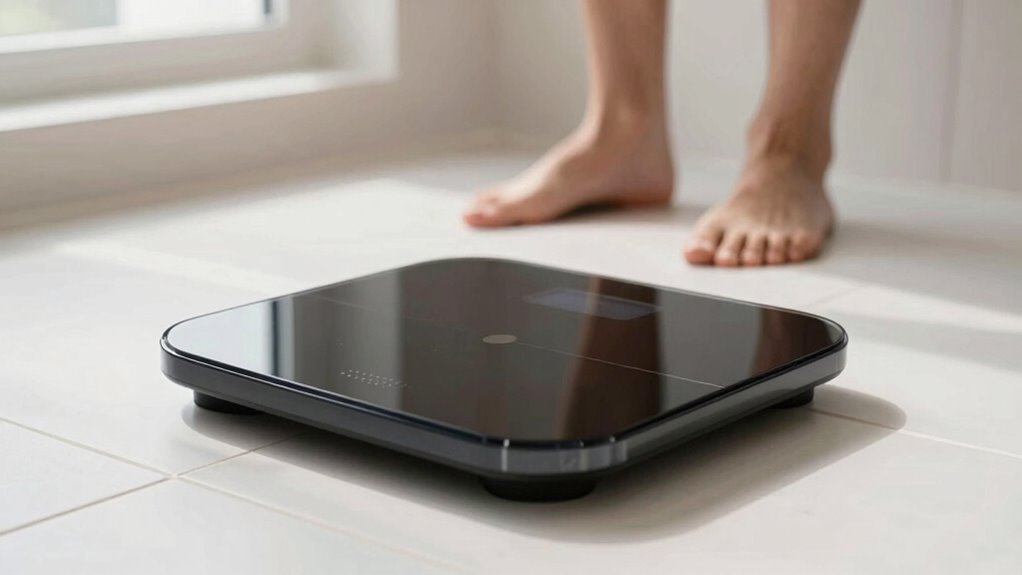
Many people fall into the trap of relying solely on smart scales to track their weight, believing these devices provide a complete picture of their health. While they’re convenient and give you quick readouts, they only tell part of the story. Your weight fluctuates for numerous reasons—fluid retention, recent meals, or even time of day—so a scale alone doesn’t reveal whether you’re gaining muscle, losing fat, or simply dehydrated.
Smart scales often estimate your muscle mass and hydration levels through bioelectrical impedance analysis. This method works by sending a small electrical current through your body and measuring resistance. While it can give you an idea of your muscle mass, it’s far from perfectly accurate. Factors like recent exercise, food intake, and even skin temperature can skew results. If your muscles feel stronger or your hydration levels improve, the scale might show a higher muscle mass reading, but that doesn’t necessarily mean you’ve gained muscle overnight. It could just be that you’re better hydrated or that your body’s water content has shifted, which affects measurements.
Bioelectrical impedance estimates muscle and hydration but is affected by exercise, food, and temperature, so interpret results cautiously.
You need to understand what these trends can and can’t tell you. For example, a rising muscle mass reading might motivate you to keep working out, but it shouldn’t make you complacent if your overall weight or body fat percentage isn’t moving in a healthy direction. Conversely, a drop in hydration levels might just mean you’re dehydrated, not that you’re losing body fat. Relying on these numbers without context can lead you astray, making you think your efforts are paying off when they’re not.
It’s also essential to recognize that body composition readings are best used as part of a broader health picture. Tracking your progress with other indicators—such as strength, endurance, how your clothes fit, and energy levels—will give you a more complete understanding. Additionally, understanding the limitations of bioelectrical impedance analysis can help set realistic expectations. Being aware of the factors influencing measurements, like recent activity or hydration, can help you interpret results more accurately. Incorporating multiple health metrics into your routine can provide a more balanced perspective on your overall progress. Remember, smart scales are tools, not crystal balls. They can highlight trends over time, but they shouldn’t be used as the sole measure of your health or fitness journey.
In the end, don’t put too much stock in a single reading. Use your smart scale as a guide, not gospel. Combine its data with other observations, and stay mindful of the factors that influence hydration levels and muscle mass measurements. That way, you avoid falling into the trap of overinterpreting numbers and stay focused on sustainable, healthy progress.
As an affiliate, we earn on qualifying purchases.
Frequently Asked Questions
How Often Should I Use a Smart Scale for Accurate Results?
You should use your smart scale once a week for accurate results, allowing for consistency amid user variability. Make certain to calibrate it regularly, ideally monthly, to guarantee precise readings. Avoid daily weigh-ins, as fluctuations from hydration or other factors can mislead you. By sticking to a weekly schedule and maintaining proper calibration, you’ll get a clearer picture of your progress without overinterpreting short-term changes.
Can Hydration Levels Affect My Smart Scale Readings?
Think of your body as a river, constantly flowing with fluid fluctuations. Hydration levels can impact your smart scale readings, as water retention affects your body’s composition. To guarantee hydration accuracy, weigh yourself at the same time daily and avoid heavy salt or water intake beforehand. This consistency minimizes fluid fluctuations, giving you a clearer picture of your true progress, rather than misleading water weight changes.
Are Smart Scales Suitable for Athletes or Bodybuilders?
Smart scales can provide useful muscle measurement data, but they aren’t ideal for athletes or bodybuilders. Scale limitations, like inconsistent readings due to hydration or posture, can lead to inaccuracies. For precise muscle assessment, consider professional methods like DEXA scans or skinfold measurements. While smart scales are convenient for general tracking, they don’t always reflect the detailed, nuanced changes in muscle mass that athletes need to monitor.
Do Smart Scales Differentiate Between Muscle and Fat Accurately?
Smart scales can measure muscle and fat, but their muscle measurement and fat accuracy aren’t perfect. They use bioelectrical impedance to estimate body composition, which can be affected by hydration levels, recent activity, and skin temperature. So, while they give you a general idea, don’t rely solely on them for precise muscle and fat measurements. For better accuracy, consider methods like DEXA scans or professional assessments.
What Are the Best Practices for Interpreting Body Composition Trends?
Think of tracking your body composition like steering a boat—caloric balance and hormonal fluctuations are your compass and weather. To interpret trends well, focus on consistent measurements over time, not daily fluctuations. Remember, a sudden dip might be water levels dropping, not fat loss. Stay patient, watch for steady progress, and consider external factors that influence your readings, ensuring you get the clearest picture of your health journey.
bioelectrical impedance body scale
As an affiliate, we earn on qualifying purchases.
As an affiliate, we earn on qualifying purchases.
Conclusion
As you step off the smart scale, remember it’s just a flickering light in your journey, not the full picture. Don’t let false promises trap you in a web of numbers that don’t define your worth. Instead, focus on the vibrant, living story your body tells—strength, resilience, and progress beyond mere stats. Trust your intuition and embrace the journey, knowing that true health isn’t measured by a screen but by how you feel in your skin.
As an affiliate, we earn on qualifying purchases.
muscle mass and hydration tracker
As an affiliate, we earn on qualifying purchases.
As an affiliate, we earn on qualifying purchases.
Fall Picks
fall essentials
As an affiliate, we earn on qualifying purchases.