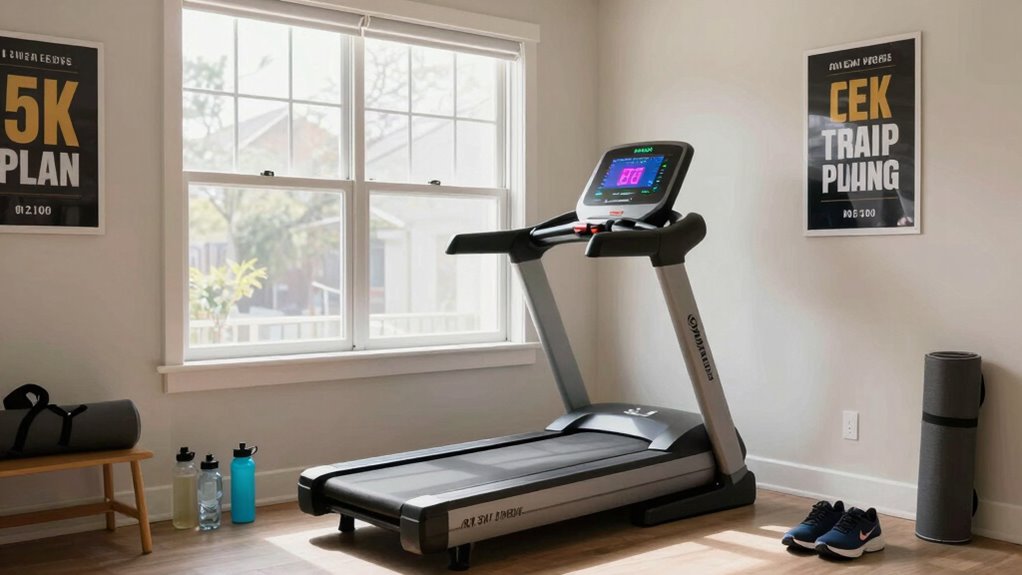

Getting ready for a 5K at home is simple and non-intimidating. Start with walking or light jogging, gradually increasing your pace and distance each week. Wear comfortable, moisture-wicking gear, and focus on consistency rather than speed. Use gentle stretching and proper nutrition to support your progress. Keep motivation high with easy routines and simple goals—if you keep moving forward, you’ll build confidence and endurance. Stick with it, and you’ll discover all the tips you need to succeed.
Key Takeaways
- Start with brisk walking or light jogging, gradually increasing intensity weekly to build confidence and endurance.
- Focus on consistency over speed, scheduling short, manageable sessions at home around your daily routine.
- Incorporate rest days and listen to your body to prevent fear of overexertion or injury.
- Use comfortable, well-fitting gear and stay motivated with playlists to make training enjoyable.
- Balance training with proper nutrition, hydration, and stretching to boost recovery and reduce anxiety.

Have you ever wondered how to train for a 5K without leaving your house? You’re not alone, and you don’t need a fancy gym membership or a ton of space to get started. The key is to build a simple, effective plan that keeps you motivated and steady. Before diving into the workouts, it helps to have the right running gear. You don’t need high-end shoes, but investing in a decent pair of running shoes that fit well can prevent injuries and make your runs more comfortable. Wear moisture-wicking clothing to stay dry and cool, especially if you plan to run indoors or outside during warmer months. Having a good pair of headphones and a playlist can also boost your energy and make your training more enjoyable.
As for nutritional tips, fueling your body properly is just as important as your running routine. Focus on a balanced diet rich in complex carbs like oats, whole grains, and fruits. These provide sustained energy for your runs. Incorporate lean proteins such as chicken, fish, or plant-based options to help your muscles recover faster after workouts. Don’t forget about hydration — drinking plenty of water throughout the day keeps you energized and prevents fatigue. If you’re planning a longer session, consider a small snack beforehand, like a banana or a handful of nuts, to give you an extra boost. Post-run, refuel with a mix of protein and carbs to help your muscles recover and prepare for the next session. Avoid high-sugar or processed foods that can cause energy crashes and slow down your progress. Additionally, understanding the benefits of Free Floating can help you stay flexible and injury-free as you build your endurance.
Starting your training at home means you can tailor your schedule around your daily routine. Begin with brisk walking or light jogging to ease into your routine, gradually increasing your pace and distance each week. Stick to a plan that involves alternating between running and walking, especially if you’re new to running, to build endurance without overdoing it. Consistency is more important than speed or distance at first. Make sure to stretch after each session to prevent tight muscles and improve flexibility. Listening to your body is vital — if you feel pain or excessive fatigue, take a rest day or reduce your intensity. Remember, training for a 5K at home isn’t about perfection; it’s about steady progress and staying motivated. With the right gear, nutrition, and a consistent plan, you’ll be crossing that finish line with confidence in no time.
Top picks for "train home beginner"
Open Amazon search results for this keyword.
As an affiliate, we earn on qualifying purchases.
Frequently Asked Questions
Can I Do This Plan if I Have Existing Health Issues?
Yes, you can do this plan if you have existing health issues, but you should first consider medical considerations. Talk to your healthcare provider to guarantee it’s safe and discuss personalized modifications tailored to your condition. Adjust the intensity and duration as needed, listen to your body, and stop if you feel discomfort. Taking these steps helps you stay safe while training effectively.
How Should I Adjust the Plan for Different Fitness Levels?
You should customize workouts and modify pacing based on your fitness level. If you’re new, start with shorter runs or walk breaks and gradually build up. For more experienced, increase intensity or duration carefully. Listen to your body, and don’t push through pain. Adjusting the plan guarantees you stay safe and motivated, helping you progress comfortably while enjoying the process.
What Should I Eat Before and After Running?
Ever wondered what to eat before and after your run? For nutrition timing, have a light carb snack like a banana or toast 30-60 minutes before running. After your run, refuel with a mix of carbs and protein, such as yogurt with fruit or a smoothie. Post-run snacks help recovery and energy replenishment. Stay hydrated and listen to your body’s hunger cues to optimize your performance.
How Do I Stay Motivated Throughout the Training?
To stay motivated throughout your training, try using motivation techniques like setting small, achievable goals and rewarding yourself. Find accountability partners, whether friends or online groups, to keep you committed. Track your progress regularly to see how far you’ve come. Remind yourself of your reasons for starting, and celebrate each milestone. This will help you stay focused, energized, and motivated to keep going until you cross that finish line.
Is It Safe to Train Indoors if I Live in a Cold Climate?
Training indoors during cold weather is perfectly safe and keeps you from battling the elements. Just make sure your space has good indoor safety, like slip-resistant floors and proper ventilation. Keep your environment warm enough to prevent injuries and discomfort, and stay hydrated. An indoor setup can be your secret weapon against freezing temps, making your 5K training feel like a cozy, unstoppable adventure—like conquering the world from your living room!
Conclusion
So, you’ve got this 5K plan in hand, and honestly, it’s more achievable than you think. Many believe that running requires fancy gear or endless hours at the gym, but the truth is, consistency beats intensity. Just like the tortoise winning the race, steady progress wins the day. Stick with your plan, trust your body, and remember—every step forward is a step toward becoming a stronger, faster you. You’ve got this!