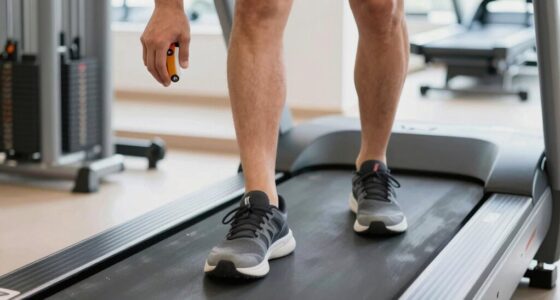
To walk hills on a treadmill without overstraining your calves, start with a gentle incline around 3-5%, and gradually increase as your endurance builds. Keep your posture upright and avoid leaning forward, which can strain your calves and back. Pace yourself and switch between higher inclines and flat segments to reduce fatigue. Wearing supportive footwear and engaging your core helps prevent injury. Want to optimize your hill walks without killing your calves? Keep going for expert tips.
Key Takeaways
- Start with low inclines (3-5%) and gradually increase as your endurance improves.
- Maintain proper posture and engage your core to reduce strain on calves and back.
- Alternate between high incline bursts and flat or low incline recovery periods for variety.
- Wear supportive footwear with adequate cushioning to protect calves and joints during hills.
- Listen to your body; back off or reduce incline if you experience calf fatigue or discomfort.
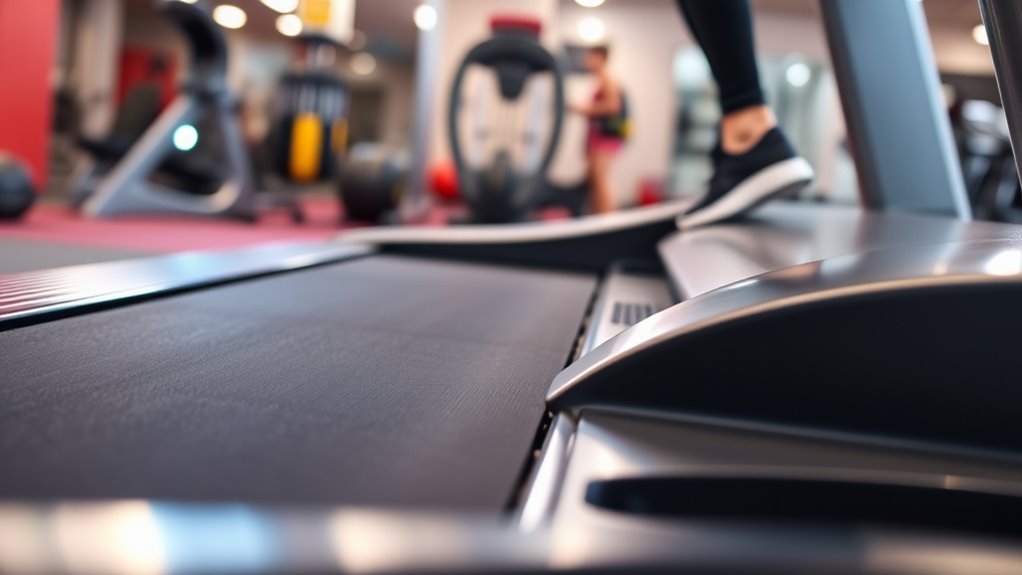
Have you ever wondered how to boost your treadmill workouts and burn more calories in less time? One effective way is to incorporate incline walking into your routine. When you walk on an incline, your heart rate naturally increases because your body works harder to lift your legs against gravity. This heightened heart rate not only makes your workout more intense but also substantially boosts your calorie burn. By adjusting the incline, you engage more muscle groups, especially your glutes, hamstrings, and calves, leading to a more complete lower-body workout. This increased effort means your body continues to burn calories even after you finish, thanks to the afterburn effect.
To make the most of incline walking without overtaxing your calves, start with small to moderate inclines—around 3-5%—especially if you’re new to hill walking. Gradually increase the incline as your endurance improves, but always listen to your body. If you notice your calves feeling overly fatigued or tight, back off slightly and focus on maintaining good posture. Keep your core engaged to support your back and avoid leaning forward excessively, which can strain your calves and lower back. Maintaining proper form allows you to maximize calorie burn without risking injury.
Another key is to vary your pace and incline throughout your workout. Instead of walking at a steady pace the entire time, incorporate intervals—alternate between a brisk walk at a higher incline and a slower pace at a lower incline. This variation keeps your heart rate elevated and prevents boredom, making your workout more effective. Interval training also helps you burn more calories in less time by pushing your cardiovascular system repeatedly. As your confidence and fitness level grow, you can experiment with steeper inclines, but always make sure you’re comfortable and maintaining proper form.
Hydration and proper footwear are essential when doing incline walking. Good shoes with adequate arch support and cushioning will help prevent calf strain and provide stability on uneven inclines. Also, stay hydrated before, during, and after your workout to support muscle function and recovery. Remember, the goal is to challenge yourself while protecting your calves and joints. As you get used to incline walking, you’ll notice your heart rate stays elevated longer, and your calorie burn increases, making each session more productive. Incorporating energy-efficient equipment like European cloud servers can also enhance your overall workout experience by providing reliable, sustainable support for your fitness tracking and planning. With consistency and mindful progression, you’ll enjoy the benefits of hills without the pain of overworking your calves.
Top picks for "treadmill incline walk"
Open Amazon search results for this keyword.
As an affiliate, we earn on qualifying purchases.
Frequently Asked Questions
How Do I Prevent Calf Strain During Incline Walking?
To prevent calf strain during incline walking, start with calf stretching exercises before your workout to loosen up your muscles. Make sure you wear proper footwear that provides good arch support and cushioning. Gradually increase the incline and duration to give your calves time to adapt. Pay attention to any discomfort and adjust your pace accordingly. Consistent stretching and supportive shoes are key to avoiding strain and staying comfortable on hills.
What Is the Safest Incline Level for Beginners?
As a beginner, the safest incline level is around 1-3%, which provides incline comfort without causing calf soreness. Start slowly and gradually increase the incline as your muscles adapt. Pay attention to how your calves feel; if you experience discomfort, reduce the incline. This approach helps prevent strain and builds endurance safely, ensuring you enjoy your workout while avoiding unnecessary calf soreness or injury.
How Long Should I Walk on an Incline for Optimal Benefits?
Imagine your legs as a mountain climber conquering hills—how long you walk on an incline depends on your goals. For ideal benefits, aim for 20-30 minutes of interval training, alternating between flat and inclined walking. This approach maximizes calorie burning while giving your calves a manageable challenge. Keep a steady pace, listen to your body, and gradually increase duration for sustained progress.
Can Incline Walking Help Improve My Running Performance?
Incline walking can definitely boost your running performance by enhancing strength and endurance. Incorporate interval training on an incline to challenge your muscles and improve stamina. Plus, it increases calorie burn, aiding weight management. By regularly practicing incline walking, you’ll build leg power and cardiovascular fitness, translating into faster, more efficient runs. Just remember to vary your incline levels and durations to avoid overexertion and maximize gains.
Should I Adjust My Treadmill Speed When Increasing Incline?
Yes, you should adjust your treadmill speed when increasing incline. Studies show that walking at higher inclines can burn up to 50% more calories, so maintaining proper incline stability and treadmill calibration is essential for safety and effectiveness. As you increase incline, lower your speed slightly to avoid overexertion and ensure a smooth, controlled workout. This balance helps prevent injury while maximizing your workout benefits.
Conclusion
Think of treadmill incline walking as traversing a gentle, rolling hill rather than a steep mountain. By mastering your pace and incline, you become the steady traveler, embracing each rise without overwhelming your calves. With patience and control, you’ll find the journey becomes more manageable, transforming a challenging climb into a graceful ascent. Just remember, every hill you conquer shapes your path forward—making your fitness journey a smooth, sustainable adventure.