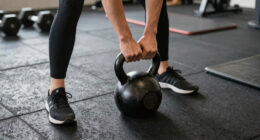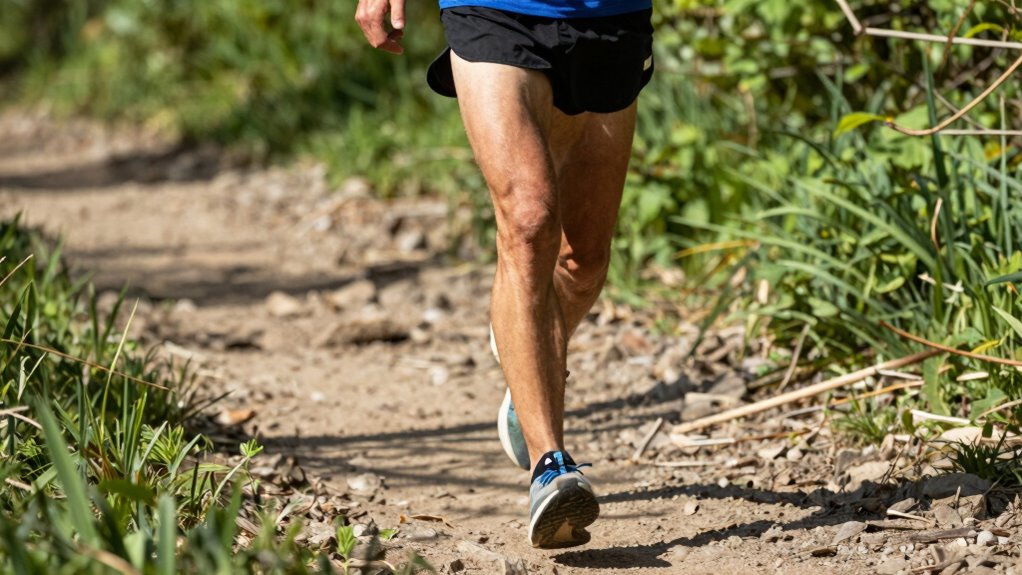
While 180 steps per minute is often suggested as an ideal running cadence, it’s not a strict rule, and you don’t need to hit exactly that number. Instead, focus on gradually increasing your cadence in a way that feels natural and sustainable for you. Improving your cadence can boost running efficiency and lower injury risk. Keep exploring ways to make small, consistent adjustments to find the rhythm that works best for your body.
Key Takeaways
- 180 steps per minute is a helpful guideline but not a universal rule for all runners.
- Optimal cadence varies based on individual height, stride length, and running style.
- Gradually increasing cadence can improve running economy and reduce impact forces.
- Using tools like metronome apps or music can assist in adjusting your cadence effectively.
- The goal is to find a sustainable, comfortable rhythm rather than hitting exactly 180.

Have you ever wondered how some runners seem to glide effortlessly, maintaining a smooth rhythm? It’s often because they’ve optimized their cadence, which directly influences their running economy and injury prevention. Running economy refers to how efficiently your body uses oxygen at a given pace, and a good cadence helps improve this efficiency. When you maintain a consistent, ideal cadence, you reduce unnecessary movements and energy waste, allowing you to run more smoothly and for longer periods. This efficiency isn’t just about speed; it’s about conserving energy, so you don’t tire out too quickly. Better running economy also means less strain on your muscles and joints, decreasing the risk of overuse injuries, which are common among runners who run with poor form or inconsistent rhythm.
Many runners fixate on the idea that 180 steps per minute is the ideal cadence, but that’s not a hard and fast rule. While 180 can be a useful benchmark—especially for experienced runners—your optimal cadence might be slightly higher or lower depending on your height, stride length, and running style. The key is to find a rhythm that feels natural and sustainable for you. When you increase your cadence gradually, you often land with your feet closer to your center of mass, reducing the impact force on your joints. This adjustment not only enhances your running economy but also plays a significant role in injury prevention. Landing with your feet under your hips, rather than out in front, minimizes braking forces and reduces the likelihood of injuries like shin splints or stress fractures.
To improve your cadence, consider using a metronome app or music with a specific beats-per-minute (BPM) count that matches your target. Start slowly, making small changes over time rather than trying to overhaul your entire running style at once. Focus on maintaining a quick, light turnover without sacrificing form. As your cadence naturally increases, you’ll notice your stride becoming more efficient, and your muscles will learn to work smarter, not harder. Incorporating proper footwear can also support your efforts in adjusting your cadence smoothly. Keep in mind that consistency is key; over time, this adjustment will lead to better running economy, less fatigue, and a lower chance of injury. Remember, the goal isn’t to hit exactly 180 steps per minute but to find a rhythm that makes your running more efficient, comfortable, and sustainable.
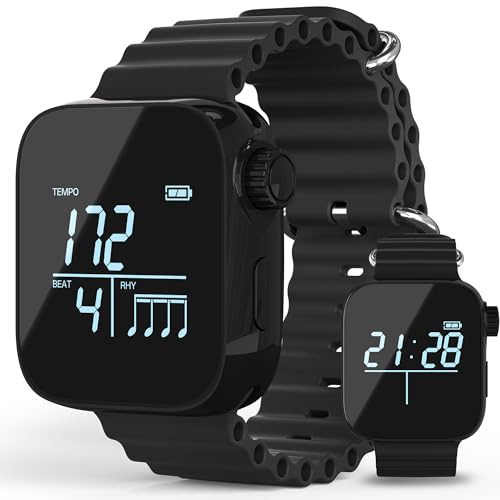
Smart Vibrating Metronome Watch, App-Controlled Multi-Mode Wearable Tempo Trainer, Rechargeable Wearable Metronome, Strong Haptic Feedback Feel the Beat for Instrument Practice and Running (Black)
【Powerful & Clear Pulse Vibration】 Feel every beat with precision. Unlike traditional audible metronomes, the advanced vibrating motor…
As an affiliate, we earn on qualifying purchases.
As an affiliate, we earn on qualifying purchases.
Frequently Asked Questions
How Can I Determine My Ideal Running Cadence?
To determine your ideal running cadence, start by tracking your current cadence using running cadence metrics or a smartwatch. Focus on maintaining a stride length that feels natural and comfortable without overstriding. Gradually increase your cadence by small increments, around 5% at a time, until you find a rhythm that reduces impact and improves efficiency. Listen to your body as you experiment with different cadence and stride length combinations.
Does Cadence Vary Between Sprinting and Long-Distance Running?
Yes, cadence varies between sprinting and long-distance running. In sprinting, your cadence is much higher to generate quick, explosive movements, often exceeding 200 steps per minute. For trail running and long-distance, your cadence tends to be lower, around 170-180, aligning with your breathing rhythm for endurance. Adjusting your cadence to suit your pace helps improve efficiency and reduces injury risk during different running styles.
What Are Signs of Over-Striding Related to Cadence?
If you’re over-striding, your cadence may be too low, causing your stride length to lengthen excessively. Signs include your foot landing too far in front of your body, often with a heavy heel strike pattern, which increases impact and fatigue. You might notice you’re landing with each step too stretched out, leading to inefficient running. To improve, focus on increasing your cadence slightly to shorten your stride length and promote a more balanced foot strike pattern.
How Does Cadence Influence Injury Risk?
Your running cadence directly impacts injury risk by influencing your foot strike and stride length. A higher cadence tends to promote a midfoot or forefoot strike, reducing the impact forces on your joints. It also shortens your stride, decreasing over-striding chances that often lead to injuries. Maintaining an ideal cadence helps you run more efficiently, lowers stress on your muscles and bones, and minimizes the risk of overuse injuries.
Can Cadence Improvements Improve Running Efficiency?
Think of your cadence as the metronome guiding your dance—small, steady steps can boost your running economy. When you improve your cadence, you naturally shorten your step length, reducing the energy wasted with each stride. This symphony of quicker, lighter steps helps you run more efficiently, conserving energy and letting you go farther with less effort. Yes, refining your cadence can turn your run into a smoother, more economical performance.

EZON GPS Running Watch with Distance Pace Alarm and Calorie Counter and Stopwatch for Men T031B01 Black
⌚Advanced GPS for Precise Tracking – Our watch is equipped with cutting-edge GPS technology, featuring a cold start…
As an affiliate, we earn on qualifying purchases.
As an affiliate, we earn on qualifying purchases.
Conclusion
Remember, finding your ideal cadence is like tuning a musical instrument—it’s about what sounds right for you. While 180 steps per minute isn’t a magic number, paying attention to your rhythm can help you run more efficiently and comfortably. Trust your body’s natural beat, and with some experimentation, you’ll discover the tempo that feels like your personal song. Embrace the journey, and let your stride become a dance in motion.

Cadence Insoles Orthotic Shoe Insoles, Orange, Men's 8-9, Women's 9-10
The Cadence Original Orange provides semi-rigid orthotic support and exceptional shock-absorbing comfort in the heel and forefoot.
As an affiliate, we earn on qualifying purchases.
As an affiliate, we earn on qualifying purchases.

Beats Powerbeats Pro 2 – Wireless Noise Cancelling Workout Earbuds with Secure- Fit Earhooks, Up to 45-Hour Battery with Charging Case, Sweat & Water Resistant, Heart Rate Monitoring – Jet Black
BUILT FOR ATHLETES WHO DON'T STOP: After 1,500 hours of testing across athletes of every ear shape and…
As an affiliate, we earn on qualifying purchases.
As an affiliate, we earn on qualifying purchases.