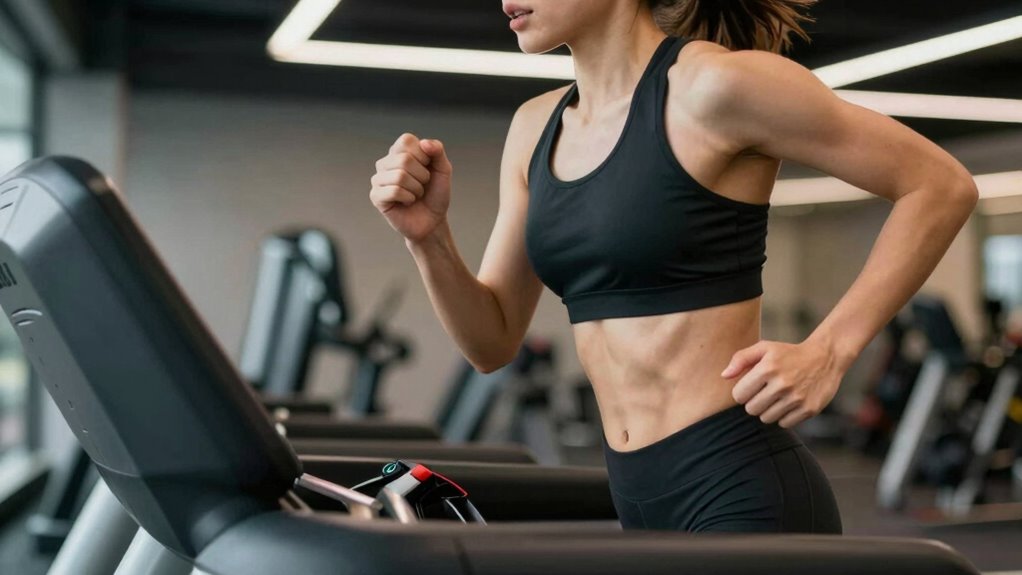

To fix a side stitch while on the treadmill, focus on deep, rhythmic breathing—inhale through your nose and exhale through your mouth—and match your breaths to your strides, like inhaling for three steps and exhaling for three. Maintain proper posture by standing tall and engaging your core, and adjust your pace gradually rather than rushing out too quickly. Mastering these breathing and timing tricks can help prevent stitches; learn more to keep your runs smooth.
Key Takeaways
- Practice deep, rhythmic breathing—inhale through the nose and exhale through the mouth—to improve oxygen flow and reduce stitches.
- Use a stride-based breathing pattern, such as inhaling for three steps and exhaling for three steps, to establish a steady rhythm.
- Maintain good posture with shoulders back and chest open to facilitate better breathing and lessen diaphragm strain.
- Avoid large water gulps before running; instead, take small sips throughout to prevent stomach discomfort that can trigger side stitches.
- Slow down or walk briefly when a stitch occurs, allowing muscles to relax and easing the pain quickly.
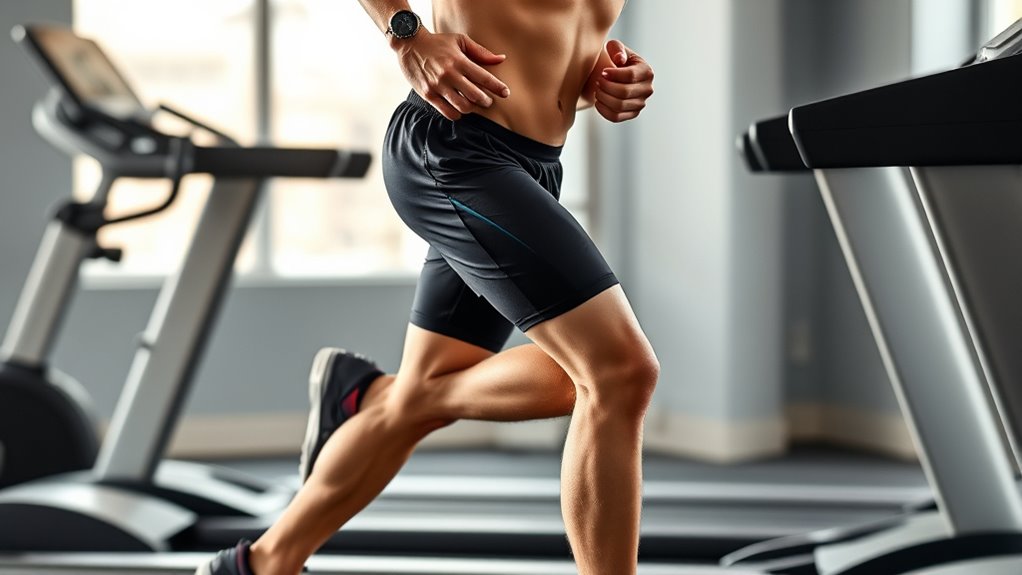
If you’ve ever experienced a side stitch while running on a treadmill, you know how disruptive it can be to your workout. That sharp, cramping sensation not only halts your progress but can also be frustrating, especially when you’re in the middle of a session. The good news is that many side stitches can be prevented or alleviated through simple adjustments and strategies. One effective approach involves paying attention to your hydration strategies; staying properly hydrated helps maintain your electrolyte balance and prevents cramping. Avoid drinking large gulps of water right before running, and instead, take small sips throughout your workout. Proper hydration keeps your muscles functioning smoothly and reduces the likelihood of cramps that cause side stitches.
Alongside hydration, your posture plays an essential role. Poor posture, such as leaning forward or slouching, can put unnecessary strain on your diaphragm and abdominal muscles, increasing the chances of a side stitch. Focus on standing tall with your shoulders back and relaxed, engaging your core gently to support your spine. Maintaining good posture not only improves your breathing but also reduces tension in your abdominal area, which can help prevent that stabbing pain during your run. When you’re on the treadmill, try to keep your chest open and avoid hunching over the handrails, as this can restrict your breathing and lead to muscle fatigue. Additionally, being aware of your breathing patterns and how they influence your overall comfort can make a significant difference in your running experience.
Breathing techniques are another key element in fixing side stitches. Many runners tend to hold their breath or breathe shallowly, which deprives your muscles of oxygen and causes cramping. Instead, practice deep, steady breaths, inhaling through your nose and exhaling through your mouth. This encourages better oxygen flow and helps relax your diaphragm, reducing the likelihood of a stitch. Timing your breathing with your stride can also make a difference; aim for a rhythmic pattern that aligns with your pace. For example, inhale for three steps and exhale for three steps, creating a natural rhythm that keeps your breathing steady and your muscles supplied with oxygen.
In addition to breathing and posture adjustments, be mindful of your pacing. Running too fast too soon can overexert your core muscles and diaphragm, leading to stitches. Gradually increase your speed to give your body time to adapt. If you feel a stitch developing, slow down your pace or take a brief walk break until it subsides. Incorporating these hydration strategies, posture adjustments, and breathing tricks into your routine can considerably reduce the occurrence of side stitches, helping you enjoy a smoother, more comfortable treadmill workout.
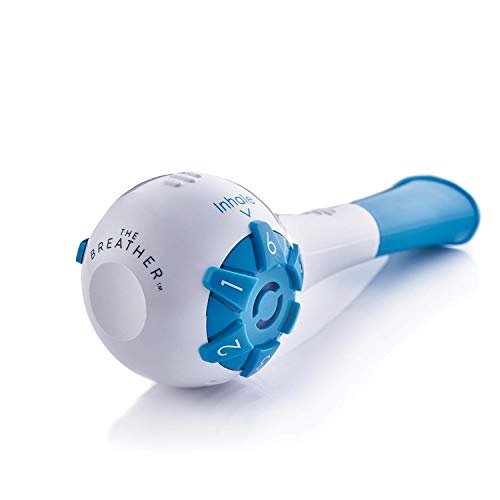
THE BREATHER │ Natural Breathing Exerciser Trainer For Drug-Free Respiratory Therapy │ Breathe Easier with Stronger Lungs │ Guided Mobile Training App Included
- Ease of Use: Simple and user-friendly design
- Enhanced Oxygen Flow: Boosts lung capacity and oxygen intake
- Training Included: Self-paced video training for users
As an affiliate, we earn on qualifying purchases.
As an affiliate, we earn on qualifying purchases.
Frequently Asked Questions
Can Hydration Levels Impact Side Stitch Occurrence?
Yes, hydration levels can impact side stitch occurrence. When your hydration balance is off, it can cause electrolyte imbalances, leading to muscle cramps and stitches. Drinking enough water and maintaining proper electrolyte intake helps keep your muscles functioning smoothly. Make sure to hydrate properly before and during your treadmill workout, as this can reduce the likelihood of side stitches caused by dehydration or electrolyte deficiencies.
Are There Specific Stretches to Prevent Side Stitches?
Think of your core as a stretched rubber band needing gentle care. Incorporate abdominal stretches like cobra pose or seated twists to enhance core flexibility. These stretches help loosen muscles and reduce tension that causes side stitches. Regularly practicing these moves before runs increases your resilience, making side stitches less likely to occur. Keep your core limber, and you’ll find your runs smoother and more comfortable.
Does Running Surface Affect the Likelihood of Side Stitches?
Your running surface can influence the likelihood of side stitches. Harder surfaces, like concrete or asphalt, increase impact injury risk, which may contribute to side stitches due to jarring movements. Softer surfaces, such as grass or treadmill mats, absorb more shock, reducing impact and strain. Switching to a gentler surface might help prevent side stitches, especially if you notice discomfort after running on harder terrains.
How Does Age Influence Side Stitch Frequency?
You’re more likely to experience side stitches as you age, especially after 40. This is because age-related muscle flexibility decreases, and breathing efficiency often declines, making it harder to maintain proper breathing during runs. Younger runners tend to have more elastic muscles and better lung capacity, reducing stitch frequency. To combat this, focus on deep, controlled breathing and stretching routines tailored to your age to minimize side stitches.
Are Side Stitches More Common During Certain Weather Conditions?
Yes, side stitches tend to be more common in certain weather conditions, especially hot or humid days. When the weather’s warmer, you might find yourself adjusting your clothing choices to stay cool, but this can sometimes lead to improper breathing or dehydration, increasing stitch risk. Also, running pace can influence this; going too fast in the heat puts extra strain on your body, making side stitches more likely.

AiRunTech Hydration Running Belt with Bottles Zero Bounce Design for Running, Triathlon, Marathon, 10K, 5K, Trail Fit for Most Smartphones(2 * 10OZ bottle)
- Anti-slip, snug fit design: Prevents bouncing and chafing during runs
- Adjustable for most hips: Fits hips from 18-51.2 inches (46-130cm)
- Comfortable low-position wear: Contoured grips for friction-free comfort
As an affiliate, we earn on qualifying purchases.
As an affiliate, we earn on qualifying purchases.
Conclusion
Remember, practicing proper breathing and timing can substantially reduce side stitches. Did you know that a study found runners who focus on deep, rhythmic breaths experience 30% fewer side stitches? So next time you hit the treadmill, try slowing your breathing and syncing it with your stride. With consistent effort, you’ll not only improve your workout comfort but also boost your endurance. Keep these tricks in mind, and enjoy smoother, more enjoyable runs!

4Pcs Dual Sided Gliding Discs Core Ultimate Core Ab Fitness Trainer
- Targeted Core Engagement: Works multiple muscle groups for core strength
- High-Quality Materials: Durable ABS and EVA construction
- Easy to Use: Suitable for hands and feet workouts
As an affiliate, we earn on qualifying purchases.
As an affiliate, we earn on qualifying purchases.

WA NAR Ergonomic 24.4 Inch Wide Handle Bar for Walking Pad Only,with Phone and Cup, Holder Adjustable Handrail Height from 38.58 to 47.24 in,Saarland Steel, Back Relief&Posture Support (Black)
- Stable, Sweat-Resistant Base: Wide base with rubber pads for stability
- Ergonomic Design: Promotes correct posture and reduces back pressure
- Adjustable Height: Four height levels from 38.58 to 47.24 inches
As an affiliate, we earn on qualifying purchases.
As an affiliate, we earn on qualifying purchases.