To prevent calf tightness during treadmill workouts, start with a dynamic warm-up like leg swings and light walking to boost blood flow and prepare your muscles. After running, cool down with gentle walking and static stretching of your calves for 20-30 seconds. Foam rolling can also release tension. Incorporating these tricks improves flexibility and reduces strain, helping your calves stay comfortable. Keep going, and you’ll discover more tips to keep your calves healthy and pain-free.
Key Takeaways
- Perform dynamic warm-up exercises like leg swings and light jogging to increase blood flow and prepare calves for treadmill running.
- Incorporate static calf stretches (hold 20-30 seconds) after workouts to release tension and improve flexibility.
- Cool down gradually by walking at a slower pace post-run to help muscles relax and reduce tightness.
- Use foam rolling or massage on calves after exercise to break up tightness and promote muscle recovery.
- Stay well-hydrated with water and electrolytes before, during, and after treadmill workouts to prevent muscle cramps and tightness.
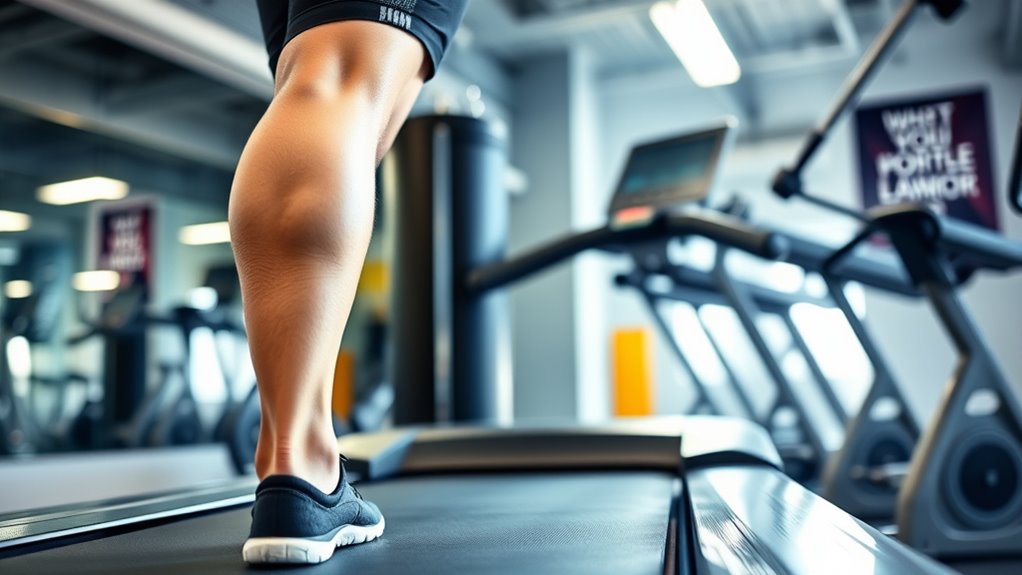
If you’ve been feeling tightness in your calves after treadmill workouts, you’re not alone. Many runners experience this discomfort, especially when their muscles haven’t warmed up properly or recovered adequately. One way to help prevent tight calves is by paying attention to your shoe flexibility. Shoes that are too stiff can restrict natural foot movement, forcing your calves to work harder than necessary. Opt for footwear with good flexibility, which allows your foot to move more naturally during each stride. This not only reduces strain on your calves but also promotes better biomechanics, making your runs smoother and less taxing on your muscles.
Wearing flexible shoes reduces calf strain and improves running biomechanics.
Alongside choosing the right shoes, implementing effective hydration strategies is essential. Dehydration can lead to muscle cramps and tightness, so staying well-hydrated before, during, and after your treadmill sessions is fundamental. Drinking water consistently helps maintain electrolyte balance, which is indispensable for muscle function. Consider incorporating electrolyte drinks or adding a pinch of salt to your water if you tend to sweat heavily or run longer distances. Proper hydration ensures your muscles stay supple and responsive, reducing the risk of tightness and soreness after your workout.
A good warm-up routine can markedly lessen calf tightness by gradually increasing blood flow to the muscles. Start with light walking or gentle stretching to prepare your calves for the upcoming effort. Incorporate dynamic stretches like leg swings or ankle circles to loosen up the muscles and improve their elasticity. This warm-up primes your calves for the repetitive impact and motion of treadmill running, reducing the likelihood of tightness later.
Cooling down is equally important. After your run, slow down your pace and walk for several minutes to allow your muscles to gradually relax. Follow this with static stretching, focusing on your calves. Hold each stretch for at least 20-30 seconds to help release accumulated tension. Consider adding foam rolling or massage to target tight spots, which can improve flexibility and speed recovery.

MZDXJ Muscle Roller Massage Roller Stick- Deep Tissue Fascia Blaster for Myofascial Pain Relief, Lymphatic Drainage & Body Sculpting, Handheld Physical Therapy & Recovery Tool (Purple Black-18 inch)
[🌟Precise targeting] Our product can reach deep into muscle trigger points. Its professional massage design effectively relieves muscle…
As an affiliate, we earn on qualifying purchases.
As an affiliate, we earn on qualifying purchases.
Frequently Asked Questions
Can Calf Tightness Be a Sign of a Serious Injury?
Calf tightness can sometimes indicate a serious injury like a muscle strain or nerve compression. If the tightness is sudden, severe, or accompanied by swelling, numbness, or weakness, it’s essential to see a healthcare professional. Persistent tightness, especially if it worsens or doesn’t improve with rest, might signal nerve compression or muscle strain that needs proper diagnosis and treatment. Don’t ignore these warning signs.
How Long Should Warm-Up and Cooldown Routines Last?
You should aim for warm-up and cooldown routines lasting about 5 to 10 minutes each. Follow the duration guidelines to prepare your muscles and prevent injury effectively. To maximize effectiveness tips, include dynamic stretches during warm-up and gentle stretching during cooldown. Consistently sticking to these routines helps reduce calf tightness, improve flexibility, and boost overall performance. Keep it steady, and your calves will thank you!
Are There Specific Stretches for Preventing Calf Tightness?
Yes, incorporating calf stretching into your routine helps prevent tightness and injury. Focus on stretches like standing calf raises against a wall or using a step to stretch your calves by dropping your heels. Doing these regularly before and after running keeps your muscles flexible and reduces strain. Consistent calf stretching is essential for injury prevention, ensuring you stay comfortable and healthy during your treadmill workouts.
Does Diet Influence Calf Muscle Flexibility?
Your diet can influence calf muscle flexibility through its nutritional impact. Eating foods rich in magnesium, potassium, and calcium helps maintain muscle health and prevent tightness. Additionally, incorporating dietary supplements like magnesium or omega-3s may support muscle recovery and reduce stiffness. Staying well-hydrated and consuming a balanced diet promotes ideal muscle function, making your calves more flexible and less prone to tightness during treadmill workouts.
When Should I See a Doctor About Persistent Calf Tightness?
You should see a doctor immediately if your calf tightness worsens despite rest or is accompanied by severe muscle strain or nerve pain, which can feel like electric shocks. Don’t ignore persistent tightness that lasts more than a week or if it interferes with daily activities. Prompt medical attention helps prevent complications, ensuring you don’t suffer from long-term damage. Trust your instincts—your health is worth it!

comness Foot and Calf Stretcher-Stretching Strap For Plantar Fasciitis, Heel Spurs, Foot Drop, Achilles Tendonitis & Hamstring. Yoga Foot & Leg Stretch Strap. (Black)
Alleviate pain effectively: The foot and calf stretcher helps improve blood circulation by stretching the plantar fascia and…
As an affiliate, we earn on qualifying purchases.
As an affiliate, we earn on qualifying purchases.
Conclusion
So, next time your calves tighten up during a treadmill session, remember that a proper warm-up and cool-down can make all the difference. It’s no coincidence that taking those extra minutes helps prevent discomfort and keeps you moving smoothly. By listening to your body and staying consistent, you’ll find your stride becomes easier and more comfortable. After all, a little preparation and recovery go hand in hand with enjoying your runs and avoiding those pesky calf tightness surprises.

AOE Womens Walking Running Shoes Ultra Lightweight Breathable Mesh Tennis Shoes Non Slip Athletic Workout Gym Sneakers Starry Light Gray 4.5women / 3.5men
Breathable mesh upper : The knitted mesh upper of running shoes is woven from a highly elastic flying…
As an affiliate, we earn on qualifying purchases.
As an affiliate, we earn on qualifying purchases.

BODYARMOR LYTE Sports Drink Low-Calorie Sports Beverage, Peach Mango, Coconut Water Hydration, Natural Flavors With Vitamins, Potassium-Packed Electrolytes, Perfect For Athletes, 16 Fl Oz (Pack of 12)
Low Calorie
As an affiliate, we earn on qualifying purchases.
As an affiliate, we earn on qualifying purchases.