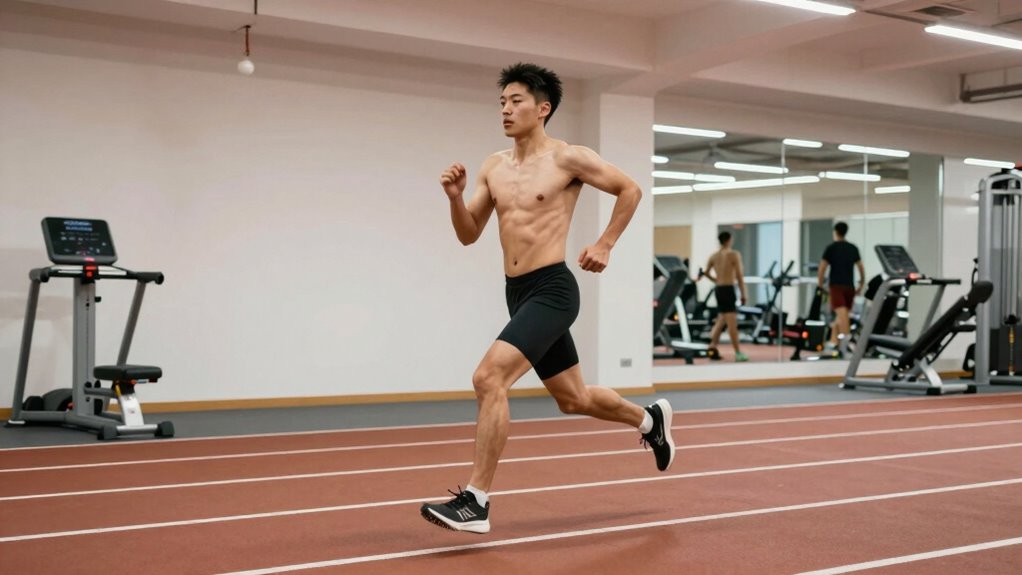
To run smoother indoors, focus on gradually increasing your cadence to about 170-180 steps per minute, which reduces impact and overstriding. Keep your posture upright, head aligned with shoulders, and tighten your core to improve efficiency. Swing your arms at a 90-degree angle, relaxing your shoulders, and coordinate arm movements with your stride for balance. Incorporate drills and tech tools to refine your technique—continue exploring these tips for even better results.
Key Takeaways
- Maintain a cadence of 170-180 steps per minute, gradually increasing your rhythm for smoother indoor running.
- Keep your head up, shoulders relaxed, and engage your core to ensure proper posture and reduce strain.
- Keep elbows bent at 90 degrees, swinging arms forward and back in a controlled, rhythmic motion to stabilize your run.
- Use real-time feedback from wearable devices or mirror drills to correct posture, cadence, and arm movement during runs.
- Incorporate drills like high knees and side shuffles to reinforce proper technique and develop muscle memory indoors.
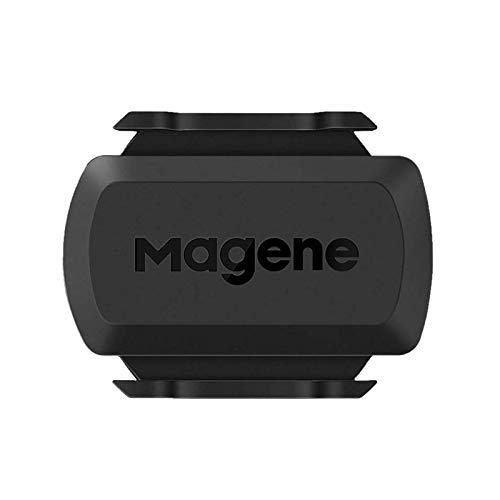
Magene Outdoor/Indoor Speed/Cadence Sensor for Cycling, Wireless Bluetooth/Ant+ Bike Computer RPM Sensor for Road Bike or Spinning Bike and Trainers Compatible with Onelap, Wahoo Fitness, Zwift
[Battery] Remove the insulating sheet of the pre-installed battery before usage; re-install the battery to switch between the…
As an affiliate, we earn on qualifying purchases.
As an affiliate, we earn on qualifying purchases.
Monitoring and Adjusting Your Running Cadence
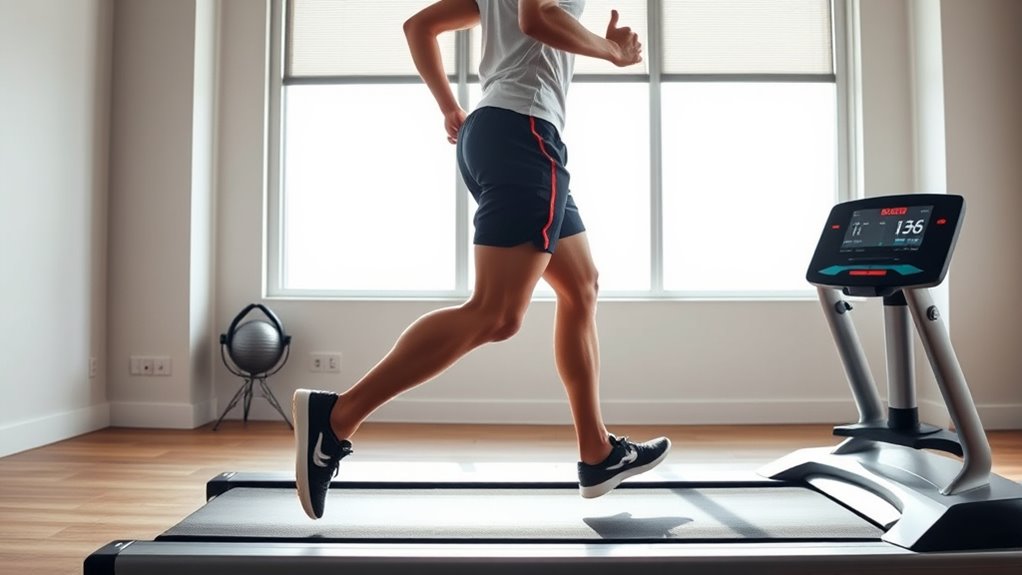
Have you ever wondered how your running rhythm affects your indoor performance? Your cadence, or steps per minute, plays a vital role in running smoothly. To monitor it, use a smartwatch or a fitness app that tracks your steps. Pay attention to your current cadence—most runners aim for around 170-180 steps per minute. If you notice your stride is too slow, you might be overstriding, which slows you down and increases impact. To improve, try to gradually increase your cadence by about 5% at a time. Focus on quickening your steps rather than taking longer strides. Regularly checking your cadence helps you find a rhythm that keeps your movements efficient and comfortable, reducing fatigue and minimizing injury risk during indoor runs. Incorporating proper running form techniques can also enhance your cadence and overall performance. Additionally, understanding your biomechanics can help you identify and correct inefficiencies in your running style, further supporting smoother indoor runs. Paying attention to your shoe cushioning can also influence your comfort and efficiency while running indoors. Being aware of your foot strike pattern can help you make adjustments that improve your overall running economy, especially when combined with knowledge of training principles to optimize your workout.

FvaPemm Posture Corrector for Women Men, Copper Upper Back Brace, Back Straightener Support Correcting Hunchback and Bad Posture, Back Pain Relief for Neck, Shoulder, Clavicle, Black, L/XL
Enjoy Confident and Healthy Life! Our back support posture corrector provides back support and appropriate shoulder tension, helping…
As an affiliate, we earn on qualifying purchases.
As an affiliate, we earn on qualifying purchases.
Aligning Your Posture for Optimal Efficiency
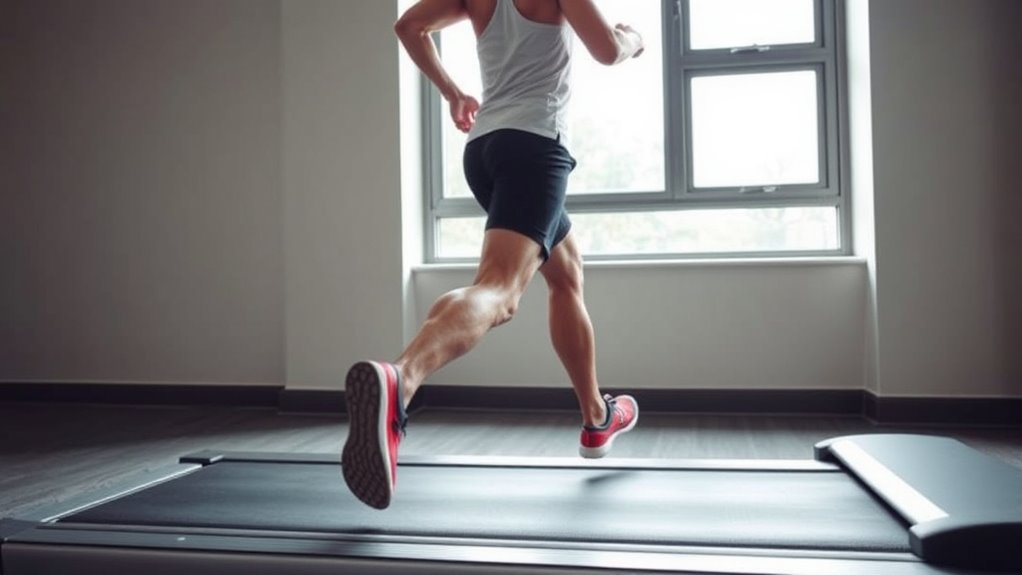
To run more smoothly indoors, focus on aligning your posture for maximum efficiency. Keep your head up to maintain balance, engage your core muscles to support stability, and hold a neutral spine to reduce strain. These small adjustments can make a big difference in your running form. Incorporating connected movement techniques can further enhance your overall coordination and efficiency. Paying attention to your body mechanics can help prevent injuries and improve overall performance. Using smart home technology, such as motion sensors and real-time feedback, can assist in maintaining proper form during practice sessions. Additionally, integrating posture correction tools can provide real-time guidance to optimize your alignment, especially when combined with biofeedback systems that monitor your posture in real time.
Keep Head Up
Keeping your head up is essential for maintaining proper posture and ensuring smooth indoor running. When you keep your head aligned with your spine, you reduce unnecessary strain on your neck and shoulders, helping your entire body stay balanced. Focus on looking straight ahead, about 10 to 15 feet in front of you, rather than down at your feet. This encourages your chest to stay open and your shoulders relaxed. A proper head position also improves breathing efficiency, allowing your lungs to expand fully. Avoid tilting or dropping your chin, which can throw off your posture and cause fatigue. Maintaining this alignment helps you stay more stable and relaxed, making your runs feel smoother and more effortless.
Engage Core Muscles
Engaging your core muscles is essential for maintaining proper posture and maximizing running efficiency indoors. When your core is active, it provides stability, preventing unnecessary swaying or wobbling as you run. Focus on tightening your abdominal muscles slightly, as if preparing for a gentle punch. This engagement helps keep your pelvis aligned, reducing strain on your lower back and hips. A strong core also allows for better transfer of energy from your upper body to your legs, improving overall efficiency. Remember to breathe steadily as you engage your core, avoiding holding your breath. Regularly activating these muscles ensures your posture stays upright and balanced, enabling smoother, more controlled strides without wasting effort. Proper core engagement is a key step toward a more efficient indoor run. Incorporating mindful movement can further enhance your awareness of body alignment and stability during exercise. Additionally, understanding muscle activation techniques can help you optimize your core engagement for better performance. For example, applying proper posture during your run can further improve your stability and reduce fatigue. Developing consistent postural awareness can help you maintain these habits over time, leading to sustained improvements in your running form.
Maintain Neutral Spine
Maintaining a neutral spine is essential for running smoothly indoors, as it guarantees your posture supports efficient movement and reduces strain. To achieve this, keep your head aligned with your shoulders, avoiding leaning forward or backward. Engage your core muscles to stabilize your pelvis and prevent excessive tilting. Imagine a straight line from your head through your hips to your ankles; this alignment helps distribute impact evenly. Keep your shoulders relaxed and down, not hunched, and your chest open. Avoid overextending or rounding your back. Maintaining this neutral posture allows your body to move naturally, conserving energy and minimizing fatigue. Regularly check your posture during runs, making small adjustments to stay aligned and ensure maximum efficiency. Incorporating proper water-based exercises can also enhance your core stability and overall running form, which promotes proper posture alignment and reduces injury risk. Additionally, practicing mindful breathing techniques can help you maintain this posture and improve your overall endurance. Developing awareness of your body mechanics through mindful movement can further optimize your running efficiency and prevent strain, leading to a smoother indoor running experience.

KLICKSPEED Running Workout Equipment – Arm Swing Training Aid with Clickers (Large)
Proper Arm Mechanics: This easy to use patented aid provides an auditory cue (click), when your arm swing…
As an affiliate, we earn on qualifying purchases.
As an affiliate, we earn on qualifying purchases.
Mastering Arm Movement for Better Balance

To improve your balance indoors, mastering arm movement is essential. Your arms help stabilize your body and maintain rhythm, so moving them correctly makes a big difference. Keep your elbows bent at about 90 degrees and swing your arms forward and back, not across your body. Avoid excessive side-to-side motion, which can throw off your balance. Focus on keeping your shoulders relaxed and your movements controlled. When your arm swing is smooth and aligned with your stride, it helps distribute your weight evenly. This reduces unnecessary wobbling and keeps you centered. Consistent, purposeful arm movement creates a stable core, making your overall run smoother and more efficient indoors. Proper arm motion isn’t just about style; it’s a key to better balance. Additionally, using high-tech vaping innovations can enhance your overall experience by providing real-time data and safety alerts, which can help you stay focused and balanced during your activities. Incorporating proper posture techniques can further improve your stability and overall movement efficiency. Paying attention to your body alignment during movement can also significantly contribute to maintaining better balance.

Smart Bracelet, Wearable Activity & Fitness Tracker Band, 24H Sleep Tracker, All-Day Continuous Heart Rate Blood Pressure Stress HRV Monitor, 173 Sport Modes Smart Wristband with Free APP Black
FITNESS TRACKER WITH 170+ WORKOUT MODES—Every outdoor activity (city running/hiking) automatically syncs GPS routes to your phone app….
As an affiliate, we earn on qualifying purchases.
As an affiliate, we earn on qualifying purchases.
Incorporating Drills to Reinforce Proper Form

Incorporating drills into your routine is a proven way to reinforce proper arm and body mechanics. Focus on exercises that target specific aspects of your form, like cadence, posture, and arm swing. For example, practice side shuffles to improve arm drive or do high-knee drills to enhance stride rhythm. Incorporate mirror drills to check your posture and make quick adjustments. Repetition helps your muscles remember correct movements, making good form automatic during runs. Keep drills short and intentional, emphasizing quality over quantity. As you practice, you’ll develop a more efficient stride and better coordination. Additionally, understanding technique differences can help tailor your drills for maximum effectiveness. By paying attention to leverage and negotiation tactics, you can optimize your approach and make your training sessions more productive. Recognizing individual biomechanics allows for more personalized adjustments to your running form. Over time, these drills will embed proper mechanics into your muscle memory, helping you run smoother indoors with less effort and fewer errors.
Using Technology to Track and Improve Your Technique
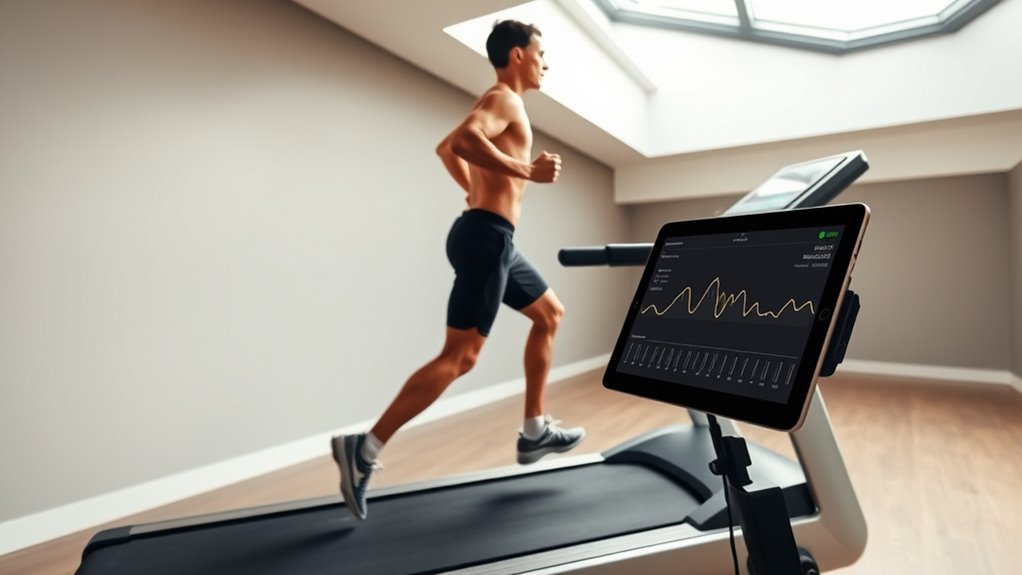
Using technology can give you real-time feedback on your running form and progress. Wearable devices track key metrics like stride length and cadence, while smartphone apps analyze your technique for areas to improve. Embracing these tools helps you run more efficiently and confidently indoors.
Wearable Devices for Metrics
Wearable devices have revolutionized how you can monitor and enhance your indoor running technique. These gadgets provide real-time data on metrics like cadence, stride length, ground contact time, and arm swing. By wearing a fitness tracker or specialized running sensor, you get immediate feedback on your form, helping you identify inefficiencies. Some devices even alert you when your cadence drops or your posture slouches, allowing you to make quick adjustments. Tracking these metrics consistently helps you develop better habits and stay motivated. Plus, many wearables sync with apps that analyze your data over time, revealing patterns and progress. With wearable technology, you gain a deeper understanding of your biomechanics, making it easier to refine your technique and run smoother indoors.
Smartphone Apps for Analysis
Smartphone apps have made it easier than ever to analyze and improve your indoor running form. With just your phone, you can track your cadence, posture, and arm swing in real-time or through recorded videos. These apps use your device’s camera and sensors to provide detailed feedback, helping you identify issues and monitor progress. Some popular options include running form analyzers and slow-motion video review tools. To help you choose, here’s a comparison:
| App Feature | Benefits |
|---|---|
| Video Analysis | Precise form review and correction |
| Real-Time Feedback | Immediate cues during your run |
| Data Tracking | Long-term progress monitoring |
| User Interface | Easy to navigate and understand |
Using these apps, you can fine-tune your technique efficiently indoors.
Tips for Staying Consistent and Preventing Overuse Injuries
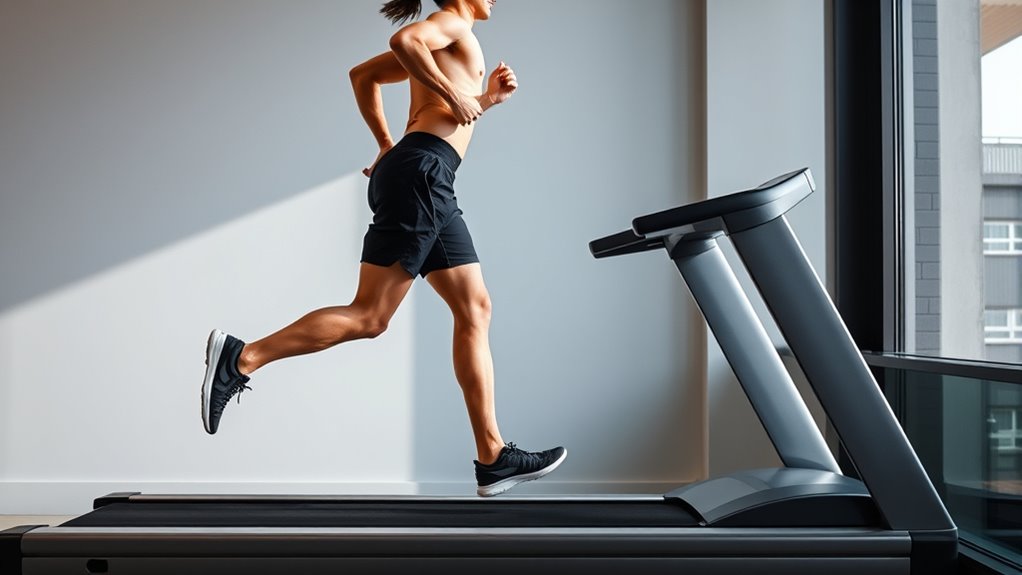
Staying consistent with indoor running can be challenging, but establishing a routine and setting realistic goals makes it easier to stick with your training. To prevent overuse injuries, vary your workouts to avoid repetitive stress on the same muscles and joints. Incorporate strength training and flexibility exercises to support your running form and reduce strain. Listen to your body—if you feel pain or persistent discomfort, take a break or swap running for low-impact activities like swimming or cycling. Gradually increase your mileage and intensity to allow your body to adapt safely. Proper footwear is essential; replace worn-out shoes regularly to maintain support. Finally, prioritize rest and recovery, ensuring your muscles have time to repair and strengthen, keeping your indoor running safe and sustainable.
Frequently Asked Questions
How Long Should I Practice New Running Techniques Before Seeing Improvements?
You should practice your new running techniques for at least 3 to 4 weeks consistently to start noticing improvements. Focus on maintaining proper cadence, posture, and arm swing during each run. It may take longer depending on your experience level and how often you train. Be patient, stay committed, and track your progress regularly. With consistent effort, you’ll gradually feel smoother and more efficient in your runs.
Can Specific Shoes Influence My Cadence, Posture, or Arm Swing?
Yes, the right shoes can act like a trusted dance partner, guiding your cadence, posture, and arm swing. They provide support and stability, encouraging you to maintain a smooth rhythm and upright form. Choose shoes with proper cushioning and flexibility; they’ll help your movements flow naturally. When your shoes fit well, they become an extension of your stride, making each run feel effortless and graceful inside.
How Do Weather Conditions Affect My Running Form Adjustments?
Weather conditions can markedly impact your running form adjustments. When it’s hot, you might naturally lean forward or shorten your stride to stay cool, affecting your posture. Rain or snow can make the surface slippery, prompting you to adopt a more cautious, lower-impact stride. Wind resistance may cause you to lean into the wind or change your arm swing to maintain balance. Adapt your cadence and posture to stay efficient and safe.
Is It Necessary to Warm up Differently When Focusing on Form Corrections?
Warming up is like priming a pump—you need to prepare your body for the specific demands of form corrections. When focusing on technique, you should spend extra time gradually increasing your pace and incorporating dynamic stretches that target your running muscles. This guarantees your muscles are ready for the adjustments you’re making, reducing injury risk and helping you adopt new habits more smoothly during your indoor runs.
What Signs Indicate I’M Overcorrecting or Causing Injury?
You might be overcorrecting if you notice persistent pain, tightness, or fatigue that worsens with running. If your form adjustments cause discomfort or lead to new aches, you’re likely pushing too hard. Pay attention to signs of strain, like joint soreness or muscle tightness, and back off if these occur. Proper corrections should feel natural and improve comfort, not create new issues or exacerbate existing ones.
Conclusion
Remember, practice makes perfect. By focusing on your cadence, posture, and arm swing, you’ll run more smoothly indoors and reduce injury risk. Incorporate drills, use technology, and stay consistent to see real improvements. Don’t forget, the journey to better running is a marathon, not a sprint. Keep refining your form, and you’ll enjoy a more efficient, comfortable run every time. Stay patient and persistent—your best stride is just around the corner.