The best indoor cycling trainers balance a ride that feels convincing with a setup that fits your bike, space, and training goals. My best overall pick is the Wahoo KICKR V6 for its smart-training focus, while the Garmin Tacx NEO 3M stands out for riders seeking a premium feature set and the Saris Fluid2 offers a simpler route to indoor riding. The main choice is between wheel-on convenience and direct-drive stability and smart control, with noise, storage, compatibility, and setup adding further tradeoffs. A smart trainer can make structured workouts and virtual platforms easier to use, but it may be more equipment than casual riders need. Read on for the full breakdown of all 13 options and how I’d match each to a rider.

Get workout gear delivered free with Prime
- Fast, free delivery on millions of items
- Prime Video, Amazon Music and more included
- Member-only deals all year
Complete the kit



Key Takeaways
Direct-drive models lead this lineup for connected training: the Wahoo KICKR V6, Garmin Tacx NEO 3M, and Tacx NEO 2T are the clearest fits for riders prioritizing smart features over quick storage.
Wheel-on trainers trade convenience and simpler bike setup for a different ride experience; the Saris Fluid2 and Garmin Tacx Boost suit riders who do not need electronic resistance control.
The Wahoo KICKR BIKE PRO is a different kind of commitment: it is a dedicated indoor bike, not a trainer that uses the rider’s own bicycle, so fit, space, and bike-sharing needs matter more.
Power and gradient claims do not tell the whole story: ThinkRider and CYCPLUS smart models may appeal to feature-focused buyers, but riders should also check app support, bike compatibility, setup, and service options.
Portable folding stands answer a different need from smart trainers: the Alpcour magnetic and fluid options favor straightforward indoor riding and storage rather than connected workout control.
| Saris M2 Smart Indoor Electromagnetic Bike Trainer |  | Best Smart Wheel-On Trainer | Resistance mechanism: Electromagnetic | App connectivity: ANT+ FE-C and Bluetooth | Power accuracy: ±5% | VIEW LATEST PRICE | See Our Full Breakdown |
| Garmin Tacx Neo 2T Smart Trainer |  | Best for Quiet, High-Intensity Training | Resistance: Magnetic with 32 neodymium magnets | Wireless connectivity: ANT+ and Bluetooth | Compatible operating systems: iOS, Android, macOS, Windows | VIEW LATEST PRICE | See Our Full Breakdown |
| Tacx Flux S Smart Direct-Drive Bike Trainer | 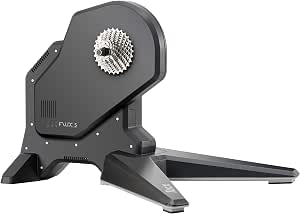 | Best for Measured Power and Virtual Climbs | Resistance mechanism: Electromagnetic | Power accuracy: Within 3% | Maximum simulated incline: 10% | VIEW LATEST PRICE | See Our Full Breakdown |
| Alpcour Foldable Magnetic Bike Trainer Stand |  | Best Portable Budget-Style Stand | Resistance mechanism: Magnetic | Resistance settings: 6 | Compatible wheel sizes: 26–28 in and 700c; product details also list 29 in | VIEW LATEST PRICE | See Our Full Breakdown |
| Saris Fluid2 Indoor Bike Trainer |  | Best for Smooth, Sensor-Based Training | Resistance mechanism: Fluid | Weight: 7.3 lb | Dimensions: 22 × 7 × 20 in | VIEW LATEST PRICE | See Our Full Breakdown |
| ThinkRider X2Max Smart Bike Trainer |  | Best Value Smart Direct-Drive Pick | Resistance mechanism: Electromagnetic | Maximum power: 2,000 W | Power meter error: ±2% | VIEW LATEST PRICE | See Our Full Breakdown |
| Garmin Tacx NEO 3M Smart Trainer |  | Best Premium Road-Feel Trainer | Trainer type: Direct-drive smart trainer | Maximum power: 2,200 W | Power accuracy: Within 1% | VIEW LATEST PRICE | See Our Full Breakdown |
| Wahoo Fitness KICKR BIKE PRO Indoor Trainer |  | Best Complete Indoor Bike Setup | Product type: Indoor cycling bike | Maximum power output: 2,500 W | Power accuracy: ±1% | VIEW LATEST PRICE | See Our Full Breakdown |
| Garmin Tacx Boost Indoor Bike Trainer |  | Best for Beginners | Resistance mechanism: Magnetic | Resistance levels: 10, manually controlled | Maximum power: 1,050 W | VIEW LATEST PRICE | See Our Full Breakdown |
| Wahoo KICKR V6 Smart Indoor Trainer |  | Best for Precise Connected Training | Resistance mechanism: Electromagnetic | Maximum resistance: Over 2,200 W | Power accuracy: Within ±1% | VIEW LATEST PRICE | See Our Full Breakdown |
| ThinkRider XXPRO Smart Bike Trainer, 2500W, 25% Gradient |  | Best for Steep Virtual Climbs | Maximum power: 2500 W | Maximum simulated gradient: 25% | Data accuracy: ±1% | VIEW LATEST PRICE | See Our Full Breakdown |
| Alpcour Fluid Bike Trainer Stand for Indoor Riding – Portable Foldable Stainless Steel Trainer, Noise Reduction, Progressive Resistance, Dual-Lock System – Road & Mountain Bikes Stationary Exercise |  | Best Portable Wheel-On Trainer | Resistance mechanism: Fluid | Resistance settings: 1 | Wheel-size compatibility: 26–29 inches, 700c | VIEW LATEST PRICE | See Our Full Breakdown |
| CYCPLUS R200 Smart Bike Trainer, 2200W |  | Best for App-Based Training Flexibility | Peak power: 2200 W | Maximum torque: 80 N·m | Power accuracy: ±1% | VIEW LATEST PRICE | See Our Full Breakdown |
| indoor cycling trainer | Resistance mechanism | Weight | Warranty | Load capacity |
|---|---|---|---|---|
| Saris M2 Smart Indoor Electrom | Electromagnetic | 20 lb | Limited lifetime | 300 lb |
| Garmin Tacx Neo 2T Smart Train | — | 47.4 lb | — | — |
| Tacx Flux S Smart Direct-Drive | Electromagnetic | 50 lb | 2-year limited | 300 lb |
| Alpcour Foldable Magnetic Bike | Magnetic | 9.34 kg | — | 150–250 lb |
| Saris Fluid2 Indoor Bike Train | Fluid | 7.3 lb | Limited lifetime | — |
| ThinkRider X2Max Smart Bike Tr | Electromagnetic | 35.2 pounds | — | — |
| Garmin Tacx NEO 3M Smart Train | — | 52 pounds | 1-year limited | — |
| Wahoo Fitness KICKR BIKE PRO I | Magnetic | 42 kg | 1-year manufacturer warranty | 250 pounds |
| Garmin Tacx Boost Indoor Bike | Magnetic | — | 1-year limited | — |
| Wahoo KICKR V6 Smart Indoor Tr | Electromagnetic | 22 kg | 1 year | 250 kg |
| ThinkRider XXPRO Smart Bike Tr | Electromagnetic | — | 1 year | 242 pounds |
| Alpcour Fluid Bike Trainer Sta | Fluid | — | — | 300 lbs |
| CYCPLUS R200 Smart Bike Traine | Magnetic | — | 2 years | 250 pounds |
More Details on Our Top Picks
Saris M2 Smart Indoor Electromagnetic Bike Trainer
The Saris M2 suits riders who want app-controlled workouts without taking off the rear wheel. Its ANT+ FE-C and Bluetooth connections work with Zwift and other training apps, while the clutch knob helps keep the tire against the roller during a session. That convenience makes it easier to set up than the direct-drive Tacx Flux S, which requires removing the rear wheel but offers more precise power measurement. The M2’s stated ±5% accuracy is a tradeoff for its wheel-on simplicity, and tire contact also means more road and roller noise: its listed level is 69 dB at 20 mph. I’d choose it for app-based training with familiar bike setup, not for riders prioritizing quiet operation or tighter power accuracy.
Pros:- Wheel-on design avoids removing the rear wheel
- ANT+ FE-C and Bluetooth support indoor cycling apps
- Clutch knob helps maintain consistent tire-to-roller contact
- Includes a steel quick-release skewer and one month of Rouvy access
Cons:- Listed power accuracy of ±5% is less precise than the Tacx Flux S’s within-3% measurement
- Listed noise level is 69 dB at 20 mph
- Wheel-on resistance depends on tire contact with the roller
Best for: Riders who want smart-trainer app control but prefer to leave their bike’s rear wheel installed
Not ideal for: Riders who need high power-measurement precision or plan to train in a noise-sensitive shared space
- Resistance mechanism:Electromagnetic
- App connectivity:ANT+ FE-C and Bluetooth
- Power accuracy:±5%
- Noise level:69 dB at 20 mph
- Weight:20 lb
- Dimensions:22 × 20 × 9 in
- Load capacity:300 lb
- Warranty:Limited lifetime
Our verdict“Choose the M2 if app connectivity and quick wheel-on setup matter more than quieter operation or more precise power data.”
Garmin Tacx Neo 2T Smart Trainer
The Garmin Tacx Neo 2T is the strongest fit here for riders who want quiet direct-drive training and resistance that can keep up with hard efforts. Its magnetic system uses 32 neodymium magnets, and the product description highlights reduced vibration and resistance designed to help prevent slipping during sprints. Unlike the wheel-on Saris M2, it connects to the bike without relying on tire-to-roller contact, a useful distinction for households where trainer noise matters. It also includes axle adapters and supports ANT+ and Bluetooth, broadening bike and device compatibility. The main compromise is practical rather than performance-based: at 47.4 pounds, it is heavy to move or store, even though the frame folds. I’d favor it over the lighter Alpcour stand for serious indoor sessions, but not for frequent room-to-room carrying.
Pros:- Quiet operation with reduced vibration
- Strong resistance is designed to limit slipping during hard sprints
- ANT+ and Bluetooth support a range of training devices
- Includes quick-release and thru-axle hardware plus adapters
Cons:- At 47.4 lb, it is heavy to move
- Direct-drive setup is less immediate than the wheel-on Saris M2
- The included Tacx Premium software access lasts one month
Best for: Riders doing frequent, hard indoor workouts who want quiet direct-drive operation and broad axle compatibility
Not ideal for: People who need to carry or stow their trainer often and want a lightweight setup
- Resistance:Magnetic with 32 neodymium magnets
- Wireless connectivity:ANT+ and Bluetooth
- Compatible operating systems:iOS, Android, macOS, Windows
- Weight:47.4 lb
- Foldable:Yes
- Included freehub:Shimano/SRAM
- Included software access:One month of Tacx Premium
- Model number:T2875.60
Our verdict“Pick the Neo 2T for quiet, demanding direct-drive workouts if its substantial weight is not a storage or portability problem.”
Tacx Flux S Smart Direct-Drive Bike Trainer
For riders who want useful training data without stepping up to the heavier-duty positioning of the Garmin Tacx Neo 2T, the Tacx Flux S offers a clear, numbers-led case. Its power measurement is listed within 3% accuracy, and it can simulate inclines up to 10% with sprint resistance up to 1,500 watts. Those figures help make structured sessions and virtual climbs more meaningful than on a basic magnetic stand such as the Alpcour Foldable Magnetic Bike Trainer Stand, which has six resistance settings but no listed power accuracy or app connectivity. The Flux S is also described as quiet and uses a heavy flywheel for a more realistic ride feel. Its cost in convenience is its 50-pound weight: it is better suited to a dedicated training spot than regular carrying or compact storage.
Pros:- Power measurement listed within 3% accuracy
- Simulates inclines up to 10%
- Provides up to 1,500 watts of sprint resistance
- Quiet direct-drive operation and compatibility with popular training apps
Cons:- Weighs 50 lb, making it difficult to move regularly
- Direct-drive setup requires more bike preparation than the Alpcour wheel-on stand
- Limited warranty is two years
Best for: Structured-training riders who want measured power and simulated climbs from a direct-drive trainer
Not ideal for: Riders who need a lightweight trainer to move frequently or want a simple, tool-light wheel-on setup
- Resistance mechanism:Electromagnetic
- Power accuracy:Within 3%
- Maximum simulated incline:10%
- Maximum sprint resistance:1,500 W
- Weight:50 lb
- Load capacity:300 lb
- Dimensions:22.99 × 19.49 × 9.99 in
- Warranty:2-year limited
Our verdict“Choose the Flux S for app-based structured training and virtual climbs when accurate power data matters more than easy portability.”
Alpcour Foldable Magnetic Bike Trainer Stand
The Alpcour Foldable Magnetic Bike Trainer Stand is the straightforward pick for riders who value portability and basic resistance choices over app-controlled workouts. It clamps a compatible road or mountain bike in place, offers six resistance settings, and folds into a frame that comes with a carrying bag. That makes it a more travel-friendly alternative to the 50-pound Tacx Flux S, though it lacks the Flux’s listed power accuracy, incline simulation, and direct-drive format. The Alpcour’s magnetic resistance acts against the rear tire, so some noise is part of the setup; riders seeking quieter training may prefer the direct-drive Garmin Tacx Neo 2T. Compatibility details also give different maximum wheel-size listings, so I’d check the fit for a 29-inch wheel before buying. This is best for uncomplicated indoor rides, not data-focused training.
Pros:- Six resistance settings for varying workout intensity
- Foldable frame and included carrying bag support storage and transport
- Quick-release setup requires no tools
- Front wheel riser and anti-slip pads help with bike positioning and stability
Cons:- Magnetic resistance works against the tire and may produce noise
- Wheel-size listings differ, including around the stated 29-inch compatibility
- Does not list app connectivity or power measurement like the Tacx Flux S
Best for: Casual riders who want a foldable, carryable stand for basic indoor sessions on a compatible road or mountain bike
Not ideal for: Riders who need smart-app control, power data, quiet direct-drive operation, or confirmed fit for a 29-inch wheel
- Resistance mechanism:Magnetic
- Resistance settings:6
- Compatible wheel sizes:26–28 in and 700c; product details also list 29 in
- Compatible bike types:Mountain and road bikes
- Weight:9.34 kg
- Dimensions:21.5 × 19 × 16.5 in
- Load capacity:150–250 lb
- Included accessories:Front wheel riser block and carrying bag
Our verdict“Choose the Alpcour for portable, basic wheel-on training, but check wheel fit and skip it if smart metrics or quieter operation are priorities.”
Saris Fluid2 Indoor Bike Trainer
The Saris Fluid2 favors a smooth, progressive ride over built-in smart-trainer features. Its fluid resistance increases as you pedal harder, giving road and hybrid riders a more natural-feeling effort than the Alpcour stand’s set six magnetic resistance levels. It also folds for storage and weighs just 7.3 pounds, making it easier to put away than either direct-drive Tacx model. The tradeoff is that app use is not built in: Zwift or Rouvy compatibility depends on a separately sold speed or cadence sensor, unlike the connected Saris M2. It also remains wheel-on, so you need to mount the bike with its rear tire against the trainer rather than removing the wheel as with direct-drive options. I’d pick it for simple, smooth indoor rides, not for riders who expect smart resistance or onboard training metrics.
Pros:- Progressive fluid resistance rises with pedaling effort
- Smooth, quiet performance is suited to regular indoor riding
- Foldable frame and 7.3 lb weight make storage easier
- Works with Zwift and Rouvy when paired with a separate speed or cadence sensor
Cons:- Speed or cadence sensor for app use is sold separately
- Wheel-on installation requires the rear tire to contact the trainer
- Does not offer the Saris M2’s listed ANT+ FE-C and Bluetooth connectivity
Best for: Road, hybrid, and mountain-bike riders who want a light, foldable trainer for smooth rides and are willing to add a sensor for app use
Not ideal for: Riders who want built-in app connectivity, direct-drive setup, or smart resistance that responds to virtual training software
- Resistance mechanism:Fluid
- Weight:7.3 lb
- Dimensions:22 × 7 × 20 in
- Material:Aluminum
- Compatible bike types:Hybrid, mountain, and road bikes
- App compatibility:Zwift and Rouvy with a separately sold speed or cadence sensor
- Frame:Foldable
- Warranty:Limited lifetime
Our verdict“Choose the Fluid2 for a lightweight, smooth wheel-on ride if you are comfortable adding a sensor for virtual training apps.”
ThinkRider X2Max Smart Bike Trainer
The ThinkRider X2Max gives app-based riders a broad training range without the advanced movement features of the Garmin Tacx NEO 3M. Its 2,000 W maximum power and simulated gradients up to 18% suit structured intervals and steep virtual climbs, while ANT+ and BLE support connections to platforms such as Zwift. A stated ±2% power error is less precise than the NEO 3M’s within-1% figure, but remains a useful specification for riders who want training data without paying for the most feature-rich experience. The tradeoffs are practical: the cassette is sold separately, and the listed 26-inch wheel size may require checking compatibility with your bike. At 35.2 pounds, it is also not a light trainer to move frequently.
Pros:- ANT+ and BLE connectivity supports a range of cycling apps and devices.
- Up to 2,000 W of power and 18% gradient simulation cover demanding workouts.
- Stable I-beam triangular structure is designed to support the bike during hard efforts.
Cons:- Cassette is not included, adding a separate compatibility and setup step.
- Power accuracy is specified at ±2%, less precise than the Garmin Tacx NEO 3M.
- The listed 26-inch wheel size may not suit every bike without a compatibility check.
Best for: App-based riders seeking high resistance and steep-climb simulation who are comfortable sourcing and installing a compatible cassette.
Not ideal for: Riders who want a ready-to-ride setup, finer stated power accuracy, or a trainer with built-in multidirectional movement.
- Resistance mechanism:Electromagnetic
- Maximum power:2,000 W
- Power meter error:±2%
- Maximum simulated slope:18%
- Connectivity:ANT+ and BLE
- Noise level:About 58 dB at 30 km/h
- Bike compatibility:Mountain bikes and road bikes; listed wheel size: 26 inches
- Weight:35.2 pounds
- Cassette:Not included
Our verdict“Choose the X2Max for app-connected training and steep climbs if you accept buying a cassette separately and do not need premium movement features.”
Garmin Tacx NEO 3M Smart Trainer
The Garmin Tacx NEO 3M is the most immersive choice here for riders who want indoor sessions to feel less fixed in place. Its built-in multidirectional movement can be switched on or off, while virtual road-surface simulation adds another layer beyond the grade changes shared with the ThinkRider X2Max. With up to 25% simulated incline and power accuracy within 1%, it is better suited to riders who value precise data and realistic climbing. The included, pre-installed 11-speed cassette also removes a setup purchase that the X2Max requires. The tradeoffs are its 52-pound weight and feature access that may depend on compatible apps or a premium subscription. Riders who want a simpler trainer or move equipment often may prefer a less elaborate option.
Pros:- Multidirectional movement can be toggled on or off to change the ride feel.
- Simulates inclines up to 25% and different road surfaces.
- Power accuracy is specified within 1%, with no calibration required.
- Pre-installed 11-speed cassette reduces initial setup work.
Cons:- At 52 pounds, it is cumbersome to move and store.
- Some features require a compatible app or premium subscription.
- Its advanced ride simulation may be unnecessary for riders seeking basic resistance training.
Best for: Dedicated virtual-cycling riders who want accurate power, steep climb simulation, and movement that makes long indoor sessions feel more dynamic.
Not ideal for: Riders who need a light, easy-to-store trainer or want every feature available without app or subscription requirements.
- Trainer type:Direct-drive smart trainer
- Maximum power:2,200 W
- Power accuracy:Within 1%
- Simulated incline:Up to 25%
- Cassette:Pre-installed 11-speed cassette
- Connectivity:Ethernet or Wi-Fi network adapter
- App compatibility:Tacx Training, TrainerRoad, and Zwift
- Weight:52 pounds
- Warranty:1-year limited
Our verdict“Pick the NEO 3M if immersive movement and precise, steep-climb training matter more than low weight and simple setup.”
Wahoo Fitness KICKR BIKE PRO Indoor Trainer
The Wahoo KICKR BIKE PRO is a different proposition from the direct-drive trainers in this roundup: it is a dedicated indoor bike rather than a trainer that holds your own bicycle. That makes it a strong fit for riders who want a self-contained setup with motorized resistance, grade changes, and virtual shifting, including customizable gear mapping. Integrated handlebar controls let riders adjust virtual rides without reaching for another device, and Wi-Fi connects it to major training apps. Its 2,500 W output and ±1% accuracy give it a substantial training range, while the Garmin Tacx NEO 3M offers a more detailed simulated road feel through movement and surface effects. The BIKE PRO’s main cost in convenience is physical: at 42 kg, it is heavy and takes dedicated space.
Pros:- Motorized resistance and grade simulation recreate climbs and descents.
- Virtual shifting allows customizable gear mapping.
- Integrated handlebar controls adjust virtual rides from the bike.
- Wi-Fi connects to major training apps.
Cons:- At 42 kg, it is difficult to move and requires dedicated floor space.
- It replaces rather than holds your outdoor bike, which may not suit riders who want their usual fit and components.
- The supplied specifications do not state a simulated grade range.
Best for: Riders building a permanent home training setup who want an adjustable, app-connected indoor bike with virtual shifting.
Not ideal for: Cyclists who want to train on their own bike, need equipment they can move or store easily, or prefer a conventional direct-drive trainer.
- Product type:Indoor cycling bike
- Maximum power output:2,500 W
- Power accuracy:±1%
- Resistance mechanism:Magnetic
- Connectivity:Wi-Fi; compatible with major training apps
- Weight:42 kg
- Dimensions:47 × 37 × 29 inches
- Load capacity:250 pounds
- Warranty:1-year manufacturer warranty
Our verdict“Choose the KICKR BIKE PRO for a dedicated, feature-rich indoor cycling station, not for a compact trainer that uses your own bike.”
Garmin Tacx Boost Indoor Bike Trainer
The Garmin Tacx Boost suits riders who want a straightforward indoor setup rather than app-controlled workouts. Its magnetic resistance has 10 manually selected levels, so effort changes come from a handlebar lever instead of automatic adjustments in a training app. That is less immersive than the ThinkRider X2Max’s connected training and simulated gradients, but it also keeps the Boost’s controls simple. Setup is designed to take two clicks, and the front-wheel support doubles as a carrying handle, useful for riders who pack the trainer away between sessions. The tradeoff is that it lacks the smart connectivity and automatic resistance changes found on the other options here. Its 1,050-watt maximum also gives hard-training riders less headroom than the smart direct-drive models.
Pros:- Ten manually controlled resistance levels provide simple workout adjustments.
- Quick two-click setup avoids the more involved configuration of smart trainers.
- Front-wheel support adds stability and doubles as a carrying handle.
- Closed resistance unit is designed to reduce noise.
Cons:- Resistance must be changed manually with a handlebar lever.
- Its 1,050-watt maximum is below the output specified for the smart trainers in this roundup.
- It does not provide the app connectivity and simulated gradients available from the ThinkRider X2Max.
Best for: New indoor riders who want manual resistance, uncomplicated setup, and a trainer they can carry between sessions.
Not ideal for: Riders who want Zwift-style automatic resistance, app-based power data, or substantial headroom for high-power efforts.
- Resistance mechanism:Magnetic
- Resistance levels:10, manually controlled
- Maximum power:1,050 W
- Flywheel weight:1.65 kg (3.64 pounds)
- Product weight:8.5 kg
- Wheel size:24 inches
- Frame material:Metal
- Included components:Boost trainer, front-wheel support, documentation
- Warranty:1-year limited
Our verdict“Pick the Tacx Boost for simple, manually controlled indoor rides, but choose a smart trainer if you want automatic app-driven resistance.”
Wahoo KICKR V6 Smart Indoor Trainer
The Wahoo KICKR V6 is a strong match for riders who want a conventional smart trainer with high power capacity and automatic data handling, without the dedicated-bike format of the KICKR BIKE PRO. Its 2.4 GHz Wi-Fi sends ride data to compatible devices, while automatic calibration and stated accuracy within ±1% support consistent power-based sessions. The high-inertia flywheel and KICKR AXIS feet add a more dynamic feel, with side-to-side movement that differs from the fixed setup of the ThinkRider X2Max. At 22 kg, it is substantially lighter than the Garmin Tacx NEO 3M, though still not a lightweight option to move after every ride. The listed warranty is one year, and the supplied specs do not state a simulated incline range.
Pros:- Wi-Fi connectivity transfers ride data to compatible computers, tablets, or smartphones.
- Power accuracy is specified within ±1%, with automatic calibration.
- KICKR AXIS feet allow side-to-side movement.
- More than 2,200 W of resistance supports demanding workouts.
Cons:- At 22 kg, it is still bulky to move regularly.
- The supplied product data does not specify a simulated incline range.
- The listed warranty is one year.
Best for: Structured-training riders who want Wi-Fi data transfer, automatic calibration, and precise power measurement on their own bike.
Not ideal for: Riders who prioritize a stated steep-climb simulation, frequently carry their trainer, or want a longer listed warranty.
- Resistance mechanism:Electromagnetic
- Maximum resistance:Over 2,200 W
- Power accuracy:Within ±1%
- Connectivity:2.4 GHz Wi-Fi
- Calibration:Automatic
- Weight:22 kg
- Frame material:Alloy steel
- Load capacity:250 kg
- Warranty:1 year
Our verdict“Choose the KICKR V6 for precise, Wi-Fi-connected training on your own bike if a stated gradient range is not a priority.”
ThinkRider XXPRO Smart Bike Trainer, 2500W, 25% Gradient
The XXPRO is the strongest fit here for riders who want a wide range of simulated terrain without moving up to a premium model like the Garmin Tacx NEO 3M. Its 2500W maximum power and 25% gradient simulation give it more headroom for hard efforts and steep virtual climbs than the CYCPLUS R200, which is rated for 2200W and gradients up to 19%. The direct-drive design also avoids the tire-on-roller contact of the Alpcour fluid stand, while ±1% accuracy and no required calibration reduce setup friction. Bluetooth and ANT+ support connect it to compatible training apps. The tradeoff is a one-year warranty and sparse fit details: the listed wheel size is 26 inches, so riders should confirm compatibility before buying. Its feature set is compelling, but the available data gives less reassurance than established premium alternatives.
Pros:- 2500W maximum power and 25% gradient simulation suit demanding virtual climbs.
- Direct-drive design avoids tire-to-roller contact.
- ±1% data accuracy with no calibration required.
- Bluetooth and ANT+ support compatible training connections.
Cons:- Listed wheel size is 26 inches, so compatibility with a specific bike needs confirmation.
- One-year warranty is shorter than the CYCPLUS R200’s stated two-year warranty.
- Limited product information makes it harder to judge support and fit before purchase.
Best for: Virtual-climb riders who want high power and steep gradient simulation in a direct-drive trainer, and who can verify bike compatibility before purchase.
Not ideal for: Buyers who want a longer stated warranty, extensive compatibility details, or the premium feature set of the Garmin Tacx NEO 3M.
- Maximum power:2500 W
- Maximum simulated gradient:25%
- Data accuracy:±1%
- Connectivity:Bluetooth, ANT+
- Resistance mechanism:Electromagnetic
- Listed wheel size:26 inches
- Load capacity:242 pounds
- Warranty:1 year
Our verdict“Choose the XXPRO for its 25% simulated climbs and high power ceiling, provided its stated wheel compatibility works for your bike.”
Alpcour Fluid Bike Trainer Stand for Indoor Riding – Portable Foldable Stainless Steel Trainer, Noise Reduction, Progressive Resistance, Dual-Lock System – Road & Mountain Bikes Stationary Exercise
The Alpcour is the practical pick for riders who want to bring their existing bike indoors without setting up a smart direct-drive system. Its fluid resistance rises as pedaling speed increases, giving effort a more natural progression than a fixed magnetic stand such as the Alpcour Foldable Magnetic Bike Trainer Stand. That simplicity also means there are no app connections or electronic features to manage. A foldable stainless steel frame, travel bag, and dual-lock system make storage and transport central strengths, while its stated 300-pound load capacity exceeds the ThinkRider XXPRO’s 242 pounds. The tradeoff is less control: it has one setting and no listed smart connectivity or power accuracy, so structured app workouts are a weaker match. Fit is limited to specified wheel sizes, and the product data lists road-bike compatibility despite mentioning road and mountain bikes in its title.
Pros:- Fluid resistance increases with pedaling speed without manual changes.
- Foldable frame and included travel bag suit storage and transport.
- Stainless steel construction and dual-lock system support a stable setup.
- Stated 300-pound load capacity is higher than the XXPRO’s 242 pounds.
Cons:- One resistance setting offers little fine control compared with smart trainers.
- No listed Bluetooth, ANT+, or power-accuracy data for app-based training.
- Wheel-size limits and conflicting bike-type details mean compatibility needs checking.
Best for: Riders with a compatible 26–29-inch or 700c bike who want a portable, straightforward indoor setup for steady workouts.
Not ideal for: App-focused cyclists who need measured power, electronically controlled resistance, or precise workout adjustments.
- Resistance mechanism:Fluid
- Resistance settings:1
- Wheel-size compatibility:26–29 inches, 700c
- Load capacity:300 lbs
- Material:Stainless steel
- Dimensions:19 × 19 × 18 inches
- Included storage accessory:Travel bag
Our verdict“Pick the Alpcour fluid stand for portable, low-complexity riding, not for connected training or finely controlled resistance.”
CYCPLUS R200 Smart Bike Trainer, 2200W
The R200 suits riders who want connected training features and clearly stated performance limits, without paying for the highest gradient ceiling in this group. It offers BLE and ANT+ connectivity, ±1% power accuracy, and up to 19% gradient simulation, making it a more explicitly app-oriented choice than the non-smart Alpcour fluid stand. Compared with the ThinkRider XXPRO, it gives up 300W of peak power and six percentage points of simulated gradient, but adds a stated two-year warranty and a listed 80 N·m maximum torque. Its built-in cooling fan is a useful detail for longer sessions. There are setup limits: the cassette is not included, virtual shifting needs a separately sold BC2 shifter, and virtual shifting is not compatible with ERG mode. Those omissions make it less ready to ride than its connectivity suggests.
Pros:- BLE and ANT+ connectivity support compatible training apps.
- ±1% power accuracy and gradient simulation up to 19% are specified.
- Two-year warranty is longer than the XXPRO’s stated one-year coverage.
- Built-in cooling fan supports extended training sessions.
Cons:- Cassette is not included.
- Virtual shifting requires a separately sold CYCPLUS BC2 shifter.
- Virtual shifting is not compatible with ERG mode, and its 19% gradient is below the XXPRO’s 25%.
Best for: Cyclists building app-based workouts who value specified power accuracy, BLE/ANT+ connections, and a two-year warranty.
Not ideal for: Riders who want steepest-possible virtual climbs, ERG-compatible virtual shifting, or a trainer that includes its cassette and optional shifter.
- Peak power:2200 W
- Maximum torque:80 N·m
- Power accuracy:±1%
- Gradient simulation:Up to 19%
- Connectivity:BLE, ANT+
- Resistance mechanism:Magnetic
- Load capacity:250 pounds
- Warranty:2 years
- Cassette:Not included
Our verdict“Choose the R200 for connected training and clearly stated accuracy, if you are willing to source a cassette and accept its virtual-shifting limits.”
How We Picked
I compared these 13 options by the jobs buyers actually need an indoor trainer to do: deliver usable resistance, work with the intended bike and drivetrain, support the desired training apps, and suit the available room and storage routine. I also weighed setup demands, noise considerations, portability, build and stability cues, maintenance needs, and whether a model is a complete indoor bike or a stand for a personal bicycle. Product claims such as maximum power and simulated gradient matter, but they are not useful by themselves if compatibility or app support does not fit the rider.
The ranking favors trainers that offer a strong mix of training capability, usability, and flexibility, rather than simply the largest stated numbers. Premium direct-drive and smart-bike options rank well for connected, structured training, while simpler wheel-on and folding models serve specific needs and are not treated as lesser choices for every rider. Where product details do not establish a clear advantage, I avoid assuming one; buyers should verify their exact bike fit, included accessories, and software compatibility before choosing.
| indoor cycling trainer | Resistance mechanism |
|---|---|
| Saris M2 Smart Indoor Electrom | Electromagnetic |
| Garmin Tacx Neo 2T Smart Train | — |
| Tacx Flux S Smart Direct-Drive | Electromagnetic |
| Alpcour Foldable Magnetic Bike | Magnetic |
| Saris Fluid2 Indoor Bike Train | Fluid |
| ThinkRider X2Max Smart Bike Tr | Electromagnetic |
| Garmin Tacx NEO 3M Smart Train | — |
| Wahoo Fitness KICKR BIKE PRO I | Magnetic |
| Garmin Tacx Boost Indoor Bike | Magnetic |
| Wahoo KICKR V6 Smart Indoor Tr | Electromagnetic |
| ThinkRider XXPRO Smart Bike Tr | Electromagnetic |
| Alpcour Fluid Bike Trainer Sta | Fluid |
| CYCPLUS R200 Smart Bike Traine | Magnetic |
Factors to Consider When Choosing Best Indoor Cycling Trainers
Before choosing a trainer, I’d start with how it will fit into your actual riding routine, not with the most impressive specification. These factors help separate equipment that supports regular structured sessions from a setup that is easier to store, share, or use casually.
Choose Between Wheel-On, Direct-Drive, and a Dedicated Bike
A wheel-on trainer holds your bicycle by its rear tire, while a direct-drive model replaces the rear wheel and connects to the drivetrain. The first can mean less bike preparation; the second is often the more natural fit for riders who want a stable platform for repeated, structured sessions. A dedicated indoor bike such as the Wahoo KICKR BIKE PRO avoids mounting your road bike, but it asks for more room and changes the purchase from an accessory to a separate riding station. A common mistake is buying direct-drive without checking whether a cassette is included or whether it matches the bicycle. If you value quick pack-away above connected training, a folding wheel-on model may serve you better than a more advanced trainer left unused because setup feels involved.
Check Bike, Axle, Cassette, and Drivetrain Compatibility
Compatibility is a chain of details, not a single statement that a trainer fits road and mountain bikes. Confirm wheel size and axle type, the bike’s drivetrain and cassette requirements, and any adapters needed for thru-axles or quick releases. For direct-drive models, cassette range and freehub body can determine whether your bike shifts properly or needs extra parts. For wheel-on trainers, tire type and pressure can affect contact, wear, and slippage; a smooth trainer tire may be useful for frequent sessions. Check the exact trainer generation and your bicycle model before ordering, since a familiar product name does not guarantee that every version uses the same fittings.
Match Smart Features to the Training You Will Do
Smart resistance matters most when you plan to use training apps, follow power-based workouts, or let a virtual course adjust resistance as you ride. If you mainly want to pedal while watching a show, a basic fluid or magnetic stand may cover the need without app setup. Before paying for connectivity, confirm which protocols and apps the trainer supports and whether your preferred phone, tablet, or computer can connect reliably. Do not treat a high maximum power or gradient figure as proof of better everyday training; many riders will get more value from dependable pairing and workout control. The right question is whether the features change your sessions, not whether the trainer can list them.
Set Expectations for Noise, Floor Space, and Storage
Indoor noise comes from more than the trainer: tire choice, drivetrain condition, cadence, floor vibration, and room acoustics all play a part. A direct-drive trainer can reduce tire-on-roller noise, but it will not make a bicycle completely silent. Check the assembled footprint and how the unit folds, then leave room for safe mounting and a fan rather than measuring only the trainer itself. Buyers in shared homes often focus on sound while overlooking vibration carried through a hard floor; a suitable mat can help manage that. If you need to move equipment after every ride, weight and folding design may matter more day to day than advanced resistance features.
Budget for the Whole Setup, Not Just the Trainer
The trainer may be only one part of an indoor setup, alongside a cassette, adapters, mat, fan, device mount, or training subscription. Those additions can change which model makes sense, especially when comparing a ready-to-use wheel-on stand with a direct-drive unit that needs drivetrain parts. Consider maintenance too: tire wear and roller contact are concerns for wheel-on use, while direct-drive systems require attention to drivetrain cleanliness and fit. A frequent rider may benefit from paying more for convenience and connected control; an occasional rider may be better served by a simpler trainer and a comfortable room setup. Compare the complete list of what you need to ride, not just the trainer’s headline features.
Prioritize Fit and Support Over Spec-Sheet Competition
Specifications help narrow choices, but reliable fit, clear setup instructions, and useful support can matter more across years of use. Check the manufacturer’s current compatibility resources and warranty terms, especially for less familiar smart-trainer brands or models with app-dependent features. A trainer that pairs with your preferred software but lacks a straightforward path for replacement parts can be a poor match for high-mileage use. Likewise, the strongest stated resistance is of little practical help if you rarely ride at that level. I would treat claimed power and gradient as screening details, then make the final decision around your bike, training habits, and confidence in ongoing support.
Frequently Asked Questions
Should I choose a direct-drive trainer or a wheel-on trainer for regular indoor workouts?
For frequent structured sessions, direct-drive is usually the stronger starting point because it connects at the drivetrain and supports smart resistance on models built for it. Wheel-on trainers can be easier to store and may suit riders who want a simpler setup or less bike preparation. The tradeoff is that tire contact adds another variable, including tire wear and the need for suitable pressure. Compare your training goals with the total setup effort rather than assuming one design is right for everyone. If your sessions are mostly casual, a simpler wheel-on option may be enough.
Can I use my mountain bike on these indoor cycling trainers?
Possibly, but the model name alone does not confirm a fit. Check the trainer’s supported axle and wheel sizes, then verify the bike’s drivetrain, cassette, and any required adapters. Wheel-on use also depends on tire clearance and contact with the roller; treaded tires can be noisier and may not behave like a smooth road tire. For direct-drive, the cassette and freehub setup must match the bike’s shifting system. Confirm compatibility for your exact bike and trainer version before buying parts.
Do I need a smart trainer to use indoor cycling apps?
Not always: some apps can display workouts or track a ride using separate sensors, but automatic resistance changes generally call for a compatible smart trainer. A basic trainer can still support indoor riding if you are comfortable controlling effort yourself or using a separate power and cadence setup. Check the app’s supported devices and connection methods before choosing a trainer, since app compatibility varies. If you do not plan to follow virtual routes or structured power sessions, smart features may add setup without changing your routine. If those features will keep you training consistently, they may justify the added complexity.
Is a dedicated indoor bike worth choosing instead of a trainer for my own bicycle?
A dedicated indoor bike makes sense when you want a permanent indoor station, need to share equipment, or prefer not to mount and remove your outdoor bike. It also requires its own fit adjustments and room, so it is not automatically more convenient in a small home. A trainer lets you ride your own bicycle and may be a better fit if maintaining your usual position and components matters. Think about who will use the equipment and how often it must be moved. If your outdoor bike is the one you want to train on, a trainer is the more direct match.
What should I check before buying a smart trainer from a less familiar brand?
Start with verified compatibility for your bike, then check which apps and connection standards the trainer supports. Look for clear setup guidance, available adapters, warranty terms, and a practical route to service or replacement parts. Treat maximum power and simulated gradient as specifications to verify, not as a complete measure of ride quality. It is also useful to confirm which accessories are included, since missing cassette or axle parts can add setup work. If dependable support and app integration matter more than headline specifications, compare those points directly with established alternatives in this roundup.
Conclusion
For most riders seeking a connected setup, I’d start with the Wahoo KICKR V6 as best overall, while buyers drawn to Garmin’s premium feature set should compare the Tacx NEO 3M and NEO 2T. For best value among simpler choices, the Saris Fluid2 is a sensible place to start if smart resistance is not a requirement; beginners who want a straightforward stand can also look at the Garmin Tacx Boost. Choose the Alpcour folding trainers when storage and basic indoor riding take priority, and the Wahoo KICKR BIKE PRO when you want a dedicated indoor bike instead of using your own. Riders comparing ThinkRider or CYCPLUS smart models should put compatibility, software support, and service details ahead of power figures. Match the trainer to your bike and routine first, then pay for added features only when they will shape your training.
Halloween Picks
halloween
As an affiliate, we earn on qualifying purchases.