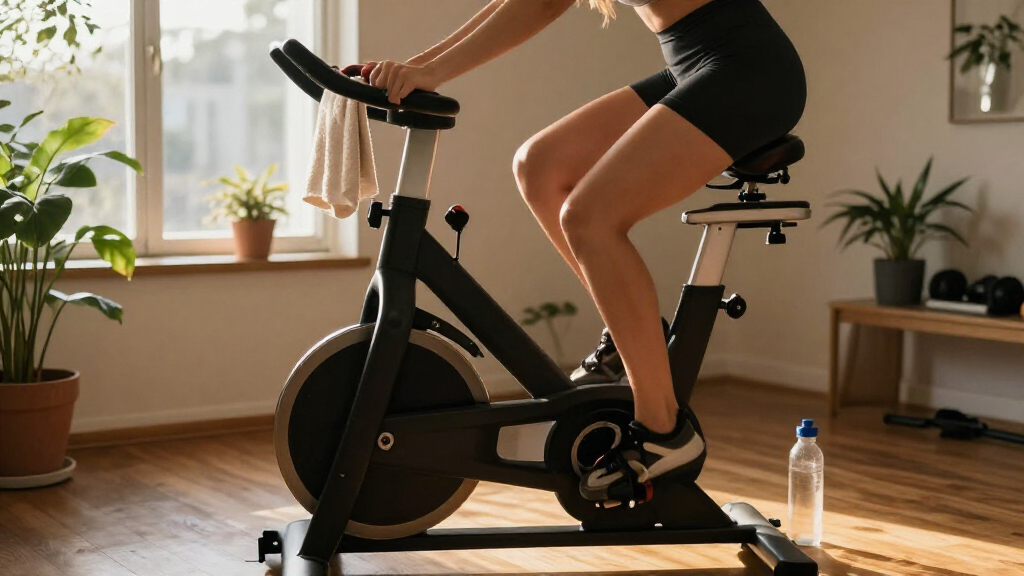

The best indoor exercise bikes balance a steady ride, useful adjustability, and a footprint that suits your home. I name the Schwinn IC4 best overall for riders seeking a more feature-rich cycling setup, while the YOSUDA 5-in-1 Folding Bike stands out for compact storage and multi-position use, and the Barwing 5-in-1 for its higher stated weight capacity and backrest. The main tradeoff is between a more traditional cycling feel and foldable, comfort-focused designs that take up less room. App connectivity, resistance style, and fit also separate these models more than their similar home-workout purpose suggests. Read on for the full comparison, buying advice, and recommendations by rider type.

Get workout gear delivered free with Prime
- Fast, free delivery on millions of items
- Prime Video, Amazon Music and more included
- Member-only deals all year
Complete the kit


Key Takeaways
- The Schwinn IC4 leads this lineup for a more dedicated cycling setup; foldable bikes add storage flexibility but serve a different kind of workout space.
- Five-in-one models prioritize versatility and compact storage over the closer-to-upright cycling position many riders want for longer, focused sessions.
- Adjustability deserves more weight than a long feature list: seat and handlebar fit can determine whether a bike feels comfortable enough for regular use.
- App compatibility appears across several bikes, including options from MERACH, CHAOKE, and YOSUDA, but compatibility alone does not establish that a particular app or subscription will suit you.
- Stated capacity and back support distinguish some foldable picks: Barwing lists a 350 lb capacity and backrest, while YOSUDA Pro lists a 300 lb capacity; check each model’s fit and setup details before choosing.
| YOSUDA 5-in-1 Folding Exercise Bike |  | Best for Workout Variety in a Small Space | Exercise modes: Upright, semi-recumbent, recumbent, rowing, resistance bands | Resistance: Magnetic, 16 levels | Flywheel: 6.6 lb | VIEW LATEST PRICE | See Our Full Breakdown |
| Schwinn IC4 Indoor Cycling Bike |  | Best for Structured Indoor Cycling | Resistance: Magnetic, 100 micro-adjustable levels | Drive system: Belt | Pedals: Dual-sided SPD clips and toe cages | VIEW LATEST PRICE | See Our Full Breakdown |
| pooboo Folding Magnetic X-Bike Upright Exercise Bike |  | Best Simple Folding Bike for Beginners | Workout modes: Upright and semi-recumbent | Resistance: Magnetic, 8 levels | Flywheel: 6.6 lb | VIEW LATEST PRICE | See Our Full Breakdown |
| CHAOKE Exercise Bike Quiet Adjustable Magnetic Stationary Bike for Home Cardio with App Compatibility, 350LB Weight Capacity, Comfortable Seat, Digital Display |  | Best for Quiet Riding and Higher Capacity | Weight capacity: 350 lb | Flywheel: 35 lb | Resistance: Magnetic, micro-adjustable | VIEW LATEST PRICE | See Our Full Breakdown |
| MERACH Magnetic Resistance Indoor Exercise Bike with App |  | Best for Multi-App Tracking | Model: S26, model S26B2 | Maximum user weight: 300 lb | Resistance: Adjustable magnetic, 0–100% | VIEW LATEST PRICE | See Our Full Breakdown |
| CHAOKE Magnetic Resistance Exercise Bike with App Compatibility |  | Best for Shorter Riders | Model: 520A | Resistance: Adjustable magnetic resistance, 0–100% | Frame: 2.00 mm thick steel | VIEW LATEST PRICE | See Our Full Breakdown |
| Wdemngg Indoor Exercise Bike with Magnetic Resistance |  | Best for Shared Households | Model: LC01 | Resistance mechanism: Magnetic | Frame material: High-carbon steel | VIEW LATEST PRICE | See Our Full Breakdown |
| YOSUDA Pro Magnetic Exercise Bike, 300 lb Capacity |  | Best for Quiet Workouts | Model: L-002C Pro | Resistance: Magnetic, adjustable from 0 to 100 levels | Drive system: Belt drive | VIEW LATEST PRICE | See Our Full Breakdown |
| YOSUDA 002 Indoor Exercise Bike with App Connectivity |  | Best for Flywheel-Focused Training | Model: Exercise Bike 002 | Drive system: Belt | Resistance mechanism: Friction | VIEW LATEST PRICE | See Our Full Breakdown |
| RELIFE REBUILD YOUR LIFE Indoor Exercise Bike with Belt Drive |  | Best for Shorter Riders Seeking a Cushioned Seat | Model: EB801 (CA-EB801) | Drive system: Belt-driven | Operating noise: Below 25 dB | VIEW LATEST PRICE | See Our Full Breakdown |
| SLUNSE FITNESS EB1 Indoor Exercise Bike with Adjustable Magnetic Resistance |  | Best for Fine-Tuned Resistance | Frame: Alloy steel | Flywheel: 35 lb | Resistance: 100-level micro-adjustable magnetic | VIEW LATEST PRICE | See Our Full Breakdown |
| CURSOR Fitness Indoor Exercise Bike with Adjustable Seat and Handlebars |  | Best for Quiet, Straightforward Riding | Frame: Reinforced alloy steel | Resistance: Friction, 100 stated levels | Drive system: Belt | VIEW LATEST PRICE | See Our Full Breakdown |
| GOIMU 5-in-1 Foldable Magnetic Resistance Exercise Bike |  | Best for Compact, Multi-Mode Workouts | Frame: Alloy steel X-frame | Design: Foldable, with transport wheels | Workout modes: 5 | VIEW LATEST PRICE | See Our Full Breakdown |
| Barwing Stationary Exercise Bike – 5-in-1 Foldable Indoor Cycling Bike |  | Best Foldable Pick for Higher Capacity | Maximum user weight: 350 lb | Resistance: 16-level magnetic | Flywheel: 6.6 lb | VIEW LATEST PRICE | See Our Full Breakdown |
| PLENY 5-in-1 Folding Exercise Bike |  | Best for Adding Upper-Body Work | Frame: Alloy steel | Workout types: Cycling and resistance-band exercises | Resistance: 16-level magnetic | VIEW LATEST PRICE | See Our Full Breakdown |
| indoor exercise bike | Resistance |
|---|---|
| YOSUDA 5-in-1 Folding Exercise | Magnetic, 16 levels |
| Schwinn IC4 Indoor Cycling Bik | Magnetic, 100 micro-adjustable levels |
| pooboo Folding Magnetic X-Bike | Magnetic, 8 levels |
| CHAOKE Exercise Bike Quiet Adj | Magnetic, micro-adjustable |
| MERACH Magnetic Resistance Ind | Adjustable magnetic, 0–100% |
| CHAOKE Magnetic Resistance Exe | Adjustable magnetic resistance, 0–100% |
| Wdemngg Indoor Exercise Bike w | — |
| YOSUDA Pro Magnetic Exercise B | Magnetic, adjustable from 0 to 100 levels |
| YOSUDA 002 Indoor Exercise Bik | — |
| RELIFE REBUILD YOUR LIFE Indoo | Adjustable from 0% to 100% |
| SLUNSE FITNESS EB1 Indoor Exer | 100-level micro-adjustable magnetic |
| CURSOR Fitness Indoor Exercise | Friction, 100 stated levels |
| GOIMU 5-in-1 Foldable Magnetic | 16-level magnetic |
| Barwing Stationary Exercise Bi | 16-level magnetic |
| PLENY 5-in-1 Folding Exercise | 16-level magnetic |
More Details on Our Top Picks
YOSUDA 5-in-1 Folding Exercise Bike
The YOSUDA stands apart from conventional indoor cycling bikes by combining upright and recumbent riding with rowing and resistance-band movements. That flexibility can make one compact machine more useful for varied home sessions, while its folding frame and transport wheels help when the bike needs to move out of the way. The adjustable padded seat and back cushion also suit riders who prefer more support than a race-style setup like the Schwinn IC4.
Its 16 magnetic resistance levels offer more gradation than the pooboo’s eight, though neither folding bike is aimed at riders seeking the heavier cycling feel of a dedicated studio-style model. The main caveat is a conflicting capacity: the supplied specs list 330 lb, while the description advertises 380 lb. I would verify the limit before buying, and plan for assembly.
Pros:- Combines upright, semi-recumbent, recumbent, rowing, and resistance-band exercise modes.
- Folds and has transport wheels for easier storage between workouts.
- Sixteen magnetic resistance levels provide more adjustment than the pooboo folding bike’s eight.
- Oversized padded seat, back cushion, and eight height settings support a more relaxed riding position.
Cons:- Product information gives conflicting maximum weight figures of 330 lb and 380 lb.
- A 6.6 lb flywheel is less suited to riders seeking a heavier, studio-style cycling feel.
- Requires assembly.
Best for: Riders in apartments or multipurpose rooms who want several exercise modes and a supportive seat in a foldable bike.
Not ideal for: Buyers who need a confirmed weight limit above 330 lb or want a dedicated, performance-focused cycling setup.
- Exercise modes:Upright, semi-recumbent, recumbent, rowing, resistance bands
- Resistance:Magnetic, 16 levels
- Flywheel:6.6 lb
- Listed maximum weight:330 lb in specifications; 380 lb advertised in description
- User height range:4’9″–6’2″
- Monitor metrics:Time, speed, distance, calories, odometer, pulse
- Connectivity:Bluetooth app connectivity
- Weight and dimensions:49 lb; 42.5″ D × 9.1″ W × 14.96″ H
Our verdict“Choose the YOSUDA if multiple exercise modes and foldaway storage matter more than a dedicated-bike ride or a clearly stated capacity.”
Schwinn IC4 Indoor Cycling Bike
The Schwinn IC4 is the clearest fit here for riders who want a dedicated indoor cycling setup rather than a folding bike with several exercise modes. Its 100 micro-adjustable magnetic resistance levels allow finer changes in effort than the 16-level YOSUDA folding bike, while the belt drive and dual-sided pedals support a more cycling-focused routine. Riders can use SPD cleats or toe cages, giving the IC4 a more adaptable pedal setup than the other bikes in this batch.
The backlit console tracks heart rate, speed, time, distance, calories, and RPM, and the included dumbbells, tablet holder, and bottle holder make workout setup straightforward. The tradeoff is a 112 lb, full-size frame that takes more room and effort to move than a foldable option. App use also has limits: services such as Peloton and Zwift require separate subscriptions, and assembly is required.
Pros:- One hundred magnetic resistance levels allow fine adjustments to workout intensity.
- Dual-sided pedals accept SPD cleats or toe cages.
- Backlit LCD tracks heart rate, speed, time, distance, calories, and RPM.
- Includes 3 lb dumbbells, tablet and bottle holders, transport wheels, and a USB port.
Cons:- Its 112 lb weight and full-size dimensions make it less convenient to relocate or store than folding models.
- Requires assembly.
- Peloton and Zwift access requires separate subscriptions.
Best for: Regular indoor cyclists who want fine resistance adjustment, SPD-compatible pedals, and detailed workout metrics.
Not ideal for: Apartment dwellers who need a bike that folds away, or buyers who want app subscriptions included with the purchase.
- Resistance:Magnetic, 100 micro-adjustable levels
- Drive system:Belt
- Pedals:Dual-sided SPD clips and toe cages
- Maximum user weight:330 lb
- Console metrics:Heart rate, speed, time, distance, calories, RPM
- Included accessories:3 lb dumbbells, water bottle holder, tablet holder, USB port
- Weight:112 lb
- Dimensions:54.6″ D × 30.7″ W × 51.8″ H
Our verdict“Pick the IC4 for a more adjustable, cycling-specific workout, provided you have space for its full-size frame.”
pooboo Folding Magnetic X-Bike Upright Exercise Bike
The pooboo is a straightforward choice for newcomers who want a foldable indoor bike without the extra modes and more complicated feature set of the YOSUDA 5-in-1. It switches between upright and semi-recumbent positions, and its arm resistance bands add a basic upper-body option without turning the bike into a rowing-style machine. The folding frame, transport wheels, and mobile-device holder suit short, convenient workouts in shared rooms.
Its eight magnetic resistance levels cover basic changes in effort, but offer fewer steps than the YOSUDA’s 16 and far less fine adjustment than the Schwinn IC4’s 100 levels. The monitor includes heart-rate tracking alongside common ride metrics, though this is still a compact home bike rather than a choice for riders wanting a dedicated cycling setup. Its 300 lb limit also sits below the IC4’s 330 lb capacity.
Pros:- Folds for storage and rolls between rooms on transport wheels.
- Offers upright and semi-recumbent riding positions.
- Arm resistance bands add a simple upper-body exercise option.
- Monitor tracks heart rate as well as time, speed, distance, and calories.
Cons:- Eight resistance levels provide fewer adjustment steps than the YOSUDA 5-in-1.
- The 300 lb maximum user weight is lower than the Schwinn IC4’s 330 lb limit.
- Does not offer the rowing mode or 16 resistance levels found on the YOSUDA 5-in-1.
Best for: New or occasional riders who want a compact, foldable bike for light cardio and a choice of two riding positions.
Not ideal for: Riders over 300 lb or cyclists who want numerous resistance adjustments and a dedicated studio-bike configuration.
- Workout modes:Upright and semi-recumbent
- Resistance:Magnetic, 8 levels
- Flywheel:6.6 lb
- Maximum user weight:300 lb
- User height range:4’10″–6’1″
- Monitor metrics:Time, speed, distance, calories, heart rate
- Included features:Arm resistance bands, bottle holder, transport wheels, mobile-device holder
- Storage:Foldable frame
Our verdict“Choose the pooboo for simple, space-conscious starter workouts, not for high-resistance variety or advanced ride adjustment.”
CHAOKE Exercise Bike Quiet Adjustable Magnetic Stationary Bike for Home Cardio with App Compatibility, 350LB Weight Capacity, Comfortable Seat, Digital Display
For riders prioritizing a sturdier, quiet-riding bike over foldaway storage, this CHAOKE offers a different proposition from the YOSUDA 5-in-1 and pooboo. Its double-triangle steel frame is listed for a 350 lb capacity, higher than the 300 lb MERACH and pooboo, while the 35 lb flywheel gives it a more substantial cycling-oriented setup than the 6.6 lb flywheels in the folding models. Magnetic resistance is listed below 25 dB, a useful feature for home workouts near other people.
The four-way seat and two-way handlebar adjustments help riders tune their position, and app compatibility includes Zwift and Kinomap. Unlike the Schwinn IC4, though, it has no built-in heart-rate monitor, and app compatibility is not the same as a detailed onboard training console. Its larger footprint and assembly time make it a weaker fit for small rooms or anyone needing quick storage.
Pros:- Listed 350 lb capacity exceeds the 300 lb limits of the MERACH and pooboo models.
- Magnetic resistance is specified at under 25 dB for quieter home workouts.
- 35 lb flywheel provides a more substantial cycling setup than the folding bikes’ 6.6 lb flywheels.
- Four-way seat and two-way handlebar adjustment support position changes across a stated 4’8″–6’4″ rider range.
Cons:- Larger footprint makes it less convenient for small rooms than folding options.
- No built-in heart-rate monitor.
- Requires 25–30 minutes of assembly despite arriving 80% pre-assembled.
Best for: Riders who want a quiet, sturdier stationary bike with a 350 lb listed capacity and adjustable riding position.
Not ideal for: People in tight living spaces who need a folding bike, or riders who want built-in heart-rate tracking and a compact console-led setup.
- Weight capacity:350 lb
- Flywheel:35 lb
- Resistance:Magnetic, micro-adjustable
- Noise level:Listed below 25 dB
- Seat adjustment:4-way: forward/backward and up/down
- Handlebar adjustment:2-way: up/down
- App compatibility:Z-sport, Zwift, Kinomap
- Frame and assembly:2.00 mm steel; 80% pre-assembled, 25–30 minutes required
Our verdict“Choose this CHAOKE for a quiet, higher-capacity stationary ride, but skip it if folding storage or onboard heart-rate tracking matters more.”
MERACH Magnetic Resistance Indoor Exercise Bike with App
The MERACH S26 is aimed at buyers who want a conventional indoor cycling bike with broad app connections rather than the extra riding positions and storage flexibility of the YOSUDA 5-in-1. It lists compatibility with MERACH, KINOMAP, Zwift, Google Fit, and Apple Health, which gives connected riders several ways to track or follow workouts. The four-way seat adjustment, two-way handlebars, and stated 4’8″–6’2″ rider range help with fit, while its sub-25 dB noise specification suits home use.
Compared with the CHAOKE, the MERACH has a lower 300 lb capacity and does not list a flywheel weight, so buyers have less information for judging its ride feel and frame capacity. It adds practical storage for workout accessories with a dumbbell rack and dual bottle holders, but app features depend on pairing a compatible device. It is also a fixed-frame bike, not a folding-space saver.
Pros:- Connects with MERACH, KINOMAP, Zwift, Google Fit, and Apple Health.
- Listed noise level is under 25 dB for quieter home workouts.
- Four-way seat and two-way handlebar adjustments fit a stated range of 4’8″–6’2″.
- Includes a tablet holder, dumbbell rack, dual bottle holders, LED display, and transport wheels.
Cons:- The 300 lb maximum user weight is lower than the CHAOKE’s listed 350 lb capacity.
- App-connected features require pairing with a compatible device.
- No flywheel weight is provided, limiting comparison of ride feel with models such as the CHAOKE.
Best for: Riders who already use fitness apps or health platforms and want a quiet, adjustable bike with accessory storage.
Not ideal for: Buyers who need a folding frame, a listed capacity above 300 lb, or a clearly specified flywheel weight.
- Model:S26, model S26B2
- Maximum user weight:300 lb
- Resistance:Adjustable magnetic, 0–100%
- Noise level:Listed under 25 dB
- Rider height range:4’8″–6’2″
- App compatibility:MERACH, KINOMAP, Zwift, Google Fit, Apple Health
- Adjustments:4-way adjustable seat; 2-way adjustable handlebars
- Included features:Tablet holder, dumbbell rack, dual water bottle holders, LED display, transport wheels
Our verdict“Pick the MERACH if app connections and workout-accessory storage are your priorities and its 300 lb limit fits your needs.”
CHAOKE Magnetic Resistance Exercise Bike with App Compatibility
The CHAOKE 520A makes the most sense for shorter riders who want magnetic resistance and app-based workouts without moving to a more feature-heavy bike. Its stated height range of 4.7–5.9 feet is narrower than the Wdemngg LC01’s range, so taller households should look at that model instead. The steel triangular and H-shaped frame is designed to provide a stable base, while magnetic resistance offers a quieter adjustment method than the friction system on the YOSUDA 002. App compatibility, including Kinomap, adds virtual training options, but the supplied details don’t specify an onboard display or workout metrics. That makes this a more focused pick for riders who value fit, quiet resistance, and app access over a detailed built-in console.
Pros:- Magnetic resistance supports quieter workouts than a friction-based system.
- Triangular and H-shaped steel frame is designed for a stable ride.
- Compatible with apps such as Kinomap for virtual training.
- Adjustable resistance and seat allow workout and fit changes.
Cons:- Recommended height range tops out at 5.9 feet, limiting fit for taller riders.
- Product details do not specify an onboard display or tracked workout metrics.
- One-year warranty is specified.
Best for: Shorter riders who want a stable magnetic-resistance bike and plan to use compatible virtual training apps.
Not ideal for: Riders taller than 5.9 feet or households that need one bike to fit a broad range of heights.
- Model:520A
- Resistance:Adjustable magnetic resistance, 0–100%
- Frame:2.00 mm thick steel
- Weight capacity:300 lbs
- Recommended user height:4.7–5.9 ft
- Connectivity:Compatible with apps such as Kinomap
- Warranty:1 year
Our verdict“Choose the CHAOKE 520A if you are within its shorter rider range and want magnetic resistance with app compatibility, but choose the Wdemngg LC01 for broader height fit and stated console metrics.”
Wdemngg Indoor Exercise Bike with Magnetic Resistance
The Wdemngg LC01 is the strongest fit here for a household where riders need different seat positions and heights. Its four-way seat adjustment and stated 4’8″–6’2″ rider range are more accommodating than the CHAOKE 520A, whose recommended range ends at 5.9 feet. The magnetic system, six-metric LCD monitor, and compatibility with Kinomap, Zwift, and Fitshow give riders several ways to follow activity; heart-rate readings come from handlebar sensors rather than a chest strap. At 42 pounds, it is relatively manageable to reposition, and transport wheels help with that task. The tradeoff is that assembly is required, and the provided dimensions list a 44.49-inch width, so check the intended space before choosing it over a more compact-feeling home setup.
Pros:- Four-way seat adjustment and a 4’8″–6’2″ height range suit varied riders.
- LCD monitor tracks six metrics, including heart rate.
- Compatible with Kinomap, Zwift, and Fitshow.
- Enclosed flywheel cover and transport wheels support home use and repositioning.
Cons:- Assembly is required, despite most components arriving pre-assembled.
- Heart-rate readings come from handlebar sensors rather than a chest strap.
- Listed dimensions include a 44.49-inch width, which may be awkward in tight spaces.
Best for: Households with multiple riders who need a broad height range, adjustable seat positioning, and app or console workout tracking.
Not ideal for: Buyers who want a bike that arrives ready to ride, need chest-strap heart-rate readings, or have limited floor space for the listed dimensions.
- Model:LC01
- Resistance mechanism:Magnetic
- Frame material:High-carbon steel
- Weight capacity:300 lbs
- Item weight:42 pounds
- Dimensions:19.29″ D x 44.49″ W x 45.87″ H
- Recommended user height:4’8″ to 6’2″
- Monitor metrics:Time, speed, distance, calories, odometer, and heart rate
- Compatible apps:Kinomap, Zwift, and Fitshow
Our verdict“Pick the Wdemngg LC01 for a shared home bike with broad fit and multiple tracking options, but favor the CHAOKE 520A if your priority is a simpler, shorter-rider-focused setup.”
YOSUDA Pro Magnetic Exercise Bike, 300 lb Capacity
The YOSUDA L-002C Pro stands out for buyers who want to keep indoor rides quiet without giving up workout tracking. Its belt drive and magnetic resistance are specified for operation at no more than 20 dB, making it a more noise-focused choice than the friction-resistance YOSUDA 002. Six-way seat adjustment and two-way handlebar adjustment offer more fit flexibility than a bike with seat-only adjustment, while the LCD and Bluetooth app support cover basic ride tracking. A tablet and water bottle holder also make longer sessions easier to set up. It is not a high-capacity alternative to the 300-pound models in this group: the listed limit is still 300 pounds, and assembly remains necessary, though it arrives 80% pre-assembled.
Pros:- Belt drive and magnetic resistance are designed for quiet operation, with noise listed at no more than 20 dB.
- Six-way seat and two-way handlebar adjustment support fit changes.
- LCD and Bluetooth app support provide workout tracking options.
- Tablet holder, water bottle holder, and transport wheels support home sessions.
Cons:- Maximum supported user weight is 300 pounds.
- Some assembly is required, even though the bike arrives 80% pre-assembled.
- The listed display metrics include heart rate, but no measurement method is specified.
Best for: Home riders who prioritize quiet cardio, adjustable riding position, and app-based workout tracking.
Not ideal for: Riders over 300 pounds or buyers who want a fully assembled bike delivered ready for use.
- Model:L-002C Pro
- Resistance:Magnetic, adjustable from 0 to 100 levels
- Drive system:Belt drive
- Noise level:≤20 dB
- Weight capacity:300 lbs
- Seat adjustment:6-way
- Handlebar adjustment:2-way, up/down
- Display and connectivity:LCD; Bluetooth app support
- Assembly:80% pre-assembled
Our verdict“Choose the YOSUDA L-002C Pro for a quiet, adjustable home bike with app support, while the Wdemngg LC01 may suit you better if its stated wider rider-height range matters more.”
YOSUDA 002 Indoor Exercise Bike with App Connectivity
The YOSUDA 002 is the pick for riders who want a stated flywheel weight and hands-on control over resistance. Its 25 lb flywheel and belt drive distinguish it from the L-002C Pro, which uses magnetic resistance and foregrounds quieter operation. This model instead uses friction resistance, so buyers should expect to adjust resistance manually and may prefer the magnetic bikes in this roundup for a quieter, less contact-based setup. Fit options are practical: the padded seat adjusts four ways, the handlebars adjust two ways, and the cage pedals help keep feet positioned during a ride. Bluetooth app support, an LCD, and a tablet holder add tracking and entertainment, though the supplied dimensions list a notably narrow width alongside a 29.9-inch depth; check the footprint against your available space.
Pros:- 25 lb flywheel and belt drive support a smoother-feeling ride.
- Four-way padded seat and two-way handlebars allow fit adjustments.
- Cage pedals and a resistance bar give riders direct workout control.
- Bluetooth app support, LCD, and tablet holder add tracking and entertainment.
Cons:- Friction resistance requires manual adjustment and differs from the magnetic systems on the other YOSUDA model and Wdemngg LC01.
- The listed dimensions may make space planning difficult; verify them before purchase.
- Maximum weight capacity is 300 pounds.
Best for: Riders who want a 25-pound flywheel, adjustable riding position, cage pedals, and Bluetooth app features.
Not ideal for: Buyers who prioritize magnetic resistance, minimal resistance maintenance, or a clearly verified footprint for a tight workout area.
- Model:Exercise Bike 002
- Drive system:Belt
- Resistance mechanism:Friction
- Flywheel weight:25 lbs
- Maximum weight capacity:300 lbs
- User height range:4 ft 8 in to 6 ft
- Seat and handlebar adjustment:Four-way seat; two-way handlebars
- Connectivity and display:Bluetooth app support; LCD
- Dimensions:29.9 in D x 7.47 in W x 38.6 in H
Our verdict“Choose the YOSUDA 002 if its flywheel-and-belt-drive setup and direct resistance control appeal to you; choose the L-002C Pro if quieter magnetic resistance is the priority.”
RELIFE REBUILD YOUR LIFE Indoor Exercise Bike with Belt Drive
The RELIFE EB801 is aimed at shorter riders who value seat comfort and a home-friendly noise profile more than a high weight limit. Its spring-cushioned seat is designed to reduce vibration during longer sessions, while the belt drive is listed below 25 dB. The six-way seat adjustment and six-level handlebar height adjustment offer useful fit changes, but the recommended rider range ends at 5’8″—a tighter fit than the Wdemngg LC01, which reaches 6’2″. The 280-pound capacity is also lower than the 300-pound limits on the CHAOKE and both YOSUDA bikes. An LED display, tablet mount, transport wheels, and 80% pre-assembly make it suited to straightforward home cardio, though some assembly is still needed.
Pros:- Spring-cushioned seat is designed to absorb vibration during longer rides.
- Belt drive is listed below 25 dB for home workouts.
- Six-way seat adjustment and six-level handlebar height adjustment support fit changes.
- Tablet mount, LED display, transport wheels, and 80% pre-assembly aid home setup.
Cons:- Recommended rider height stops at 5’8″.
- 280-pound maximum capacity is lower than the 300-pound limit on several alternatives.
- Some assembly is required.
Best for: Shorter riders seeking a quiet belt-drive bike with a spring-cushioned seat and convenient home-use features.
Not ideal for: Riders taller than 5’8″ or above 280 pounds, and buyers who need the broader fit range of the Wdemngg LC01.
- Model:EB801 (CA-EB801)
- Drive system:Belt-driven
- Operating noise:Below 25 dB
- Resistance:Adjustable from 0% to 100%
- Seat adjustment:6-way
- Handlebar adjustment:6-level height adjustment
- Recommended rider height:4’8″ to 5’8″
- Maximum user weight:280 lbs
- Assembly:80% pre-assembled
Our verdict“Pick the RELIFE EB801 if you are within its shorter height range and want a cushioned, quiet ride, but choose the Wdemngg LC01 for taller riders or a higher stated weight capacity.”
SLUNSE FITNESS EB1 Indoor Exercise Bike with Adjustable Magnetic Resistance
The EB1 stands out for riders who want small, controlled changes in workout intensity. Its 100-level magnetic resistance offers more adjustment steps than the 16-level systems on the GOIMU G0605 and Barwing, which can help when a rider wants to make gradual changes rather than jump between broader settings. A 35 lb flywheel and quiet belt drive also make it a better fit for steady indoor cycling than compact folding bikes built around lighter flywheels.
The tradeoff is footprint: this is a steel-frame cycling bike, not a folding option for easy storage. It supports riders up to 350 lb and has four-way seat and two-way handlebar adjustment, but the stated height range ends at 6 ft 1 in. App compatibility with Zwift and Kinomap is listed, though the connection method is not specified, so buyers should not assume advanced app data integration.
Pros:- 100-level magnetic resistance supports fine intensity adjustments.
- 35 lb flywheel and belt drive suit steady, quieter home workouts.
- Four-way seat adjustment and two-way handlebar adjustment accommodate varied fits.
- Includes an LCD monitor, tablet holder, and water bottle holder.
Cons:- Does not fold for compact storage.
- Some assembly remains despite arriving 80% pre-assembled.
- App connection details are not specified.
Best for: Home riders who want gradual magnetic resistance changes, a heavier flywheel, and adjustable fit for multiple users within the stated height range.
Not ideal for: People who need a bike that folds away, riders taller than 6 ft 1 in, or app-focused cyclists who need confirmed connectivity details.
- Frame:Alloy steel
- Flywheel:35 lb
- Resistance:100-level micro-adjustable magnetic
- Drive system:Belt drive
- Maximum user weight:350 lb
- Rider height range:4 ft 8 in to 6 ft 1 in
- Adjustments:4-way seat; 2-way handlebars
- Monitor metrics:Time, speed, distance, calories, odometer
- App compatibility:Zwift and Kinomap
Our verdict“Choose the EB1 if fine resistance control and a heavier flywheel matter more than foldability or fully specified app connectivity.”
CURSOR Fitness Indoor Exercise Bike with Adjustable Seat and Handlebars
CURSOR’s CBE is a practical pick for riders who want a quiet belt-driven bike with broad fit adjustments but do not need a heavy flywheel or a folding frame. Its listed noise level is below 25 dB, and the seat and handlebars both adjust vertically; compared with the SLUNSE EB1, it gives up micro-adjustable magnetic resistance and a much heavier flywheel in exchange for a lighter, simpler setup.
This bike uses friction resistance with 100 stated levels, so its adjustment feel differs from the magnetic systems on the EB1, GOIMU, and Barwing. The 300 lb capacity is lower than those three options, and the battery-powered setup has no stated battery type or runtime. Still, tool-free assembly is described as taking under 30 minutes, making it an appealing choice for riders who value a quick start over app or performance details.
Pros:- Belt drive is specified at below 25 dB for quiet riding.
- Seat and handlebars offer multiple vertical settings for fit adjustment.
- Recommended rider height range spans 4 ft 8 in to 6 ft 2 in.
- Tool-free assembly is described as taking under 30 minutes.
Cons:- Friction resistance differs from the magnetic systems on the SLUNSE EB1 and folding alternatives.
- Maximum user capacity is 300 lb, below the EB1, GOIMU, and Barwing.
- Battery type and runtime are not specified.
Best for: Apartment or home-office riders seeking quiet cycling, multiple seat and handlebar settings, and a stated setup time under 30 minutes.
Not ideal for: Riders over 300 lb, buyers who specifically want magnetic resistance, or cyclists seeking a heavier flywheel and detailed app connectivity.
- Frame:Reinforced alloy steel
- Resistance:Friction, 100 stated levels
- Drive system:Belt
- Maximum user weight:300 lb
- Item weight:39.7 lb
- Recommended rider height:4 ft 8 in to 6 ft 2 in
- Seat adjustment:4-way; 7 vertical settings from 32.2 to 39.1 in
- Handlebar adjustment:5 vertical settings from 36.2 to 46.85 in
- Noise level:Below 25 dB
Our verdict“Pick the CURSOR if quiet operation and adjustable fit outweigh a higher weight capacity or magnetic resistance.”
GOIMU 5-in-1 Foldable Magnetic Resistance Exercise Bike
The GOIMU G0605 is built around storage flexibility and several workout positions, rather than the heavier, more cycling-focused feel of the SLUNSE EB1. Its folding X-frame and transport wheels make it easier to move out of the way, while the cushioned seat and backrest support a more upright ride. That makes it a stronger match for shared rooms or occasional home workouts than a fixed-frame bike.
Its 16-level magnetic resistance is simpler than the EB1’s 100-level adjustment, and the 5.5 lb flywheel is much lighter than the EB1’s 35 lb unit. Buyers seeking sustained, higher-intensity cycling may prefer that heavier-flywheel design. GOIMU’s 330 lb capacity is also below the Barwing’s 350 lb limit. The five workout modes add variety, but their configurations are not detailed, so the label alone does not tell buyers exactly how each position works.
Pros:- Folding frame and transport wheels help with storage and repositioning.
- Backrest and cushioned seat support a more upright riding posture.
- 16-level magnetic resistance offers adjustable workout intensity.
- 330 lb maximum capacity is higher than the CURSOR’s 300 lb limit.
Cons:- The 5.5 lb flywheel is much lighter than the SLUNSE EB1’s 35 lb flywheel.
- Capacity is lower than the Barwing’s 350 lb rating.
- The specific configurations of its five workout modes are not described.
Best for: Space-conscious households wanting a folding bike with a backrest, transport wheels, and several workout positions for casual indoor exercise.
Not ideal for: Cyclists seeking a heavier flywheel for more demanding riding, buyers who need a 350 lb capacity, or anyone who wants clearly specified workout-mode configurations.
- Frame:Alloy steel X-frame
- Design:Foldable, with transport wheels
- Workout modes:5
- Resistance:16-level magnetic
- Flywheel:5.5 lb aluminum
- Maximum user capacity:330 lb
- Seat:Cushioned, with backrest
- Recommended use:Indoor
Our verdict“Choose the GOIMU if foldability, back support, and workout-position variety matter more than a heavy flywheel or the highest capacity.”
Barwing Stationary Exercise Bike – 5-in-1 Foldable Indoor Cycling Bike
Among the folding options here, the Barwing makes the strongest case for riders who need a higher stated weight capacity without giving up compact storage. Its 350 lb limit matches the fixed-frame SLUNSE EB1, while its folding X-frame, transport wheels, and approximately 1.8 sq ft folded footprint make it more practical to stow. The 16-level magnetic resistance is quieter by specification than the CURSOR’s friction setup, with a stated noise level below 20 dB.
That convenience comes with a lighter 6.6 lb flywheel, so it is less suited to riders prioritizing the heavier cycling feel offered by the EB1. The adjustable seat, backrest, and riding positions support varied workout postures, but the seat padding may not suit very long sessions. Buyers also miss out on Bluetooth connectivity and a built-in heart-rate monitor, and partial assembly is still required.
Pros:- 350 lb capacity is higher than the GOIMU and PLENY folding bikes.
- Folds to an approximately 1.8 sq ft footprint and includes transport wheels.
- Magnetic resistance is specified at under 20 dB.
- Adjustable seat, backrest, and multiple riding positions support workout variety.
Cons:- The 6.6 lb flywheel is far lighter than the SLUNSE EB1’s 35 lb flywheel.
- No built-in heart-rate monitor or Bluetooth connectivity.
- Partial assembly is required, and seat padding may be uncomfortable during long sessions.
Best for: Riders who need a foldable home bike rated up to 350 lb and want quiet magnetic resistance with adjustable riding positions.
Not ideal for: Cyclists who want a heavy flywheel, Bluetooth or heart-rate tracking, or a seat designed for long uninterrupted sessions.
- Maximum user weight:350 lb
- Resistance:16-level magnetic
- Flywheel:6.6 lb
- Frame:Heavy-duty steel X-type
- Noise level:Below 20 dB
- Folded footprint:Approximately 1.8 sq ft
- Seat adjustments:Height, angle, and backrest
- Console metrics:Time, speed, distance, calories, odometer
- Warranty:1 year parts
Our verdict“Choose the Barwing if compact storage and a 350 lb capacity lead your priorities, but skip it for heavy-flywheel training or connected workout tracking.”
PLENY 5-in-1 Folding Exercise Bike
PLENY gives folding-bike buyers a reason to look beyond cycling: its resistance bands add upper-body exercises to a compact indoor routine. The padded backrest and handles, LCD monitor, phone holder, and transport wheels make it a more feature-filled space-saving option than the CURSOR, which has a fixed-bike format and no listed resistance bands. A claimed noise level under 15 dB also puts it below the Barwing’s stated under-20 dB figure on paper.
The tradeoff is capacity. PLENY is recommended for users up to 300 lb, while the Barwing supports 350 lb and the GOIMU supports 330 lb. Its 16 magnetic resistance levels and 6.6 lb flywheel point toward moderate home workouts, not the heavier cycling feel of the SLUNSE EB1. The heart-rate metric is listed for the display, but the product details do not explain how it is measured.
Pros:- Resistance bands support upper-body exercises alongside cycling.
- Folds to a stated 20 × 20 in footprint and includes transport wheels.
- Padded backrest and handles add support for upright riding.
- 16-level magnetic resistance and a stated noise level under 15 dB.
Cons:- 300 lb maximum recommendation is below the Barwing’s 350 lb and GOIMU’s 330 lb limits.
- The 6.6 lb flywheel is much lighter than the SLUNSE EB1’s 35 lb unit.
- The display lists heart rate, but the measurement method is not specified.
Best for: Space-conscious riders who want light cycling sessions plus resistance-band exercises, back support, and a compact folded footprint.
Not ideal for: Users above 300 lb, riders seeking a heavy-flywheel cycling workout, or buyers who need a clearly described heart-rate sensor.
- Frame:Alloy steel
- Workout types:Cycling and resistance-band exercises
- Resistance:16-level magnetic
- Flywheel:6.6 lb
- Maximum weight recommendation:300 lb
- Folded footprint:20 × 20 in
- Noise level:Under 15 dB
- Display metrics:Time, speed, distance, calories, heart rate
- Assembly:85% pre-assembled; approximately 30 minutes to set up
Our verdict“Pick PLENY for a compact bike that adds resistance-band work, but choose the Barwing or GOIMU if you need a higher capacity.”
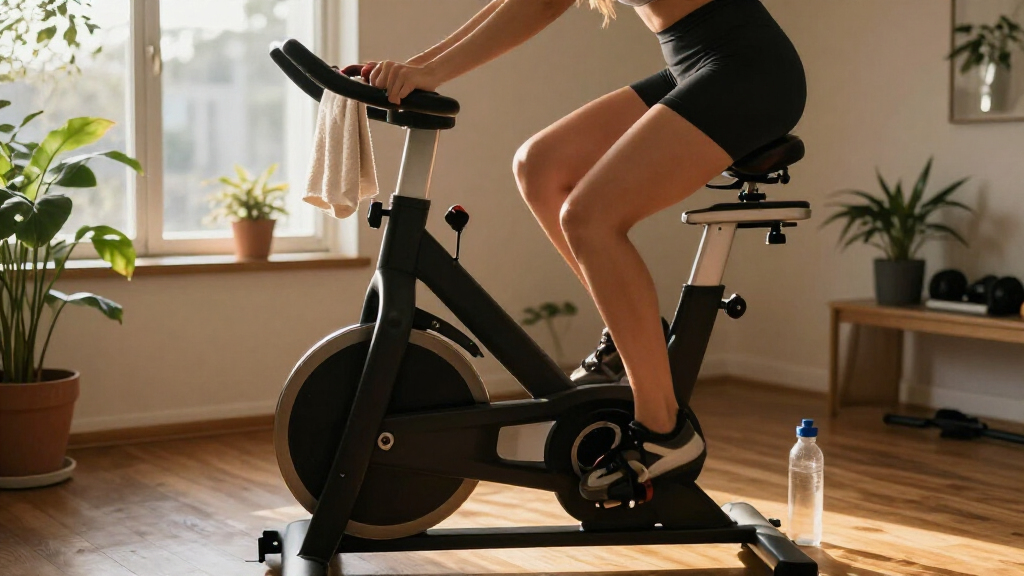
How We Picked
I compared these 15 indoor exercise bikes by the factors that shape everyday home use: ride format, resistance type, adjustability, storage needs, stated capacity, and connected features. I gave more weight to a clear fit for a particular buyer than to a long feature list. A dedicated cycling bike can be a stronger match for sustained upright riding, while a foldable design earns its place when storage and varied seated positions matter more.
The ranking reflects those differences rather than treating every bike as interchangeable. Models with a more distinct use case or a clearer combination of fit and workout features rank ahead of options whose listings emphasize overlapping basics. I also account for tradeoffs: folding frames may suit small rooms but not every rider seeking a traditional cycling position, and app compatibility may add options without guaranteeing a better workout. Product details and stated capacities should be checked against the manufacturer’s current specifications before purchase.
Factors to Consider When Choosing Indoor Exercise Bikes
Before choosing among indoor exercise bikes, I would start with how and where the bike will be used—not with the number of modes or connected features. These decisions help narrow the field and avoid paying for features that do not match your routine.
Choose a ride position that suits your workouts
A traditional upright cycling position suits riders who want the feel of a focused stationary bike session, while a recumbent-style or backrest-supported position may feel more comfortable for gentler workouts. Foldable multi-position bikes can cover several seating setups, but that versatility does not automatically make them the best choice for sustained cycling. Think about whether your sessions will be brief and varied or longer and centered on pedaling. If possible, compare the seat and handlebar adjustment ranges with your height and preferred posture. A common mistake is choosing by storage convenience alone, then finding the riding position less natural than expected. Match the frame format to the workout you will repeat most often.
Check fit before buying for multiple riders
Seat height, seat distance, and handlebar position affect comfort, knee alignment, and how readily different household members can share a bike. A model with adjustment in several directions can be more useful than one with a larger display or additional resistance levels. Look for the maker’s rider-height guidance and compare it with the bike’s adjustment range rather than assuming “adjustable” means it fits everyone. If two riders differ greatly in height, check whether changing the setup is straightforward and repeatable. A poor fit can make even quiet, smooth pedaling uncomfortable. Prioritize documented fit information over broad claims about universal sizing.
Treat resistance and drive as workout decisions
Magnetic resistance is common in this group and can suit home use where a quieter ride is desirable, but the existence of resistance settings does not tell you how fine the changes feel. Consider whether you prefer small adjustments for steady efforts or a straightforward control for casual cardio. Belt-drive descriptions may also appeal to buyers trying to limit mechanical noise, though noise can depend on assembly, floor placement, and maintenance. Do not assume a larger number of levels means a wider or more useful workout range. Look for clear details about how resistance changes and whether the bike’s intended workout style matches your needs. If quiet operation matters, plan for a stable mat and regular checks of the assembled bike as well.
Measure storage space and moving clearance
A folding bike can free floor space between workouts, but measure both its riding footprint and its folded dimensions before ordering. Also leave room to step on and off, move the pedals, and adjust the seat without hitting a wall or nearby furniture. Some buyers focus on the folded width and overlook the space needed for a safe riding position. Consider where the bike will live during a workout; repeatedly moving a heavy frame may discourage use even if it folds. Check whether the design has a practical way to move or store it, and confirm that the floor can support a stable setup. For a permanent workout area, a nonfolding format may be a better trade than a compact frame.
Read capacity and stability details together
A stated maximum user capacity is a useful screening figure, not a complete measure of how a bike will feel under pedaling. Frame construction, base width, floor level, and correct assembly all affect perceived stability. Choose a model whose listed capacity leaves a suitable margin for your body weight, then inspect the manufacturer’s guidance rather than relying on a headline number alone. This matters especially for compact folding designs, where storage convenience and frame structure share the same design. A wobble can come from an uneven floor or loose fittings, but persistent movement may point to a poor match. Check the return terms and assembly instructions before committing.
Decide whether connected features add real value
App compatibility can make it easier to track workouts or follow structured sessions, but it is useful only if the bike works with the devices and services you plan to use. Check the exact app name, phone or tablet requirements, and whether any features require a separate subscription. Do not assume that an “app-compatible” label means the bike controls resistance automatically or includes coaching. A simple display may be enough if you mainly want to track time and basic workout data. Buyers who already use a training platform should verify compatibility before choosing a bike on that basis. For others, a comfortable fit and dependable setup may matter more than connectivity.
Frequently Asked Questions
Which of these bikes makes the most sense for a small apartment?
I would start with the foldable options, including the YOSUDA 5-in-1, pooboo Folding Magnetic X-Bike, GOIMU 5-in-1, Barwing, and PLENY. Their folding formats are meant to reduce storage demands, but the bike still needs enough room to ride safely and get on and off. Compare each model’s folded and open dimensions rather than relying on the word “compact.” If you plan to move it after every workout, check how the design handles transport and storage. A nonfolding bike may still suit a small room if it can stay in one dedicated spot.
Should I choose a folding bike or a dedicated indoor cycling bike?
Choose a folding model if storing the bike between workouts or having varied seated positions is a central need. A dedicated cycling format, such as the Schwinn IC4, is a better starting point for riders focused on a more traditional upright cycling setup. These designs solve different problems, so one is not automatically better for every household. Consider how long you usually ride and whether you want to share the bike with others. If storage is optional and cycling position is your priority, favor fit and ride format over foldability.
Does app compatibility mean I need a paid subscription?
No; app compatibility by itself does not confirm that a paid plan is required or that all app functions are included. Check the product listing and app terms for device support, available workout features, and any subscription fees before choosing. Some riders may only want to record basic sessions, while others prefer guided classes or training data. A compatible app may still have limited integration with the bike, so verify whether resistance changes manually or can be controlled through the software. If you will not use connected training, do not let an app label outweigh comfort and fit.
How much should I rely on a bike’s stated weight capacity?
Use the listed capacity as a basic suitability check, then review the manufacturer’s setup and use guidance. In this lineup, Barwing states a 350 lb capacity and YOSUDA Pro lists 300 lb, but those figures alone do not say how stable a particular bike will feel for you. Frame shape, floor condition, assembly, and riding intensity can all affect stability. Leave a sensible margin rather than selecting a bike right at its stated limit. If the listing does not provide clear fit or stability information, contact the manufacturer before buying.
What should I prioritize if more than one person will use the bike?
Prioritize adjustment range and how easily each rider can restore a comfortable setup. Seat and handlebar adjustments matter more for shared use than a display packed with features. Compare the manufacturer’s height guidance with every rider’s needs, especially if there is a large height difference. App profiles or workout tracking may help keep sessions separate, but they cannot make an ill-fitting frame comfortable. If several people will ride regularly, choose the model with the clearest fit information and a setup that is simple to change.
Conclusion
Best overall: I would start with the Schwinn IC4 if you want a more dedicated indoor cycling setup. Best for compact storage: the YOSUDA 5-in-1 is a strong match for buyers who value folding and varied riding positions. Best for capacity and back support: the Barwing is worth a close look, with its stated 350 lb capacity and backrest. Best for beginners: choose the bike whose posture, controls, and fit feel easiest to use; a foldable model can suit casual workouts, while a dedicated bike may be preferable if you plan to ride regularly. Best for connected workouts: compare the app details on the Schwinn IC4, MERACH, CHAOKE, and YOSUDA 002 before deciding. For value, focus on the features you will actually use rather than a model’s mode count, and verify fit, dimensions, and current specifications before ordering.