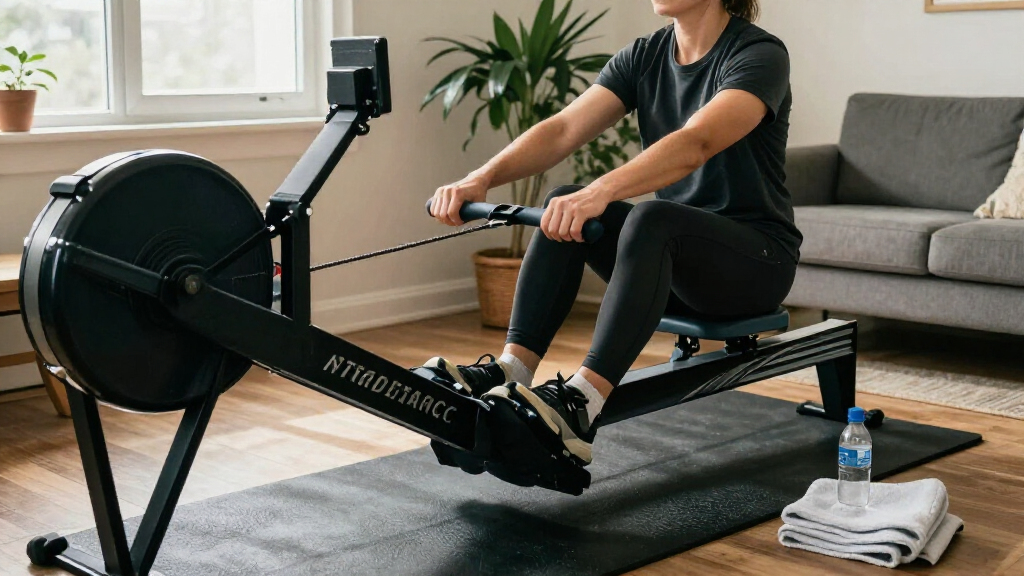
For most home rowers, I’d start with the Concept2 RowErg: its air resistance and PM5 monitor make it the most versatile pick for structured training. The Sunny Health & Fitness Smart Magnetic Rower suits quieter workouts and app-connected sessions, while the FEIERDUN Hydraulic Rower is a compact choice for limited space. The main tradeoffs are noise and rowing feel, storage footprint, resistance range, and how much workout data or app support you want. A lower-footprint model can be easier to live with, but may not offer the same training experience as a full-size rower. Read on for the full comparison and help matching a machine to your home and workout style.

Get workout gear delivered free with Prime
- Fast, free delivery on millions of items
- Prime Video, Amazon Music and more included
- Member-only deals all year
Complete the kit


Key Takeaways
- The Concept2 RowErg leads for all-around training: Its air resistance and PM5 monitor give it a stronger case for varied, measurable workouts than the compact magnetic and hydraulic choices.
- Magnetic models are the quiet-focused group: Options such as the Sunny Health & Fitness, YOSUDA, and Merach Q1S are more suited to shared spaces where noise matters.
- Compactness comes with tradeoffs: Hydraulic options from FEIERDUN and Stamina are easier to fit into a small home, but they offer a different rowing feel from full-length machines.
- Resistance design matters more than a long level count: A listed number of settings alone does not tell you how natural the stroke feels or whether the range fits your training goals.
- App support is not the same as a complete training setup: Several picks connect to apps, but shoppers should compare the monitor and workout data they need rather than choosing on connectivity alone.
| Concept2 RowErg Indoor Rowing Machine – PM5 Monitor, Device Holder, Adjustable Air Resistance, Easy Storage |  | Best Overall | Resistance: Air resistance with adjustable damper | Monitor: Performance Monitor 5 (PM5) | Connectivity: Bluetooth and ANT+ | VIEW LATEST PRICE | See Our Full Breakdown |
| MAJOR FITNESS Drone R1 Indoor Rowing Machine, 10-Level Adjustable Resistance Rower, Quiet Smooth Aluminum Rail, 330LB Weight Capacity, Foldable Design for Home Gym Cardio Workout |  | Best Foldable Air Rower | Resistance: Air resistance with 10 damper levels | Monitor: LCD | Metrics: Distance, speed, stroke count, and time | VIEW LATEST PRICE | See Our Full Breakdown |
| Dripex Rowing Machine, Upgraded Rowing Machines for Home, Magnetic Rower |  | Best Quiet Magnetic Pick | Resistance: Magnetic, 16 levels | Flywheel: 12 lb | Maximum resistance: 66 lb, as stated by the manufacturer | VIEW LATEST PRICE | See Our Full Breakdown |
| pooboo Foldable Magnetic Rowing Machine with App Support |  | Best for Varied Home Workouts | Resistance: Magnetic, 14 levels | Exercise modes: Rowing, resistance-band training, and push-ups | Connectivity: Bluetooth with Kinomap app | VIEW LATEST PRICE | See Our Full Breakdown |
| pooboo Dual Scull Rowing Machine with Wind and Magnetic Resistance |  | Best Full-Motion Scull-Style Rower | Resistance: Wind and magnetic, 14 levels | Handle design: 360-degree rotating dual handles | Connectivity: Bluetooth with Kinomap app | VIEW LATEST PRICE | See Our Full Breakdown |
| YOSUDA Rowing Machine for Home, Magnetic Rower with 16-Level Resistance |  | Best for Quiet Beginner Training | Resistance: Magnetic, 16 levels | Maximum user weight: 350 lb | User height range: 4 ft 5 in to 5 ft 11 in | VIEW LATEST PRICE | See Our Full Breakdown |
| Merach Q1S Magnetic Rowing Machine Indoor, Dual Slide Rail, Quiet & Smooth |  | Best for Taller Users | Resistance: Magnetic, 16 levels | Maximum user weight: 350 lb | Maximum user height: 6 ft 5 in | VIEW LATEST PRICE | See Our Full Breakdown |
| FEIERDUN Hydraulic Rowing Machine for Home, Compact Adjustable Rower with 12 Resistance Levels, 300LBS Weight Capacity, Full Body Workout Equipment |  | Best Compact Hydraulic Pick | Resistance: Hydraulic, 12 levels | Maximum user weight: 300 lb | Dimensions: 57.09 x 23.62 x 22.05 in | VIEW LATEST PRICE | See Our Full Breakdown |
| Rowing Machine for Home, 350 LB Capacity, 16-Level Silent Resistance, Magnetic Rowing Machines for Home Foldable, Full-Body Workout Compact Rowing Machine for Cardio & Strength with APP Support |  | Best for Vertical Storage | Resistance: Magnetic, 16 levels | Maximum user weight: 350 lb | Maximum user height: 6 ft 3 in | VIEW LATEST PRICE | See Our Full Breakdown |
| Merach R50 Pro & R60N Rowing Machine Indoor, Backlit Professional Monitor |  | Best Premium Air Rower | Resistance: Air, 10 adjustable levels | Maximum user weight: 440 lb | Dimensions: 95 x 24 x 40 in | VIEW LATEST PRICE | See Our Full Breakdown |
| Wenoker Magnetic Rowing Machine for Home, Quiet & Smooth, Full Body Workout |  | Best for Quiet, Connected Training | Resistance: Magnetic; 16 levels | Maximum user weight: 350 lb | Noise: Stated under 30 dB | VIEW LATEST PRICE | See Our Full Breakdown |
| Sunny Health & Fitness Smart Magnetic Rower |  | Best for Guided Workouts and Storage | Resistance: Magnetic; 16 manual levels | Maximum user weight: 300 lb | Dimensions: 64 × 19.3 × 27 in | VIEW LATEST PRICE | See Our Full Breakdown |
| Stamina Hydraulic Rowing Machine, BodyTrac Glider |  | Best Compact Pick for Small Rooms | Resistance: Adjustable hydraulic cylinder | Maximum user weight: 250 lb | Dimensions: 58.25 × 42.5 × 18.13 in | VIEW LATEST PRICE | See Our Full Breakdown |
| Merach RS3 Scull Rowing Machine for Home |  | Best for Varied Sculling Workouts | Resistance: Magnetic; 16 levels | Peak resistance: 80 lb, as stated by the manufacturer | Maximum user weight: 350 lb | VIEW LATEST PRICE | See Our Full Breakdown |
| YOSUDA R2 Rowing Machine for Home, Air Rower with Self-Powered Monitor |  | Best Air Rower for Long-Stroke Fit | Resistance: Air; 10 airflow levels | Maximum user weight: 350 lb | Dimensions: 95 × 24 × 44 in | VIEW LATEST PRICE | See Our Full Breakdown |
| indoor rowing machines for home | Resistance | Dimensions | Maximum user weight | Weight |
|---|---|---|---|---|
| Concept2 RowErg Indoor Rowing | Air resistance with adjustable damper | 24 x 96 x 14 in | — | 57.3 lb |
| MAJOR FITNESS Drone R1 Indoor | Air resistance with 10 damper levels | 95.7 x 19.3 x 50 in | — | 77 lb |
| Dripex Rowing Machine | Magnetic, 16 levels | 63.4 x 16.5 x 24 in | — | — |
| pooboo Foldable Magnetic Rowin | Magnetic, 14 levels | — | — | — |
| pooboo Dual Scull Rowing Machi | Wind and magnetic, 14 levels | 77 x 33 x 42.99 in | — | — |
| YOSUDA Rowing Machine for Home | Magnetic, 16 levels | 57.88 x 17.72 x 24.81 in | 350 lb | 43 lb |
| Merach Q1S Magnetic Rowing Mac | Magnetic, 16 levels | 65 x 19.3 x 24.8 in | 350 lb | 42 lb |
| FEIERDUN Hydraulic Rowing Mach | Hydraulic, 12 levels | 57.09 x 23.62 x 22.05 in | 300 lb | 22.4 lb |
| Rowing Machine for Home | Magnetic, 16 levels | 65 x 17.7 x 23.6 in | 350 lb | — |
| Merach R50 Pro & R60N Rowing M | Air, 10 adjustable levels | 95 x 24 x 40 in | 440 lb | 72 lb |
| Wenoker Magnetic Rowing Machin | Magnetic; 16 levels | — | 350 lb | — |
| Sunny Health & Fitness Smart M | Magnetic; 16 manual levels | 64 × 19.3 × 27 in | 300 lb | — |
| Stamina Hydraulic Rowing Machi | Adjustable hydraulic cylinder | 58.25 × 42.5 × 18.13 in | 250 lb | 38 lb |
| Merach RS3 Scull Rowing Machin | Magnetic; 16 levels | 60.6 × 29.5 × 28.3 in | 350 lb | 58 lb |
| YOSUDA R2 Rowing Machine for H | Air; 10 airflow levels | 95 × 24 × 44 in | 350 lb | 65.5 lb |
More Details on Our Top Picks
Concept2 RowErg Indoor Rowing Machine – PM5 Monitor, Device Holder, Adjustable Air Resistance, Easy Storage
The Concept2 RowErg is the strongest all-around choice here for buyers who want consistent training data, a broad resistance range, and a machine built for regular use. Its PM5 monitor reports pace, watts, and calories, with Bluetooth and ANT+ support for compatible apps and heart-rate monitors; that makes it easier to track progress than the simpler LCD setup on the MAJOR FITNESS Drone R1. Air resistance responds to rowing effort, while the damper setting changes the feel rather than acting like a fixed intensity ceiling. The tradeoff is a full-length footprint of roughly 9 by 4 feet in use and noticeable fan noise compared with magnetic models such as the Dripex. It separates into two pieces for storage, but it is not a compact fold-up rower. I rank it first for its blend of training feedback, capacity, and practical storage.
Pros:- PM5 tracks pace, watts, and calories and supports Bluetooth and ANT+ connections.
- Air resistance responds to effort, allowing a wide range of workout intensities.
- Separates into two sections and rolls on caster wheels for storage and movement.
- 500-pound stated user capacity and aluminum-and-steel construction.
Cons:- Requires about 9 by 4 feet of clear space while in use.
- Air-flywheel sound is more noticeable than the magnetic Dripex and pooboo H015.
- Stores in two sections rather than folding into a single compact unit.
Best for: Home rowers who want detailed, comparable workout metrics, app and heart-rate connectivity, and a machine suitable for frequent training.
Not ideal for: People who need a very quiet rower or have no room for a full-length machine during workouts.
- Resistance:Air resistance with adjustable damper
- Monitor:Performance Monitor 5 (PM5)
- Connectivity:Bluetooth and ANT+
- User capacity:500 lb
- Dimensions:24 x 96 x 14 in
- Weight:57.3 lb
- Storage:Separates into two pieces; caster wheels
- Power:Two D-cell batteries; flywheel helps power monitor during workouts
Our verdict“Choose the RowErg if training data and adaptable air resistance matter more than quiet operation or a small workout footprint.”
MAJOR FITNESS Drone R1 Indoor Rowing Machine, 10-Level Adjustable Resistance Rower, Quiet Smooth Aluminum Rail, 330LB Weight Capacity, Foldable Design for Home Gym Cardio Workout
The MAJOR FITNESS Drone R1 suits home users who want an air-style rowing stroke but need a more foldable setup than the Concept2 RowErg. Its 10 damper levels let users adjust the airflow feel, while resistance still rises with effort, so it can cover both steady cardio and harder intervals. The LCD reports distance, speed, stroke count, and time, though it lacks the RowErg’s more detailed pace-and-watt feedback and listed Bluetooth/ANT+ connections. For shared living spaces, the brand describes its air system as quiet, but an air flywheel can still be more audible than the magnetic Dripex or pooboo H015. The foldable structure, transport wheels, and stated 330-pound capacity make storage and support its main advantages; the one-year parts coverage is shorter than the RowErg’s listed frame warranty. I place it here for buyers prioritizing foldability over advanced metrics.
Pros:- Air resistance scales with rowing effort and offers 10 damper settings.
- Foldable, detachable design with transport wheels supports easier storage.
- LCD displays distance, speed, stroke count, and time without external power.
- Stated 330-pound capacity and aluminum-alloy frame.
Cons:- LCD data and connectivity options are more limited than the Concept2 RowErg’s PM5 setup.
- Air resistance may be more audible than magnetic rowers such as the Dripex.
- One-year parts coverage is limited compared with the RowErg’s stated frame warranty.
Best for: Home exercisers who prefer effort-responsive air resistance and want a foldable rower that can be moved and stored between workouts.
Not ideal for: Data-focused athletes who want detailed performance tracking, or users who need the quieter feel of a magnetic resistance machine.
- Resistance:Air resistance with 10 damper levels
- Monitor:LCD
- Metrics:Distance, speed, stroke count, and time
- User capacity:330 lb
- Dimensions:95.7 x 19.3 x 50 in
- Weight:77 lb
- Storage:Foldable and detachable; front transport wheels
- Warranty:One-year parts coverage
Our verdict“Pick the Drone R1 if you want adjustable air resistance in a foldable home setup and can accept simpler workout tracking.”
Dripex Rowing Machine, Upgraded Rowing Machines for Home, Magnetic Rower
The Dripex magnetic rower is a practical choice for apartments and shared rooms where sound matters more than simulating an air rower. Its magnetic system is described as operating below 15 decibels, and the 16 resistance levels give beginners room to raise difficulty gradually. Compared with the air-driven Concept2 RowErg, resistance is adjusted by turning a knob rather than increasing naturally with each harder stroke; that makes intensity straightforward to set, but the feel is less effort-responsive. The Dripex also offers Bluetooth connection to a phone or device and a stated 360-pound capacity, higher than the MAJOR FITNESS Drone R1’s listed limit. The dual-slide steel rails are intended to improve stability, while the 48.8-inch slide length is specified for users from 4 feet 5 inches to 6 feet 5 inches. Its compact dimensions help at home, though its LCD does not provide the RowErg’s detailed performance metrics.
Pros:- Magnetic resistance is designed for quiet operation in shared spaces.
- Sixteen knob-adjustable resistance levels accommodate gradual progression.
- Bluetooth connection and LCD support device-based tracking and workout data.
- Stated 360-pound capacity and user-height range of 4 feet 5 inches to 6 feet 5 inches.
Cons:- Magnetic resistance does not scale with effort in the same way as the Concept2 RowErg’s air system.
- LCD metrics are less detailed than the RowErg’s PM5 data.
- The stated slide length may feel limiting for users near the upper end of the listed height range.
Best for: Apartment dwellers, newer rowers, and households wanting quiet workouts with adjustable magnetic resistance and app connection.
Not ideal for: Experienced rowers seeking air-resistance feel or advanced workout comparisons such as pace and watts.
- Resistance:Magnetic, 16 levels
- Flywheel:12 lb
- Maximum resistance:66 lb, as stated by the manufacturer
- User capacity:360 lb
- User height range:4 ft 5 in to 6 ft 5 in
- Slide length:48.8 in
- Dimensions:63.4 x 16.5 x 24 in
- Storage:Vertical storage with transport wheels
- Connectivity:Bluetooth
Our verdict“Choose the Dripex for quiet, adjustable magnetic workouts and app connection, rather than an air rower’s effort-responsive feel.”
pooboo Foldable Magnetic Rowing Machine with App Support
The pooboo H015 stands apart from the more conventional Dripex magnetic rower by adding resistance-band training and push-up exercises to its rowing setup. That versatility may help buyers who want one machine to support short, varied home sessions rather than rowing-only workouts. Its 14 magnetic resistance levels and LCD keep the rowing controls familiar, while Bluetooth links with Kinomap for guided training. The foldable frame and transport wheels suit smaller rooms, and the listed 350-pound capacity and height range up to 6.3 feet give it useful household flexibility. Compared with the Concept2 RowErg, it offers quieter magnetic resistance and more exercise modes, but not the same depth of monitor data or air-resistance response. The provided product details say it arrives 80% pre-assembled, yet setup remains necessary; plastic components may also feel less robust than a dedicated performance-focused machine.
Pros:- Three exercise modes combine rowing, resistance-band work, and push-ups.
- Fourteen magnetic resistance levels and Kinomap Bluetooth support add workout variety.
- Foldable design with transport wheels helps with home storage.
- Stated 350-pound capacity and user height support up to 6.3 feet.
Cons:- The extra exercise modes do not replace the detailed rowing metrics available on the Concept2 RowErg.
- Some assembly is required despite the stated 80% pre-assembled condition.
- Plastic components may feel less durable than the construction of a dedicated performance rower.
Best for: Home users who want rowing plus simple strength exercises, guided app sessions, and a foldable machine for a shared or limited-space room.
Not ideal for: Rowers focused on performance benchmarking, or buyers who prefer a sturdier, rowing-specific build with detailed workout metrics.
- Resistance:Magnetic, 14 levels
- Exercise modes:Rowing, resistance-band training, and push-ups
- Connectivity:Bluetooth with Kinomap app
- Display:LCD
- User capacity:350 lb
- User height range:4.9 to 6.3 ft
- Storage:Foldable with transport wheels
- Assembly:80% pre-assembled
- Warranty:Two-year manufacturer warranty
Our verdict“Choose the H015 if varied exercise modes and fold-away storage matter more than detailed rowing data or a performance-first build.”
pooboo Dual Scull Rowing Machine with Wind and Magnetic Resistance
The pooboo Dual Scull is the most unconventional pick in this group: its rotating dual handles are designed to mimic a sculling motion rather than the fixed-handle stroke used by the Concept2 RowErg, Dripex, and pooboo H015. That broader arm movement gives it a distinct full-body emphasis, while the wind-and-magnetic resistance system combines a moving-air feel with 14 adjustable levels. Bluetooth app support, a device stand, and a monitor reporting several workout measures make it more connected than the MAJOR FITNESS Drone R1. It also has the highest stated capacity here at 400 pounds and is specified for users up to 6 feet 6 inches tall. Those benefits come with a wide 33-inch footprint and less conventional rowing mechanics, which may not suit buyers training around standard rowing technique. It folds for storage, but its wider handle setup needs room during use.
Pros:- Rotating dual handles create a sculling-style motion distinct from conventional rowers.
- Combines wind and magnetic resistance with 14 adjustable levels.
- Stated 400-pound capacity and height accommodation up to 6 feet 6 inches.
- Bluetooth Kinomap support, LCD data display, and device stand.
Cons:- The 33-inch width takes more workout space than the Dripex or RowErg.
- Dual scull handles provide a different movement pattern from conventional rowing machines.
- The product details do not specify a monitor data depth comparable to the Concept2 PM5.
Best for: Taller or higher-capacity users who want a sculling-style arm motion, app-connected sessions, and mixed wind-and-magnetic resistance.
Not ideal for: Rowers who want a conventional fixed-handle stroke, a narrow machine, or a familiar performance benchmark like the Concept2 RowErg.
- Resistance:Wind and magnetic, 14 levels
- Handle design:360-degree rotating dual handles
- Connectivity:Bluetooth with Kinomap app
- Display:LCD
- User capacity:400 lb
- Maximum user height:6 ft 6 in
- Slide rail length:38 in
- Dimensions:77 x 33 x 42.99 in
- Storage and assembly:Folds for vertical storage; 90% pre-assembled
Our verdict“Pick the Dual Scull if its wider sculling motion and high stated capacity fit your needs, not if you want conventional rowing form.”
YOSUDA Rowing Machine for Home, Magnetic Rower with 16-Level Resistance
For a home where a quiet workout and straightforward controls matter more than advanced training data, the YOSUDA magnetic rower is a sensible fit. Its 16 resistance levels give newer rowers room to progress, while the LCD tracks time, distance, stroke count, and calories without requiring an app. Compared with the Merach Q1S, it is shorter and lists a narrower height range, but both use quiet magnetic resistance and support up to 350 pounds. The YOSUDA’s listed footprint is compact, though its dimensions still call for a dedicated workout area rather than a tiny corner during use. Its 4-foot-5 to 5-foot-11 user range also rules it out for some taller households, and the description’s app claims do not specify compatibility details. I’d choose it for uncomplicated, low-noise home sessions, not data-heavy or tall-user training.
Pros:- 16 resistance levels allow gradual progression from easier sessions.
- Magnetic resistance and PU rollers are designed for quiet, smooth operation.
- 350-pound maximum user capacity.
- LCD displays time, distance, stroke count, and calories.
Cons:- Listed user-height range stops at 5 feet 11 inches, shorter than the Merach Q1S’s stated 6-foot-5 limit.
- Workout data is basic compared with app-focused rowers.
- Its 59-inch listed length still requires floor space while rowing.
Best for: Beginners and apartment residents who want quiet magnetic workouts, simple LCD metrics, and a 350-pound capacity.
Not ideal for: Rowers taller than 5 feet 11 inches or buyers who need a clearly documented app experience and richer workout data.
- Resistance:Magnetic, 16 levels
- Maximum user weight:350 lb
- User height range:4 ft 5 in to 5 ft 11 in
- Dimensions:57.88 x 17.72 x 24.81 in
- Weight:43 lb
- Monitor metrics:Time, distance, total count, count, calories
- Frame material:Alloy steel
- Power:2 AAA batteries
Our verdict“Choose the YOSUDA for quiet, uncomplicated beginner workouts if its shorter user-height limit suits your household.”
Merach Q1S Magnetic Rowing Machine Indoor, Dual Slide Rail, Quiet & Smooth
The Merach Q1S stands out among these compact magnetic rowers for a particularly useful fit advantage: it lists users up to 6 feet 5 inches. That makes it a stronger household option for taller rowers than the YOSUDA, whose stated limit is 5 feet 11 inches. Its dual slide rail is designed to add stability, and the 350-pound capacity gives it broad household appeal. The Q1S also supports Merach and Kinomap apps, with workout data including speed, cadence, and heart rate through the app. That offers more tracking than the YOSUDA’s basic monitor, though app use depends on bringing your own phone or tablet. At 65 inches long, it needs more workout-floor space than the shorter YOSUDA, even though it can be stored vertically in a smaller area. I’d favor it when fit and guided app workouts outrank minimum dimensions.
Pros:- Stated user-height limit of 6 feet 5 inches accommodates taller rowers.
- Dual slide rail is designed for added stability.
- Compatible with Merach and Kinomap training apps.
- Vertical storage and transport wheels help with post-workout storage.
Cons:- At 65 inches long, it takes more active-use floor space than the YOSUDA.
- Phone or tablet for app sessions is not included.
- App use is needed for some of the richer workout metrics.
Best for: Taller home users seeking a quiet magnetic rower with a dual rail, app-based workout options, and a 350-pound capacity.
Not ideal for: Buyers prioritizing the shortest machine for active use or those who want an included screen for app classes.
- Resistance:Magnetic, 16 levels
- Maximum user weight:350 lb
- Maximum user height:6 ft 5 in
- Dimensions:65 x 19.3 x 24.8 in
- Weight:42 lb
- Storage footprint:1.6 x 2.1 ft
- App compatibility:MERACH and Kinomap
- Warranty:12 months
Our verdict“Pick the Q1S over the shorter YOSUDA if a taller user needs a stable magnetic rower and will use a personal device for app training.”
FEIERDUN Hydraulic Rowing Machine for Home, Compact Adjustable Rower with 12 Resistance Levels, 300LBS Weight Capacity, Full Body Workout Equipment
If storage and portability take precedence over a full-length rail, the FEIERDUN hydraulic rower fills a different role from the magnetic machines here. At 22.4 pounds, it is much lighter than the YOSUDA and Merach Q1S, and its hydraulic resistance has 12 adjustment levels. That makes it a practical choice for someone who wants a simple machine they can move or put away without handling a heavier frame. The compromise is capacity: its 300-pound limit is below the 350-pound ratings of both magnetic alternatives. The supplied information also gives no monitor metrics, app support, or user-height range, so I would not choose it for structured performance tracking or a shared household with varied body sizes. Its 57.09-inch length is still substantial during use, despite the lighter frame. This is a space-conscious pick for basic sessions, not a substitute for a data-rich magnetic rower.
Pros:- Lightweight 22.4-pound design is easier to move than the YOSUDA or Merach Q1S.
- 12 hydraulic resistance levels provide adjustable workout intensity.
- Compact style suits homes where equipment needs to be moved or stored.
- Cushioned seat and alloy-steel frame are specified.
Cons:- 300-pound capacity is lower than the 350-pound ratings of the YOSUDA and Merach Q1S.
- No monitor metrics or app compatibility are listed.
- No user-height range is provided, making fit harder to judge.
Best for: People in small homes who need a lightweight rower they can move frequently and want adjustable, basic resistance.
Not ideal for: Users over 300 pounds or buyers who need app workouts, detailed metrics, or a documented fit range.
- Resistance:Hydraulic, 12 levels
- Maximum user weight:300 lb
- Dimensions:57.09 x 23.62 x 22.05 in
- Weight:22.4 lb
- Frame material:Alloy steel
- Seat:Cushioned
- Assembly:Described as a 5-minute setup
Our verdict“Choose FEIERDUN if low weight and easy relocation matter more than higher capacity and connected workout tracking.”
Rowing Machine for Home, 350 LB Capacity, 16-Level Silent Resistance, Magnetic Rowing Machines for Home Foldable, Full-Body Workout Compact Rowing Machine for Cardio & Strength with APP Support
The YPOO RM930 is the clearest fit here for households that need to store a rower upright after training. It combines transport wheels with a claimed vertical-storage design, while keeping the footprint compact enough for home use. Its 16 magnetic resistance levels and stated under-25-decibel operation suit early workouts and shared walls; the app compatibility adds guided sessions beyond the basic LCD. Compared with the Merach Q1S, YPOO lists a lower maximum user height of 6 feet 3 inches, but it adds a tablet holder and describes a 6.5% incline for a more challenging pull. The incline and resistance claims are not accompanied by detailed test standards, so I would focus on the practical storage and workout features rather than treating them as performance guarantees. Its 65-inch working length still needs room when deployed.
Pros:- Vertical storage and transport wheels help reclaim space between workouts.
- 16 magnetic resistance levels and app compatibility support varied training.
- 350-pound maximum user capacity.
- Tablet holder and monitor provide options for guided sessions and basic tracking.
Cons:- The Merach Q1S lists a taller maximum user height: 6 feet 5 inches versus 6 feet 3 inches.
- The 65-inch working length still needs room while rowing.
- Claims about incline and resistance strength lack detailed measurement context.
Best for: Apartment dwellers who need a 350-pound-capacity magnetic rower that can be stored vertically and supports app workouts.
Not ideal for: Users taller than 6 feet 3 inches or buyers seeking the Merach Q1S’s higher stated height limit.
- Resistance:Magnetic, 16 levels
- Maximum user weight:350 lb
- Maximum user height:6 ft 3 in
- Dimensions:65 x 17.7 x 23.6 in
- Rail:46-inch dual slide rail
- Storage:Vertical storage
- Noise claim:Less than 25 dB
- Warranty:12 months
Our verdict“Choose the YPOO if upright storage and app-supported sessions matter more than the Merach Q1S’s extra height allowance.”
Merach R50 Pro & R60N Rowing Machine Indoor, Backlit Professional Monitor
Among these five, the Merach R50 Pro is the performance-oriented choice: its air resistance changes with rowing effort, making it a better match for hard intervals than the fixed magnetic levels on the YOSUDA or Q1S. A backlit monitor with 20-plus training modes and app syncing also gives serious home rowers more structured tracking than the simpler LCDs elsewhere in this group. The tradeoffs are size and weight. At 95 inches long and 72 pounds, it asks for a much larger workout area than the compact magnetic models, even though its frame separates for vertical storage and has transport wheels. Its listed 440-pound capacity is the highest among the five, and the 53-inch aluminum rail is a plus for longer users, but the supplied data does not state a specific height range. I’d pick it for training depth and capacity, not for a small room or easy carrying.
Pros:- Air resistance responds dynamically to effort, unlike the fixed magnetic levels on the YOSUDA and Q1S.
- Backlit monitor offers 20-plus training modes and workout storage.
- 440-pound maximum user capacity is higher than the other four products in this batch.
- Frame separates for vertical storage and includes transport wheels.
Cons:- At 95 inches long, it requires substantially more active-use space than the magnetic rowers.
- 72-pound weight makes it less convenient to move than the 42-pound Merach Q1S.
- The supplied product data does not specify a maximum user height.
Best for: Dedicated home rowers who want air resistance, detailed training modes, a backlit monitor, and higher weight capacity.
Not ideal for: People with limited workout-floor space or anyone who needs a lightweight machine that is easy to carry between rooms.
- Resistance:Air, 10 adjustable levels
- Maximum user weight:440 lb
- Dimensions:95 x 24 x 40 in
- Weight:72 lb
- Rail:53-inch aluminum long rail
- Monitor:Backlit display with 20-plus training modes
- Power:2 AA batteries
- Frame material:Alloy steel
Our verdict“Choose the Merach R50 Pro for more demanding air-resistance training and higher capacity if you can accommodate its long frame.”
Wenoker Magnetic Rowing Machine for Home, Quiet & Smooth, Full Body Workout
For home workouts where noise matters, the Wenoker’s magnetic resistance and stated under-30 dB operation make it a more apartment-friendly choice than the air-resistance YOSUDA R2, which creates airflow sound as resistance rises. Its 16 resistance levels give you room to adjust effort, while the monitor covers time, speed, distance, and estimated calories. Bluetooth support for FTMS-compatible apps and a device holder add options for guided sessions, though you’ll need your own phone or tablet.
The tradeoff is that its display reports fewer training metrics than the Sunny Health & Fitness Smart Magnetic Rower, which also tracks stroke rate and 500-meter split and includes SunnyFit app access. Wenoker lists a 350-pound capacity and transport wheels, but the supplied dimensions appear unusually small for a full rowing machine, so check the assembled measurements before buying. It makes most sense if quiet operation and app flexibility outrank detailed performance data.
Pros:- Magnetic resistance is specified at under 30 dB, making it suited to shared living spaces.
- Sixteen resistance levels allow a range of workout efforts.
- Bluetooth supports apps using the FTMS protocol, including Kinomap.
- Listed 350-pound capacity and transport wheels support flexible home use.
Cons:- The LCD tracks fewer workout metrics than the Sunny Health & Fitness Smart Magnetic Rower.
- A phone or tablet is needed for app-based visuals and is not included.
- The listed dimensions appear too small to describe the assembled machine, so buyers should verify its footprint.
Best for: Apartment dwellers who want adjustable, quiet magnetic resistance, a device holder, and compatibility with FTMS fitness apps.
Not ideal for: Buyers who want detailed stroke and split metrics, a bundled training app, or verified full-length dimensions before committing to a home setup.
- Resistance:Magnetic; 16 levels
- Maximum user weight:350 lb
- Noise:Stated under 30 dB
- Monitor metrics:Time, speed, distance, estimated calories
- Connectivity:Bluetooth; supports FTMS-compatible apps
- Device holder:Adjustable holder; device not included
- Frame material:Alloy steel
- Warranty:1 year
Our verdict“Choose the Wenoker if quiet magnetic rowing and FTMS app compatibility matter more than richer onboard workout metrics.”
Sunny Health & Fitness Smart Magnetic Rower
The Sunny Health & Fitness Smart Magnetic Rower earns its place for buyers who want home-friendly quietness with a built-in path to guided training. Its SunnyFit app connection offers trainer-led sessions, scenic routes, challenges, and plans without a subscription, giving it a clearer workout ecosystem than the Wenoker, which connects to FTMS-compatible apps but does not specify a comparable included training library. The LCD also shows stroke count, strokes per minute, and 500-meter split, so it offers more pacing information than Wenoker’s simpler monitor.
Its 16 manual resistance levels and dual rails support steady everyday workouts, while the 45.7-inch slide rail and 40.9-inch inseam provide useful fit details. The main home advantage is upright storage, with transport wheels for repositioning. Compared with the compact Stamina BodyTrac Glider, it offers conventional rail rowing and a higher 300-pound capacity, but it is a larger machine when set up and its resistance changes by hand rather than through electronic controls.
Pros:- SunnyFit provides guided workouts, scenic routes, and plans without a subscription.
- LCD includes stroke rate and 500-meter split alongside basic workout data.
- Dual rails and a 45.7-inch slide rail support a stable, extended stroke.
- Upright storage and transport wheels help reclaim room after workouts.
Cons:- Resistance is adjusted manually with a tension knob rather than electronically.
- The 300-pound capacity is lower than the Wenoker, Merach RS3, and YOSUDA R2.
- Its 64-inch assembled length still requires workout space before it can be stored upright.
Best for: Home exercisers who want quiet magnetic rowing, app-led workouts, useful pacing metrics, and upright storage between sessions.
Not ideal for: Buyers who need a very low-capacity footprint, electronically controlled resistance, or the small folded form of a hydraulic rower.
- Resistance:Magnetic; 16 manual levels
- Maximum user weight:300 lb
- Dimensions:64 × 19.3 × 27 in
- Slide rail:45.7 in
- Slide-rail inseam:40.9 in
- Monitor metrics:Time, distance, estimated calories, stroke count, total strokes, SPM, 500-meter split
- Connectivity:Bluetooth; SunnyFit app connection
- Storage and transport:Vertical storage; front transport wheels
Our verdict“Pick the Sunny if guided app workouts, richer pacing data, and upright storage are your priorities in a quiet home rower.”
Stamina Hydraulic Rowing Machine, BodyTrac Glider
The Stamina BodyTrac Glider takes a different approach from the rail-based magnetic machines in this roundup: its full-motion rowing arms move through a wide arc, and hydraulic-cylinder resistance keeps the design compact. At 39 pounds, it is easier to shift than the 58-pound Merach RS3, while its foldable frame suits rooms where a long rail rower would be awkward to leave out. The molded seat, padded grips, and strapped footplates cover the basics for short home cardio and strength sessions.
That compact format brings tradeoffs. Its 250-pound capacity is lower than the Sunny Health & Fitness Smart Magnetic Rower’s 300 pounds and the 350-pound capacities listed for Wenoker and Merach RS3. The arm motion also differs from a conventional sliding-seat stroke, so it may not suit rowers focused on practicing standard rowing mechanics. Its monitor tracks only stroke count, time, and calories, making it a simpler choice than Sunny’s more detailed display. I’d choose it for space and movement variety, not advanced tracking or high-capacity use.
Pros:- Compact, foldable design is easier to store than a full-length rail rower.
- Full-motion arms provide a distinct movement pattern from standard rail machines.
- At 39 pounds, it is lighter to reposition than the Merach RS3.
- Padded grips, a molded seat, and foot straps provide basic workout comfort.
Cons:- The 250-pound capacity is lower than the other magnetic and air rowers in this batch.
- Hydraulic resistance and arm motion feel different from conventional sliding-seat rowing.
- The monitor omits distance, speed, and split metrics.
Best for: People in small homes who want a foldable, lighter machine with independent full-motion rowing arms for general fitness.
Not ideal for: Taller or heavier users who need a conventional sliding-seat stroke, higher weight capacity, or detailed workout metrics.
- Resistance:Adjustable hydraulic cylinder
- Maximum user weight:250 lb
- Dimensions:58.25 × 42.5 × 18.13 in
- Weight:38 lb
- Monitor metrics:Stroke count, time, calories
- Seat and grip:Molded seat; padded handgrips
- Storage:Folding design
- Frame material:Carbon steel
Our verdict“Choose the BodyTrac Glider when compact storage and arm-driven movement matter more than conventional rowing mechanics or detailed tracking.”
Merach RS3 Scull Rowing Machine for Home
The Merach RS3 is the most movement-focused option here. Its sculls-style arms swing outward up to 120 degrees, and the machine supports one-arm, alternating, and synchronized pulls. That gives home users more upper-body variation than a conventional rail stroke on the Sunny Health & Fitness Smart Magnetic Rower or YOSUDA R2. Sixteen magnetic resistance levels and a stated peak of 80 pounds are aimed at harder sessions, while the 350-pound capacity and fit claim for users up to 6 feet 4 inches make it a substantial choice for a home setup.
The tradeoff is its 29.5-inch width and 60.6-inch length: this is not as space-conscious as the foldable Stamina BodyTrac Glider, and its sculling action may be less suitable for someone seeking standard rowing technique. The MERACH app offers courses and games, but the product description does not specify a subscription policy. At 58 pounds, it is also heavier than the Stamina. I’d shortlist it for movement variety and higher resistance, not for a minimal footprint.
Pros:- Sculling arms support one-arm, alternating, and synchronized rowing modes.
- Sixteen resistance levels and stated 80-pound peak resistance suit challenging training.
- 350-pound capacity and stated fit for users up to 6 feet 4 inches accommodate a broad range of users.
- The MERACH app includes courses, tutorials, and workout games.
Cons:- Its nearly 30-inch width takes more room than the Stamina BodyTrac Glider.
- Sculling arm mechanics are not a direct substitute for conventional sliding-seat rowing.
- The app description does not clarify whether all courses and plans are available without a subscription.
Best for: Experienced home exercisers who want sculling-style arm movements, varied stroke modes, and a higher-capacity magnetic machine.
Not ideal for: Buyers with narrow storage spaces or anyone who wants a standard sliding-seat rowing stroke and a clearly stated app cost policy.
- Resistance:Magnetic; 16 levels
- Peak resistance:80 lb, as stated by the manufacturer
- Maximum user weight:350 lb
- Dimensions:60.6 × 29.5 × 28.3 in
- Weight:58 lb
- Stated user height:Up to 6 ft 4 in
- Monitor metrics:Calories, distance, speed, stroke count, time
- Connectivity:Bluetooth; MERACH app
Our verdict“Choose the RS3 if you want varied sculling movements and strong magnetic resistance and have room for its wide frame.”
YOSUDA R2 Rowing Machine for Home, Air Rower with Self-Powered Monitor
The YOSUDA R2 stands apart from the magnetic rowers in this group with air resistance that responds to your pull: harder strokes bring more airflow resistance, giving the session a more dynamic feel than the Wenoker’s fixed magnetic levels. Its 53.7-inch rail is the clearest fit advantage, with the manufacturer stating a user-height range from 3 feet 11 inches to 6 feet 10 inches. The self-powered monitor tracks 500-meter split, watts, and stroke count without external batteries, while Bluetooth adds access to apps such as Zwift and Kinomap.
That performance-oriented setup is less suited to noise-sensitive rooms than the Sunny Health & Fitness Smart Magnetic Rower, since airflow sound is part of the resistance system. Its 10 airflow settings also provide fewer numbered adjustments than the 16-level Merach RS3. For storage, the R2 separates into two pieces and stands upright, but its stated footprint and full dimensions mean it still needs workout space when assembled. I’d favor it for varied, data-led training over near-silent apartment use.
Pros:- 53.7-inch rail and stated 3-foot-11-inch to 6-foot-10-inch fit range accommodate a wide span of user heights.
- Air resistance responds to stroke effort for a more dynamic workout than fixed magnetic settings.
- Self-powered monitor reports watts and 500-meter split without external batteries.
- Bluetooth supports Zwift and Kinomap, and the machine separates for upright storage.
Cons:- Airflow sound makes it less suitable for noise-sensitive apartments than magnetic rowers.
- Ten airflow settings offer fewer numbered adjustments than the 16-level Merach RS3.
- Compatible heart-rate chest strap is sold separately.
Best for: Taller or shorter users seeking a long rail, responsive air resistance, app connectivity, and a self-powered performance monitor.
Not ideal for: People who need near-silent workouts, fine-grained numbered resistance settings, or a machine that stays compact while assembled.
- Resistance:Air; 10 airflow levels
- Maximum user weight:350 lb
- Dimensions:95 × 24 × 44 in
- Weight:65.5 lb
- Rail length:53.7 in
- Stated user height:3 ft 11 in to 6 ft 10 in
- Monitor metrics:500-meter split, watts, stroke count, distance, heart rate with compatible strap, time
- Power and connectivity:Self-powered monitor; Bluetooth for compatible apps
- Storage:Separates into two pieces for upright storage; stated footprint 25 × 33 in
Our verdict“Pick the YOSUDA R2 if you want an adjustable air-resistance feel, broad height fit, and training data rather than the quietest indoor workout.”
How We Picked
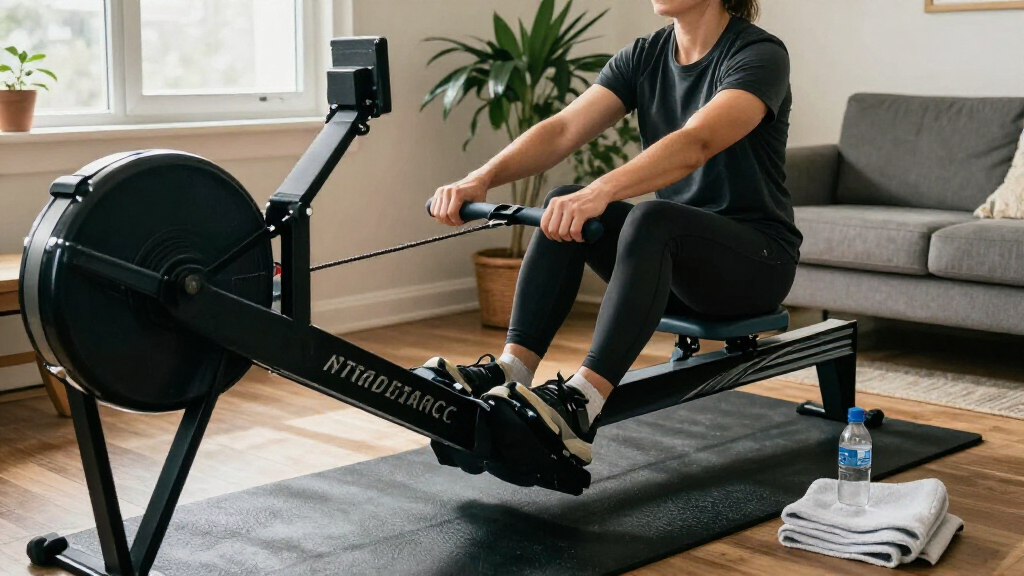
I ranked these indoor rowing machines for home by how well their resistance systems, stroke setup, and monitors suit repeatable workouts in a household setting. I also weighed space needs, storage and folding claims, noise considerations, stated weight capacity, app connectivity, and the likely upkeep associated with each design. A machine’s headline feature mattered only when it translated into a practical benefit for a home user.
The Concept2 RowErg ranks first because its air resistance and PM5 monitor make it the most flexible pick across training styles. Quiet magnetic models follow for buyers who prioritize shared-space use and accessible workouts; compact hydraulic machines are ranked for space-conscious or occasional users, not as direct substitutes for a full-size rower. I treat the remaining picks as distinct alternatives, since differences such as dual rails, scull-style arms, and monitor or app support can matter more to certain buyers than a single overall ranking.
Factors to Consider When Choosing Indoor Rowing Machines For Home
Choosing a home rower is less about collecting the most features and more about matching the machine to your room, workout habits, and preferred stroke. I’d use these factors to check whether a model will work day to day, not just on paper.
Match Resistance to Your Training and Household
Air, magnetic, and hydraulic resistance each create a different ownership experience. Air resistance is a strong fit for workouts where effort can rise with stroke intensity, but it usually produces more sound than a magnetic system. Magnetic rowers tend to suit shared rooms or early and late sessions, though the feel and resistance range vary by model. Hydraulic designs can keep the machine compact, but their shorter or different stroke mechanics may not satisfy someone training for long rowing sessions. If possible, compare the type of motion you want before treating resistance levels as a direct measure of workout quality.
Measure the Whole Workout Footprint
Check the machine’s operating length, not just its folded or stored dimensions. You need room for the seat to travel and for your body to move through a full stroke, plus access to get on and off safely. Folding frames can help, but only if you have a suitable place to store the machine and can move it without strain. Also account for ceiling height, nearby furniture, and the path from storage to workout area. A compact model that fits but limits your movement is a poor space-saving trade.
Think About Stroke Fit and Frame Stability
A rower should let you move comfortably through the catch and finish without feeling cramped or unstable. Buyers with longer legs or a larger build should look beyond the advertised weight capacity and check the rail length, seat travel, and handle reach where those details are available. Dual rails can offer a stable seat path, while a single rail may have a different feel and footprint. A machine that rocks or feels awkward can discourage regular use even if its resistance system is appealing. If fit information is unclear, confirm dimensions and return terms before ordering.
Decide Which Data and App Features You Will Use
Some buyers want basic workout feedback; others need pace, distance, or session tracking to follow a plan. A device holder or app connection can make guided workouts easier to follow, but it does not guarantee that the built-in monitor supplies the metrics you care about. Check whether an app is optional, what it connects to, and whether you can row without a subscription or phone nearby. A simpler monitor may be perfectly adequate for steady cardio, while structured training benefits from clear, consistent data. Choose the screen and connectivity around your actual routine rather than the feature list.
Factor in Noise, Maintenance, and Shared Use
Noise can affect whether a home rower works in an apartment, a shared living space, or a room near sleeping areas. Magnetic models are often the quieter direction, while air systems produce the sound of moving air and hydraulic units have their own mechanical character. Ask who else uses the room and when workouts are likely to happen. Maintenance needs also differ: moving parts, rails, and storage mechanisms call for routine attention, so check the maker’s care instructions before purchase. A quieter machine is not automatically the right choice if its fit or workout style does not suit you.
Pay for Useful Training Features, Not a Long Feature List
Spending more makes sense when the added monitor, resistance behavior, stability, or build quality solves a real problem for your training. It may not be worthwhile to pay extra for app connectivity you will not use or a high resistance-level count that does not produce a comfortable stroke. For beginners, ease of setup and a manageable learning curve may matter more than advanced tracking. Regular, performance-focused rowers should place more weight on stroke consistency and workout data. Compare the features against how often and how seriously you plan to row.
Frequently Asked Questions
Is an air rower or a magnetic rower a better fit for an apartment?
A magnetic model is usually the safer starting point when noise could disturb neighbors or other people at home. Air rowers create noticeable airflow sound, which some users enjoy but others may find disruptive in a shared building. The machine’s location, floor surface, and workout time also affect how much sound carries. If you want the air-rowing feel, check the room setup and consider whether your schedule allows louder sessions. Choose based on the household’s real noise limits, not only the machine’s resistance category.
Can a compact hydraulic rower replace a full-size machine for regular training?
It can support regular exercise, but it may not feel like a full-size rower or suit every training goal. Compact hydraulic designs are useful when storage space is the main constraint and workouts are shorter or more general. Buyers planning longer sessions or a rowing-specific routine should check the stroke length and movement before choosing one. A full-size machine generally gives more room to move through a rowing stroke, though it takes more space. Treat compactness as a priority with a real tradeoff, not a free upgrade.
Should I choose a rower with app support or a better monitor?
Pick the feature that supports the way you plan to train. App support can provide guided sessions and motivation, but it may rely on your phone or a separate service, and it does not necessarily mean the machine reports detailed workout data. A monitor is more useful if you want to track sessions directly from the rower or follow a repeatable workout without another device. Check which metrics are shown and whether the app works with your existing devices. If you are unsure, prioritize clear basic feedback over connectivity you may not use.
How do I know whether a rower will fit my height and build?
Start with the machine’s rail length, seat travel, handle reach, and stated weight capacity rather than relying on a general label such as full-body. The listed capacity is a safety and use specification, but it does not confirm that the stroke will feel comfortable for your proportions. Look for a complete set of dimensions and compare it with the space needed for your legs to extend during a stroke. If fit details are missing, ask the manufacturer or seller before buying. A return policy is especially useful when you cannot try the machine first.
Is it worth paying extra for a performance-focused rower if I’m a beginner?
It depends on whether you expect to follow structured workouts or build toward regular rowing. A performance-focused machine can make pace and session tracking easier, which may help if you want measurable progress from the start. A beginner who mainly wants occasional cardio may be better served by a simpler, quieter rower that fits the room and feels easy to use. Avoid paying for advanced features just because they sound more capable. Choose the machine you are likely to use consistently, then weigh an upgrade against your actual training plans.
Conclusion
My best overall pick is the Concept2 RowErg for buyers who want a versatile air rower and a monitor suited to structured training. For best value, I’d compare the straightforward magnetic options, including the YOSUDA 16-Level and Dripex, against the features you will actually use rather than choosing by level count alone. The Sunny Health & Fitness Smart Magnetic Rower is my best fit for buyers prioritizing quieter workouts and app-connected sessions, while the FEIERDUN Hydraulic Rower makes the most sense for a small home where storage space takes priority. Beginners who want a clear training platform can start with the RowErg; those who want a quieter, simpler routine may prefer a magnetic model. For buyers seeking a more specialized stroke or feature set, compare the scull-style Merach RS3 or the dual wind-and-magnetic pooboo with the conventional rail rowers before deciding.
Halloween Picks
halloween
As an affiliate, we earn on qualifying purchases.