For most home gyms, I’d start with the Concept2 RowErg: its performance-focused monitor and proven air-resistance design make it the strongest all-around choice for structured training. The YOSUDA 16-Level Magnetic Rower is a quieter alternative for everyday workouts, while the Sunny Health & Fitness Compact Hydraulic Rower suits homes where storage space matters most. The main tradeoffs are noise versus quiet operation, full-body rowing feel versus compact storage, and simple workouts versus connected features. A machine that fits your space and training habits is more useful than one with features you won’t use. Read on for my comparison of all 15 options and guidance on choosing the right fit.

Get workout gear delivered free with Prime
- Fast, free delivery on millions of items
- Prime Video, Amazon Music and more included
- Member-only deals all year
Complete the kit


Key Takeaways
- Concept2 RowErg leads for training feedback: its PM5 monitor gives it a stronger case for structured workouts than the more basic magnetic options.
- Magnetic models prioritize a quieter home workout: YOSUDA, YPOO, Dripex, and several MERACH and Sunny Health & Fitness machines offer multiple resistance settings, but feature overlap makes fit and usability key differentiators.
- Storage and rowing feel pull in different directions: compact hydraulic designs save room, while full-motion and dual-rail styles may better suit buyers seeking a more involved stroke.
- Self-powered models avoid a power-cord constraint: the TOUSAINS ER7 and MERACH NovaRow R7 may appeal where outlet placement is inconvenient, though buyers should compare their features with simpler magnetic alternatives.
- Several products share similar names or resistance formats: the two YOSUDA entries and multiple Sunny models need careful model-level comparison rather than a brand-name shortcut.
| MAJOR FITNESS Drone R1 Indoor Rowing Machine |  | Best Air-Resistance Pick for Adjustable Storage | Resistance: Air; 10 damper levels | Frame: Aluminum alloy | Maximum capacity: 330 lbs | VIEW LATEST PRICE | See Our Full Breakdown |
| YOSUDA Magnetic Rowing Machine with 16-Level Resistance |  | Best for Quiet, Progressive Training | Resistance: Magnetic; 16 levels | Maximum load capacity: 350 lbs | Recommended user height: 4’5″–5’11” | VIEW LATEST PRICE | See Our Full Breakdown |
| Concept2 RowErg Indoor Rowing Machine with PM5 Monitor and Device Holder |  | Best for Performance Tracking and Long-Term Training | Resistance: Adjustable air resistance | Monitor: Performance Monitor 5 (PM5) | Connectivity: Bluetooth and ANT+ | VIEW LATEST PRICE | See Our Full Breakdown |
| YPOO RM930 Magnetic Rowing Machine with 16-Level Resistance |  | Best Compact Magnetic Pick for Taller Rowers | Resistance: Magnetic; 16 levels | Maximum user weight: 350 lb | Suggested user height: 4 ft 5 in to 6 ft 3 in | VIEW LATEST PRICE | See Our Full Breakdown |
| TOUSAINS ER7 Self-Powered Magnetic Rowing Machine |  | Best High-Capacity Self-Powered Pick | Resistance: Magnetic; 32 levels | Power source: Self-powered | Maximum weight capacity: 400 pounds | VIEW LATEST PRICE | See Our Full Breakdown |
| Dripex Magnetic Rowing Machine with 16 Resistance Levels |  | Best for Quiet, Compact Training | Resistance: 16 magnetic levels; maximum resistance listed as 66 lb | Flywheel: 12 lb | Rail: Dual steel slide rails; 48.8 inches | VIEW LATEST PRICE | See Our Full Breakdown |
| Sunny Health & Fitness Smart Full-Motion Rowing Machine | 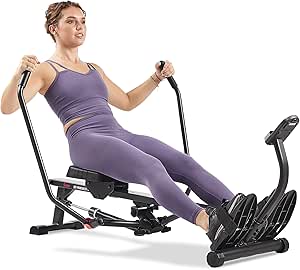 | Best for Full-Motion Variety | Model: SF-RW5639SMART | Resistance: 12 hydraulic tension levels | Dimensions: 55.7 x 22.6 x 29.1 inches | VIEW LATEST PRICE | See Our Full Breakdown |
| MERACH Q1S Magnetic Rowing Machine with Dual Slide Rail |  | Best for Guided App Workouts | Resistance: Magnetic; 16 levels | Weight capacity: 350 lb | Dimensions: 65 x 19.3 x 24.8 inches | VIEW LATEST PRICE | See Our Full Breakdown |
| Sunny Health & Fitness Smart Magnetic Rowing Machine |  | Best for a Longer Rail and Simple Storage | Model: SF-RW523021 | Resistance: 16-level magnetic | Rail length: 50 inches | VIEW LATEST PRICE | See Our Full Breakdown |
| Sunny Health & Fitness Smart Magnetic Rower |  | Best for Bluetooth-Connected Basics | Model: SF-RW524079 | Resistance: 16 manual magnetic levels | Drive system: Belt drive | VIEW LATEST PRICE | See Our Full Breakdown |
| MERACH NovaRow R7 Self-Powered Magnetic Rowing Machine |  | Best for Strong, Outlet-Free Training | Resistance mechanism: Electromagnetic | Maximum resistance: 130 lbs | Maximum user load: 400 lbs | VIEW LATEST PRICE | See Our Full Breakdown |
| MERACH RS3 Magnetic Scull Rowing Machine |  | Best for Multi-Movement Workouts | Resistance mechanism: Magnetic | Resistance levels: 16 adjustable levels | Maximum resistance: 88 lbs | VIEW LATEST PRICE | See Our Full Breakdown |
| UMAY RW505 Magnetic Rowing Machine with Dual Slide Rails | 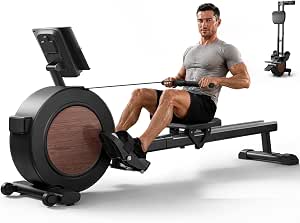 | Best Compact, Self-Powered Pick | Resistance type: Magnetic | Resistance levels: 16 | Maximum resistance: 110 lbs | VIEW LATEST PRICE | See Our Full Breakdown |
| Sunny Health & Fitness Compact Hydraulic Rower with 12-Level Resistance |  | Best Lightweight Pick for Small Spaces | Resistance: 12-level hydraulic | Dimensions: 58.1 x 20.1 x 24.8 in | Weight: 22.4 lb | VIEW LATEST PRICE | See Our Full Breakdown |
| YOSUDA Magnetic Rowing Machine with 16-Level Resistance |  | Best for Taller Rowers on a Straight Rail | Resistance mechanism: Magnetic | Resistance levels: 16 | Slide rail length: 50.2 inches | VIEW LATEST PRICE | See Our Full Breakdown |
| rowing machines for home gym | Resistance | Warranty | Dimensions |
|---|---|---|---|
| MAJOR FITNESS Drone R1 Indoor | Air; 10 damper levels | 1 year | 95.7 x 19.3 x 50 in (D x W x H) |
| YOSUDA Magnetic Rowing Machine | Magnetic; 16 levels | 1 year | 59 x 19 x 25 in |
| Concept2 RowErg Indoor Rowing | Adjustable air resistance | Limited 2-year and 5-year warranty | — |
| YPOO RM930 Magnetic Rowing Mac | Magnetic; 16 levels | — | — |
| TOUSAINS ER7 Self-Powered Magn | Magnetic; 32 levels | — | 63.58 x 16.34 x 31.89 in (D x W x H) |
| Dripex Magnetic Rowing Machine | 16 magnetic levels; maximum resistance listed as 66 lb | 1 year | — |
| Sunny Health & Fitness Smart F | 12 hydraulic tension levels | 3 years on structural frame; 180 days on other parts and components | 55.7 x 22.6 x 29.1 inches |
| MERACH Q1S Magnetic Rowing Mac | Magnetic; 16 levels | — | 65 x 19.3 x 24.8 inches |
| Sunny Health & Fitness Smart M | 16-level magnetic | 3 years on structural frame; 180 days on other parts and components | — |
| Sunny Health & Fitness Smart M | 16 manual magnetic levels | 3 years on structural frame; 180 days on other parts and components | — |
| MERACH NovaRow R7 Self-Powered | — | 2 years | — |
| MERACH RS3 Magnetic Scull Rowi | — | 12 months | 60 x 28.3 x 29.5 in (D x W x H) |
| UMAY RW505 Magnetic Rowing Mac | — | 1 year | — |
| Sunny Health & Fitness Compact | 12-level hydraulic | 3-year structural frame; 180 days for other parts and components | 58.1 x 20.1 x 24.8 in |
| YOSUDA Magnetic Rowing Machine | — | — | 64.57 x 17.72 x 28.35 inches |
More Details on Our Top Picks
MAJOR FITNESS Drone R1 Indoor Rowing Machine
The Drone R1 suits home-gym users who want air resistance and a machine that can be stored upright between sessions. Its 10 damper levels let you adjust airflow, while resistance also responds to how forcefully you row, giving workouts a different feel from the fixed magnetic settings on the YOSUDA US-181. The monitor runs without batteries or external power, and the adjustable foot pedals and cushioned seat add useful comfort details for regular training.
The tradeoff is its full-size footprint: at 95.7 inches long, it needs substantial room while in use. Folding helps after a workout, but the 77-pound frame may be awkward to lift upright. Compared with the Concept2 RowErg, the Drone R1 offers a similar air-resistance approach but has a simpler listed monitor and a shorter warranty. I’d choose it for flexible air rowing and upright storage, not for the smallest workout area or extensive performance tracking.
Pros:- Air resistance responds to rowing effort, with 10 damper settings for adjusting the feel.
- Folds upright and includes transport wheels for storage and repositioning.
- Monitor displays distance, speed, stroke count, and time without batteries or external power.
- Adjustable anti-slip foot pedals and a cushioned seat support a more comfortable rowing position.
Cons:- Its 95.7-inch operating length calls for substantial floor space.
- At 77 pounds, lifting it for upright storage may take effort.
- The listed one-year warranty is shorter than the Concept2 RowErg warranty.
Best for: Home-gym owners who want responsive air resistance, battery-free workout data, and upright storage after training.
Not ideal for: People with limited workout space or anyone who needs a lightweight machine that is easy to lift and move.
- Resistance:Air; 10 damper levels
- Frame:Aluminum alloy
- Maximum capacity:330 lbs
- Item weight:77 lbs
- Dimensions:95.7 x 19.3 x 50 in (D x W x H)
- Monitor:LCD; distance, speed, stroke count, and time
- Storage:Folds for upright storage; transport wheels
- Warranty:1 year
Our verdict“Choose the Drone R1 if you want adjustable air resistance and fold-away storage, and have room for a long machine during workouts.”
YOSUDA Magnetic Rowing Machine with 16-Level Resistance
The YOSUDA US-181 is a practical fit for shared homes where a quieter rowing session matters more than the longer, effort-responsive feel of an air rower such as the MAJOR FITNESS Drone R1. Its 16 magnetic resistance levels provide a straightforward way to progress from lighter sessions to more demanding ones, while smooth rollers are intended to keep movement quiet. Bluetooth app support adds a route to connected workouts, and the monitor tracks time, distance, counts, strokes, and calories.
Its clearest limitation is fit: YOSUDA recommends it for users between 4’5" and 5’11", so taller rowers should look at the YPOO RM930, which lists a suggested maximum height of 6’3". The stated 59-inch dimensions also describe a much shorter machine than the Drone R1, but not necessarily a full-length workout position for every body. I’d pick this for quiet, accessible magnetic training, while buyers needing a higher user-height range should skip it.
Pros:- Sixteen magnetic resistance levels support gradual changes in workout difficulty.
- Magnetic resistance and PU rollers are designed for smooth, quiet operation.
- Bluetooth app support complements a monitor that displays several workout metrics.
- 350-pound maximum load capacity.
Cons:- Recommended user height stops at 5’11”, which may exclude taller rowers.
- A one-year warranty offers limited coverage compared with the Concept2 RowErg’s listed warranty.
- Magnetic resistance does not respond to rowing effort in the same way as air resistance.
Best for: Households seeking quiet magnetic workouts and app connectivity, especially users within the listed 4’5″–5’11” height range.
Not ideal for: Rowers taller than 5’11” or buyers who want the effort-responsive feel of air resistance.
- Resistance:Magnetic; 16 levels
- Maximum load capacity:350 lbs
- Recommended user height:4’5″–5’11”
- Dimensions:59 x 19 x 25 in
- Monitor metrics:Time, distance, total count, stroke count, and calories
- Connectivity:Bluetooth app support
- Warranty:1 year
- Assembly time:Approximately 25 minutes
Our verdict“Pick the YOSUDA US-181 for quiet, app-connected magnetic rowing if every intended user fits its recommended height range.”
Concept2 RowErg Indoor Rowing Machine with PM5 Monitor and Device Holder
The Concept2 RowErg earns its place for home-gym buyers who want detailed training data and broad connectivity, rather than the simpler workout readouts offered by the MAJOR FITNESS Drone R1. Its PM5 monitor supports Bluetooth and ANT+, making it a better match for people who use training apps or compatible heart-rate monitors. Air resistance adjusts with rowing effort, and the machine separates into two pieces with caster wheels, so storage does not require lifting the entire rower upright.
This is still a full-size machine: the recommended workout area is 9 x 4 feet, so it is not a compact-room solution. The monitor also uses two D-cell batteries, although it draws power from the flywheel during workouts. Compared with the magnetic YOSUDA US-181, the RowErg offers air resistance and a more connected performance-monitor setup, but asks for a larger space. I’d favor it for structured training; casual users seeking quiet, compact magnetic rowing may prefer another pick.
Pros:- PM5 monitor supports Bluetooth and ANT+ connectivity for apps and compatible heart-rate monitors.
- Air resistance varies with rowing effort for a responsive workout feel.
- Separates into two pieces and includes caster wheels for easier storage and moving.
- 500-pound user capacity, adjustable footrests, ergonomic handle, and device holder.
Cons:- Requires a recommended workout space of 9 x 4 ft.
- The monitor requires two D-cell batteries, even though it also draws power during workouts.
- Air resistance may be a less suitable fit for buyers prioritizing very quiet operation.
Best for: Regular rowers who track performance, use connected training devices, and can dedicate a 9 x 4 ft workout area.
Not ideal for: Small-space buyers or casual users who want a compact, quiet magnetic machine with minimal setup needs.
- Resistance:Adjustable air resistance
- Monitor:Performance Monitor 5 (PM5)
- Connectivity:Bluetooth and ANT+
- User capacity:500 lb
- Seat height:14 in
- Recommended space:9 x 4 ft
- Storage:Separates into two pieces; caster wheels
- Warranty:Limited 2-year and 5-year warranty
Our verdict“Choose the RowErg for connected performance tracking and responsive air rowing if you have room for its full-size footprint.”
YPOO RM930 Magnetic Rowing Machine with 16-Level Resistance
The YPOO RM930 stands out among the magnetic options for buyers who need a more accommodating listed height range without choosing a long air rower. YPOO suggests it for users from 4’5" to 6’3", a broader upper limit than the YOSUDA US-181’s 5’11" recommendation. Sixteen resistance levels and compatibility with YPOOFIT and Kinomap add room to vary sessions, while the LCD tracks time, distance, strokes per minute, calories, and count.
Its 46-inch slide rail is the compromise behind the more compact approach: it may not suit people who want a longer rowing stroke or a larger-feeling machine. Vertical storage and transport wheels help reclaim floor space, unlike the RowErg’s 9 x 4 ft recommended workout area, but the RM930 still needs room to operate. The app and display features also depend on a separate phone or tablet for a larger viewing experience. I’d choose it for a space-conscious home gym, not for users seeking a long rail or built-in screen entertainment.
Pros:- Recommended user height extends to 6’3″, above the YOSUDA US-181’s listed 5’11” limit.
- Sixteen magnetic resistance levels and compatibility with YPOOFIT and Kinomap.
- Vertical storage and transport wheels help reduce the machine’s storage footprint.
- Steel frame rated for up to 350 lb.
Cons:- The 46-inch slide rail may feel short for users who prefer a longer rowing stroke.
- App use and a larger viewing experience may require a separate phone or tablet.
- Its compact format may not suit buyers seeking a full-size, long-rail rower.
Best for: Space-conscious households wanting magnetic resistance, app compatibility, and a recommended height range that includes rowers up to 6’3″.
Not ideal for: Taller users who need more than a 46-inch rail, or buyers who want a large integrated screen rather than a separate device.
- Resistance:Magnetic; 16 levels
- Maximum user weight:350 lb
- Suggested user height:4 ft 5 in to 6 ft 3 in
- Slide rail:46 in
- Resistance noise:Less than 25 dB
- Display metrics:Time, strokes per minute, distance, calories, and count
- App compatibility:YPOOFIT and Kinomap
- Storage:Vertical storage; transport wheels
Our verdict“Pick the RM930 if you need a stowable magnetic rower with a higher recommended user-height limit, and accept its shorter rail.”
TOUSAINS ER7 Self-Powered Magnetic Rowing Machine
The TOUSAINS ER7 is the strongest fit here for buyers who want magnetic resistance, a high stated weight capacity, and no external power connection for the monitor. Its 32 resistance levels offer finer adjustment than the 16-level YOSUDA US-181 and YPOO RM930, while the self-powered system generates monitor power as you row. The dual-rail design, 400-pound capacity, and 210 cm rail make it a more substantial option for home users who want room to train and a machine built around a higher load limit.
That capability comes with a space tradeoff: its listed operating length is 63.58 inches, so it still needs a dedicated workout spot. It folds upright and has transport wheels, but the product data does not provide a user-height range, leaving fit less clearly defined than on the YPOO RM930. Unlike the air-resistance Drone R1, the ER7 uses magnetic settings rather than resistance that changes with rowing effort. I’d pick it for capacity and resistance adjustment, while buyers needing documented height guidance should compare alternatives.
Pros:- Self-powered system operates the LCD monitor as you row, without external electricity or batteries.
- Thirty-two magnetic resistance levels provide more adjustment steps than the 16-level YOSUDA US-181 and YPOO RM930.
- 400-pound maximum capacity and a 210 cm rail.
- Folds upright and includes transport wheels.
Cons:- The 63.58-inch listed length requires dedicated room during workouts.
- Product data does not specify a recommended user-height range.
- Magnetic resistance does not vary with rowing effort like the air-based Drone R1.
Best for: Home-gym users who want a 400-pound capacity, many magnetic resistance settings, and a monitor that runs without external power.
Not ideal for: Buyers with limited operating space or rowers who need a clearly stated user-height recommendation before choosing a machine.
- Resistance:Magnetic; 32 levels
- Power source:Self-powered
- Maximum weight capacity:400 pounds
- Rail length:210 cm
- Dimensions:63.58 x 16.34 x 31.89 in (D x W x H)
- Frame material:Iron
- Connectivity:KINOMAP compatible
- Storage:Folds upright; transport wheels
Our verdict“Choose the ER7 if high capacity, fine magnetic resistance adjustment, and self-powered monitoring matter more than a small operating footprint.”
Dripex Magnetic Rowing Machine with 16 Resistance Levels
The Dripex is a strong fit for a home gym where quiet operation and easy storage matter more than a long rail. Its 16 magnetic resistance levels offer finer adjustment than the Sunny Health & Fitness Smart Full-Motion Rowing Machine, whose 12 hydraulic levels pair with a distinctly different arm-driven stroke. Dripex uses dual steel rails and a padded seat, while Bluetooth adds workout tracking and video access when paired with a compatible device. At a stated noise level below 15 decibels, it suits shared rooms better than many louder training setups. The tradeoff is the 48.8-inch rail, which may restrict fit for some users despite the listed height range. I’d choose it for controlled, low-noise sessions, but not for buyers seeking a long, performance-focused slide.
Pros:- Sixteen magnetic resistance levels allow incremental intensity changes.
- Dual steel rails and a padded seat support a stable, comfortable stroke.
- Bluetooth connectivity and an LCD monitor support workout tracking and training-video access.
- Transport wheels and vertical storage suit tight home-gym spaces.
Cons:- The 48.8-inch rail may feel restrictive for users near the limits of its stated height range.
- Bluetooth features require a compatible personal device.
- The one-year warranty is shorter than the frame coverage listed for the Sunny Health & Fitness rowers in this group.
Best for: Apartment or shared-home exercisers who want quiet magnetic resistance, Bluetooth workout features, and upright storage.
Not ideal for: Taller rowers who need extra slide length, or buyers who want connected features without supplying their own Bluetooth-compatible device.
- Resistance:16 magnetic levels; maximum resistance listed as 66 lb
- Flywheel:12 lb
- Rail:Dual steel slide rails; 48.8 inches
- User fit:Stated height range: 4 ft 5 in to 6 ft 5 in
- Weight capacity:360 lb
- Noise:Below 15 decibels, per product data
- Connectivity and metrics:Bluetooth; scan, distance, time, calories, count, and total count
- Storage and setup:Vertical storage; partially pre-assembled; approximately 20 minutes to assemble
- Warranty:1 year
Our verdict“Choose the Dripex for quiet, compact magnetic rowing with connected features, provided its rail length suits your body.”
Sunny Health & Fitness Smart Full-Motion Rowing Machine
The defining difference here is the 360-degree dual-arm motion: this is not the fixed-track rowing feel offered by the MERACH Q1S or Sunny Health & Fitness SF-RW523021. That arm movement gives home workouts a broader, more open-ended motion, and the 12 hydraulic resistance levels let users adjust effort without adding a large flywheel system. Its 400 lb capacity is the highest stated among these five options, while the elevated padded seat and non-slip contact points support a secure setup. The compact dimensions and app-based rowing simulation also make it approachable for varied home routines. The compromise is hydraulic resistance, which differs in feel and progression from the magnetic systems in the lineup, plus a battery-powered monitor. I’d pick it for movement variety, not for a conventional rail-based stroke.
Pros:- 360-degree dual arms allow a full-motion rowing movement distinct from fixed-rail machines.
- Twelve hydraulic tension levels provide adjustable workout effort.
- The stated 400 lb weight capacity exceeds the other products in this batch.
- Compact footprint, padded elevated seat, and non-slip grips and pedals suit home use.
Cons:- Hydraulic resistance provides a different rowing feel from the magnetic systems in this roundup.
- The LCD monitor needs two AAA batteries.
- The listed warranty is 180 days for parts and components, despite longer structural-frame coverage.
Best for: Home exercisers who want a compact machine with free-moving arms, adjustable effort, and a high stated weight capacity.
Not ideal for: Rowers seeking the familiar back-and-forth rail stroke or the quieter magnetic resistance offered by the Dripex and MERACH Q1S.
- Model:SF-RW5639SMART
- Resistance:12 hydraulic tension levels
- Dimensions:55.7 x 22.6 x 29.1 inches
- Weight capacity:400 lb
- Item weight:16.5 kg
- Frame:Alloy steel
- Display and power:LCD digital monitor; two AAA batteries included
- App:SunnyFit app with rowing simulation
- Warranty:3 years on structural frame; 180 days on other parts and components
Our verdict“Pick this Sunny model if full-motion arms and a high capacity matter more to you than a traditional rail-based rowing stroke.”
MERACH Q1S Magnetic Rowing Machine with Dual Slide Rail
The Q1S is the app-centered pick in this group, pairing 16 magnetic resistance levels with MERACH and KINOMAP compatibility for guided courses and workout tracking. That makes it more appealing to buyers who want structure than the Dripex, whose Bluetooth features include video access but whose supplied metrics are less extensive. The Q1S also has a dual-slide rail and supports users up to 6 ft 5 in, with a stated 350 lb capacity. Its 42 lb machine weight and built-in wheels help with repositioning, though this is not a rower that disappears from a room: the listed use area is 1.6 x 5.7 ft. Compared with the Sunny SF-RW524079, it offers app compatibility and a longer stated height fit, but needs about 30 minutes for assembly. Choose it for guided training, not for minimal setup or no-device workouts.
Pros:- Sixteen magnetic resistance levels and a quiet flywheel support adjustable home workouts.
- MERACH and KINOMAP app compatibility offers courses and performance tracking.
- Dual slide rails and a stated fit for users up to 6 ft 5 in suit a range of rowers.
- Built-in wheels help move the 42 lb machine.
Cons:- The recommended workout area is 1.6 x 5.7 ft, so it needs dedicated floor space.
- Phones and tablets are not included for app use.
- Assembly takes about 30 minutes, longer than the listed estimate for the Dripex.
Best for: Home rowers who want guided app courses, performance metrics, and a magnetic dual-rail machine sized for users up to 6 ft 5 in.
Not ideal for: People without a dedicated workout area or those who want a ready-to-use screen and do not want to supply a phone or tablet.
- Resistance:Magnetic; 16 levels
- Weight capacity:350 lb
- Dimensions:65 x 19.3 x 24.8 inches
- Machine weight:42 lb
- User fit:Up to 6 ft 5 in
- Seat:9.5 x 11.5 x 2.3 inches
- App compatibility:MERACH app and KINOMAP
- Workout and storage space:Recommended use space: 1.6 x 5.7 ft; storage space: 1.6 x 2.1 ft
- Warranty and assembly:12 months; assembly about 30 minutes
Our verdict“Choose the Q1S if app-guided sessions and a longer stated height fit matter more than a smaller storage footprint.”
Sunny Health & Fitness Smart Magnetic Rowing Machine
Among these Sunny models, the SF-RW523021 is the better fit for buyers who want a 50-inch rail without moving up to an app-focused machine like the MERACH Q1S. Sixteen magnetic levels offer quiet, low-impact resistance, and the semi-pivoting pedals and padded seat focus on comfort through repeated strokes. Its adjustable LCD monitor includes useful pace measures such as strokes per minute and 500-meter split, while SunnyFit adds an app option. Transport wheels and upright storage help reclaim floor space between workouts. The main compromise is its 300 lb capacity, below the Dripex and MERACH Q1S, and the parts warranty is limited to 180 days. It makes more sense than the SF-RW524079 for buyers prioritizing the longer rail, but the latter has Bluetooth connectivity explicitly listed.
Pros:- A 50-inch rail provides more slide length than the 45.7-inch rail on the Sunny SF-RW524079.
- Sixteen magnetic resistance levels support quiet, adjustable workouts.
- The monitor tracks pace-focused metrics, including strokes per minute and 500-meter split.
- Transport wheels and upright storage help conserve home-gym floor space.
Cons:- The maximum user capacity is 300 lb, lower than the Dripex and MERACH Q1S in this batch.
- Parts and components have a listed warranty of 180 days.
- The supplied product data does not state a machine footprint or user-height range.
Best for: Home rowers who want a quiet magnetic machine with a 50-inch rail, pace metrics, and upright storage.
Not ideal for: Buyers above the 300 lb stated capacity or those who prioritize longer parts coverage over the listed frame warranty.
- Model:SF-RW523021
- Resistance:16-level magnetic
- Rail length:50 inches
- Maximum user capacity:300 lb
- Monitor metrics:Time, count, distance, calories, total counts, SPM, T/500m, and pulse
- App:SunnyFit
- Storage:Upright; transport wheels
- Warranty:3 years on structural frame; 180 days on other parts and components
Our verdict“Choose this Sunny rower for a longer rail, pace metrics, and upright storage if its 300 lb capacity fits your needs.”
Sunny Health & Fitness Smart Magnetic Rower
This Sunny model keeps the feature set straightforward: 16 manual magnetic resistance levels, a belt drive, and Bluetooth access to SunnyFit workouts without a subscription. Its dual-rail construction and upright storage make it a practical home-gym option, while the LCD tracks distance, strokes, estimated calories, and 500-meter split. Compared with the SF-RW523021, this machine has a shorter 45.7-inch rail but explicitly lists Bluetooth connectivity; compared with the MERACH Q1S, its supplied data does not specify guided course compatibility or a user-height limit. The tension knob means resistance changes are manual rather than app-controlled, and the 40.9-inch listed slide-rail inseam may not suit every body. I’d choose it for app connectivity and simple storage, but not for rowers who need the longest available slide.
Pros:- Sixteen magnetic resistance levels provide a range of manually selected effort.
- Bluetooth supports SunnyFit app workouts without a subscription.
- The LCD tracks several useful workout measures, including strokes per minute and 500-meter split.
- Dual rails, transport wheels, and upright storage suit home-gym use.
Cons:- The 45.7-inch rail is shorter than the 50-inch rail on the Sunny SF-RW523021.
- Resistance changes require turning a manual tension knob.
- The 40.9-inch listed slide-rail inseam may limit fit for some users.
Best for: Home exercisers seeking Bluetooth-linked SunnyFit workouts, a belt-driven magnetic rower, and upright storage.
Not ideal for: Taller rowers who need a longer slide or buyers who want app-controlled resistance rather than a manual tension knob.
- Model:SF-RW524079
- Resistance:16 manual magnetic levels
- Drive system:Belt drive
- Rail and inseam:45.7-inch slide rail; 40.9-inch slide-rail inseam
- Weight capacity:300 lb
- Monitor metrics:Time, distance, estimated calories, stroke count, total strokes, strokes per minute, and 500-meter split
- Connectivity and app:Bluetooth; SunnyFit
- Storage:Upright; transport wheels
- Warranty:3 years on structural frame; 180 days on other parts and components
Our verdict“Pick this Sunny model for Bluetooth-linked workouts and upright storage if its shorter slide length works for your stride.”
MERACH NovaRow R7 Self-Powered Magnetic Rowing Machine
The NovaRow R7 is a strong fit for a home gym where users want a broad resistance range without positioning the rower near an outlet. Its self-powered electromagnetic system reaches 130 lbs of stated resistance, more than the 88 lbs listed for the MERACH RS3, while the 49.2-inch slide gives room for a full stroke. Quiet rollers and aluminum rails suit shared spaces where workout noise matters. App classes and games add guided options, though they depend on the MERACH app rather than working as a standalone feature. The 400 lb capacity is also the highest among these five picks. The tradeoff is that its 5 W USB-C reverse charging is modest, and its display tracks fewer metrics than the RS3’s. I’d choose it over the RS3 for heavier, conventional rowing, not for multi-movement training.
Pros:- Self-powered operation avoids needing an outlet beside the rower.
- Stated 130 lb maximum resistance exceeds the RS3’s listed 88 lb.
- 400 lb maximum user load is the highest in this group.
- 49.2-inch sliding distance and app-connected workouts support longer, varied sessions.
Cons:- The 5 W USB-C reverse-charging output is limited for charging devices during workouts.
- App classes and games require connecting to the MERACH app.
- The display omits stroke count, which the RS3 tracks.
Best for: Home-gym users who want self-powered magnetic rowing, substantial stated resistance, and a high weight capacity without needing an outlet.
Not ideal for: Buyers who want detailed stroke metrics, stronger device charging, or exercise variety from dual-oar movements rather than standard rowing.
- Resistance mechanism:Electromagnetic
- Maximum resistance:130 lbs
- Maximum user load:400 lbs
- Power source:Self-generated
- Sliding distance:49.2 inches
- Seat height:11.4 inches
- Display metrics:Calories burned, distance, speed, and time
- USB-C reverse charging:5 W
- Warranty:2 years
Our verdict“Choose the NovaRow R7 if high stated resistance, self-powered use, and a 400 lb capacity matter more than expanded workout metrics or dual-oar exercise variety.”
MERACH RS3 Magnetic Scull Rowing Machine
Unlike the straight-track YOSUDA RM-185, the MERACH RS3 uses dual oars and a 120° stroke arc to bring a sculling-style motion into a home gym. That difference matters if you want more than a conventional pull: interchangeable handles and app support are intended to cover rowing plus 26 or more strength movements. Its 16 magnetic resistance levels allow intensity adjustments, while quiet operation is better suited to shared rooms than a louder training setup. The cost of that versatility is a more involved routine: switching handles interrupts the flow between movements, and the 60-inch depth needs a clear floor area. The NovaRow R7 is the stronger choice for higher stated resistance and a larger capacity; the RS3 is the pick when movement variety matters more than those numbers.
Pros:- Dual oars and a 120° arc create a different movement pattern from the straight-rail YOSUDA RM-185.
- Interchangeable handles and app support accommodate 26 or more exercise options.
- Sixteen magnetic resistance levels make intensity adjustable.
- LCD tracks stroke count along with time, distance, speed, and calories.
Cons:- The listed 60-inch depth requires a dedicated floor area.
- Changing handles takes time when moving between exercise types.
- Its 88 lb stated maximum resistance and 350 lb capacity are below the NovaRow R7’s figures.
Best for: Home exercisers who want sculling-style rowing and a machine that can support strength movements beyond standard rowing.
Not ideal for: Buyers with limited floor depth, users who want quick changes between exercises, or heavier users above its 350 lb capacity.
- Resistance mechanism:Magnetic
- Resistance levels:16 adjustable levels
- Maximum resistance:88 lbs
- Stroke arc:120°
- Exercise options:26+
- Dimensions:60 x 28.3 x 29.5 in (D x W x H)
- Maximum user weight:350 lbs
- Display metrics:Calories burned, distance, speed, stroke count, and time
- Warranty:12 months
Our verdict“Pick the RS3 if you want sculling-inspired movement and strength-exercise variety, and have room for its deeper footprint.”
UMAY RW505 Magnetic Rowing Machine with Dual Slide Rails
The UMAY RW505 suits a home gym that needs a rower to move out of the way between sessions. It runs without an outlet and stands upright in a stated 2.9 sq. ft., giving it a storage advantage over the longer YOSUDA RM-185, whose listed dimensions extend to 64.57 inches. Its 49.2-inch rails, dual-rail layout, and 350 lb capacity make it a more substantial-feeling option on paper than the lighter Sunny hydraulic rower, though the products use different resistance systems. The LCD and Bluetooth app support cover basic tracking and guided workouts. The main fit limitation is the suggested height range of 4 ft 5 in to 6 ft 5 in; buyers outside it should look elsewhere. Assembly is listed at about 25 minutes, and the warranty is shorter than the NovaRow R7’s.
Pros:- Self-powered operation and upright storage help keep it practical in a shared room.
- Stated storage footprint is 2.9 sq. ft.
- Dual rails and a 350 lb capacity support a stable setup.
- Bluetooth app support, an LCD, and an adjustable tablet holder aid guided training.
Cons:- Suggested user-height range is limited to 4 ft 5 in through 6 ft 5 in.
- Assembly is required and takes about 25 minutes.
- Its 1-year warranty is shorter than the NovaRow R7’s 2-year warranty.
Best for: Home-gym owners who need self-powered magnetic resistance, upright storage, and a stated 350 lb capacity.
Not ideal for: Users taller than 6 ft 5 in or shorter than 4 ft 5 in, and anyone seeking a longer warranty or a ready-to-use machine without assembly.
- Resistance type:Magnetic
- Resistance levels:16
- Maximum resistance:110 lbs
- Weight capacity:350 lbs
- Rail design and length:25 mm dual slide rails; 49.2 in rail length
- Suggested user height:4 ft 5 in to 6 ft 5 in
- Power:Self-powered; no outlet required
- Storage:Stands upright; occupies 2.9 sq. ft.
- Warranty:1 year
Our verdict“Choose the RW505 if upright storage and outlet-free operation are priorities, provided its stated height range fits you.”
Sunny Health & Fitness Compact Hydraulic Rower with 12-Level Resistance
For a smaller home gym where easy repositioning matters more than a high user limit, the Sunny Health & Fitness SF-RW1205SMART is the lightest choice here at 22.4 lb. Its 58.1-inch length is shorter than the YOSUDA RM-185’s 64.57 inches, and its hydraulic resistance gives buyers an alternative to the magnetic systems used by the UMAY RW505 and MERACH models. Twelve resistance levels provide some adjustment, while the inclined rail is intended to make the leg drive more demanding. SunnyFit connectivity, an LCD, and a device holder support guided sessions without adding much complexity. The clear compromise is capacity: its 220 lb maximum is well below the other machines in this group. The hydraulic feel also differs from magnetic rowing, so it is a less natural match for buyers seeking that specific setup.
Pros:- At 22.4 lb, it is easier to reposition than the 54 lb YOSUDA RM-185.
- Shorter overall length than the YOSUDA RM-185 helps in tighter spaces.
- Twelve resistance levels, SunnyFit connectivity, and an LCD support adjustable guided workouts.
- Padded seat, foam-covered handlebars, and adjustable foot straps add contact-point comfort.
Cons:- The 220 lb maximum user weight is substantially below the 350 lb capacities listed for the UMAY RW505 and YOSUDA RM-185.
- Hydraulic resistance and the inclined rail feel different from conventional magnetic rowers.
- Warranty coverage is 180 days for parts and components, with a 3-year structural-frame warranty.
Best for: Apartment dwellers and occasional rowers who need a light, compact machine and weigh within its 220 lb limit.
Not ideal for: Heavier users, taller households needing more capacity flexibility, or rowers who specifically want the feel of a magnetic resistance system.
- Resistance:12-level hydraulic
- Dimensions:58.1 x 20.1 x 24.8 in
- Weight:22.4 lb
- Maximum user weight:220 lb
- Frame material:Steel
- Display metrics:Time, count, total count, calories, and scan
- Connectivity and app:Bluetooth; SunnyFit
- Warranty:3-year structural frame; 180 days for other parts and components
Our verdict“Choose this Sunny rower if you need a lightweight, compact machine and its hydraulic feel and 220 lb capacity suit your household.”
YOSUDA Magnetic Rowing Machine with 16-Level Resistance
The YOSUDA RM-185 is the straightforward pick for buyers who want a conventional magnetic rower with more slide length than the UMAY RW505. Its 50.2-inch rail and stated maximum user height of 6 ft 3 in give taller rowers a useful fit reference, while the steel mono-rail frame is rated for 350 lb. Sixteen resistance levels let users adjust workout effort, and Bluetooth app support adds connected tracking. Unlike the Sunny hydraulic option, it uses magnetic resistance; unlike the MERACH RS3, it stays focused on standard rowing rather than dual-oar exercises. The tradeoffs are practical: at 54 lb, it is much heavier than the Sunny, and the display needs two AAA batteries rather than drawing power from a self-generated system. Its 1-year warranty is also shorter than the NovaRow R7’s.
Pros:- 50.2-inch slide rail is longer than the UMAY RW505’s 49.2-inch rail.
- Stated maximum user height of 6 ft 3 in helps taller buyers judge fit.
- Sixteen magnetic resistance levels allow workout intensity adjustments.
- Steel frame is rated for a 350 lb capacity, with Bluetooth app support for tracking.
Cons:- At 54 lb, it is heavier than the 22.4 lb Sunny hydraulic rower.
- The display requires two AAA batteries rather than self-generated power.
- Its 1-year warranty is shorter than the NovaRow R7’s 2-year coverage.
Best for: Taller home rowers up to 6 ft 3 in who want a conventional magnetic machine with a 350 lb capacity and app connectivity.
Not ideal for: Users who need upright storage, a self-powered display, a machine that is especially easy to move, or a longer warranty.
- Resistance mechanism:Magnetic
- Resistance levels:16
- Slide rail length:50.2 inches
- Maximum user height:6 feet 3 inches
- Weight capacity:350 pounds
- Dimensions:64.57 x 17.72 x 28.35 inches
- Item weight:54 pounds
- Display metrics:Calories burned, distance, stroke count, and time
- Power and warranty:2 included AAA batteries; 1-year warranty
Our verdict“Choose the YOSUDA RM-185 if you want a standard magnetic rower with a longer rail and a stated fit for users up to 6 ft 3 in.”

How We Picked
I ranked these rowing machines for home gyms by how well their designs match real household needs: workout feedback, resistance style, comfort and usability, footprint, storage, and likely upkeep. I also considered how a machine’s design might affect daily use—for example, whether a quieter magnetic setup better fits shared living space or whether a fuller rowing motion is worth giving up some compactness.
The ranking favors machines with a clear advantage for a common buyer need, rather than treating a longer feature list as an automatic win. The Concept2 RowErg sits at the top for its training-focused monitor and broad workout appeal; quieter magnetic models follow for home-friendly operation and accessible resistance choices. Compact, hydraulic, full-motion, and self-powered options earn distinct roles, but rank lower overall when their specialized benefits come with narrower use or fewer clearly differentiated features. Where products appear similar, I emphasize the design distinction buyers should verify before choosing.
Factors to Consider When Choosing Rowing Machines For Home Gyms
Before choosing a rower, I’d match the machine to the conditions that will shape whether you use it: available floor space, acceptable noise, workout goals, and how much feedback you want. These decisions matter more than comparing resistance-level counts alone.
Match Resistance to Your Training and Household
Resistance type changes both the feel of a workout and how it fits into a home. Magnetic resistance is often a sensible choice for shared spaces because it tends to operate more quietly, and adjustable settings make it easy to vary effort. Air rowers can suit people who want a more performance-oriented workout experience, though the fan sound may be noticeable to others nearby. Hydraulic designs can offer a compact alternative, but their motion and workout feel differ from longer-track rowers. Don’t select by the number of resistance levels alone: a large count does not tell you whether the range or stroke suits your training. If possible, compare the manufacturer’s description of resistance and motion with the way you plan to row.
Measure the Workout Footprint, Not Just Storage Size
A rower’s stored dimensions can look manageable while its working footprint is too large for the room. Measure the full rowing area, including space behind the seat and room to get on and off safely. Check both the machine’s use and storage dimensions, along with whether it folds, stands upright, or needs to remain assembled. A compact model may be easier to keep out of the way, but the shorter or different design may not suit every user’s preferred stroke. Also check the route from the delivery entrance to the workout space; a machine that fits the room may still be awkward to move through a narrow doorway. Choose storage convenience you’ll actually use rather than relying on a folded-size figure alone.
Prioritize a Suitable Fit and Comfortable Stroke
Comfort affects whether a machine remains part of your routine after the first few workouts. Check the rail length, seat travel, footrest adjustment, and user-height guidance before buying, especially if several people will share the rower. A dual-rail design may offer a stable-feeling seat path, but rail style alone does not confirm that the machine fits your body. Pay attention to how easily the foot straps adjust and whether the handle and seat position support a natural movement. A machine that feels cramped can limit your stroke even if its resistance settings seem appealing. When the product information leaves fit unclear, seek exact dimensions rather than assuming all home rowers accommodate users equally.
Decide How Much Workout Feedback You Need
A display can make it easier to track progress, but more screen features only help if you use them. Structured training benefits from clear workout metrics, while someone rowing casually may be satisfied with simpler time, distance, or resistance information. Check which metrics the monitor shows, whether it requires a phone or account, and how the device holder works with your phone or tablet. App connectivity can add guided sessions, but it may also create setup or subscription questions that basic displays avoid. Don’t confuse a device holder with an advanced training system. Choose feedback that supports a specific habit, such as interval timing or keeping a steady pace.
Account for Noise, Power, and Maintenance
Home-gym convenience depends on more than the workout itself. Noise and power needs can determine whether a rower works in an apartment, a shared room, or a space without a nearby outlet. Self-powered models may reduce dependence on outlet placement, while electrically powered consoles can add features but bring charging or power considerations. Ask what routine upkeep the machine needs, such as checking fasteners, cleaning the rail, or replacing parts over time. Simpler equipment may be easier to maintain, but the details vary by design and manufacturer guidance. Read the care instructions before purchase so that the upkeep matches your willingness to maintain the machine.
Pay for Benefits You Will Use
Spending more makes sense when it buys a feature that changes your workouts, not just a longer feature list. Training feedback, a better fit, or a design suited to frequent use may justify paying more for a buyer who rows regularly. By contrast, a casual user in a small home gym may get more value from a straightforward magnetic or compact model than from connected extras. Compare warranty terms, assembly requirements, and support availability along with the machine’s features. Avoid treating a high resistance-level count as proof of better performance; it does not tell you about fit, stroke quality, or long-term usefulness. Set your priorities first, then pay for the machine that meets them with the fewest compromises.
Frequently Asked Questions
Is an air rower or a magnetic rower a better fit for a home gym?
I’d choose based on your training style and who else shares the space. An air rower such as the Concept2 RowErg makes a stronger case for performance-focused training and detailed workout tracking, while its fan sound may be a drawback in a quiet household. Magnetic models in this lineup offer adjustable resistance and may be a better match for home workouts where noise matters. Neither type is automatically better for every buyer: check the sound level you can tolerate, the monitor features you’ll use, and the room available. If you expect structured training, prioritize feedback; if quiet operation comes first, compare magnetic designs closely.
Can I leave a rowing machine set up in a small apartment?
Possibly, but measure the machine while it is in use rather than relying only on its folded or stored dimensions. You need room for the full stroke, safe access, and enough clearance to avoid striking furniture or walls. The compact Sunny hydraulic model may suit tighter storage needs, while longer-track machines can call for more permanent floor space. Check whether a rower can be stored upright or folded, and confirm that the storage position is stable and practical in your home. If you need to move it after every session, consider the effort involved as part of the buying decision.
Do I need a rowing machine with app connectivity?
No; connectivity is useful only if it supports a workout habit you plan to maintain. A clear monitor can be enough for timing sessions and tracking basic progress, while app-based workouts may help you follow guided plans or stay engaged. Before paying for connected features, check whether the app needs a subscription, a phone during every session, or a separate account. Also distinguish app support from a device holder, which simply gives you a place to position a screen. If you mainly want steady, self-directed workouts, prioritize fit, resistance, and a usable display instead.
How can I tell whether a rower will fit my height?
Look for the manufacturer’s user-height guidance and compare it with the usable rail travel, not just the machine’s overall length. The seat needs enough room to move through your intended stroke without feeling cramped, and adjustable footrests should hold your feet securely. If more than one person will use the rower, check the fit guidance for each person rather than choosing for only the tallest or shortest user. Dual rails can describe the seat structure, but they do not guarantee a suitable range of motion. When specifications are missing, ask the manufacturer for seat-travel or fit details before ordering.
Is a self-powered rowing machine worth choosing over a standard magnetic model?
A self-powered design can be useful when outlet access is inconvenient or you want fewer power-cord constraints around the workout area. That benefit may not matter if the machine will stay near an outlet and its console’s power needs are easy to manage. Compare the display and workout controls as carefully as the power source; self-powered operation does not automatically mean better training feedback. In this roundup, the TOUSAINS ER7 and MERACH NovaRow R7 provide options for buyers drawn to that feature, while simpler magnetic machines may be enough for straightforward sessions. Choose self-powered operation when it solves a real setup issue, not simply because it sounds more advanced.
Conclusion
For the broadest mix of training focus and useful feedback, I recommend the Concept2 RowErg as best overall. Buyers who want a quieter, adjustable magnetic setup should compare the YOSUDA 16-Level Magnetic Rower as a value-oriented option, while the Concept2 is also my best premium pick for workout tracking and performance use. Beginners who want straightforward resistance choices may prefer a magnetic model such as YOSUDA or Dripex, after checking fit and console details. For specific needs, the Sunny Health & Fitness Compact Hydraulic Rower stands out for limited storage space, and the TOUSAINS ER7 or MERACH NovaRow R7 may suit buyers seeking self-powered operation. My final advice: choose the machine that fits your room, body, and workout routine before comparing extra features.