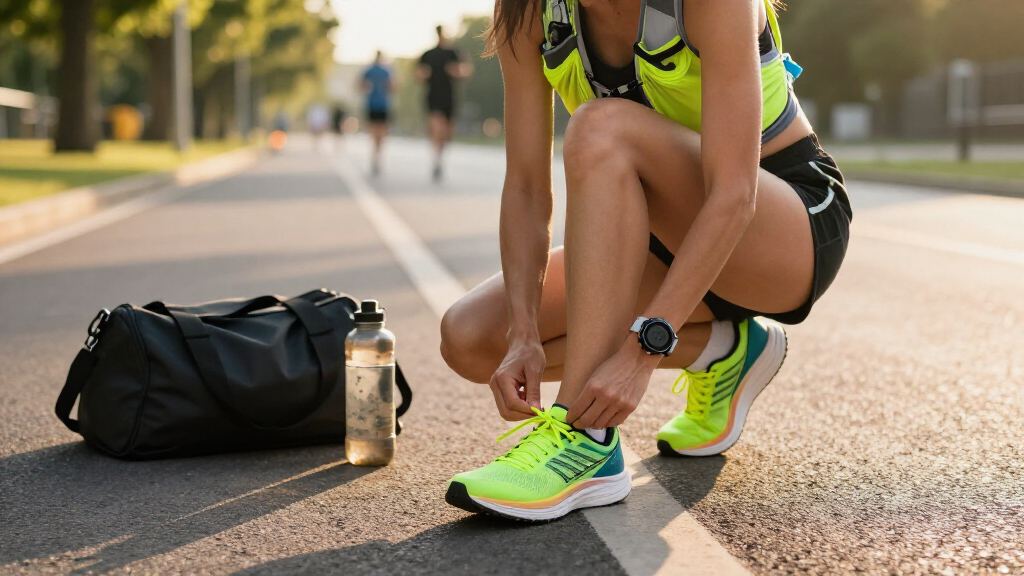

The best running gear in 2026 comes down to three core categories: carrying your essentials (hydration vests and running belts), staying visible (LED vests and armbands), and protecting your body (knee straps and technical apparel). The Zelvot Running Vest with 2L Water Bladder earns the top overall spot because it solves hydration and storage in one lightweight package, making it the most versatile pick for distance runners. If you only need a phone and keys, the AIKENDO Slim Running Belt is the smarter, less bulky choice, while the ISEYOU LED Chest Light stands out for anyone running in low light. The main tradeoff you’ll face is between capacity and comfort: vests carry more but bounce and heat up, belts disappear on your waist but hold almost nothing, and safety gear adds visibility at the cost of charging routine and strap management. Keep reading for the full breakdown of all 15 options.

Get workout gear delivered free — and shop member deals
- Fast, free delivery on millions of items
- Access to Prime Big Deal Days deals on October 6–7
- Prime Video, Amazon Music and more included
Complete the kit

Key Takeaways
- Hydration vests dominated this lineup (five of 15 picks), and the deciding factors were bladder capacity versus soft flasks: the Zelvot‘s 2L bladder suits long runs while the MOKORA and SWIFTVEST flask-based vests bounce less at race pace.
- Running belts split into two clear tiers: the AIKENDO Slim Belt balances storage and low profile best, while the generic slim waist packs are nearly identical, so fit and buckle quality should drive your choice there.
- For visibility gear, the ISEYOU chest light beat the vests and armbands on outright brightness (500 lumens), but the Zacro LED vest wins on adjustability for families since it fits kids and adults.
- The two apparel picks, the Baleaf long sleeve top and CRZ YOGA 2-in-1 shorts, punch above their price tier on fabric, making them the easiest low-risk buys in the roundup.
- The Bodyprox Knee Strap is the only recovery-style item here and fills a specific gap: runners with patellar pain should treat it as a targeted fix, not an upgrade, and pair it with proper footwear.
| Bodyprox Patella Tendon Knee Strap 2 Pack |  | Best for Injury Recovery and Knee Support | Fit Range: 13-18 inch knee circumference | Material: Nylon 59%, SBR 28%, Spandex 8%, Cotton 5% | Padding: Built-in silicone gel pad | VIEW LATEST PRICE | See Our Full Breakdown |
| Zelvot Running Vest with 2L Water Bladder |  | Best Hydration Vest for Long Runs | Bladder Capacity: 2L | Bladder Material: Food-grade, BPA & PVC-free | Fabric: 900D waterproof Oxford fabric | VIEW LATEST PRICE | See Our Full Breakdown |
| AIKENDO Slim Running Belt | 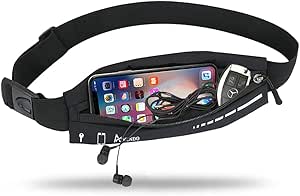 | Best Value Gear Carrier | Weight: 2 oz | Waist Range: 27-45 inches | Pocket: Expandable, fits phones with cases | VIEW LATEST PRICE | See Our Full Breakdown |
| Baleaf Women’s Long Sleeve Running Shirt |  | Best Running Top for Sun Protection | Front Fabric: 93% Polyester, 7% Spandex | Back Fabric: 100% Polyester mesh | Sun Protection: UPF 50+ | VIEW LATEST PRICE | See Our Full Breakdown |
| Lamicall 24g Polarized Sports Sunglasses |  | Best Budget Polarized Eyewear | Weight: 24g | Frame Material: TR90 | Frame Type: Semi-rimless | VIEW LATEST PRICE | See Our Full Breakdown |
| MOKURA Running Vest with 500ML Soft Flask & Phone Holder |  | Best Zero-Bounce Hydration Vest | Weight: Under 10 oz | Materials: Neoprene, breathable mesh | Flask Capacity: 500ml, BPA/PVC-free | VIEW LATEST PRICE | See Our Full Breakdown |
| MVRK Water Resistant Running Vest Chest Pack with Phone Holder |  | Best Minimalist All-Weather Chest Pack | Material: Cordura nylon | Weight: 22.68 g | Dimensions: 7″W x 4″H x 0.75″D | VIEW LATEST PRICE | See Our Full Breakdown |
| SWIFTVEST Running Phone Holder Vest with 500ml Water Bottle |  | Best Storage-Rich Hydration Vest | Weight: 285 g | Flask Capacity: 500 ml soft flask, included | Pockets: 6 | VIEW LATEST PRICE | See Our Full Breakdown |
| ISEYOU Running Lights for Runners – 500 Lumens LED Chest Light with 360° Reflective Vest |  | Best Visibility for Dark-Road Running | Brightness: 500 lumens | Lighting Modes: 6 (4 white, 2 red) | Battery: 1800mAh built-in, USB-C | VIEW LATEST PRICE | See Our Full Breakdown |
| Fitense Rechargeable LED Armband 2-Pack | 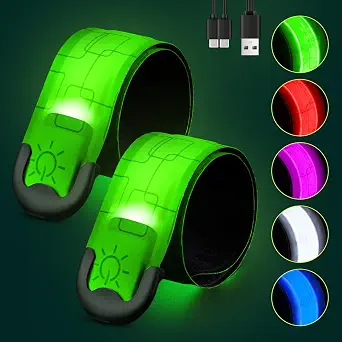 | Best Budget-Friendly Visibility Add-On | Quantity: 2 armbands plus dual-port charging cable | Battery: 100mAh USB rechargeable | Battery Life: 8-10 hours | VIEW LATEST PRICE | See Our Full Breakdown |
| Zacro LED Reflective Vest with 5 Light Colors |  | Best for Night Visibility | Weight: 0.35 lb (160g) | Light Colors: 5 (White, Green, Blue, Pink, Red) | Light Modes: 3 (Steady On, Single Color Flashing, 5-Color Flashing Cycle) | VIEW LATEST PRICE | See Our Full Breakdown |
| SWIFTVEST Running Phone Holder Vest with 500ml Water Bottle |  | Best Hydration-and-Storage Combo | Pockets: 6 | Water Bottle Capacity: 500ml/17oz | Phone Pouch Max Size: 18cm x 10cm | VIEW LATEST PRICE | See Our Full Breakdown |
| SWIFTER 2x Soft Flask 500ml – Collapsible Leakproof Hydration Flask |  | Best Value Hydration Add-On | Capacity: 2x 500ml (17oz) | Weight: 60 g (pack); 25 g per flask | Material: TPU (BPA & PVC free) | VIEW LATEST PRICE | See Our Full Breakdown |
| CRZ YOGA 2-in-1 Double Layer Running Shorts, 3″ Inseam |  | Best Running Shorts | Inseam: 3 inches | Rise: High rise | Closure Type: Pull on | VIEW LATEST PRICE | See Our Full Breakdown |
| Slim Running Belt Fanny Pack – Phone Holder Waist Pack |  | Best Budget Storage Pick | Waist Size: 27″ to 46″ | Material: TPU inner lining | Water Resistance: Water-resistant lining and zipper | VIEW LATEST PRICE | See Our Full Breakdown |
More Details on Our Top Picks
Bodyprox Patella Tendon Knee Strap 2 Pack
This two-pack stands out for runners managing patellar tendonitis or runner’s knee, where targeted compression below the kneecap matters more than full-sleeve support. The built-in silicone gel padding cushions the tendon during downhill sections and high-impact strides, and the hexagonal venting keeps the neoprene from turning into a sweat trap on longer runs. Compared with the hydration vests and running belts elsewhere in this roundup, this is the only pick that addresses a rehabilitation need rather than carrying gear — and the two-strap pack means you can outfit both knees or keep a spare in a gym bag. The tradeoff is real, though: a strap treats symptoms, not causes, and sizing tops out at an 18-inch knee circumference, so thicker-legged runners may find the fit uncomfortably tight.
Pros:- Silicone gel padding targets the patellar tendon directly under load
- Adjustable hook-and-loop fit accommodates 13-18 inch knee circumferences
- Breathable hex-vent neoprene prevents overheating on long runs
- Two straps per pack covers both knees or provides a backup
Cons:- Hand-wash-only care makes it less convenient for daily training
- Strap addresses symptoms rather than the underlying cause of knee pain
- Size ceiling of 18 inches excludes runners with larger knees
Best for: Runners returning from patellar tendonitis, jumper’s knee, or arthritis flare-ups who need targeted support during training
Not ideal for: Runners with knee pain caused by alignment or strength issues — a strap won’t fix the root problem and a physio plan will serve better
- Fit Range:13-18 inch knee circumference
- Material:Nylon 59%, SBR 28%, Spandex 8%, Cotton 5%
- Padding:Built-in silicone gel pad
- Closure:Adjustable hook-and-loop straps
- Ventilation:Hexagonal venting holes
- Quantity:2 straps per pack
- Care:Hand wash only
Our verdict“A sensible, low-commitment support tool for runners battling tendonitis who want to keep training through discomfort.”
Zelvot Running Vest with 2L Water Bladder
When a run stretches past 90 minutes, handheld bottles and waist belts stop being enough, and this is where the 2L bladder system earns its place — hands-free sipping through a high-flow bite valve means no breaking stride. Compared with the MOKURA Running Vest and its single 500ML flask, the Zelvot carries roughly four times the water, which makes it the stronger choice for trail half-marathons and hot-weather long runs. The 900D Oxford fabric feels genuinely rugged, and three waterproof zippered pockets keep a phone and gels dry in rain. That tactical construction has a cost in warmth, though — the breathable mesh helps, but this runs warmer than minimalist race vests. Runners chasing PRs will also notice the holster and tactical pen slots add bulk that pure running brands skip.
Pros:- 2L BPA-free bladder with hands-free bite valve carries far more water than flask-based vests
- Three waterproof zippered pockets protect electronics from rain and sweat
- Durable 900D Oxford fabric resists abrasion on trail brush
- Reflective strips and adjustable fit reduce bounce and improve visibility
Cons:- 2L capacity still falls short for ultra-distance events requiring refills
- Tactical holster and pen features add bulk some runners will never use
- Two-size range demands careful measurement before ordering
Best for: Trail runners and long-distance road runners who need multi-hour hydration and secure gear storage in one pack
Not ideal for: Race-day runners counting grams or anyone wanting a simple phone-and-flask setup — the MVRK chest pack is lighter and simpler
- Bladder Capacity:2L
- Bladder Material:Food-grade, BPA & PVC-free
- Fabric:900D waterproof Oxford fabric
- Front Pockets:3 waterproof zippered
- Chest Size Range:XS/S: 25-35 in; M/L: 29-41 in
- Special Features:Detachable pistol holster, tactical pen slot, reflective strips
- Design:U.S. Design Patent
Our verdict“The most capable hydration option in this roundup for runners whose routes outlast a single small flask.”
AIKENDO Slim Running Belt
For the majority of runs — a phone, a key, a card — a full hydration vest is overkill, and that’s the gap this belt fills better than anything else here. At 2 ounces, it nearly disappears at the waist, and the expandable pocket swallows a cased smartphone without the sagging bounce that plagues cheaper fanny packs. Compared with the Slim Running Belt Fanny Pack also featured in this roundup, the AIKENDO differentiates with a wider 27-45 inch waist range and reflective detailing for evening routes, though both share the same limited cargo space. The water-resistant fabric handles sweat drizzle fine, but it’s not submersion-proof — anyone caught in a downpour should keep electronics in a plastic sleeve. It’s the minimalist pick: perfect for what it does, incapable of what it doesn’t.
Pros:- Featherlight 2 oz build is comfortable for hours without noticing it
- Expandable pocket fits all smartphones including bulky cases
- Water-resistant material shields contents from sweat
- Reflective accents add night-run visibility
Cons:- No room beyond phone plus small essentials — no bottles or layers
- Waist range of 27-45 inches excludes some body types
- Water resistance won’t protect electronics in sustained heavy rain
Best for: Daily runners and gym-goers who carry just a phone, keys, and cards and hate bounce
Not ideal for: Runners needing water, layers, or gels on board — the Zelvot vest or a flask-based chest pack covers those loads
- Weight:2 oz
- Waist Range:27-45 inches
- Pocket:Expandable, fits phones with cases
- Material Features:Water resistant, reflective
- Adjustability:Adjustable strap
- Model Number:1802
Our verdict“The simplest, most affordable way to carry the daily essentials if hydration isn’t part of your run.”
Baleaf Women’s Long Sleeve Running Shirt
This pullover solves a problem most running gear ignores: all-day sun exposure. The UPF 50+ rating plus thumbhole raglan sleeves means covered hands and neck without sunscreen reapplication, and the wrist windows are a genuinely thoughtful touch — checking a watch without breaking the thumbhole grip sounds trivial until you’ve tried it on mile eight. The back-panel mesh does the sweating work while the stretchy front blocks UV, and a hidden zippered pocket takes a 5.5-inch phone. Compared with the CRZ YOGA 2-in-1 Running Shorts elsewhere in this guide, this shirt targets the same coverage-first, warm-weather buyer but for the upper body, making them a natural pairing. The tradeoff: the two-fabric construction feels noticeably different front to back, and the high neck runs warm once temps climb past mild.
Pros:- UPF 50+ fabric with thumbholes delivers near-total sun coverage
- Wrist windows let you glance at a watch without loosening your grip
- Back mesh panel manages moisture where runners sweat most
- Zippered side pocket secures a phone up to 5.5 inches
Cons:- Front and back fabrics feel noticeably different against the skin
- High-neck pullover design traps heat in warm conditions
- Phone pocket only fits smaller phones — larger models won’t fit
Best for: Women logging sunny outdoor miles — desert runners, coastal walkers, hikers — who want full UV coverage built into their top
Not ideal for: Hot, humid climates where a long sleeve high-neck top causes overheating regardless of mesh — a short sleeve is the smarter call
- Front Fabric:93% Polyester, 7% Spandex
- Back Fabric:100% Polyester mesh
- Sun Protection:UPF 50+
- Sleeves:Long raglan with thumbholes
- Pocket:Hidden right-side zipper (fits 5.5″ phone)
- Neck Style:High neck
- Special Features:Wrist windows for watch viewing
- Care:Machine wash
Our verdict“The coverage-first choice for sun-drenched training if you can live with a warm neck and mixed fabric feel.”
Lamicall 24g Polarized Sports Sunglasses
At 24 grams, these sit lighter on the face than most running eyewear, and that weight matters on sweaty climbs when frames start sliding. The TAC polarized lenses cut glare off pavement and water while blocking 99.9% of UVA/UVB, and the three-level adjustable nose pads handle face-shape fit better than fixed-bridge rivals at this tier. Compared with the ISEYOU chest light and Zacro LED vest in this roundup — which make you visible to others — these solve the opposite problem: letting you see the road in harsh light. The semi-rimless frame gives an unobstructed upward view for cycling and trail scanning. The honest tradeoff is lens material: TAC resists impact but scratches more readily than polycarbonate, so these need the included hardshell case to survive a gear bag, not just tossed in a car door pocket.
Pros:- Ultralight 24g TR90 frame stays comfortable across long sessions
- UV400 polarized lenses block 99.9% of UVA/UVB and cut glare
- Adjustable nose pads dial in fit across different face shapes
- Complete kit includes hardshell case, pouch, cloth, and polarized test card
Cons:- TAC lenses scratch more easily than polycarbonate alternatives
- Semi-rimless aesthetic divides opinion
- Anti-fog vents help but lens fogging can still occur on slow steep climbs
Best for: Runners and cyclists who train in bright glare and want polarized protection without paying premium-brand prices
Not ideal for: Anyone careless with storage — the softer TAC lenses will scratch quickly without the case, and style-conscious buyers may dislike the semi-rimless look
- Weight:24g
- Frame Material:TR90
- Frame Type:Semi-rimless
- Lens Type:TAC polarized
- UV Protection:UV400 (blocks 99.9% UVA/UVB)
- Special Features:Anti-fog vents, 3-level adjustable nose pads, impact-resistant
- Sport Types:Running, cycling, baseball, fishing, golf
Our verdict“A capable glare-cutting companion for bright-weather miles if you commit to using the case between runs.”
MOKURA Running Vest with 500ML Soft Flask & Phone Holder
Among the hydration vests in this lineup, this option stands out for its zero-bounce fit, thanks to three adjustable chest straps and stretch waist panels that lock the vest in place at speed. Compared with the SWIFTVEST Running Phone Holder Vest, it carries less overall storage, but the neoprene-and-mesh construction feels lighter and cooler on hot miles, weighing under 10 oz before fluids. The included 500ml soft flask uses a high-flow bite valve that doesn’t leak, and the sweatproof phone pouch with a coiled lanyard is a smart touch for runners who check pace mid-effort. Reflective accents front and back round out a package built for daily training rather than ultra distances, where a 2L bladder option like the Zelvot would serve better.
Pros:- Ultra-lightweight at under 10 oz, barely noticeable once worn
- Three adjustable chest straps and stretch panels eliminate bounce
- Leakproof 500ml soft flask with a high-flow bite valve included
- Reflective accents front and back for early-morning visibility
Cons:- Storage capacity is limited for very long runs
- 500ml flask volume falls short in hot weather or ultra distances
Best for: Daily runners who want water, phone, and gels carried without any bounce on tempo runs and intervals
Not ideal for: Ultra-distance or hot-weather runners — 500ml of capacity and modest pocket space won’t cover multi-hour efforts
- Weight:Under 10 oz
- Materials:Neoprene, breathable mesh
- Flask Capacity:500ml, BPA/PVC-free
- Chest Straps:3 adjustable
- Pockets:2 front, 1 rear mesh
- Phone Holder:Sweatproof, touchscreen-friendly with coiled lanyard
- Safety:Reflective accents front and back
Our verdict“This vest makes the most sense for everyday runners who prioritize a bounce-free, breathable fit over maximum carrying capacity.”
MVRK Water Resistant Running Vest Chest Pack with Phone Holder
Where the MOKURA Running Vest is about hydration, this chest pack is about bare-essentials carry — phone, keys, cards, nothing more. At roughly 23 grams, it disappears on the body, and the Cordura nylon shell shrugs off rain and sweat far better than soft-flask vests in this roundup. The neoprene-padded contact points mean it stays comfortable even worn shirtless, a detail most running belts like the AIKENDO Slim Running Belt don’t address. Three zippered pockets keep items organized and silent. The tradeoff is capacity: there’s no water bottle, and the phone sleeve tops out at 5.5 inches, which excludes most modern flagship phones — a real limitation buyers should weigh before choosing this over a larger vest.
Pros:- Water-resistant Cordura nylon built for all-weather training
- Extremely light at under an ounce, with zero bounce
- Neoprene padding at contact points for shirtless comfort
- Three zippered pockets keep gear organized and secure
Cons:- Phone sleeve fits devices only up to 5.5 inches
- Hand wash only, which adds upkeep after sweaty runs
Best for: Short-runners and gym-to-track athletes who need weatherproof pockets for essentials and train shirtless in rain or heat
Not ideal for: Runners with phones larger than 5.5 inches or anyone who needs hydration carried on the run
- Material:Cordura nylon
- Weight:22.68 g
- Dimensions:7″W x 4″H x 0.75″D
- Storage Volume:28 cubic inches
- Pockets:3 zippered
- Max Device Size:5.5 inches
- Warranty:12 months
Our verdict“This pack suits minimalist runners in tough weather who can live without hydration and a large phone.”
SWIFTVEST Running Phone Holder Vest with 500ml Water Bottle
This vest earns its spot by solving the organization problem: six pockets plus a zippered waterproof phone pouch sized for devices up to 18 x 10 cm — comfortably larger than the MVRK’s 5.5-inch limit. Compared with the MOKURA vest, the SWIFTVEST trades a bit of minimalism for genuine load-carrying ability: gels, keys, phone, and the included 500ml soft flask all fit with room to spare. Sizing in three ranges (XS-S through L-XL) gives a more precise fit than one-size options elsewhere in this guide, and neoprene padding at key zones dampens bounce when pockets are loaded. At around 285 g it’s heavier than minimalist picks, and the extra pockets can feel like overkill on short recovery jogs — but for marathon training, that capacity is the point.
Pros:- Six easy-access pockets including a waterproof phone pouch
- Zippered pouch fits phones up to 18 x 10 cm
- Three size options for a more precise fit than one-size vests
- Included 500ml soft flask compresses as you drink
Cons:- Heavier than minimalist chest packs at roughly 285 g
- Loaded pockets add bulk that some runners will find excessive
Best for: Marathon and half-marathon trainees who carry a phone, gels, and hydration and want everything organized and dry
Not ideal for: Minimalist short-run runners — six pockets and 285 g of vest is more bulk than a 5K shakeout requires
- Weight:285 g
- Flask Capacity:500 ml soft flask, included
- Pockets:6
- Phone Pouch:Zippered waterproof, fits up to 18 x 10 cm
- Sizes:XS-S, M-L, L-XL
- Materials:Neoprene with quick-dry panels
- Visibility:Reflective detailing front and back
Our verdict“The right pick for long-course runners whose gear list outgrows simpler vests like the MOKURA or MVRK.”
ISEYOU Running Lights for Runners – 500 Lumens LED Chest Light with 360° Reflective Vest
Unlike the passive reflective gear elsewhere in this roundup, this chest light does two jobs at once: a 500-lumen forward beam that lights the path up to 300 feet ahead, and a 360° reflective vest so drivers spot you from up to 650 feet away. Compared with the Zacro LED Reflective Vest, it adds genuine trail-illuminating power rather than just being seen, with a 45° adjustable beam to tune the throw. The 1800mAh battery runs 4-9 hours in white modes and up to 16 in red, and USB-C charging is a convenience the Fitense armbands share. The compromise is the built-in non-swappable battery — if it dies at hour nine of an ultra, you’re finished, and a 3-4 hour recharge demands planning. At 236 g, it also outweighs lighter visibility options.
Pros:- 500-lumen beam illuminates up to 300 feet of path ahead
- 360° reflective design visible to drivers at 650 feet
- Up to 16 hours runtime in red mode with USB-C charging
- Dual-strap design fits chest sizes from 31 to 51 inches
Cons:- Built-in battery can’t be swapped or carried as a spare
- Full recharge takes 3-4 hours, requiring planning between runs
Best for: Pre-dawn and night runners on unlit roads or trails who need to see the ground, not just be seen
Not ideal for: Runners who want featherweight be-seen-only visibility — the Fitense armbands or Zacro vest do that job with less weight
- Brightness:500 lumens
- Lighting Modes:6 (4 white, 2 red)
- Battery:1800mAh built-in, USB-C
- Runtime:4-9 hours white, up to 16 hours red
- Water Resistance:IPX4
- Beam Distance:300 feet (90 m)
- Fit Range:Chest 31-51 inches
- Weight:236 g
Our verdict“The strongest choice in this roundup for runners who need active illumination on dark roads, not just reflective accents.”
Fitense Rechargeable LED Armband 2-Pack
Sometimes the right visibility solution isn’t a vest at all. This two-pack of slap bands delivers 1,000-foot visibility for a fraction of the complexity of the ISEYOU chest light — no beam to aim, no harness to adjust, just slap them on and go. Five color options and three modes let runners differentiate (white front, red rear is a proven combo), and the 8-10 hour battery outlasts most weekly mileage between charges, refilling in just 40 minutes. Compared with the Zacro vest, armbands move visibility to your moving limbs, which studies of driver perception consistently favor, and they’re far easier to stash in a pocket. The catch: the fixed length suits wrists and ankles under about 25 cm, so larger runners may find the fit snug, and they require a standard 5V/1A charger to protect the cells.
Pros:- Visible up to 1,000 feet in low light
- 8-10 hour battery life with a fast 40-minute recharge
- Five colors and three modes for front/rear signaling
- Simple slap-on fit wearable by the whole family
Cons:- Fixed length can’t be adjusted — limited to about 25 cm circumference
- Requires a standard 5V/1A charger; fast chargers risk damaging the battery
Best for: Runners and cyclists who already carry a vest or light and want simple, cheap supplemental visibility on limbs
Not ideal for: Runners with wrists or ankles over 25 cm circumference, or anyone who needs forward illumination rather than just being seen
- Quantity:2 armbands plus dual-port charging cable
- Battery:100mAh USB rechargeable
- Battery Life:8-10 hours
- Charge Time:40 minutes
- Light Modes:5 colors, 3 modes (constant, flash, RGB)
- Visibility:Up to 1,000 feet
- Size:35 x 4 cm, one size
Our verdict“A low-commitment visibility upgrade for casual night runners, as long as the one-size band fits.”
Zacro LED Reflective Vest with 5 Light Colors
For runners who log miles after dark, 360° visibility up to 1000 feet is the feature that matters most, and this vest delivers it better than the Fitense Rechargeable LED Armband 2-Pack, which covers far less surface area. The combination of LED lights and reflective strips means drivers see you from every angle, not just the front. Compared with the ISEYOU 500 Lumen Chest Light, the Zacro trades a focused beam for ambient glow — you’ll be seen, but you won’t see the road ahead. The 7-20 hour battery life and fast 50-minute USB-C charge make it practical for daily use, and at 0.35 lb it disappears on your body. The annoying part is powering off: it demands a long 3-second press or cycling through every mode first.
Pros:- True 360° visibility up to 1000 feet for nighttime safety
- 7-20 hour battery life with fast 50-minute USB-C charging
- Featherweight 0.35 lb design with adjustable fit for adults and kids 8+
- Five color options and three flashing modes
Cons:- Awkward power-off requires a long 3-second press or cycling through all modes
- Provides no forward illumination for unlit paths
Best for: Night runners and early-morning commuters who prioritize being seen by traffic over lighting their own path
Not ideal for: Trail runners who need forward illumination — this vest makes you visible but doesn’t light the ground ahead
- Weight:0.35 lb (160g)
- Light Colors:5 (White, Green, Blue, Pink, Red)
- Light Modes:3 (Steady On, Single Color Flashing, 5-Color Flashing Cycle)
- Battery Life:7-20 hours depending on mode
- Charging:USB Type-C (dual ports), full charge in 50 minutes
- Adjustable Waist Size:26″-49″ (66-124.4 cm)
- Visibility Range:Up to 1000 feet
Our verdict“Buy this if you run on roads in the dark and want maximum visibility; skip it if you need a light to see where you’re stepping.”
SWIFTVEST Running Phone Holder Vest with 500ml Water Bottle
This vest sits in the sweet spot between a simple belt and a full hydration backpack like the Zelvot Running Vest with 2L Water Bladder. The six-pocket layout plus an included 500ml soft flask covers water, phone, keys, and gels without the weight or bulk of a 2L bladder system — a smarter choice for runs under two hours. The zippered waterproof phone pouch (fits phones up to 18cm x 10cm) is the standout compared with the MVRK Water Resistant Chest Pack, which offers storage but no hydration at all. Neoprene padding and adjustable straps keep bounce to a minimum. The tradeoffs: phablet-sized phones with thick cases won’t fit the pouch, and you only get one bottle, so long-distance runners may outgrow it.
Pros:- Six pockets including a waterproof zippered phone pouch
- Includes a 500ml soft flask that compresses as you drink
- Breathable, quick-dry material with reflective detailing
- Adjustable straps and neoprene padding minimize bounce and chafing
Cons:- Only one water bottle included
- Phone pouch limited to phones up to 18cm x 10cm — large flagships with cases may not fit
Best for: Mid-distance runners training for 10Ks or half marathons who want hydration and organized storage in one piece
Not ideal for: Marathoners or all-day trail runners — a single 500ml flask won’t cover longer hydration needs
- Pockets:6
- Water Bottle Capacity:500ml/17oz
- Phone Pouch Max Size:18cm x 10cm
- Sizes:XS-S, M-L, L-XL
- Gender:Unisex
- Included Components:Running vest, 500ml/17oz soft flask
- Warranty:1 year manufacturing defect warranty
Our verdict“The balanced pick for runners who want drinks, phone, and essentials carried comfortably on mid-length runs.”
SWIFTER 2x Soft Flask 500ml – Collapsible Leakproof Hydration Flask
If you already own a vest with front pockets — like the SWIFTVEST above or the Zelvot hydration backpack — this two-pack is the cheapest way to double your carry capacity. At 25 grams per flask, they’re lighter than most competitors, and the auto-sealing bite valve means no leaking in a pocket, a real failure point on cheaper flasks. The collapsible design shrinks as you drink, which eliminates that sloshing bounce you get from rigid bottles. Compared with buying a vest that includes a single flask, this pair gives you redundancy for long runs or a spare for a partner. Two honest caveats: the sky blue finish can discolor over time depending on your water’s pH, and dishwasher cleaning doesn’t always reach deep inside, so hand-washing with a brush is wise.
Pros:- Leakproof high-flow bite valve that auto-seals after each sip
- Ultralight at just 25 grams per flask
- Collapsible design shrinks as you drink to eliminate bounce
- BPA and PVC-free food-grade TPU construction
Cons:- Flask color may change over time due to water pH
- Dishwasher cleaning may not fully reach the interior
Best for: Owners of hydration vests who want extra flasks for longer runs or a backup for a running partner
Not ideal for: Runners without a vest or belt with flask pockets — these have no carrying system of their own
- Capacity:2x 500ml (17oz)
- Weight:60 g (pack); 25 g per flask
- Material:TPU (BPA & PVC free)
- Color:Sky Blue (matte finish)
- Care:Dishwasher safe
- Included Components:2x 500ml soft flasks
Our verdict“A low-cost, low-weight upgrade for anyone whose vest came with just one flask — as long as you have pockets to carry them.”
CRZ YOGA 2-in-1 Double Layer Running Shorts, 3″ Inseam
The double-layer construction is what separates these from basic single-layer shorts: the built-in spandex liner with anti-slip dots stays put through strides, which prevents the thigh chafing and ride-up that plague longer runs. The Feathery-Fit fabric is quiet — no swishing — and dries fast, a nice contrast to budget shorts that soak through with sweat. While the Slim Running Belt elsewhere in this roundup carries a phone, these shorts’ deep side zipper pockets may let you skip a belt entirely for shorter outings. Two real tradeoffs shape the buying decision: the 3-inch inseam is genuinely brief, so runners who prefer coverage over the thigh should look elsewhere, and there’s no drawstring — if the compression waistband doesn’t match your body shape, the fit can’t be fine-tuned.
Pros:- Ultra-soft, quick-dry fabric with no swishing sound
- Anti-slip inner liner prevents chafing and riding up
- Deep side zipper pockets secure a phone, keys, and cards
- Compression waistband holds comfortably without a drawstring
Cons:- Short 3-inch inseam may be too brief for many preferences
- No drawstring means fit depends entirely on waistband sizing
Best for: Runners who want chafe-free, distraction-free shorts and prefer a short racing-cut inseam
Not ideal for: Runners who like longer inseams or a tunable drawstring fit — the 3″ cut and fixed waistband leave no adjustment
- Inseam:3 inches
- Rise:High rise
- Closure Type:Pull on
- Body Fabric:86% Polyester, 14% Elastane
- Liner Fabric:88% Polyester, 12% Elastane
- Pockets:Side zipper pockets
- Waistband:Compression, no drawstring
- Care:Machine wash
Our verdict“A strong pick for fast, chafe-free miles if you like a short inseam — size carefully since the waistband is your only fit adjustment.”
Slim Running Belt Fanny Pack – Phone Holder Waist Pack
When all you need is your phone, a key, and a card, this belt undercuts the fuller vests on price and bulk. Its best trick is fitting all smartphones, cases included — no measuring your handset against a size chart like you must with the SWIFTVEST’s 18cm x 10cm pouch. The water-resistant TPU lining keeps sweat and rain off your electronics, and the elastic strap genuinely stays put without bouncing, which the AIKENDO Slim Running Belt also does well at a similar footprint. Two reflective strips add a modest visibility boost, though they can’t compete with the Zacro LED vest for night safety. The catch is capacity: a wallet, snack bars, or any hydration simply won’t fit, and the belt rides best worn below the waistband, which takes a run or two to position correctly.
Pros:- Fits all smartphones including those with cases
- Stays secure without bouncing or slipping
- Water-resistant TPU lining and zipper protect electronics
- Two reflective strips improve low-light visibility
Cons:- Very limited capacity for anything beyond a phone and small essentials
- Must be positioned below the waistband to stay discreet, which takes adjustment
Best for: Minimalist runners and walkers who carry just a phone and keys and want a low-cost, bounce-free solution
Not ideal for: Runners who need hydration, gels, or extra layers — the storage volume just isn’t there
- Waist Size:27″ to 46″
- Material:TPU inner lining
- Water Resistance:Water-resistant lining and zipper
- Phone Compatibility:Fits all phones including with cases
- Safety Features:Two highly reflective strips
- Adjustability:Adjustable elastic strap
Our verdict“The simplest, cheapest way to carry a phone on a run — just don’t expect it to hold anything more.”

How We Picked
I evaluated every item against the same question: does it solve a real problem on a run without creating a new one? For carrying gear, that meant weighing bounce, breathability, capacity, and adjustability — a vest that holds two liters but chafes at mile three fails the test, while a belt that fits a large phone flat against the body without riding up passes it. For visibility gear, brightness, battery life, USB-C charging, and water resistance were the deciding factors, since these items live or die by reliability in rain and dark. For apparel and support gear, I focused on fabric performance and fit: quick-dry capability, seam placement, and whether the product works across a range of body types.
Ranking then came down to versatility. Products that cover multiple needs — hydration plus storage, or light plus reflectivity — ranked above single-purpose items, unless the single-purpose item outclassed everything else in its niche. That’s why the Zelvot vest leads the list and the Bodyprox knee strap, excellent at its one job, sits lower: it’s a fix for a specific problem rather than a smart buy for most runners. Price-to-performance and build durability acted as tiebreakers throughout.
Factors to Consider When Choosing Best Running Gear
Before clicking buy on any single item, step back and think about what your runs actually demand. Most runners overspend in one category and neglect another — buying a premium vest while running in dark cotton with no lights, for example. These are the factors that should shape your decisions.
Match Your Carry Solution to Your Run Distance
The single biggest mistake runners make is buying carrying gear for runs they don’t actually do. A 2L bladder vest like the Zelvot makes sense above roughly 90 minutes of running, when sweat loss and fueling needs justify the weight on your shoulders. For anything shorter, a vest is overkill: it traps heat on your back, and a mostly empty bladder sloshes annoyingly. A slim belt or a small flask vest covers the 30-to-60-minute range far better because the load sits low or compresses as you drink. A useful rule: buy for the runs you do weekly, not the race you do once a year. If you’re training for a marathon, invest in the vest; if you’re a 5K regular, spend the difference on better shoes.
Bounce and Chafe Matter More Than Features
Spec sheets can’t tell you how gear behaves at mile six, and this is where cheap carrying products fail. Look for adjustment points at both the chest and waist — a single strap almost always leaves slack that translates to bounce. Soft flasks collapse as they empty, which is why flask-based vests like the MOKORA feel more stable late in a run than rigid bottles. For belts, the width of the band matters more than pocket count: wider bands distribute phone weight and resist rolling, while thin bands twist and ride up the moment you add speed. If a product lists reflective detailing but no adjustability, treat that as a warning sign that form came before function.
Visibility Gear: Passive vs. Active Protection
Reflective gear only works when light hits it, which means it’s nearly useless on unlit roads where drivers have their headlights off or angled away. Active lighting — the ISEYOU chest light, the Fitense armbands, the Zacro LED vest — generates its own visibility, making it the safer choice for pre-dawn and evening runs in suburban or rural areas. The tradeoff is battery management: USB-C rechargeable gear needs topping up weekly, and an uncharged light is worse than nothing because it creates false confidence. A layered approach works best — an active light plus passive reflectivity — so you’re covered even if a battery dies mid-run. Check the IPX rating too; IPX4 handles rain and sweat, but anything less will fog or fail within a season.
Apparel Fabric Is a Performance Decision, Not a Comfort One
Cotton is the enemy of running, and even among technical fabrics there’s a real gap between budget and mid-tier. A quick-dry long sleeve like the Baleaf pullover isn’t just about staying dry — wet fabric causes chafing, adds weight, and drops your body temperature fast in wind. The 2-in-1 short design with a built-in liner eliminates the need for separate underwear, which removes a common chafe point entirely. When choosing, prioritize flatlock seams over cut-and-sew panels and check whether the fabric has any mechanical stretch, since rigid technical fabric restricts stride at faster paces. Sizing runs notoriously inconsistent across brands in running apparel, so check the size chart against actual measurements rather than your usual size.
Support Gear: Fix the Cause, Not Just the Symptom
Knee straps like the Bodyprox patella strap can genuinely reduce pain during a run by offloading the tendon, but too many runners use them to mask problems that need different solutions. If knee pain appears consistently at the same distance or on the same terrain, the strap is buying you time, not fixing the issue — the usual culprits are worn shoes, weak hips, or ramping mileage too fast. A strap makes sense as a bridge while you address the underlying cause, or for occasional flare-ups on race day. Also check the closure system: velcro straps lose grip over time and slide when wet with sweat, so look for reinforced stitching at the strap anchors. If pain persists beyond a few weeks, the right purchase isn’t gear at all — it’s an appointment with a physio.
Water Resistance Claims: Read Between the Lines
“Water resistant” and “waterproof” get used loosely in this category, and understanding the difference prevents disappointment. A water-resistant phone pocket, like on the MVRK chest pack, handles sweat and light drizzle but will not protect a phone in a downpour or if you fall into a stream. True waterproofing at this price point barely exists — what you’re really buying is sweat protection, which matters more than most runners realize since body heat and moisture accumulate against your chest and back for hours. If you run in genuinely wet conditions, put your phone in a ziplock inside the pocket rather than trusting the product’s claims. For electronics like lights, the IPX4 rating on the ISEYOU is the baseline acceptable standard; anything unrated will fail within one wet winter.
Frequently Asked Questions
Should I get a hydration vest or just a running belt with a small bottle?
It depends almost entirely on how long you’re out. Below about an hour, a belt with a soft flask or a small bottle vest covers hydration without the heat and shoulder pressure of a full vest, and most runners find them dramatically more comfortable at faster paces. Beyond 90 minutes, or in hot weather, a vest with a 2L bladder like the Zelvot becomes the better tool because you’ll drink more when water is easy to reach via the tube, and you’ll have room for fuel, a jacket, and your phone. There’s also a middle path: flask vests like the MOKORA or SWIFTVEST carry 500ml with vest-style stability but far less bulk. If you’re torn, start with the belt — it’s cheaper, and you’ll know quickly whether you’re itching for more capacity.
Are LED running vests worth it if my gear already has reflective details?
Reflective details only return light that’s already pointed at you, which fails exactly where you need visibility most — on unlit roads, paths, and during rain when drivers’ headlights scatter. Active LED gear solves this by making you visible from any angle, typically from several hundred meters away versus a fraction of that for passive reflectivity. The real question is which format suits you: the ISEYOU chest light doubles as a path light so you can see the ground ahead, while the Zacro vest and Fitense armbands are lighter and simpler but won’t illuminate your footing. The commitment you’re making is charging discipline — build a habit of plugging gear in after every run, because a dead light gives you false confidence. For urban running with streetlights, reflectivity alone is usually adequate; anywhere darker, go active.
Do running phone holders actually stay secure, or should I just hold my phone?
Holding your phone changes your arm swing and gait subtly, and over thousands of strides that asymmetry can contribute to nagging shoulder or neck tightness — plus a dropped phone on pavement is an expensive mistake. The good news is that modern chest-vest phone pockets and slim belts hold phones remarkably securely when sized correctly; the failure point is almost always buying a holder that’s too tight or too loose for your specific phone. Measure your phone with its case on before ordering, since a bare-phone spec rarely matches reality. Belts like the AIKENDO keep the phone flat against your lower back or hip where bounce is minimal, while vest pockets on the chest straps offer quicker access for music and tracking checks. If you run with a plus-size phone, favor stretch-fabric pockets over rigid zippered ones.
Can a knee strap fix my running knee pain, or is it just masking it?
A patella strap like the Bodyprox does have a legitimate mechanical effect — it changes the load angle on the patellar tendon and can reduce pain during activity, which is why physios sometimes recommend them for runners with patellar tendinopathy or runner’s knee. But it’s a management tool, not a cure. If your pain shows up at a consistent point in every run, the underlying cause is usually shoe wear, weak glutes or hips, tight calves, or a training load that increased too fast, and no strap will fix those. The smart play is using the strap to keep running comfortably while you address the root cause through strength work and a look at your mileage progression. If pain persists beyond two or three weeks, sharpens, or appears at rest, skip the gear aisle and see a professional.
What’s the minimum running gear a beginner actually needs to buy first?
Beginners routinely overspend on gear before knowing what they need, so sequence your purchases. Proper running shoes come first and are non-negotiable — everything else in this list is secondary to footwear. Second comes technical apparel: a quick-dry shirt and 2-in-1 shorts like the CRZ YOGA pair will do more for your comfort than any accessory, because chafing ends more beginner running careers than lack of motivation. Third, if any of your runs happen in low light, get an active light — it’s cheap insurance and builds a safety habit early. Hydration vests and running belts can genuinely wait until you’re running long enough to need them, which for most beginners is several months in. A simple test: buy gear when a problem shows up repeatedly, not in anticipation of problems you’ve never had.
Conclusion
Mapping this roundup to buyer types makes the decision straightforward. For best overall, the Zelvot Running Vest with 2L Water Bladder stands out because it combines hydration, storage, and reflectivity in one package that covers the widest range of run types. The best value picks are the AIKENDO Slim Running Belt for carrying essentials and the CRZ YOGA 2-in-1 shorts for apparel — both deliver the core benefits of far pricier gear with few meaningful compromises. On the premium end, the ISEYOU LED Chest Light justifies its position with 500 lumens of active visibility plus path illumination that none of the reflective-only options can match.
For beginners, the Baleaf long sleeve top and a simple belt cover 90% of what you need for months of running — resist the urge to buy a full vest on day one. For specific needs: distance runners training through summer should look hard at the Zelvot or the SWIFTER soft flasks for race-day hydration; runners with patellar pain should add the Bodyprox knee strap as a bridge while addressing the root cause; parents who run with kids will appreciate the Zacro vest’s one-size adjustability; and anyone on unlit roads at night should treat the ISEYOU or the Fitense armbands as mandatory rather than optional. Match the purchase to the runs you actually do, and every item on this list will earn its place in your kit.
Evergreen bestsellers Picks
bestsellers
As an affiliate, we earn on qualifying purchases.