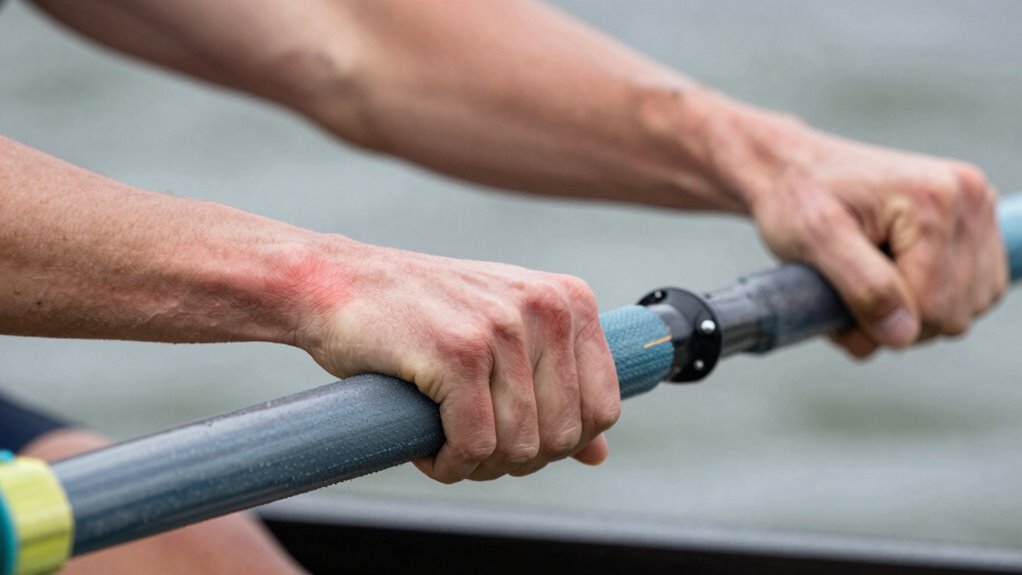
To fix wrist pain during rowing, focus on your grip and handle position. Hold the handle firmly but without gripping too tight, keeping your wrists in a neutral, straight line with your forearms. Make certain your handle sits comfortably in your palms, and avoid bending or twisting your wrists during the stroke. Proper technique and alignment can greatly reduce strain; keep these tips in mind, and you’ll discover more ways to protect your wrists.
Key Takeaways
- Keep your grip firm but relaxed, avoiding excessive tension to reduce wrist strain.
- Ensure your wrists remain in a neutral, straight position aligned with your forearms during rowing.
- Adjust handle placement to sit comfortably in your palms, preventing forward or backward wrist leaning.
- Focus on engaging your core and legs to minimize reliance on your wrists during the stroke.
- Regularly review and refine your technique to maintain proper form and prevent repetitive wrist injury.
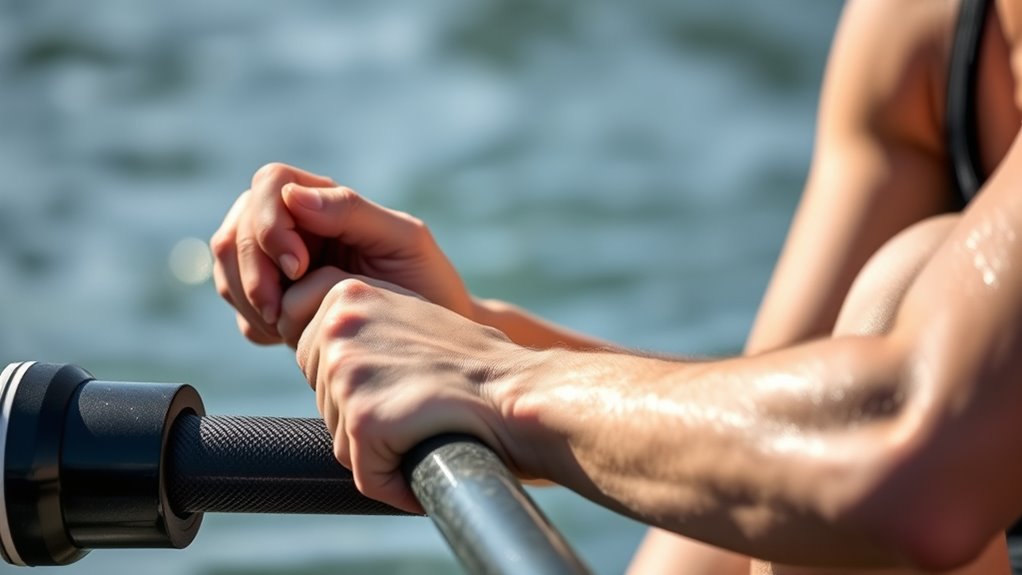
If you’ve been experiencing wrist pain while rowing, it’s likely due to strain or improper technique. The good news is that small adjustments in your techniques and grip ergonomics can make a significant difference. Many rowers struggle with wrist discomfort simply because they haven’t optimized their form or how they hold the handle. The key is to focus on techniques adjustment and ensuring your grip is natural and supportive, rather than overly tight or awkward.
Start by examining your grip ergonomics. Your hands should hold the handle firmly enough to maintain control but not so tightly that you’re tensing your wrists or forearms. A common mistake is gripping too hard, which increases strain on your wrists and can lead to pain over time. Instead, aim for a relaxed grip, with your fingers wrapping comfortably around the handle and your wrists remaining in a neutral position. This helps distribute the force more evenly and reduces unnecessary stress.
Techniques adjustment is equally important. Many rowers tend to pull with their arms excessively or use poor body mechanics, which puts additional strain on the wrists. Focus on engaging your core and legs to power the stroke, rather than relying solely on your arms. When you pull, your wrists should stay aligned with your forearms, not bent or twisted. Practice maintaining a straight, neutral wrist position throughout the stroke, especially during the pull and recovery phases. This can prevent awkward angles that cause pain and fatigue.
Another helpful tip is to ensure your handle position is correct. The handle should sit comfortably in your palms with your wrists in line with your forearms, not leaning forward or backward. If your handle is too low or too high, you may compensate with improper wrist movements, leading to discomfort. Adjust the foot straps and seat position to help achieve a natural, ergonomic posture that supports good wrist alignment.
Additionally, regularly reviewing your rowing technique and making small adjustments can help prevent repetitive stress injuries and improve overall comfort. Consistently paying attention to your techniques adjustment and grip ergonomics will improve your form and reduce wrist strain. It’s a good idea to record yourself or work with a coach to identify any habits that might be causing undue stress. Small changes—like relaxing your grip, maintaining a neutral wrist position, and engaging your core—can make a big difference in eliminating wrist pain and making your rowing sessions more comfortable and effective. Remember, proper technique isn’t just about performance; it’s about protecting your body for the long haul.

Rowing Machine Handle Assembly For Concept-2 Model D/E Powerfun 500/550 Indoor Rower Handlebar Holder Replacement Part Black Ergonomic Design Exercise Equipment Accessory 50.5cm Length
ENHANCED GRIP TECHNOLOGY: Upgrade your rowing experience with this ergonomically designed handle assembly featuring comfortable grip positions that…
As an affiliate, we earn on qualifying purchases.
As an affiliate, we earn on qualifying purchases.
Frequently Asked Questions
Can Wrist Pain From Rowing Be Permanent?
Wrist pain from rowing can become permanent if you don’t address underlying issues. Poor wrist flexibility and weak grip strength often contribute to ongoing discomfort. To prevent lasting damage, focus on improving flexibility through stretching and building grip strength with specific exercises. Additionally, make certain your grip isn’t too tight and your handle position is correct. Consistent care can reduce the risk of permanent wrist pain and keep you rowing pain-free.
How Quickly Can I See Improvements After Fixing My Grip?
You can notice improvements in your grip strength and wrist comfort within a few sessions after making handle adjustments. As you refine your grip, your wrist pain should gradually lessen, often visible in just a few days. Consistently practicing proper grip and handle technique helps prevent future discomfort, allowing you to enjoy rowing with more ease and confidence. Keep at it, and you’ll likely see positive changes sooner than you think.
Are There Specific Stretches to Prevent Wrist Pain?
Yes, you can incorporate specific stretches to prevent wrist pain. Focus on wrist flexibility by doing stretching routines like wrist circles, wrist flexion, and extension stretches regularly. These exercises loosen up your wrist joints, reduce tension, and improve mobility. Consistently practicing these stretches before and after rowing sessions helps prevent discomfort and injury, ensuring your wrists stay healthy and pain-free during your workouts.
Does Rowing Technique Affect Wrist Strain?
You can’t judge a book by its cover, so your rowing technique truly impacts wrist strain. Making technique adjustments, like maintaining a relaxed grip and experimenting with handle variations, can considerably reduce discomfort. Focus on a smooth, controlled movement rather than brute force. Proper form ensures your wrists aren’t bearing the brunt, allowing you to row effectively without pain. Small tweaks can make a big difference in keeping your wrists happy.
Should I See a Doctor for Persistent Wrist Pain?
If your wrist injury persists despite adjusting your rowing ergonomics, you should see a doctor. Persistent wrist pain could indicate a more serious injury that needs professional evaluation and treatment. Don’t ignore ongoing discomfort, as it might worsen or lead to long-term issues. A healthcare provider can diagnose the problem accurately and recommend appropriate therapy or rest, helping you recover fully and prevent future injury.

HiRui 2-Pack Ultra-Thin Mesh Wrist Wraps – Breathable, Adjustable Wrist Support for Workouts & Daily Use – Unisex Wrist Brace for Pain Relief, Tendonitis, Carpal Tunnel – One Size Fits All (Black)
Breathable Mesh Design for All-Day Comfort: Crafted with premium lightweight mesh fabric, this wrist brace ensures maximum breathability,…
As an affiliate, we earn on qualifying purchases.
As an affiliate, we earn on qualifying purchases.
Conclusion
Just like the steady oars guiding a boat through calm waters, adjusting your grip and handle can steer you clear of rowing wrist pain. Remember, even Hercules needed the right tools and technique to conquer his labors. By making simple fixes, you’ll prevent discomfort from sinking your passion for rowing. Keep these tips in mind, and you’ll stay afloat—strong, pain-free, ready to face whatever challenges come your way, just like a seasoned mariner.

Rowing Machine Handle Replacement For Concept 2 Model D/E For Powerfun 500/550 Rowing Machines, 50.5cm Plastic Row Bar Assembly With Secure Grip
PRECISE COMPATIBILITY: Fit for Concept 2 Model D/E and Powerfun 500/550 rowing machines, this 50.5cm handle assembly restores…
As an affiliate, we earn on qualifying purchases.
As an affiliate, we earn on qualifying purchases.
HiRui 2-Pack Ultra-Thin Mesh Wrist Wraps – Breathable, Adjustable Wrist Support for Workouts & Daily Use – Unisex Wrist Brace for Pain Relief, Tendonitis, Carpal Tunnel – One Size Fits All (Black)
Breathable Mesh Design for All-Day Comfort: Crafted with premium lightweight mesh fabric, this wrist brace ensures maximum breathability,…
As an affiliate, we earn on qualifying purchases.
As an affiliate, we earn on qualifying purchases.