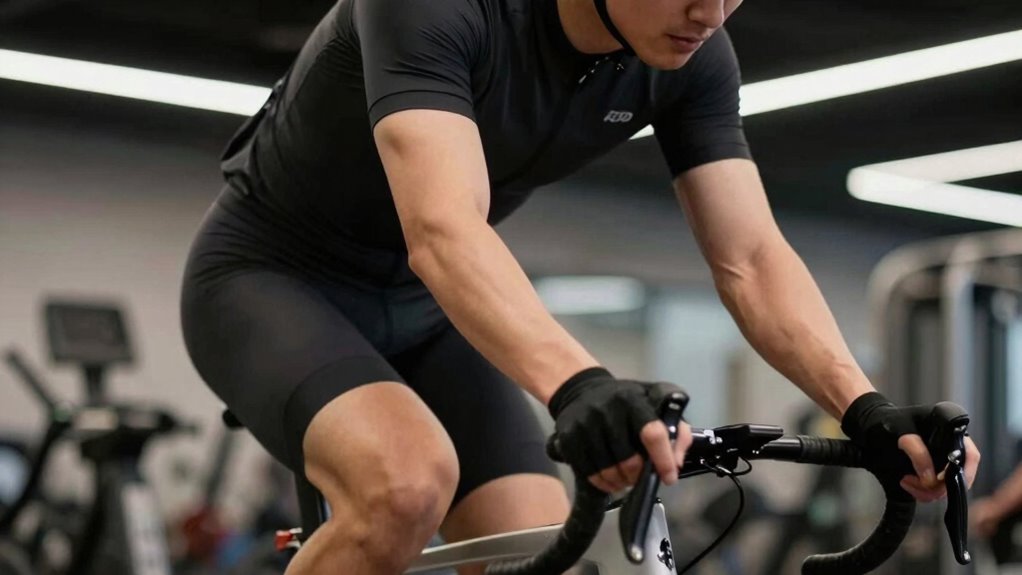

To protect your neck during indoor cycling, focus on small adjustments like keeping your head aligned with your spine, avoiding pushed-forward postures, and maintaining a neutral neck position with ears over shoulders. Adjust your bike height and handlebars so you’re not leaning forward excessively. Relax your grip and wrists, stay balanced, and incorporate gentle neck stretches before and after rides. If you continue these tweaks, you’ll find yourself more comfortable and avoid long-term strain.
Key Takeaways
- Maintain a neutral head position with ears aligned over shoulders and gaze slightly downward to reduce neck strain.
- Adjust saddle height and handlebar position for a comfortable, supportive riding posture that minimizes neck and back tension.
- Hold handlebars gently with relaxed wrists and experiment with grip options to prevent tension and promote proper alignment.
- Keep your core engaged and head in a neutral position, avoiding overextension and regularly checking your posture during rides.
- Incorporate routine ergonomic adjustments and neck stretches before and after cycling to prevent tension and protect neck health.

Ultra Pain Relief Cooling Pillow for Neck Support, Adjustable Cervical Pillow Cozy Sleeping, Odorless Ergonomic Contour Memory Foam Pillows, Orthopedic Bed Pillow for Side Back Stomach Sleeper
- Hollow Concave Design: Cradles head at 15-degree angle
- Ergonomic Contour Zones: Supports neck, shoulders, and arms
- Memory Foam Core: Breathable, non-toxic, odorless material
As an affiliate, we earn on qualifying purchases.
As an affiliate, we earn on qualifying purchases.
Understanding the Importance of Proper Neck Alignment
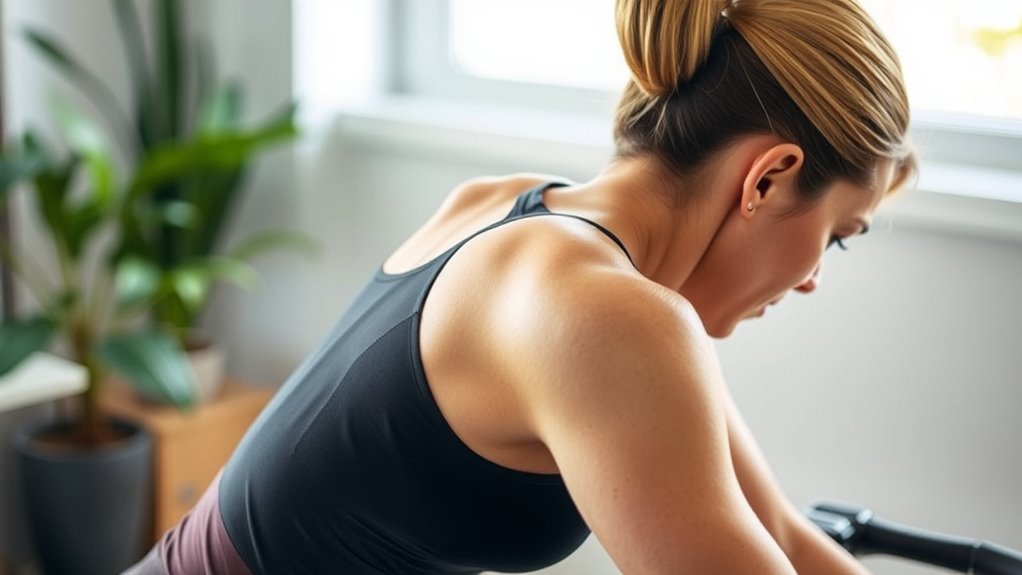
Maintaining proper neck alignment during indoor cycling is essential to prevent discomfort and injury. When your neck is aligned correctly, you reduce strain on the cervical spine and surrounding muscles. If you crane your neck forward or let it droop, you risk tension headaches, sore shoulders, and even long-term issues like nerve compression. Keep your gaze forward, looking straight ahead rather than down at the screen or handlebars. Your neck should stay in a neutral position, with your ears aligned over your shoulders. This alignment ensures your head feels balanced and relaxed throughout your ride. Paying attention to neck posture helps you avoid unnecessary fatigue and discomfort, enabling you to focus on your workout and enjoy a safer, more effective indoor cycling session. Incorporating ergonomic principles can further enhance your riding comfort and prevent strain. Additionally, adjusting your bike setup to match your body’s natural posture can make a significant difference in maintaining proper neck alignment during your rides. Being mindful of your body positioning can also help prevent cumulative strain over time. Practicing regular stretching can further support your neck health and flexibility, contributing to overall riding comfort.
As an affiliate, we earn on qualifying purchases.
Adjusting Your Bike Height for Optimal Posture
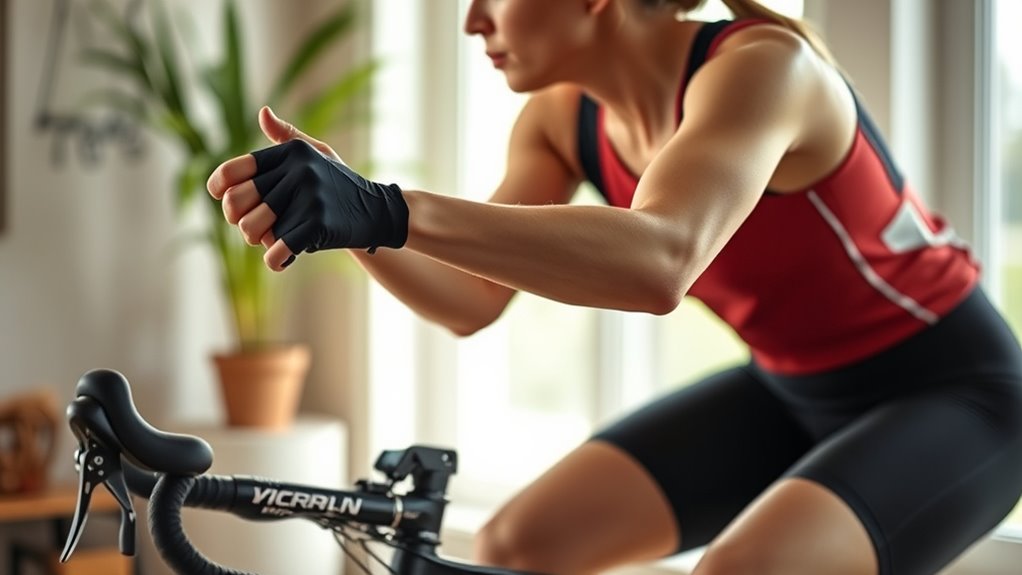
Adjusting your bike height correctly is essential for maintaining proper posture and preventing discomfort during indoor cycling. When your saddle is too high, you’ll strain your hips and risk losing control, while a saddle that’s too low causes unnecessary knee bending and reduces power. To find the right height, stand beside your bike and set the saddle so it’s level with your hip bone. Sit on the saddle and place your heel on the pedal; your leg should be fully extended with a slight bend at the knee when the pedal is at its lowest point. This position ensures ideal leg extension and minimizes strain on your neck and back. Regularly check and fine-tune your bike height to stay comfortable and protect your neck during every ride. Additionally, considering the contrast ratio of your setup can help improve visibility and reduce eye strain, making your rides more comfortable. Incorporating ergonomic adjustments into your bike setup can further enhance your comfort and prevent long-term injury. Paying attention to your bike fit can also help optimize your posture and reduce fatigue over time. Being aware of proper alignment can contribute to better overall posture and injury prevention, especially when combined with correct posture awareness during your rides.
adjustable bike saddle for proper posture
As an affiliate, we earn on qualifying purchases.
As an affiliate, we earn on qualifying purchases.
Finding the Right Handlebar Position for Comfort
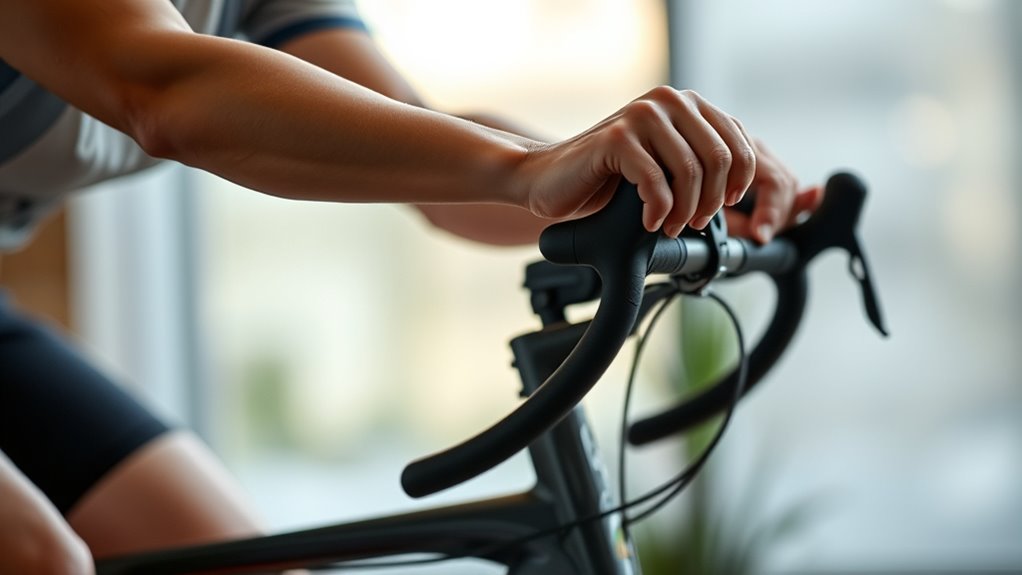
Adjusting your handlebar height can make a big difference in comfort, so find a position that feels natural for your back and shoulders. Pay attention to your wrist and grip—keeping them relaxed and aligned prevents strain. Experiment with small changes until your handlebars support a smooth, pain-free riding posture. Incorporating ergonomic adjustments can further enhance comfort and reduce the risk of neck strain during your ride. Ensuring proper bicycle fit is essential to prevent discomfort and promote better posture over time. Additionally, selecting appropriate handlebar accessories can help fine-tune your setup for optimal comfort. Considering proper cycling posture techniques can also contribute to long-term comfort and injury prevention, especially when combined with power tool ergonomics principles that emphasize proper alignment and movement efficiency.
Handlebar Height Adjustment
Finding the right handlebar height is essential for comfort and efficiency during your indoor cycling sessions. If the handlebars are too high, you may feel overly stretched, putting strain on your neck and shoulders. Conversely, if they’re too low, you’ll hunch forward excessively, which can cause neck tension and reduce your stability. To find the best height, start with the handlebars level with or slightly above your saddle. Test your position by riding comfortably; you should feel supported without leaning too far forward or back. Adjust incrementally, making sure your arms are relaxed and your shoulders stay down. Remember, a proper handlebar height helps maintain good posture and minimizes neck strain, allowing you to ride longer and more comfortably.
Wrist and Grip Position
Your wrist and grip position play a crucial role in ensuring comfort and preventing strain during indoor cycling. To find the right handlebar grip, avoid gripping too tightly, which can cause tension in your wrists and arms. Instead, hold the handlebars firmly but gently, allowing your hands to rest naturally. Experiment with different hand positions—such as the tops, hoods, or drops—to find what feels most comfortable and reduces wrist fatigue. Keep your wrists in a neutral position, avoiding excessive bending or twisting. If you notice discomfort, adjust your grip or handlebar height accordingly. Proper wrist positioning helps distribute pressure evenly, minimizes strain, and promotes better control, making your ride more comfortable and reducing the risk of injury. Additionally, maintaining a correct posture ensures that your entire upper body remains aligned, further preventing unnecessary tension. An ergonomic bike setup is essential for long-term comfort and injury prevention during indoor cycling. Being mindful of your ergonomic principles can help you make ongoing adjustments for optimal comfort. Regularly checking your handlebar position can also help prevent discomfort and enhance your overall cycling experience.
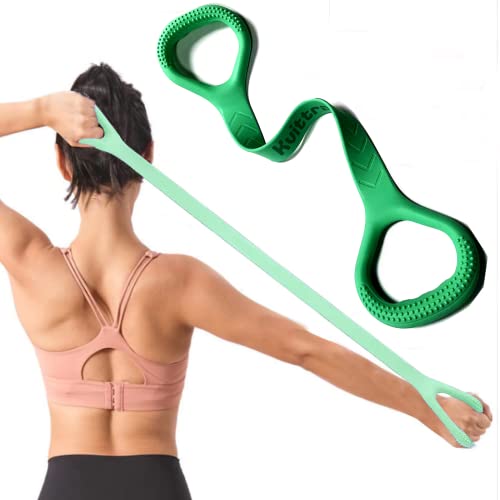
Kvittra Figure 8 Resistance Band, Arm Back Shoulder Exercise Elastic Rope Stretch Fitness Band, Foot, Leg, Hand Stretcher, Arm Exerciser for Yoga Pilates Stretching Physical Therapy, Home Gym Workout
- Material: Natural latex for durability and elasticity
- Design: 8-shaped handle for comfortable grip
- Massage Points: Anti-skid massage function for comfort
As an affiliate, we earn on qualifying purchases.
As an affiliate, we earn on qualifying purchases.
Maintaining a Neutral Head Position During Rides
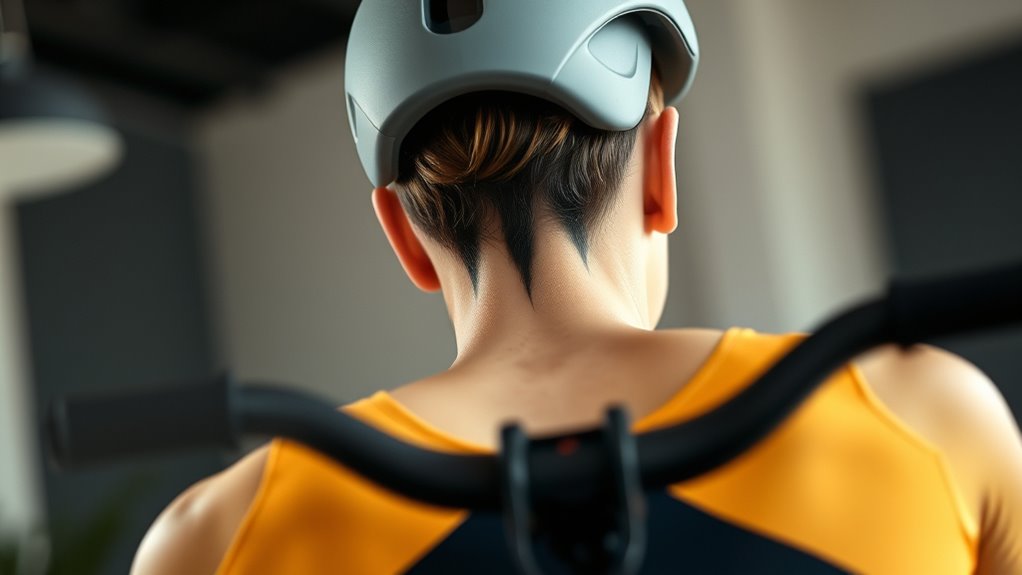
To keep your head aligned and avoid strain, focus on proper head alignment techniques. Make sure you’re not leaning forward excessively, which can cause discomfort over time. Using a mirror helps you check your position and stay in a neutral head posture throughout your ride. Incorporating correct posture adjustments can further enhance comfort and prevent long-term issues. Additionally, maintaining proper ergonomic setup can support sustained neck health during long rides. Paying attention to cycling posture habits allows you to make small, effective changes that protect your neck during extended sessions. Being mindful of muscle engagement can also help you maintain stability and reduce tension in your neck muscles. Recognizing how ergonomics influence your riding position is key to making meaningful improvements.
Head Alignment Techniques
Maintaining a neutral head position is essential for comfort and efficiency during indoor cycling. To achieve this, focus on aligning your ears with your shoulders, avoiding craning your neck forward or tilting it downward. Keep your gaze level straight ahead or slightly downward, aiming at a point just below eye level. Engage your neck muscles gently, avoiding unnecessary tension. Adjust your handlebars if needed so your head naturally rests in a comfortable, upright position without straining. Remember to stay relaxed and avoid locking your neck or shoulders. Regularly check your posture during rides, making small adjustments to keep your head aligned with your spine. Proper head alignment reduces neck fatigue and helps maintain overall ride comfort. Being mindful of postural awareness throughout your ride can significantly improve your comfort and prevent strain.
Avoiding Forward Leaning
Keeping your head in a neutral position during rides helps prevent a forward lean that can cause neck and back strain. To achieve this, focus on aligning your ears over your shoulders and avoid jutting your chin forward. Keep your gaze level or slightly downward, looking straight ahead rather than down at your handlebars. Adjust your handlebar height if you find yourself leaning excessively forward; a slight raise can encourage better posture. Engage your core to support your upper body and maintain this neutral position throughout your ride. Regularly check your posture, especially during intense sessions, to prevent slipping into a forward-leaning habit. By maintaining a balanced head position, you’ll reduce strain and improve your overall comfort and endurance on the bike.
Using Mirror for Check
Using a mirror during your ride can be a simple yet effective way to guarantee your head stays in a neutral position. Position the mirror so you can see your face clearly without straining your neck. As you cycle, glance at the mirror periodically to check if your head tilts forward or drops too low. This quick visual feedback helps you make immediate adjustments, ensuring your neck stays relaxed and aligned. Focus on keeping your gaze forward, not downward, to maintain proper posture. Incorporate mirror checks into your routine, especially during warm-ups or if you feel discomfort. Over time, this habit trains you to maintain a balanced head position naturally, reducing neck strain and promoting better overall posture during your rides.
Incorporating Gentle Neck Stretches Before and After Cycling
Before hopping on your indoor bike, gentle neck stretches can help prepare your muscles and reduce tension. These stretches loosen tightness and improve flexibility, making your ride more comfortable. To perform them, gently tilt your head forward, backward, and side to side, holding each position for a few seconds. Incorporate these stretches both before and after your session to promote muscle recovery and prevent strain.
| Stretch Type | Technique | Benefits |
|---|---|---|
| Forward Tilt | Lower chin toward chest slowly | Releases tension in the neck |
| Side Stretch | Tilt head toward shoulder, hold, then switch sides | Enhances lateral flexibility |
| Backward Tilt | Gently lift chin upward | Opens front neck muscles |
Avoiding Overextension: Recognizing Signs of Strain
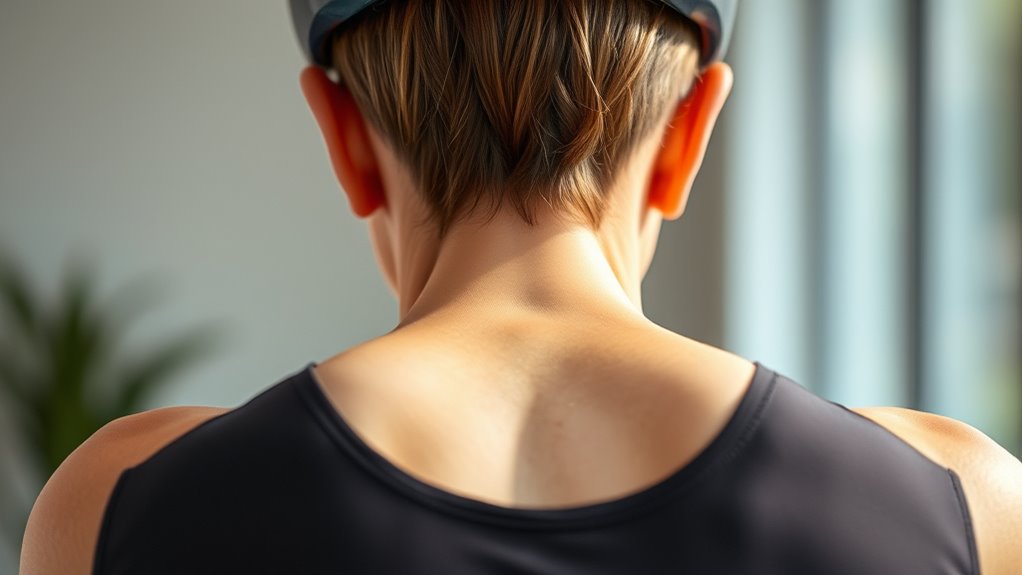
Overextending your neck or shoulders during indoor cycling can lead to strain and discomfort. You might notice a persistent ache or tightness in your neck or upper shoulders after a ride. Headaches, especially at the base of your skull, can also signal overextension. Pay attention to your posture during cycling; if your head feels pushed forward or your shoulders are hunched, you’re likely overextending. Numbness or tingling in your arms or hands may also occur, indicating nerve compression from poor alignment. Regularly check in with how your body feels during and after cycling. Recognizing these signs early helps you adjust your posture, preventing long-term strain or injury. Staying mindful of your body’s signals keeps your ride comfortable and safe.
Strengthening Neck and Upper Back Muscles for Support

Building strength in your neck and upper back muscles provides essential support to maintain proper cycling posture and reduce the risk of strain. When these muscles are strong, they help keep your head aligned with your spine, preventing unnecessary tilting or overextension. Incorporate targeted exercises like shoulder blade squeezes, neck isometrics, and rows into your routine to build resilience. Consistent strength training improves muscle endurance, making it easier to hold correct posture during long rides. It’s important not to overdo it—gradually increase intensity and always focus on controlled movements. Strong upper back and neck muscles support your head naturally, reducing tension and fatigue. This foundation allows you to stay comfortable, improve your cycling efficiency, and protect your neck from developing aches or injuries over time.
Using Accessories to Support Neck Health
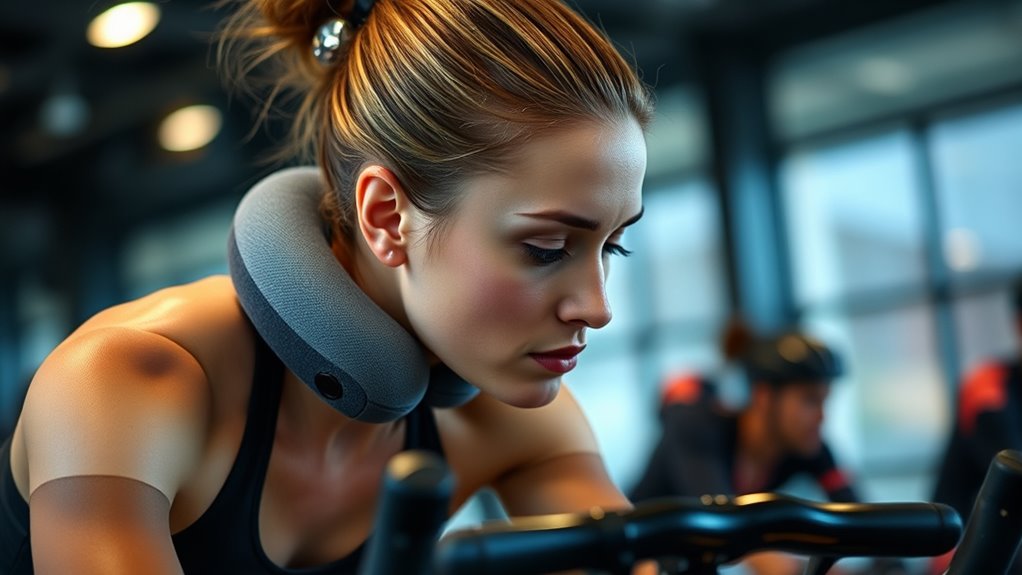
Using accessories such as padded neck supports, ergonomic handlebars, and adjustable helmets can considerably enhance your neck health during indoor cycling. Padded supports help cushion your neck and reduce strain, especially during long rides. Ergonomic handlebars are designed to keep your wrists and shoulders in a natural, relaxed position, which lessens tension traveling up to your neck. Adjustable helmets ensure a proper fit, preventing unnecessary pressure or misalignment that can cause discomfort over time. Incorporating these accessories allows you to customize your setup, promoting better posture and reducing the risk of neck fatigue. Remember, small adjustments with supportive gear make a significant difference in maintaining comfort and protecting your neck during every session.
Monitoring Your Riding Duration and Breaks to Prevent Fatigue
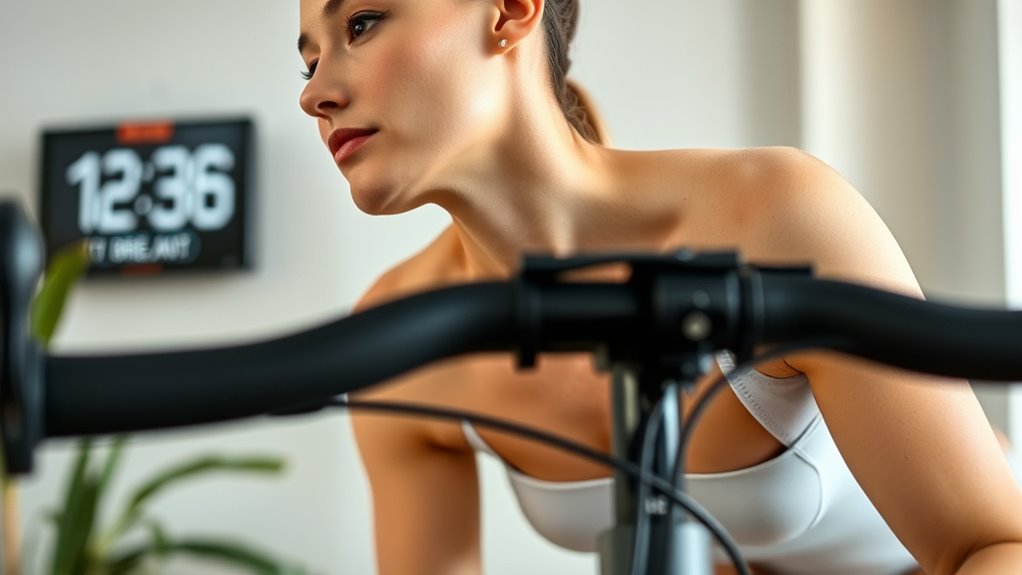
Maintaining awareness of your riding duration and taking regular breaks can considerably reduce the risk of fatigue and discomfort. Set a timer or watch your session time closely, aiming to cycle in manageable intervals. For example, ride for 20-30 minutes, then pause for a few minutes to stretch and relax your muscles. This helps prevent your muscles from tightening and your posture from deteriorating. Pay attention to how your body feels—if you notice tension or numbness, it’s a sign to pause and reset. Incorporate short breaks consistently, especially during longer sessions, to maintain proper alignment and avoid overexertion. Staying mindful of your riding duration ensures you can focus on maintaining good posture and protecting your neck throughout your workout.
Tips for Consistent Posture Checks During Indoor Sessions

To guarantee your posture stays correct throughout your indoor cycling session, it’s important to check in regularly. Set a timer or use reminders every 10 to 15 minutes to pause briefly and assess your form. Focus on your neck, shoulders, and back—ensure your head remains aligned with your spine, shoulders are relaxed, and your core is engaged. Adjust your handlebars or seat if you notice tension or discomfort. Incorporate quick cues, like “neck long” or “shoulders down,” to remind yourself to maintain proper positioning. Staying conscious of your posture helps prevent strain and fatigue. Regular checks create muscle memory, making good form second nature. Consistency is key, so make these quick assessments a routine part of every session.
Frequently Asked Questions
How Often Should I Check My Cycling Posture During a Session?
You should check your cycling posture every 10 to 15 minutes during a session. As you ride, it’s easy to slip into bad habits or strain your neck. Take a moment to glance at your position, ensuring your neck stays relaxed and aligned with your spine. Small, frequent adjustments help prevent discomfort and injury, keeping you comfortable and efficient throughout your workout.
Can Specific Pillow or Cushion Use Improve Neck Comfort?
Using a supportive pillow or cushion can make a noticeable difference in neck comfort. Choose one that gently cradles your neck and aligns your head without forcing you into awkward positions. Look for memory foam or ergonomic designs that adapt to your shape. This small addition helps reduce strain, making your ride more enjoyable and preventing discomfort from creeping in, so you can focus on your workout without distraction.
Are There Different Posture Tips for Beginners Versus Advanced Riders?
Yes, there are different posture tips for beginners and advanced riders. As a beginner, focus on maintaining a relaxed grip, keeping your shoulders down, and avoiding overreaching, which can strain your neck. Advanced riders can fine-tune their posture by engaging their core, slightly tilting the pelvis, and ensuring proper alignment to prevent neck tension. Always listen to your body and adjust as needed to stay comfortable and safe.
How Do I Prevent Neck Pain When Cycling for Long Durations?
Think of your neck as a delicate lighthouse, guiding your body safely through long rides. To prevent neck pain, keep your gaze forward, not down, and avoid craning your neck. Adjust your handlebars to a comfortable height, so you’re not reaching or straining. Take short breaks to stretch your neck and shoulders. Stay mindful of your posture, and your lighthouse will shine brightly without strain during those extended cycling sessions.
What Are Signs That My Cycling Posture Is Causing Strain?
You might notice persistent neck stiffness, headaches, or soreness after cycling. If you feel your neck muscles tighten or you experience discomfort that worsens during rides, it’s a sign your posture is causing strain. Additionally, if your shoulders or upper back ache, or if you find yourself craning your neck forward, these are clear indicators. Pay attention to these signals and adjust your position to prevent long-term issues.
Conclusion
By making these small tweaks, you’ll protect your neck like a superhero guarding a priceless treasure. Stay mindful of your posture, adjust your bike thoughtfully, and incorporate stretches and strength exercises into your routine. With consistent checks, you’ll prevent neck strain from sneaking up on you during those epic indoor rides. Remember, a little attention to detail today can save you from a neck saga tomorrow—your ride’s safety depends on it!