
Sitting for long periods tightens your hip muscles by keeping them in a shortened position, reducing flexibility and blood flow. To reset your hips in just 8 minutes, start with a quick warm-up like leg swings and hip circles to activate your muscles. Then, do targeted stretches for your hip flexors and glutes, followed by gentle mobility drills to increase your range of motion. Keep going to discover simple, effective ways to free your hips from sitting-related tightness.

Get workout gear delivered free with Prime
- Fast, free delivery on millions of items
- Prime Video, Amazon Music and more included
- Member-only deals all year
Key Takeaways
- Incorporate dynamic warm-up movements like leg swings and hip circles to increase blood flow and loosen tight hip muscles.
- Perform targeted stretches such as lunges or pigeon pose for 20-30 seconds to release hip flexors.
- Use gentle mobility drills like knee-to-chest tilts and seated hip openers to enhance joint range of motion.
- Practice deep breathing and relaxation techniques post-exercise to reduce muscle stiffness and promote circulation.
- Maintain daily movement habits like walking, stretching, and frequent breaks to prevent sitting-related hip tightness.
As an affiliate, we earn on qualifying purchases.
Understanding Why Sitting Causes Hip Tightness
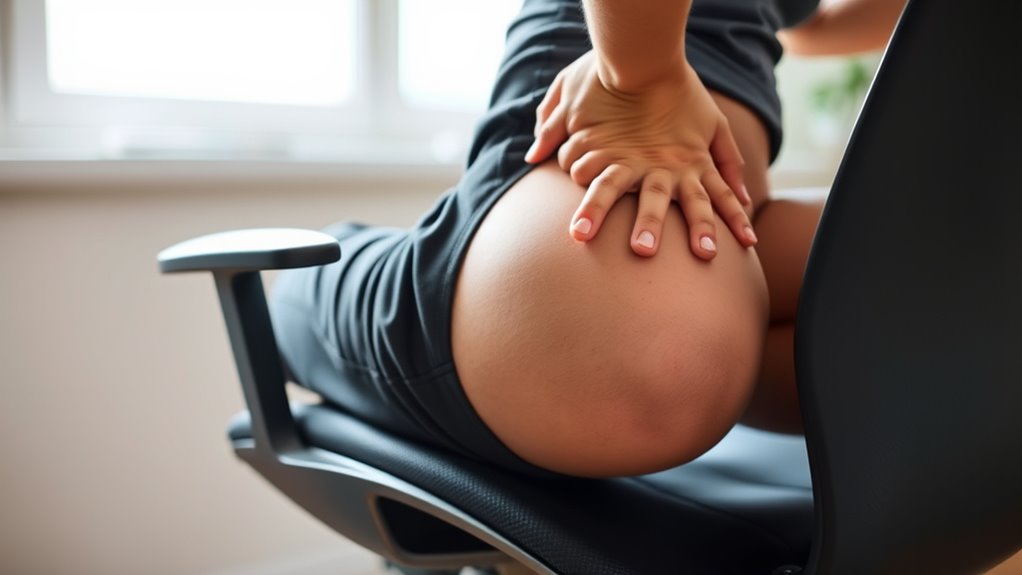
When you sit for extended periods, your hip muscles can become tight and restricted. Sitting keeps your hip flexors and surrounding muscles in a shortened position, which reduces their flexibility over time. Without movement, these muscles lose their elasticity, leading to stiffness and discomfort. Prolonged sitting also limits blood flow, depriving muscles of essential nutrients and oxygen needed for maintenance. As your hip muscles tighten, they pull on the hip joint, causing decreased mobility and potential pain. This tightness can alter your posture and gait, increasing strain on other areas like your lower back. Understanding this process helps you realize why regular movement and stretching are vital to prevent tight hips and maintain healthy, functional mobility.
As an affiliate, we earn on qualifying purchases.
Essential Preparations Before You Begin
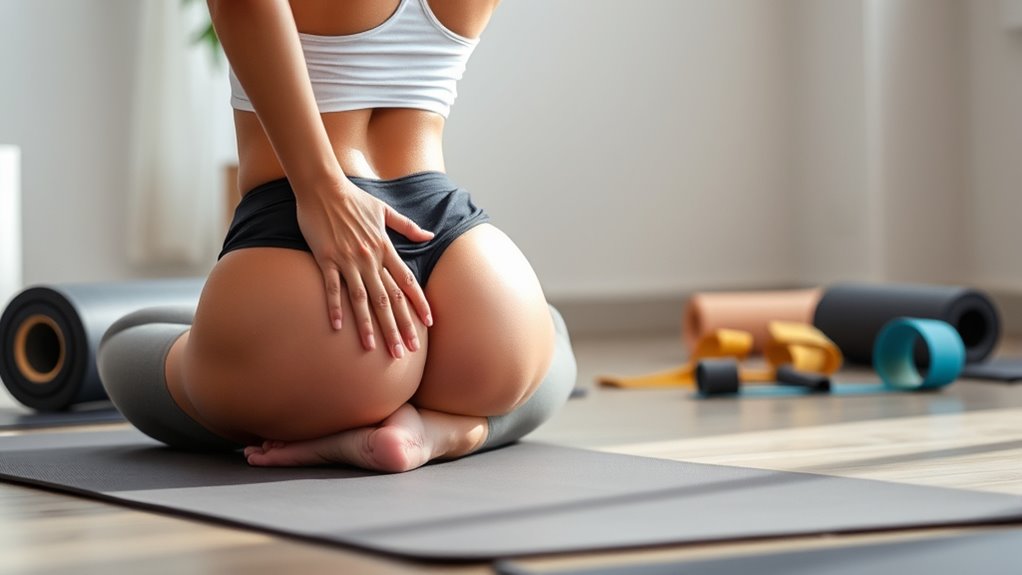
Before you start stretching or doing exercises to loosen tight hips, it’s important to prepare your body properly. This sets the foundation for effective and safe movement. First, hydrate well—drink a glass of water to ensure your muscles are hydrated and responsive. Second, find a quiet space free of distractions, so you can focus entirely on your movements. Third, wear comfortable clothing that allows full range of motion without restriction. These simple steps help prevent injury and maximize the benefits of your mobility reset. Incorporating proper movement preparation** techniques can also enhance your stretching routine and help you achieve better results. Additionally, ensuring proper air quality in your environment can further support your relaxation and muscle recovery during your mobility exercises. Paying attention to environmental factors like ventilation and temperature can make your session more comfortable and effective. Using breathing techniques** during your warm-up can further improve your flexibility and relaxation, leading to more effective stretches. With proper preparation, you’ll experience smoother, more targeted stretches that bring lasting relief.
resistance bands for hip exercises
As an affiliate, we earn on qualifying purchases.
As an affiliate, we earn on qualifying purchases.
Dynamic Warm-Up to Activate Your Muscles
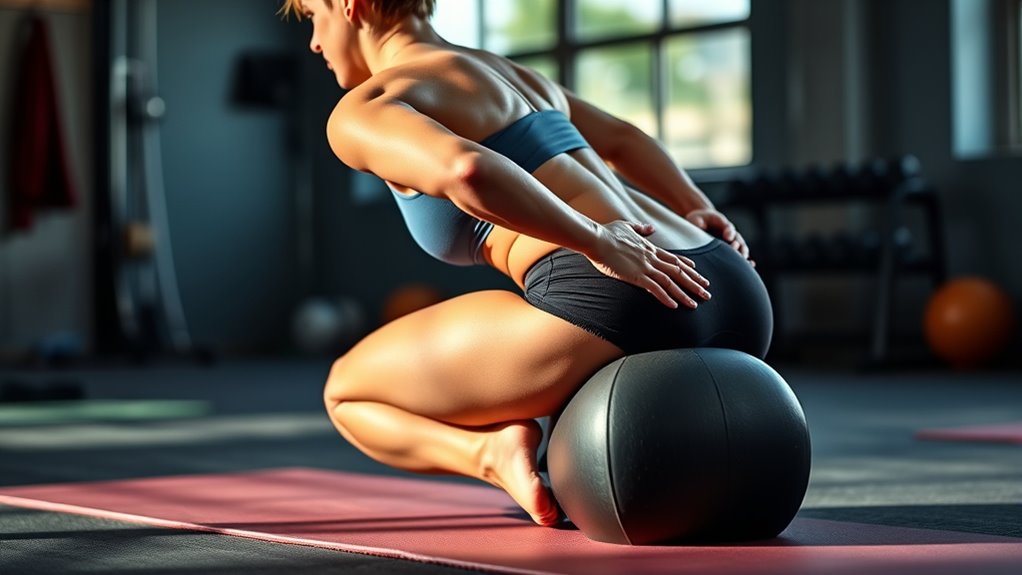
A dynamic warm-up helps activate your hip muscles so they’re ready for movement. It also boosts blood flow, preparing your body to move comfortably. By doing this, you reduce the risk of injury and improve your overall mobility. Incorporating free floating movements into your routine can further enhance flexibility and prevent stiffness. Understanding smart home gym equipment can help you maintain a more comfortable, injury-free space during your recovery. Additionally, using smartphone apps designed for guided mobility exercises can provide convenient support and motivation. Staying informed about sleep hygiene and proper routines can also support overall physical well-being and recovery.
Engage Hip Muscles
Engaging your hip muscles through a dynamic warm-up is essential to counteract the stiffness caused by prolonged sitting. When you activate these muscles, you improve stability and prepare your hips for movement. Start with these key steps:
- Leg Swings – Swing each leg forward and back, feeling the muscles engage and loosen.
- Hip Circles – Rotate your hips in circular motions, focusing on controlled, full-range movements.
- Standing Hip Abductions – Lift your leg to the side, activating the glutes and outer hips.
- Proper Movement Mechanics – Incorporating correct movement patterns can further enhance mobility and reduce strain. Incorporating adaptive movement techniques can also help prevent injury and improve overall function. Additionally, understanding muscle activation principles can optimize your warm-up effectiveness.
- Improving movement efficiency through proper technique can lead to better mobility outcomes and reduce the risk of strain.
Awareness of industry trends and proper technique can maximize your mobility gains. These movements target your hip stabilizers and mobilize tight muscles, making it easier to move freely. Consistently engaging your hip muscles primes them for activity and helps reduce tightness caused by sitting all day.
Increase Blood Flow
How can you guarantee your muscles are ready for movement? The key is increasing blood flow. When you start moving, your heart pumps more blood to your muscles, delivering oxygen and nutrients essential for ideal performance. A quick dynamic warm-up gets your blood flowing efficiently, warming up your tissues and preparing them for activity. Incorporate movements like leg swings, hip circles, or light jogging to stimulate circulation. This boosts warmth and flexibility, reduces stiffness, and minimizes injury risk. As blood flow increases, muscles become more elastic and responsive. Think of it as jump-starting your body; it’s the first step toward effective, pain-free movement. With improved circulation, your muscles are primed to activate smoothly, setting a solid foundation for the rest of your mobility reset. Additionally, a proper warm-up prepares your nervous system for coordinated movement, further reducing the chance of strains. Engaging in a gradual warm-up also helps your mind focus on the movement patterns to come, promoting better overall execution. Incorporating dynamic stretching can further enhance muscle elasticity and readiness before activity. To maximize these benefits, aiming for a short, focused warm-up can make a significant difference in your mobility routine.
Prepare for Movement
Getting your muscles ready for movement involves more than just raising your heart rate; it requires specific movements that activate and loosen your muscles. To prepare effectively, focus on dynamic warm-ups that target key areas. Perform leg swings — front to back and side to side — to loosen your hips and legs. Do hip circles to increase mobility and improve joint lubrication. Incorporate bodyweight lunges to engage your glutes, thighs, and core. These movements increase blood flow, activate muscle fibers, and improve joint range of motion. Additionally, understanding the importance of self-expression and cultural moments can motivate you to maintain an active and healthy lifestyle that supports your personal style and confidence. Incorporating body awareness exercises can further enhance your ability to move efficiently and prevent injuries during activity. Practicing proper warm-up techniques can also reduce the risk of injury and ensure your muscles are fully prepared for activity. Engaging in dynamic stretching methods can further optimize your readiness for movement.
As an affiliate, we earn on qualifying purchases.
Targeted Stretches for Hip Flexors and Glutes

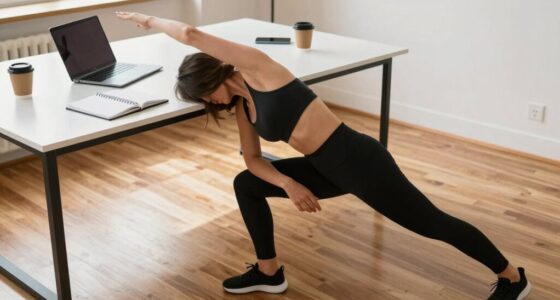
To relieve tight hips from prolonged sitting, targeted stretches for the hip flexors and glutes can be highly effective. Focus on stretches like the kneeling hip flexor stretch, where you kneel on one knee and gently push your hips forward, feeling a stretch in the front of your hip. For your glutes, try the figure-four stretch: lie on your back, cross one ankle over the opposite knee, and pull your bent knee toward your chest. Hold each stretch for 20-30 seconds, breathing deeply. These targeted moves loosen tight muscles and improve flexibility, reducing discomfort and increasing mobility. Incorporating these smart tweaks into your routine consistently can counteract the effects of sitting and promote healthier hip function. Maintaining proper posture and movement habits throughout the day can further enhance your hip health and prevent tightness.
Gentle Mobility Drills to Increase Range of Motion
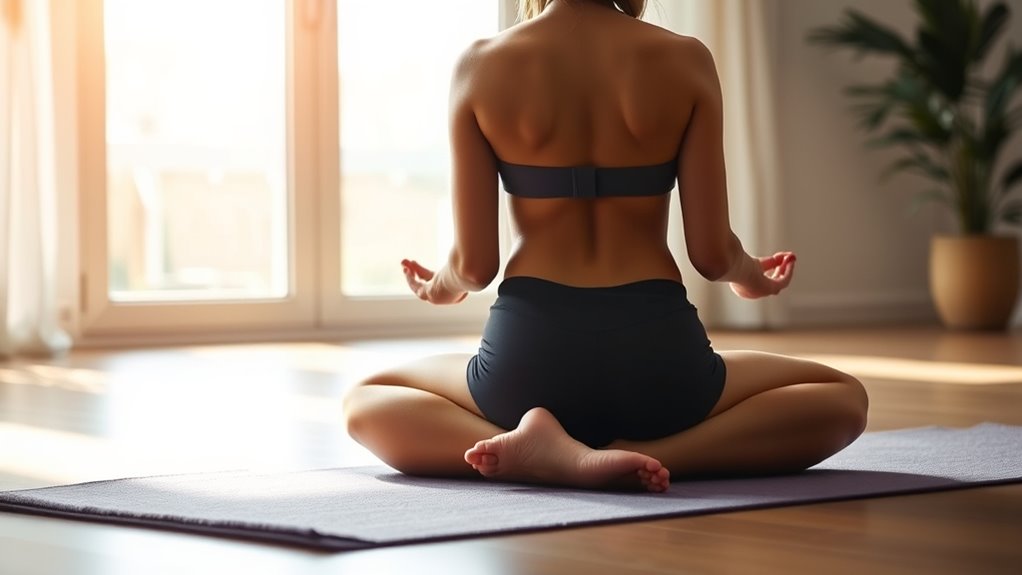
Gentle mobility drills are an effective way to gradually increase your hip range of motion without putting too much strain on tight muscles. These simple movements help loosen stiff hips and improve flexibility over time. To get started, try these three key drills:
- Hip Circles – Move your hips in slow, controlled circles to loosen the joint.
- Knee-to-Chest Tilts – Bring one knee toward your chest, then switch sides, gently stretching the hip flexors.
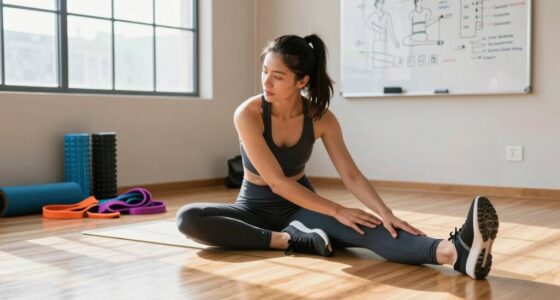
- Seated Hip Openers – Sit with one ankle over the opposite knee and gently press down your raised knee to open the hip.
Perform each movement for 30 seconds, focusing on smooth, controlled motions. These drills boost mobility without risking overstretching.
Cool-Down and Relaxation Techniques

After your mobility exercises, take a moment to cool down and relax your hips. Try deep breathing exercises to calm your mind and release tension. Gentle stretching routines and progressive relaxation techniques can help you feel more comfortable and prevent stiffness.
Deep Breathing Exercises
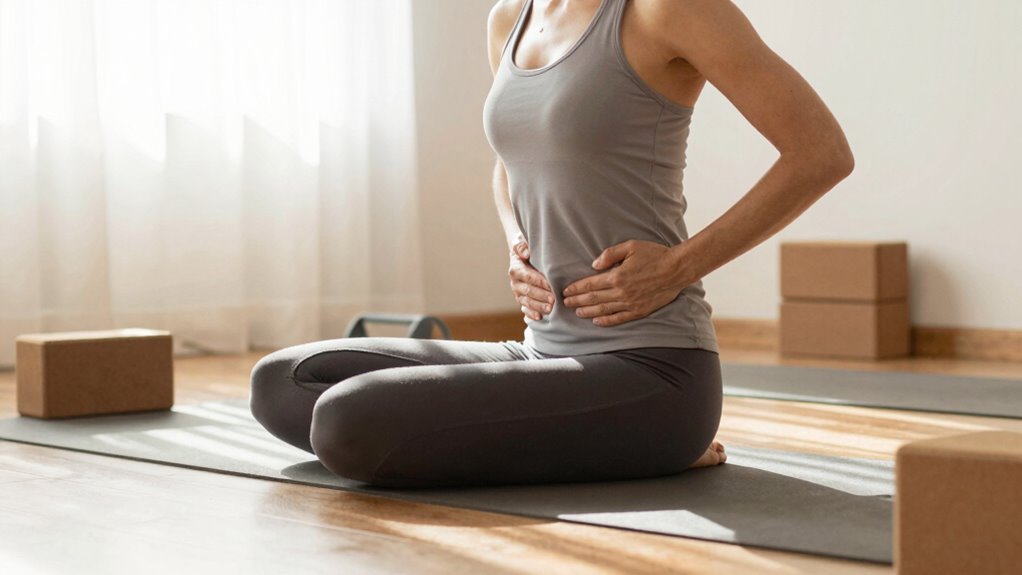
Deep breathing exercises are an effective way to relax your muscles and calm your mind after sitting for extended periods. They help reduce tension in your hips and lower back, promoting overall relaxation. To get the most benefit, try these steps:
- Inhale slowly through your nose for a count of four, filling your lungs completely.
- Hold your breath for a count of four, keeping your shoulders relaxed.
- Exhale gently through your mouth for a count of six, releasing any remaining tension.
Repeat this cycle for 1-2 minutes, focusing on your breath and letting go of stress. Deep breathing calms your nervous system, making your hips feel looser and your mind clearer. Incorporate this simple practice into your cool-down routine regularly.
Gentle Stretching Routines
Incorporating gentle stretching routines into your cool-down helps prolong the relaxation achieved through breathing exercises and prevent muscle stiffness. Focus on slow, controlled movements that target your hips, thighs, and lower back. Simple stretches like figure-four stretches, seated forward bends, and hip openers can release tension built up during the day. Hold each stretch for 20 to 30 seconds, breathing deeply to enhance relaxation. Avoid bouncing or forcing movements; instead, listen to your body and ease into each position. These gentle routines help reduce muscle tightness, improve flexibility, and promote circulation. Consistently incorporating them after sitting or exercise creates a calming progression, leaving you feeling more relaxed and less prone to stiffness or discomfort.
Progressive Relaxation Techniques
Progressive relaxation techniques offer an effective way to deepen your cool-down and promote overall relaxation. By systematically tensing and releasing muscle groups, you help release built-up tension and calm your nervous system. To try this, follow these steps:
- Start with your feet, tensing the muscles for five seconds, then slowly releasing.
- Move upward through your legs, hips, and core, repeating the tensing and relaxing process.
- Finish with your shoulders, neck, and face, ensuring every area feels relaxed.
This method not only relaxes your muscles but also sharpens your awareness of tension and relaxation cues. Incorporating progressive relaxation into your routine helps prevent tightness from sitting and improves your overall sense of calm and mobility.
Tips for Maintaining Hip Mobility Daily
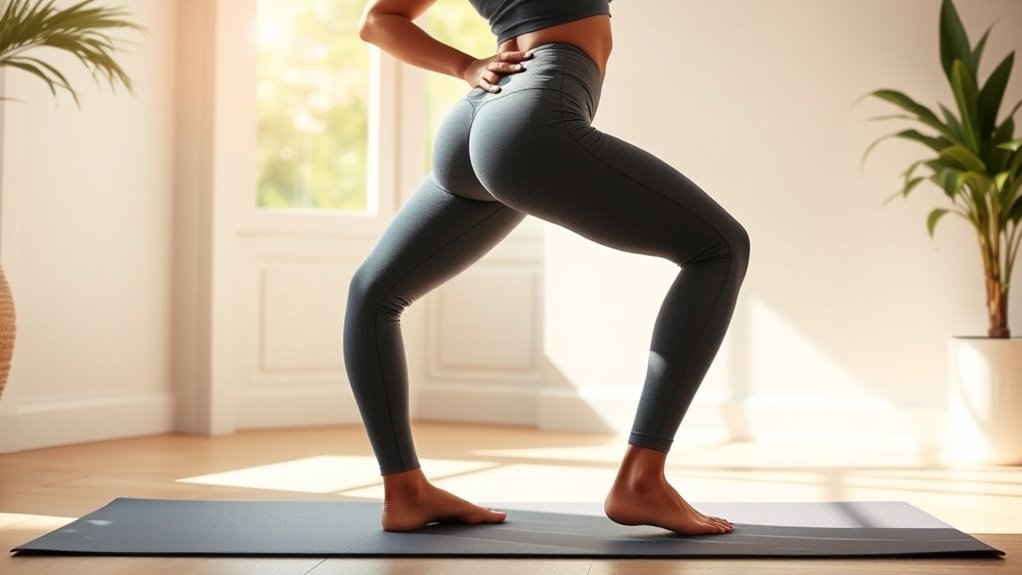
To keep your hips mobile every day, maintaining simple, consistent movement routines into your schedule is essential. Incorporate short stretches and mobility exercises, like hip circles or lunges, into your morning or evening routine. Take breaks from sitting every hour—stand up, walk around, or do a quick stretch. Use your lunch break for a quick mobility reset, focusing on hip openers like pigeon pose or butterfly stretches. Avoid staying in the same position for long periods; instead, switch between sitting, standing, and moving. Strengthening exercises, such as glute bridges or clamshells, also support hip health. Consistency is key, so make these habits part of your daily rhythm. With regular effort, you’ll maintain better hip flexibility and reduce tightness caused by sitting.
Frequently Asked Questions
How Often Should I Perform the 8-Minute Mobility Reset?
You should perform the 8-minute mobility reset daily or at least 3-4 times a week. Consistency helps improve flexibility and reduces tightness. Incorporate it into your morning routine or during breaks to keep your hips mobile. If you notice soreness or tightness, do it more often to help your muscles relax and regain their range of motion. Regular practice makes a noticeable difference over time.
Can These Exercises Help With Hip Pain or Just Tightness?
These exercises can be like a gentle hug for your hips, easing tightness and reducing pain. While they mainly target mobility, they also help alleviate discomfort by improving flexibility and circulation. If your hip pain is persistent or sharp, it’s best to consult a healthcare professional. For minor tightness, consistently doing these movements can bring relief and restore natural movement, making everyday activities more comfortable.
Are There Any Contraindications or Injuries That Prevent Me From Doing These Drills?
If you have recent injuries, joint instability, or severe chronic pain, you should consult your healthcare provider before doing these drills. Avoid exercises that cause sharp pain, dizziness, or discomfort beyond mild stretching. If you’re pregnant or have other medical conditions, modify or skip certain movements. Always listen to your body, and stop if anything feels wrong. Your safety comes first, so get professional advice when in doubt.
Do I Need Special Equipment or Props for These Mobility Exercises?
You don’t need special equipment for these mobility exercises. Most moves are bodyweight-based, so you can do them anywhere, whether at home or in the office. However, a yoga mat or towel can add comfort, especially for floor stretches. If you have a sturdy chair or wall nearby, use those for support if needed. Keep it simple and focus on your form rather than gear.
How Long Will It Take to Notice Improvements in Hip Flexibility?
You can start noticing improvements in your hip flexibility within just a few days to a week if you do these exercises consistently. Keep in mind, individual progress varies based on your current mobility level and how often you practice. Stay committed, listen to your body, and don’t push too hard. With regular effort, you’ll likely see noticeable changes in your hip movement and comfort sooner than you expect.
Conclusion
Remember, a journey of a thousand miles begins with a single step. By dedicating just 8 minutes daily to this mobility reset, you’ll loosen tight hips and reclaim your comfort. Consistency is key—don’t let small setbacks stop you. Keep moving, stay committed, and watch your flexibility improve. Your hips will thank you, and you’ll feel more energized to face each day with confidence. Start today; your future self will thank you for it.
Fall Picks
fall essentials
As an affiliate, we earn on qualifying purchases.